
Travel To Morocco: Essential Packing List For First-Timers
Travel to Morocco: Essential Packing List for First-Timers
Introduction
You step out of your riad in Marrakech at 6:47 AM. The medina air bites at your arms — 48°F in February, and the sun hasn't yet climbed over the rooftops. By 2:00 PM, you're crossing the Palmeraie on the back of a camel, and the temperature has rocketed to 78°F. By midnight, you'll be huddled around a fire in a Sahara tent, watching your breath crystallize at 34°F. That single-day temperature swing of over 40 degrees isn't unusual in Morocco. It's expected.
Most first-time visitors make the same critical error: they pack like Morocco is Thailand or Mexico — a suitcase stuffed with flip-flops, tank tops, and a single hoodie "just in case." Then they spend their first afternoon in a Fes medina dodging motorbikes on uneven cobblestones in unsupportive sandals, shoulders sunburned because every shirt they brought was sleeveless, shivering through a mountain dinner in the Atlas while wishing they'd brought something warmer than a cotton t-shirt.
Morocco demands a fundamentally different packing philosophy. The country packs four distinct geographic zones into a landmass roughly the size of California: the Atlantic coastline with its relentless trade winds, the Sahara Desert with its brutal diurnal temperature swings, the Atlas Mountains where elevations push past 13,000 feet, and the sprawling medina cities where conservative dress norms are a matter of cultural respect, not suggestion. Each zone pulls your wardrobe and gear in a different direction.
Every recommendation in this guide addresses a problem you will actually encounter — from the conservative dress expectations in rural villages to the power outlet situation in century-old riads. Pack smarter, travel lighter, and arrive prepared for everything this extraordinary country throws at you.
1. Clothing Essentials: Dressing for Culture, Climate, and Comfort
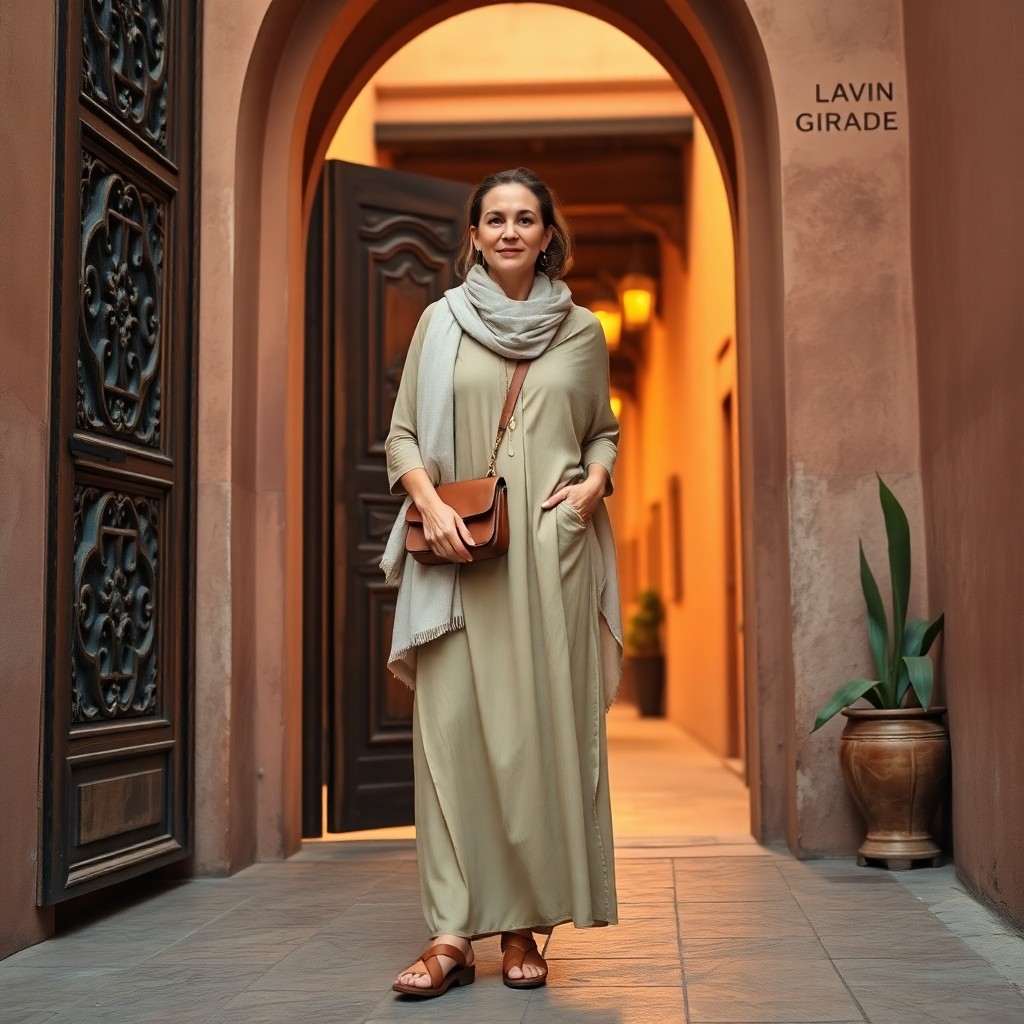
*A practical outfit reference image showing a well-dressed traveler at a riad entrance, demonstrating layered, conservative-appropriate clothing ideal for Morocco's variable climate.*
Getting your clothing right in Morocco solves three problems simultaneously: cultural appropriateness, sun and heat management, and temperature regulation across wildly different microclimates. The solution isn't packing more — it's packing garments that work overtime.
1.1 Modesty Without Overheating — The Layering Formula
Morocco is a Muslim-majority country, and while tourist areas like the Jemaa el-Fna square or the beach clubs of Agadir are relatively relaxed, the baseline expectation is that shoulders and knees stay covered. This applies to everyone, though women tend to attract more attention for revealing clothing, particularly in rural villages and when entering mosques (which, with the exception of the Hassan II Mosque in Casablanca, are generally closed to non-Muslims — but you'll still pass through prayer spaces and conservative neighborhoods constantly).
The key is breathable coverage. Linen, lightweight cotton, and merino wool blends are your best friends because they breathe, dry quickly, and resist odor — critical when you're sweating through a 14-hour travel day from Casablanca airport to a Fes riad. Avoid synthetic fabrics like polyester for base layers; they trap heat and amplify discomfort.
Build your wardrobe around these seven specific garment types: a loose maxi dress or long skirt (women), wide-leg linen trousers (works for any gender), a lightweight long-sleeve button-up shirt, a breathable kaftan or djellaba-style cover-up, a lightweight cardigan or shawl, one pair of comfortable ankle-length pants, and a large pashmina or scarf. That last item is arguably the most versatile thing you'll pack. A pashmina covers your head when you enter a mosque, doubles as a blanket on freezing overnight trains, shields your neck from Sahara sun, and transforms a basic outfit into something dinner-appropriate at your riad.
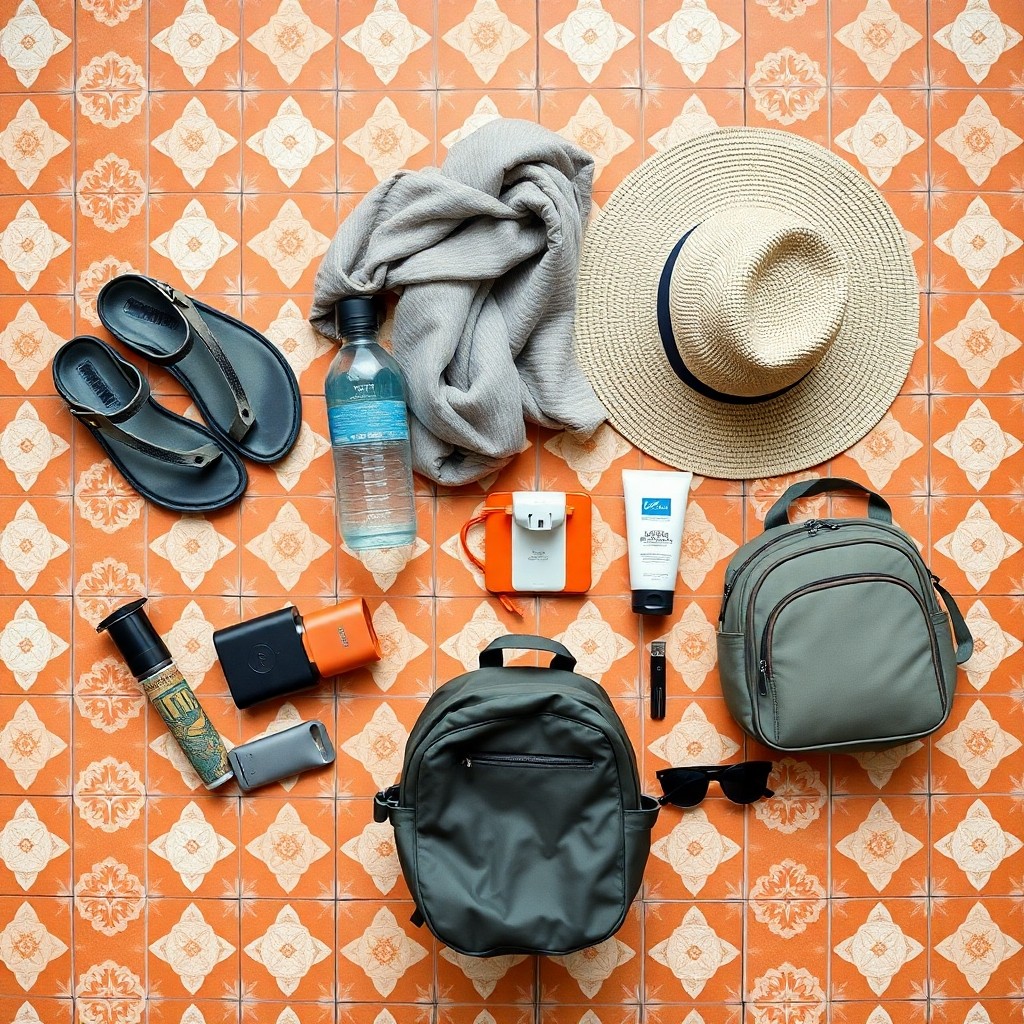
*A visual packing checklist showing the core items every first-time Morocco traveler should bring, styled on an iconic Moroccan tile surface for cultural context.*
1.2 Footwear: Medina Cobblestones to Desert Sand
Your feet will take a beating in Morocco. The medinas of Fes and Marrakech feature narrow alleys paved with uneven cobblestones, often slick with water or olive oil from nearby shops. Desert camps involve deep sand that gets everywhere. Riad staircases are steep, narrow, and sometimes poorly lit.
The 3-shoe strategy solves this: one pair of broken-in closed-toe walking shoes (trail runners or sturdy sneakers work perfectly), one pair of supportive sandals with a back strap (think Birkenstock-style or sport sandals, not flat flip-flops), and one pair of basic flip-flops or slides for shared bathroom use in desert camps and budget riads.
A hard-worn rule: never bring new shoes to Morocco. Break them in for at least two weeks before your trip. Blisters on Day 2 in Fes will ruin your experience faster than almost anything else — you'll easily walk 8 to 12 miles per day navigating the medina's labyrinthine corridors.
1.3 The One Item Most First-Timers Forget
A lightweight, packable fleece or insulated jacket. Desert nights in the Sahara regularly drop to 35–45°F from October through March, even when daytime temperatures exceed 80°F. In the Atlas Mountains, nighttime temperatures at trekking altitude can fall below freezing from November through April. A packable down jacket compresses to the size of a water bottle and weighs under 12 ounces. You will use it. Budget travelers staying in basic riads during winter should also bring a beanie — many older riad buildings have minimal heating, and thick stone walls stay cold long after sunset.
2. Toiletries & Health Kit: What You Can't Easily Find in Morocco
Moroccan cities have pharmacies on nearly every corner, and they're often well-stocked by regional standards. But specific products you rely on at home — particular sunscreen brands, high-concentration DEET repellent, tampon varieties — range from overpriced to unavailable outside Casablanca and Marrakech.
2.1 The "Morocco Gap" List — Products Scarce or Overpriced Locally
High-SPF sunscreen is the most common frustration. Moroccan pharmacies carry local brands, but SPF 50+ options are limited and imported brands like La Roche-Pay or Neutrogena cost two to three times what you'd pay at home. Bring a full bottle (or two) of reef-safe SPF 50 for face and body. DEET-based insect repellent is similarly hard to find in concentrations above 20%; if you're heading to the southern desert regions or oasis areas near Ouarzazate where mosquitoes are active from April through October, bring a 30% DEET formula from home.
For prescription medications, carry them in original packaging with a doctor's note — particularly anything containing stimulants, strong painkillers, or injectable substances. Moroccan customs can be strict, and while most common prescriptions pass without issue, documentation eliminates delays. Tampons deserve a specific mention: they're available in urban pharmacies but brand variety is extremely limited, and applicator-style tampons are rare outside Marrakech and Casablanca. If you have a preferred brand, pack your full supply.
2.2 Digestive & Hydration Defense
Moroccan food is extraordinary, but your stomach needs time to adjust to new spices, oils, and bacterial flora. Roughly 40% of travelers to Morocco experience some form of digestive disruption during their first week — ranging from mild bloating to full traveler's diarrhea. Start taking a daily probiotic at least one week before departure and continue throughout your trip to help your gut microbiome acclimate.
Pack oral rehydration salts (at least 4–6 packets). They're lightweight, cost pennies, and are genuinely effective when your body loses more fluid than it's taking in. For water purification, a SteriPen UV purifier or LifeStraw water bottle eliminates reliance on buying plastic bottled water at every stop — important in remote desert areas where vendors may be sparse. Purification tablets as a backup weigh nothing and take up zero space.
One habit that prevents more stomach issues than any medication: use bottled water for brushing your teeth. Tap water in Morocco is technically treated in major cities, but the mineral content and residual bacteria differ enough from what your system is used to that even small exposures can trigger problems. Keep a dedicated water bottle by the sink and refill it only from sealed bottles.
2.3 Minor Wound & Skin Care
Public restrooms in Morocco — particularly in bus stations, roadside stops, and older medina buildings — frequently lack soap. Carry a 2-ounce bottle of alcohol-based hand sanitizer on a carabiner attached to your daypack. You'll use it multiple times daily.
Blister bandages (like Compeed or moleskin patches) are essential given the walking distances involved. Antiseptic cream prevents minor cuts from becoming infected in dusty desert or medina environments. Lip balm with SPF 30+ is non-negotiable — the combination of dry desert air, wind, and high UV exposure will crack your lips within 48 hours without protection. Pack two: one for your daypack, one for your bedside.
3. Tech & Documents: Staying Connected and Legally Prepared
Morocco's tech infrastructure is solid in cities and patchy in remote areas. Planning your connectivity and document security before departure prevents the most common logistical headaches.
3.1 Power & Connectivity
Morocco uses Type C and Type E plugs — the standard European two-round-pin configuration at 220V. A universal travel adapter with multiple USB ports is the single best tech investment you'll make. Many riads, particularly restored traditional houses, have limited electrical outlets — sometimes only one per room. A multi-USB hub lets you charge your phone, camera, power bank, and e-reader from a single wall socket.
For mobile data, skip international roaming and buy a local SIM at the airport or any city telecom shop. Orange Morocco offers the best coverage in remote desert and mountain areas. Maroc Telecom (now operating under the brand Maroc Telecom) is a close second. Inwi is the budget option with decent urban coverage but weaker signal in the Atlas and Sahara. A 10GB data plan costs approximately 100–150 MAD ($10–$15 USD) and lasts most travelers their entire trip. You'll need your passport to purchase a SIM — Moroccan law requires registration.
Download offline maps before you go. Google Maps works well for major roads, but Maps.me is superior for medina navigation because it includes the narrow pedestrian alleys that Google often misses. Download the Morocco map over WiFi the night before your flight.
3.2 Document Redundancy System
Implement a three-location backup system for every important document. First: store digital scans in cloud storage (Google Drive, Dropbox, or iCloud). Second: email PDF copies to yourself and to a trusted contact back home. Third: carry one physical photocopy of your passport, travel insurance policy, and accommodation confirmations in a separate bag from your original documents. If your daypack is stolen in the Marrakech medina, you'll thank yourself for this system.
Verify your travel insurance covers the specific activities you're planning. Standard policies often exclude camel trekking, motorbike or quad rental, and hiking above certain altitudes. The CDC travel health page for Morocco is an excellent resource for understanding recommended vaccinations and health precautions before you go. If you're adding an Atlas Mountain trek to Toubkal (13,671 feet), confirm your policy covers emergency evacuation at altitude — helicopter rescue from the high Atlas is expensive and not something you want to pay out of pocket.
3.3 Payment & Money Tech
Despite Morocco's growing card acceptance in hotels and upscale restaurants, the economy remains heavily cash-dependent. Souk vendors, grand taxis, small riads, street food stalls, and rural guesthouses operate almost exclusively in cash. Moroccan dirhams (MAD) are a closed currency, meaning you cannot obtain them outside Morocco — exchange cash upon arrival at the airport or withdraw from ATMs in the city.
Notify your bank of your Morocco travel dates to prevent your card from being frozen for suspicious foreign activity. Budget travelers can manage comfortably on 400–600 MAD ($40–$60 USD) per day covering food, local transport, and activities. Mid-range travelers should plan for 800–1,500 MAD ($80–$150 USD) per day including nicer riads, guided tours, and meals at tourist-oriented restaurants. Carry a dedicated travel debit card (Wise, Revolut, or Charles Schwab are popular options) with no foreign transaction fees for ATM withdrawals.
4. Bags, Organization & Packing Strategy
Your bag choice directly impacts your daily comfort in Morocco in ways that don't apply to most European or Asian destinations.
4.1 The Right Bag for Morocco's Terrain
A rolling suitcase is a liability in Morocco. Medina paths are too narrow, riad staircases are too steep, and desert sand jams wheels permanently. The ideal setup is a carry-on-sized travel backpack (40–45 liters) paired with a collapsible daypack (15–20 liters). The main bag travels with you between cities; the daypack holds your essentials during daily exploration.
Two solid options: the Osprey Farpoint 40 (excellent harness system, clamside opening for easy packing) and the Peak Design Travel Backpack (sleek, weather-resistant, expands from 30L to 45L). For budget-conscious travelers, the CabinZero Classic 42L offers solid construction at a lower price point. All three fit within airline carry-on dimensions, which matters because you'll likely take at least one domestic flight or long-distance bus.
4.2 Packing Cube System for Morocco
Divide your main bag into three zones using packing cubes. Zone 1 (top of bag, most accessible): daily wear — your rotation of tops, bottoms, and undergarments. Zone 2 (bottom): desert and mountain gear — fleece, buff, headlamp, thermal base layer — items you won't need until you reach those destinations. Zone 3 (front pocket or lid): one complete clean outfit reserved for travel days and your flight home. A separate stuff sack or dry bag for dirty laundry and wet items (swimwear, sweaty hiking clothes) prevents odor from permeating everything else.
Compression cubes save roughly 30% space compared to loose packing — the difference between a comfortable carry and an overstuffed bag you're wrestling onto overhead bins.
4.3 The "Leave Behind" List
Expensive jewelry invites unwanted attention in crowded souks. Unnecessary electronics (a second camera body you'll barely use, a tablet you'll check twice) add weight without adding value. Every "just in case" item you pack is weight and space stolen from the Moroccan purchases you'll inevitably bring home. Empty bag space is a strategic asset — you'll fill it with hand-tooled leather bags from Fes, hand-painted ceramics from Safi, woven rugs from the Atlas, and bottles of culinary-grade argan oil from cooperatives near Essaouira. Leave 20% of your bag empty on departure day.
5. Seasonal & Region-Specific Add-Ons
Morocco's packing list shifts dramatically depending on your itinerary and travel dates. A static list fails because the country's regional diversity is extreme.
5.1 Desert Camping Additions (Sahara)
The Erg Chebbi dunes near Merzouga and the more remote Erg Chigaga near M'Hamid represent two distinct desert experiences. Erg Chebbi sees average daytime highs of 85–100°F from May through September, dropping to 40–55°F at night. Erg Chigaga, deeper in the Sahara, runs 5–8 degrees hotter by day and 5 degrees colder at night. From November through February, daytime temperatures hover at a pleasant 65–75°F, but nighttime plunges to 32–45°F — frost is not uncommon in January.
Pack a headlamp with fresh batteries (essential for navigating camp paths to the bathroom in total darkness), a buff or neck gaiter to wrap around your face during sandstorms, earplugs for the combination of camp sounds and the 4:30 AM call to prayer from distant villages, and a sleep mask if you're sensitive to light — desert camps have minimal blackout capability.
5.2 Coastal & Surf Towns (Essaouira, Taghazout)
Essaouira's trade winds blow relentlessly from April through October, with average wind speeds of 18–25 mph and gusts exceeding 40 mph. A windbreaker is essential regardless of the season — standing on the Skala de la Ville at sunset in a t-shirt is genuinely cold even in July. Taghazout, Morocco's surf capital, draws wave riders from March through November. Bring a rash guard (long-sleeve for sun and sand protection) and board shorts that dry quickly. Swimwear norms are relaxed on tourist beaches, but walking through town in a bikini top invites stares — cover up with a kaftan or sarong when leaving the sand.
5.3 Atlas Mountain Trekking
Mount Toubkal, North Africa's highest peak at 13,671 feet, is the most popular multi-day trek in Morocco. The standard two-day summit route starts in Imlil (6,300 feet) and climbs to the Toubkal Refuge (10,200 feet) before a pre-dawn summit push. Broken-in hiking boots with ankle support are non-negotiable — the terrain is rocky, steep, and often icy above 10,000 feet from November through April. Trekking poles are available for rent in Imlil for approximately 50 MAD ($5 USD) per day, so you can save pack space by renting locally. UV-protective sunglasses (Category 3 or 4) are mandatory above treeline, where snow glare and altitude intensify sun exposure. Electrolyte packets help prevent altitude-related headaches and fatigue.
5.4 Winter Travel (November–February)
Morocco is not a warm-weather destination in winter. Marrakech averages 45–65°F, Fes drops to 38–55°F, and Chefchaouen in the Rif Mountains regularly sees overnight lows of 30–38°F with occasional snow. A packable down jacket, one thermal base layer (merino wool preferred), wool socks, and a beanie transform a miserable cold-weather experience into a manageable one. Riads with central courtyards are beautiful but drafty — you'll wear your jacket indoors during winter evenings.
Conclusion
Packing for Morocco isn't about bringing everything — it's about bringing the *right* things. The five-pillar framework in this guide — strategic clothing choices, a health kit that bridges the availability gap, tech and document preparation, smart bag selection, and region-specific additions — covers every scenario a first-time traveler will encounter. The goal is to pack lighter than you think you need, with items that earn their place by serving multiple functions.
A pashmina that works as a headscarf, blanket, and sun shield. A fleece that compresses to nothing but saves you on a freezing Sahara night. A multi-USB adapter that turns one riad outlet into a charging station. These are the items that define a well-packed Morocco trip.
Leave 20% of your bag empty. You'll need it for the hand-stitched babouche slippers, the argan oil, the ceramic tagine dish, and the Berber rug you didn't plan to buy but couldn't resist. That's part of the experience.
Frequently Asked Questions
**What should I NOT wear in Morocco as a tourist?** Avoid shorts above the knee, tank tops, and sheer or tight clothing — especially in rural areas, religious sites, and traditional neighborhoods. Women should avoid low-cut tops and mini-skirts. Men wearing shorts in a village near Fes will draw stares; men wearing shorts at a Marrakech beach club will not. Context matters.
**Do I need a travel adapter for Morocco?** Yes. Morocco uses Type C and Type E plugs at 220V. A universal adapter with built-in USB ports is the most practical choice. Most riads have limited outlets, so a hub-style adapter that charges multiple devices from one socket is especially useful.
**Is it safe to drink tap water in Morocco?** No. Stick to bottled or purified water throughout your trip, including for brushing your teeth. Some upscale hotel chains have filtered water systems, but unless explicitly confirmed, assume tap water is unsafe. Most shops sell 1.5L bottled water for 5–8 MAD ($0.50–$0.80 USD).
**What's the best way to carry money in Morocco?** Carry a mix of Moroccan dirhams in cash and a travel-friendly debit card for ATM withdrawals. USD and EUR are easily exchanged at banks and official exchange offices. ATMs are widely available in cities but rare in rural areas and desert towns, so withdraw cash before leaving urban centers.
**How much should I pack for a 10-day trip to Morocco?** Aim for 7–10 day outfits maximum. A practical capsule: 5 tops, 3 bottoms, 2 layers, 1 dress/formal option, 7 pairs of underwear, 4 pairs of socks, and a mid-trip laundry stop (most riads offer laundry service for 50–100 MAD). This keeps your bag manageable while ensuring you always have clean clothes.
**Meta Description:** Planning your first trip to Morocco? This essential packing list covers everything from conservative dress codes and desert gear to SIM cards, health kits, and region-specific add-ons.