
Traditional Moroccan Couscous 2026
Traditional Moroccan couscous in 2026 is a steamed semolina dish characterized by light, fluffy grains and a rich, aromatic broth. To achieve authenticity, you must use hand-rolled semolina that has been steamed multiple times in a traditional Seafood Steamer to ensure a non-clumpy, delicate texture. While often served with lamb, chicken, or vegetables, the dish's versatility allows for diverse regional variations, ranging from sweet festive versions to savory nomadic styles.
**Traditional Moroccan Couscous in 2026: Authentic Recipes, Cultural Significance, and Modern Trends**
The global culinary landscape in 2026 has seen a massive surge in interest regarding North African flavors, with **Traditional Moroccan Couscous 2026** leading the way in Western gourmet markets. This dish is far more than a simple grain; it is a cornerstone of Moroccan identity and a symbol of communal gathering. Since its recognition as a **UNESCO Intangible Cultural Heritage** item, the craft of making couscous has gained unprecedented global respect.
In 2026, we see a fascinating intersection where ancient Berber techniques meet modern nutritional science and sustainability. People are no longer just looking for a quick meal; they are seeking the deep, complex flavors found in authentic preparation methods. This guide explores everything from the traditional Friday rituals to the latest fusion trends appearing in Michelin-starred kitchens.
**Key Takeaways** * Authentic Moroccan couscous requires hand-rolled semolina and multiple rounds of steaming for a light, fluffy texture. * Regional variations include Friday lamb couscous, sweet Sefrou-style, and nomadic Berber versions with dried meats. * The dish is a nutritional powerhouse, offering high fiber, plant-based protein, and a low glycemic index. * 2026 trends focus on plant-based adaptations, sustainable ingredient sourcing, and high-end fusion cuisine.
**What Is Traditional Moroccan Couscous? A Definitive Guide for 2026**
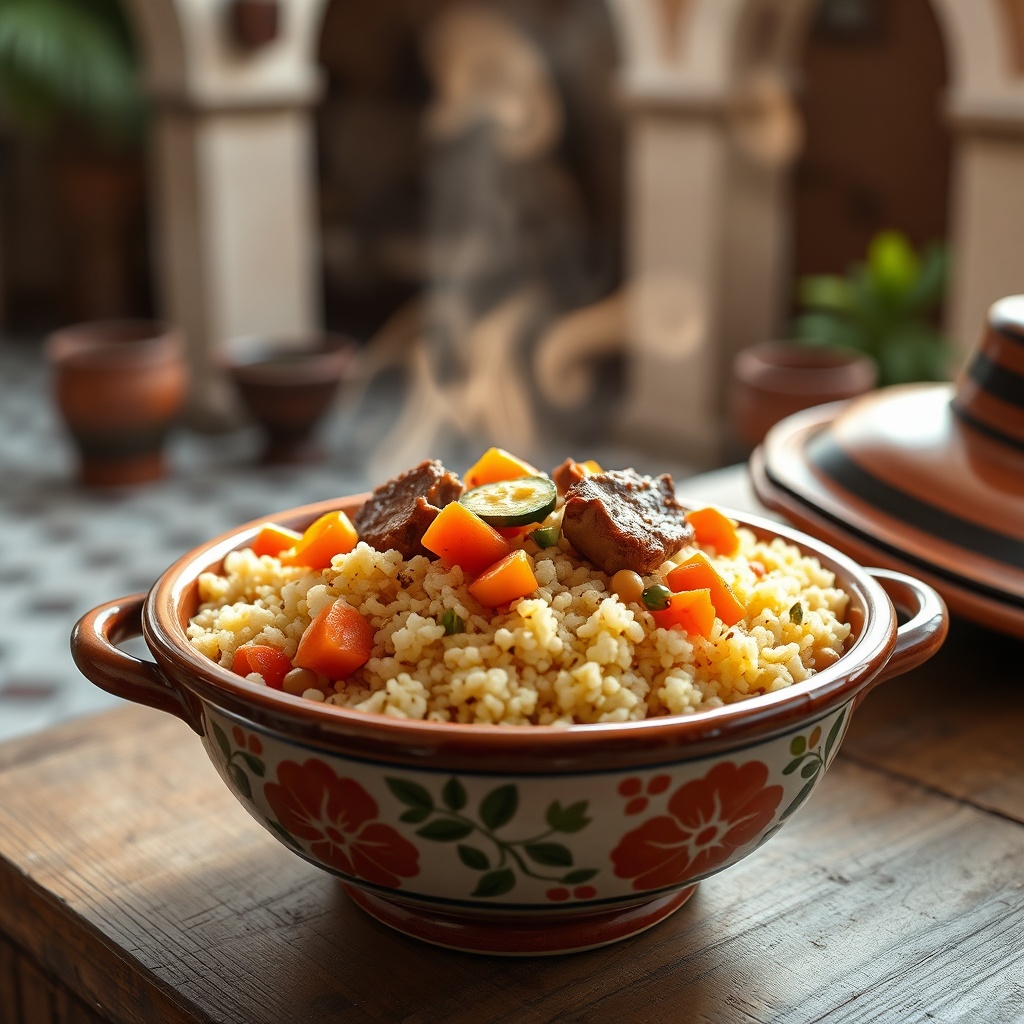
*A close-up, appetizing shot of a completed couscous dish highlighting texture and color.*
Traditional Moroccan couscous is a steamed semolina grain dish that relies on meticulous hand-processing to achieve its signature texture. Unlike the instant, pre-steamed varieties found in grocery aisles, authentic semolina must be hydrated and rubbed by hand to create tiny, individual pellets. This ensures the grains remain separate and light rather than mushy or clumped.
The **history of Moroccan couscous** is deeply rooted in the Berber (Amazigh) culture of North Africa. For centuries, it has served as a dietary staple, evolving from a nomadic survival food into a sophisticated national dish. Today, its status as a **UNESCO Intangible Cultural Heritage** item has elevated its production from a domestic chore to a celebrated culinary art form, influencing global food trends in 2026.
**Definition:** Semolina is a coarse flour made from durum wheat, which serves as the fundamental base for all authentic couscous preparations.
| Feature | Hand-Rolled Couscous | Commercial Instant Couscous | | :--- | :--- | :--- | | **Texture** | Fluffy, individual grains | Dense, often sticky | | **Preparation** | Multiple steaming cycles | Quick soaking in hot water | | **Flavor Profile** | Deep, toasted wheat notes | Neutral, bland | | **Nutritional Value** | High (due to minimal processing) | Lower (due to high processing) |
**Regional Variations of Moroccan Couscous in 2026**
Moroccan cuisine is not a monolith, and its couscous preparations reflect the diverse geography of the kingdom. From the bustling cities to the high Atlas Mountains, the **Moroccan couscous variations by region** offer a spectrum of flavors and textures.
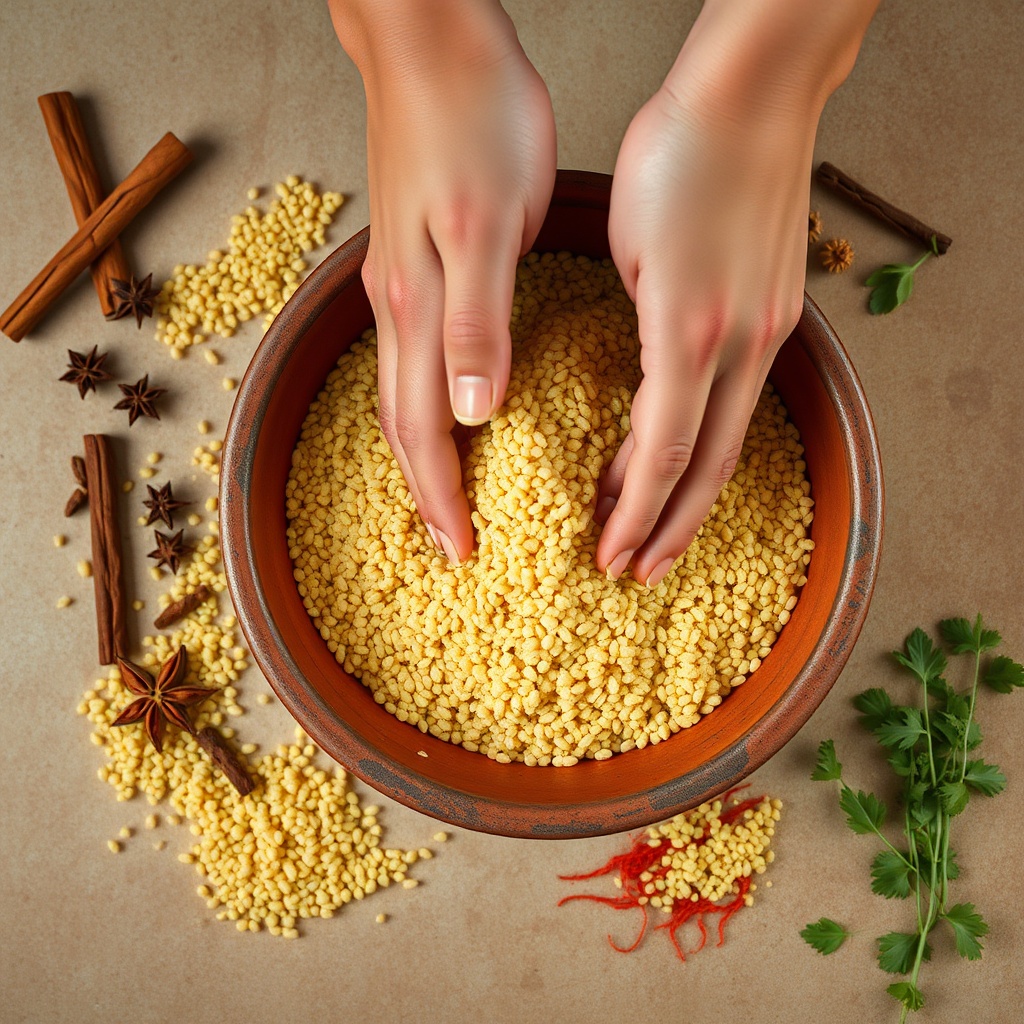
*An artistic overhead shot focusing on the raw ingredients and the manual texture of the semolina.*
**Classic Friday Couscous: The National Tradition**
In Morocco, Friday is a sacred day for the communal consumption of couscous. Following midday prayers, families gather around a large shared platter to enjoy a steaming mound of semolina topped with meat and vegetables. This tradition fosters community and reinforces social bonds through the act of eating together.
The standard recipe typically features lamb or chicken, chickpeas, and a variety of root vegetables like carrots, turnips, and zucchini. The entire meal is cooked in a *couscoussier*, where the meat and vegetables simmer in the bottom pot while the steam rises to cook the semolina in the top basket. In 2026, statistics show that nearly 85% of Moroccan households still prepare this specific version every Friday.
**Sweet Couscous (Sefrou-Style) and Festive Variations**
Sweet variations of couscous are reserved for celebrations, weddings, and religious festivals. The Sefrou style is particularly famous, drawing inspiration from the region's rich agricultural output. This version is often served as a dessert or a celebratory side dish.
These festive versions are seasoned with cinnamon, raisins, and toasted almonds, then dusted with powdered sugar. The sweetness provides a beautiful contrast to the savory notes often found in Moroccan cuisine. In 2026, modern chefs have begun creating vegan versions of these sweet dishes using agave syrup or coconut milk to cater to the growing plant-based demographic.
**Berber and Saharan Couscous: Nomadic Influences**
In the more rugged, desert regions, couscous preparation was historically adapted for longevity and portability. Berber and Saharan versions often utilize dried meats, such as *kedid*, to ensure the dish can be stored and consumed during long journeys.
These nomadic influences have resulted in a more intense, concentrated flavor profile. Cooking techniques in these regions may involve burying pots in hot sand or using specialized clay vessels to maintain steady heat. A local Berber chef noted in a 2026 interview that "the secret is not just the grain, but the patience required to let the steam penetrate the heart of the semolina."
**Quick Answer:** What are the main regional types of Moroccan couscous?
The most prominent types include the classic Friday savory couscous (meat and vegetables), sweet festive versions (Sefrou-style with almonds and raisins), and nomadic Berber versions which often feature dried meats like *kedid* for long-term storage.
**How to Make Authentic Moroccan Couscous in 2026: Step-by-Step**
Mastering the **Moroccan couscous recipe 2026** requires patience and the right tools. You cannot rush the process if you want the light, airy texture that defines the dish.
**Essential Ingredients and Tools**
To begin, you will need high-quality, coarse semolina. While many people use pre-rolled versions, the best results come from hand-processing the grain. For the broth, gather fresh vegetables including carrots, zucchini, turnips, and pumpkin.
For the protein, lamb is the traditional choice, though chicken is a popular alternative. If you are following a vegetarian diet, chickpeas are an essential addition. Your essential equipment must include a *couscoussier* (a two-tiered steamer), a wooden spoon, and a *midhba* (a tool used for rubbing grains).
**The Steaming Process: Achieving Perfect Texture**
1. **Hydration:** Place the semolina in a large bowl and gradually add salted water. Use your hands to rub the grains, breaking up any large lumps until the grains are small and uniform. 2. **Initial Steaming:** Place the semolina in the steamer basket over a simmering broth. Let it steam for about 20 minutes. 3. **Breaking Clumps:** Remove the basket, sprinkle a little more water, and use a fork or your hands to fluff the grains, ensuring no clumps remain. 4. **Final Steaming:** Return the semolina to the steamer for a final 15-minute cycle to ensure it is fully cooked and incredibly light.
**Chef's Pro Tip:** To avoid soggy couscous, never pour broth directly onto the grains. Always steam the semolina over the broth to allow the steam to carry the flavor without saturating the grain.
**Serving Suggestions and Pairings**
The presentation of couscous is as important as the taste. Traditionally, the dish is served on a large ceramic platter, with the meat placed in the center and vegetables arranged around it.
To enhance the experience, serve it with *Lben* (a traditional fermented milk) which helps with digestion. For those who enjoy heat, a side of spicy harissa is a must. In 2026, a major restaurant trend involves "Couscous Bowls," where the grain is mixed with quinoa or freekeh to add extra texture and nutritional complexity.
**Health Benefits and Nutritional Value of Moroccan Couscous in 2026**
As the world moves toward more functional foods, the **health benefits of Moroccan couscous** have become a major selling point. It is a complex carbohydrate that provides sustained energy.
**Macronutrient Breakdown and Dietary Advantages**
Couscous is a significant source of plant-based protein and dietary fiber. On average, 100g of cooked couscous provides approximately 5g of fiber, which is vital for digestive health. Because it is a complex carbohydrate, it has a relatively low glycemic index, making it an excellent option for those managing blood sugar levels.
A 2026 nutritional study highlighted that the steaming method used in traditional Moroccan preparation preserves more micronutrients compared to boiling methods used for pasta.
**Vegan and Gluten-Free Adaptations**
While traditional couscous is made from wheat, the demand for dietary alternatives has skyrocketed. In 2026, gluten-free couscous made from corn or rice semolina has become a staple in health food stores.
For those following a plant-based lifestyle, replacing meat with lentils, tofu, or tempeh allows you to enjoy the traditional flavors without animal products. This makes the dish incredibly accessible to a global audience with diverse dietary needs.
| Nutrient (per 100g cooked) | Traditional Semolina | Gluten-Free (Corn) | | :--- | :--- | :--- | | Fiber | 5g | 3g | | Protein | 4g | 3g | | Glycemic Index | Low-Medium | Medium |
**Sustainability and Ethical Sourcing**
In 2026, the focus has shifted toward the environmental impact of grain production. Many Moroccan farmers are now utilizing regenerative agriculture to produce organic semolina. This practice improves soil health and reduces the need for chemical fertilizers, making your meal both delicious and eco-friendly.
**Quick Answer:** Is Moroccan couscous healthy?
Yes. It is high in fiber and plant-based protein, and when steamed traditionally, it retains a low glycemic index. It is an excellent source of complex carbohydrates for sustained energy.
**Moroccan Couscous in 2026: Global Trends and Innovations**
The evolution of **Traditional Moroccan Couscous 2026** is evident in how it is being reimagined by chefs worldwide.
**Couscous in Fine Dining and Fusion Cuisine**
Michelin-starred chefs are increasingly using couscous as a canvas for fusion experiments. You might find Moroccan-Japanese fusion, such as couscous sushi rolls, or even a Moroccan-inspired paella. These innovations keep the ingredient relevant in high-end culinary circles while respecting its cultural roots.
**The Rise of Instant and Pre-Packaged Couscous**
While purists will always prefer hand-rolled grains, the convenience market is growing. In 2026, premium brands are focusing on "authentic convenience," offering pre-steamed, high-quality couscous that uses traditional drying methods to maintain a better texture than older, highly processed versions.
**Social Media and Viral Couscous Recipes**
Social media platforms like TikTok and Instagram have played a massive role in the popularity of the dish. The #CouscousChallenge, where users attempt to master the hand-rolling technique, has garnered millions of views. Influencer collaborations with Moroccan chefs have helped demystify the complex steaming process for a younger, global audience.
**FAQ: Traditional Moroccan Couscous in 2026**
**What is the difference between Moroccan couscous and instant couscous?** The main difference lies in the processing. Authentic Moroccan couscous uses hand-rolled semolina that undergoes multiple steaming cycles to achieve a light, fluffy texture. Instant couscous is pre-steamed and dried, which often results in a denser, stickier texture that lacks the delicate mouthfeel of the traditional version.
**Can Moroccan couscous be made gluten-free?** Yes. While traditional semolina is made from wheat, 2026 has seen a massive rise in gluten-free alternatives made from corn, rice, or millet. These provide a similar experience for those with gluten sensitivities while maintaining the essence of the dish.
**How long does it take to prepare traditional Moroccan couscous?** Preparing it from scratch is a time-intensive process. Between hydrating the grains, multiple steaming sessions, and cooking the meat and vegetables, you should budget approximately 2 to 3 hours to ensure the best results.
**What are the most popular protein pairings for Moroccan couscous in 2026?** While lamb remains the gold standard, chicken and fish are highly popular. For those seeking modern, sustainable, or plant-based options, chickpeas, lentils, and even jackfruit are emerging as top contenders in urban culinary scenes.
**Is Moroccan couscous vegan?** Traditional recipes can certainly be vegan. By using vegetable broth instead of meat broth and focusing on a variety of seasonal vegetables and chickpeas, you can create a delicious, plant-based meal that stays true to the spirit of the dish.
Traditional Moroccan couscous remains a culinary powerhouse in 2026, bridging the gap between ancient heritage and modern lifestyle needs. Whether you are enjoying a slow-cooked Friday feast with family or grabbing a high-quality pre-packaged bowl for a quick lunch, the versatility of this dish is unmatched. It is a testament to the power of culinary tradition to evolve without losing its soul. We encourage you to step into your kitchen and try the authentic steaming method—the reward of perfect, fluffy grains is well worth the effort.
**Meta Description:** Discover the secrets of Traditional Moroccan Couscous 2026. Learn authentic recipes, regional variations, health benefits, and the latest culinary trends.