
Top 7 Must‑Visit Moroccan Souks For Berber Handicrafts
The bustling corridors of Morocco’s souks are more than marketplaces; they are living museums where Berber artistry pulses through every woven thread and hand‑carved detail. When you wander past the fragrant spice stalls and glittering lanterns, you are stepping into a tradition that stretches back over a millennium. Recent tourism reports estimate that roughly **2.5 million visitors** explore Moroccan souks each year, drawn by the promise of authentic crafts and vibrant culture. As a Berber weaver from the High Atlas explains, “Every knot I tie carries the memory of my ancestors; the market is where that memory meets the world.” This guide walks you through the **Top 7 Must‑Visit Moroccan Souks for Berber Handicrafts**, offering a roadmap that blends history, hands‑on experiences, and ethical buying practices. Whether you are mapping a Moroccan travel guide itinerary or simply craving a piece of Berber culture to bring home, you can Explore Kenzadi's Moroccan décor for inspiration. The souks below promise unforgettable encounters.
1. The Historical Roots that Shape Today’s Souk Selections
Centuries of tribal customs dictate the colors, symbols, and techniques you’ll discover in each market. Berber weaving history reveals that distinct motifs—such as the diamond‑shaped “Tazoult” of the Ait Ben Haddou region—originated as protective symbols for nomadic families. Over time, these designs migrated from remote mountain villages to bustling souk stalls, evolving without losing their original meanings.
1.1. Tribal motifs that travel from the Atlas to the market stalls
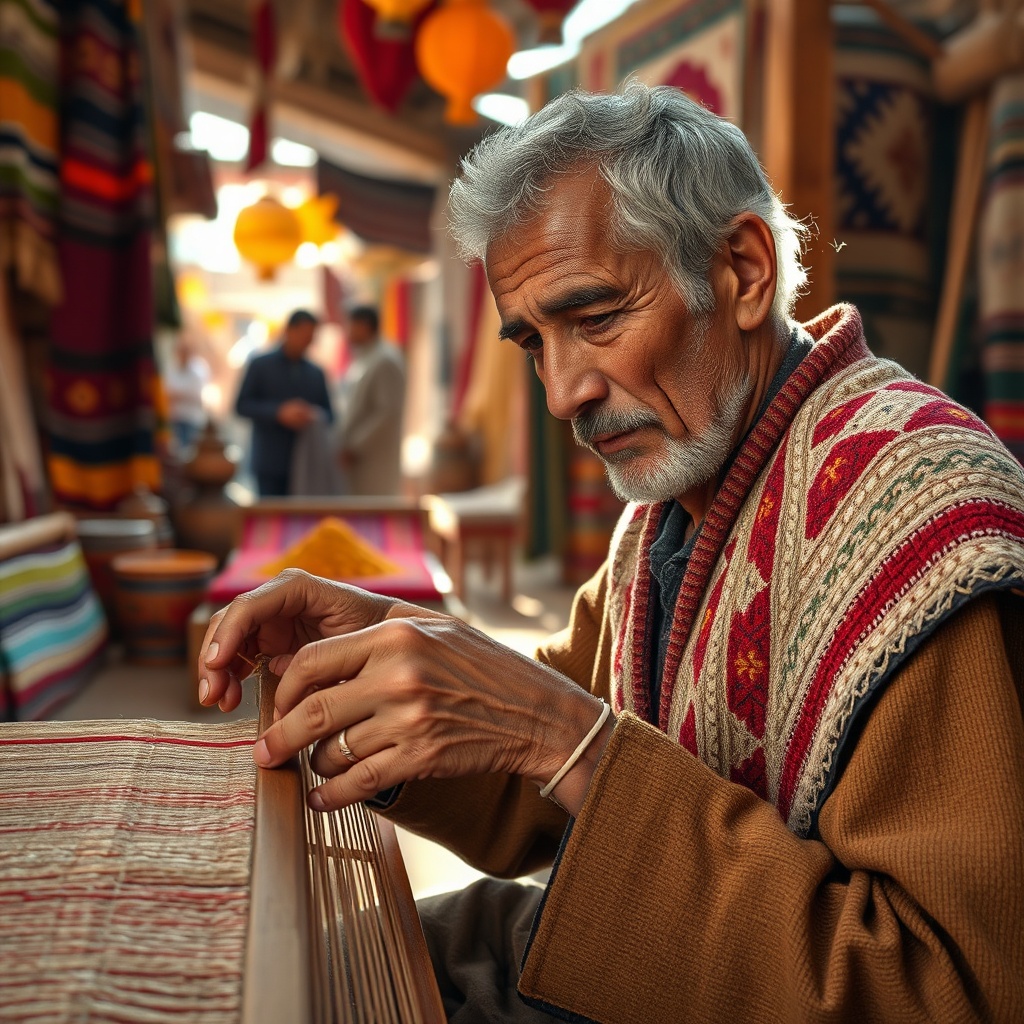
*A detailed, authentic portrayal of a Berber artisan weaving traditional motifs, highlighting the skill and cultural significance of Moroccan souks.*
Amazigh patterns like the “Zigzag of the Rif” appear on both traditional blankets and contemporary scarves, linking high‑altitude shepherds to city shoppers.
1.2. How colonial trade routes influenced the diversity of goods
During the 19th century French protectorate, caravan routes expanded, introducing new dyes from Spain and metalwork techniques from Italy, which now coexist with indigenous styles.
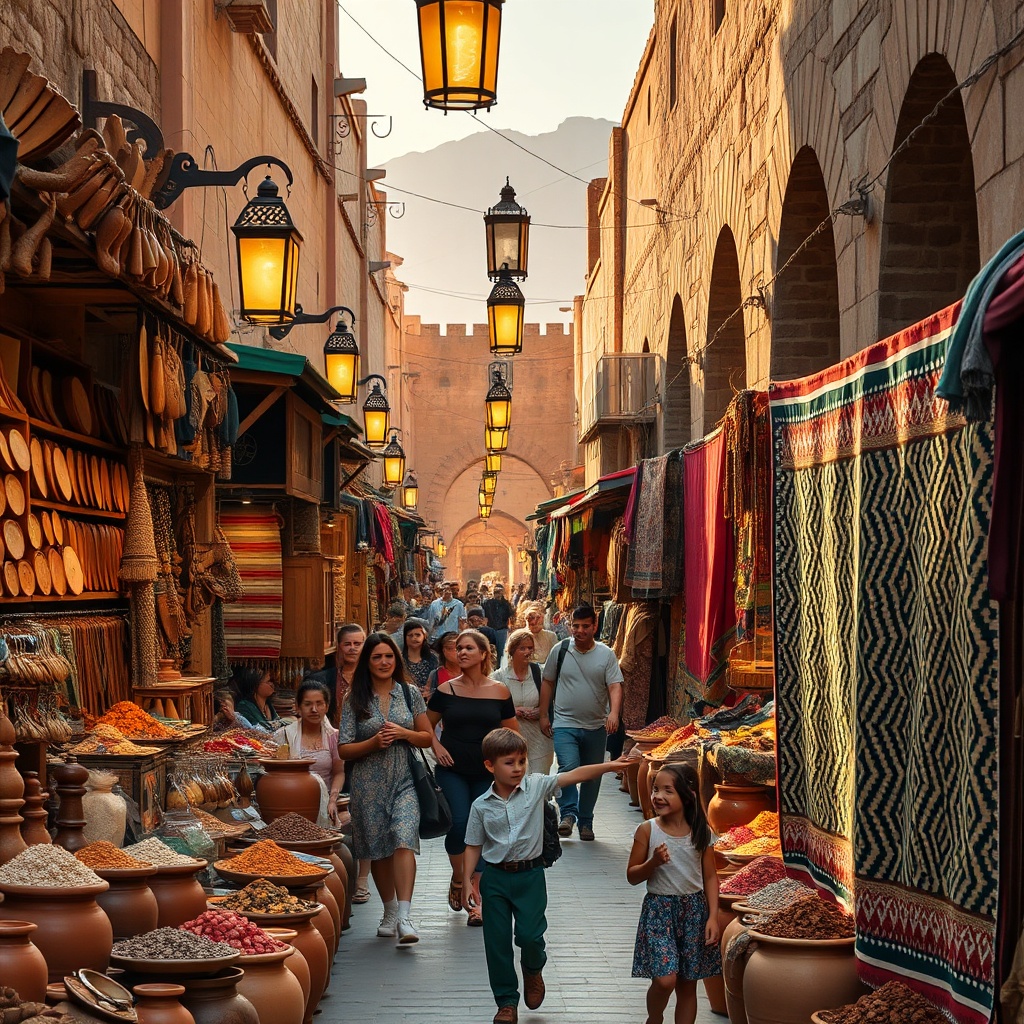
*An immersive view of a lively souk, illustrating the diversity of crafts and the global appeal of Berber artistry.*
1.3. Preservation efforts: UNESCO listings & local guilds
UNESCO currently recognizes **four** Moroccan craft sites, and local guilds in Fez and Marrakech certify over **800** artisans who adhere to age‑old standards, ensuring that each piece you purchase reflects genuine heritage.
2. Souk Spotlight: Marrakech’s Jemaa el‑Fnaa & the Enchanting Souk Semmarine
Marrakech’s iconic square serves as the gateway to a labyrinth of alleys where Berber rugs and ceramics thrive. For a focused two‑hour immersion, start at the north‑west entrance of Jemaa el‑Fnaa, then follow the stone‑paved lane that leads directly to Souk Semmarine. You can find unique pieces like an Authentic Beni Ouarain rug in these alleys.
2.1. Entry points & optimal routes for a focused 2‑hour tour
Begin at the “Bab Doukkala” gate, head east for 150 meters, turn left onto Rue des Banques, and you’ll arrive at the first cluster of hand‑woven rugs. Continue straight for another 100 meters to reach the ceramic tile workshops.
2.2. Must‑see stalls: artisan‑run vs. wholesale vendors
Artisan stalls typically price a 2 m² Berber rug between **1,200 MAD** and **1,800 MAD**, while wholesale rows may list the same size for **900 MAD** but lack the personal story of the weaver. Look for handwritten tags that include the maker’s name and village.
2.3. Hidden gems: the tiny workshop behind the main lane
A narrow doorway off the third alley houses a master weaver who still uses a hand‑loom inherited from his grandfather. He offers a quick demonstration for **50 MAD**, after which you can purchase a custom‑size rug at a negotiated rate.
3. Artisan Workshops: Watching Berber Handicrafts Come to Life
Seeing a craft unfold before your eyes deepens appreciation and helps you gauge quality. Several souks schedule daily demonstrations, allowing you to observe the rhythm of creation.
3.1. Top 3 souks that host daily weaving demonstrations
- **Souk el‑Attarine (Fez)** – Mon‑Fri, 10 am‑2 pm - **Souk Laghzal (Meknes)** – Tue‑Sat, 11 am‑3 pm - **Souk Taznakht (Dades Valley)** – Daily, 9 am‑1 pm
Each session showcases the full process from dyeing wool in natural indigo to knotting the final pattern.
3.2. Step‑by‑step guide to booking a private workshop session
1. Identify the desired souk and note the demonstration times. 2. Contact the workshop manager via the listed phone number or on‑site kiosk. 3. Confirm the date, number of participants, and any special design requests. 4. Pay a 30 % deposit to secure the slot; the balance is due after the session.
3.3. How to ask the right questions to assess craftsmanship
“Which region did the wool originate from?” – authentic Berber rugs use highland sheep wool. “How long does it take to complete a 2 m² rug?” – a genuine hand‑loom piece requires **10‑12 days** of continuous work. “What natural dyes are employed?” – traditional palettes include **indigo**, **madder root**, and **copper sulfate** for reds.
4. Mastering the Art of Bargaining for Authentic Berber Goods
Negotiation in the souks is a cultural dance that respects both buyer and maker. Understanding pricing logic helps you secure fair deals without undervaluing the artisan’s labor. You can also find unique items to negotiate for, such as a Moroccan leather stuffed pouf, by exploring the stalls.
4.1. The psychology of price‑setting in traditional souks
Vendors typically mark up raw material costs by **150‑200 %** to cover loom maintenance and family expenses. Knowing this range lets you propose a price that feels reasonable to both parties.
4.2. 5 proven tactics (e.g., “the silent walk away”) with real‑world examples
1. **Start low** – Offer **40 %** of the listed price for a medium‑size rug; the seller may counter at **75 %**. 2. **Bundle items** – Combine a small basket with a scarf; sellers often reduce the total by **10 %**. 3. **Show genuine interest** – Ask about the weaving technique; sellers appreciate curiosity and may lower the price. 4. **The silent walk away** – Pause and step back; many vendors call you back with a better offer. 5. **Use local currency** – Paying in **MAD** rather than foreign currency signals seriousness and can shave off a few hundred dirhams.
4.3. When to say “yes”: recognizing quality cues that justify higher costs
A rug with a **tight knot density** of **120 knots per square inch**, natural dye hues that do not bleed, and a hand‑stitched fringe indicates superior craftsmanship. In such cases, paying the higher end of the price range ensures the artisan receives a just reward.
5. Sustainable & Ethical Buying: Supporting the Future of Berber Craftsmanship
Your purchase can become a catalyst for community empowerment when you choose certified ethical products.
5.1. Certifications & labels to look for in the souk
- **Fair‑Trade Morocco** – green leaf emblem on tags. - **Eco‑Artisan** – blue wave symbol indicating natural dyes only. - **UNESCO Heritage** – red ribbon badge confirming recognized traditional techniques.
5.2. How to verify that a product is genuinely handcrafted
1. Examine the back of the item; hand‑woven pieces reveal uneven edges and visible loom marks. 2. Ask the seller to demonstrate a small portion of the process; a true artisan will gladly show the loom. 3. Request a receipt that lists the maker’s name, village, and certification numbers.
5.3. Post‑purchase impact: stories of artisans whose lives changed
In the village of **Ait Melloul**, a weaver named **Fatima** increased her monthly income from **1,200 MAD** to **3,500 MAD** after selling a line of eco‑friendly scarves certified by Eco‑Artisan. The extra earnings allowed her to enroll her two children in school and purchase a solar panel for her home.
Conclusion
From the ancient tribal motifs that echo across the Atlas to the modern ethical labels guiding conscious shoppers, the journey through the **Top 7 Must‑Visit Moroccan Souks for Berber Handicrafts** offers more than souvenirs—it provides a connection to living heritage. Armed with historical insight, navigation tips, bargaining strategies, and sustainability guidelines, you can explore each market with purpose and confidence. The next time you step into a bustling souk, remember that every knot, bead, and glaze carries a story waiting to become part of yours.
**Meta Description:** Discover the seven essential Moroccan souks for authentic Berber crafts, with navigation tips, bargaining advice, and ethical buying guidance.
Frequently Asked Questions
1. **What are the most authentic Berber handicrafts to buy in Moroccan souks?** - Hand‑woven rugs, silver bejewelled jewelry, carved wooden tea sets, painted pottery, and woven baskets are the most genuine items reflecting Berber tradition.
2. **How can I tell if a Berber rug is truly handmade?** - Look for uneven fringe, natural dye stains, and a knot density of at least 100 knots per square inch; a quick “back‑side” inspection often reveals loom marks.
3. **Is it acceptable to bargain in all Moroccan souks?** - Bargaining is expected in most traditional stalls, but fixed‑price shops, especially those selling imported goods, usually do not entertain negotiation.
4. **Where can I find eco‑friendly Berber products in Morocco?** - Seek out the **Eco‑Artisan** label in souks of Marrakech, Fez, and the Dades Valley, where natural dyes and sustainably sourced wool are standard.
5. **What is the best time of year to visit Moroccan souks for Berber crafts?** - Spring (March‑May) and autumn (September‑November) offer mild weather, fewer crowds, and vibrant market activity, making it ideal for exploring crafts.