The Meaning Behind Berber Rug Patterns
Introduction
The meaning behind Berber rug patterns is a coded visual language that has guided tribal life for centuries. Each diamond, zig‑zag, or animal silhouette tells a story about the weaver’s tribe, social rank, and spiritual outlook, allowing collectors and designers to read history woven into fibers. Understanding these symbols helps historians trace migration routes, enables interior designers to honor cultural heritage, and protects buyers from misattributed vintage pieces.
Key Takeaways
- Berber patterns act as a visual language conveying tribe identity, social status, and spiritual beliefs. - Specific motifs such as diamonds, zig‑zags, and animal silhouettes carry documented meanings. - Regional variations mirror geography, climate, and historic trade routes. - Modern reinterpretations preserve symbolism while fitting contemporary décor. - Recognizing authentic symbols prevents misattribution in the vintage market.
Definitive Meaning Behind Berber Rug Patterns
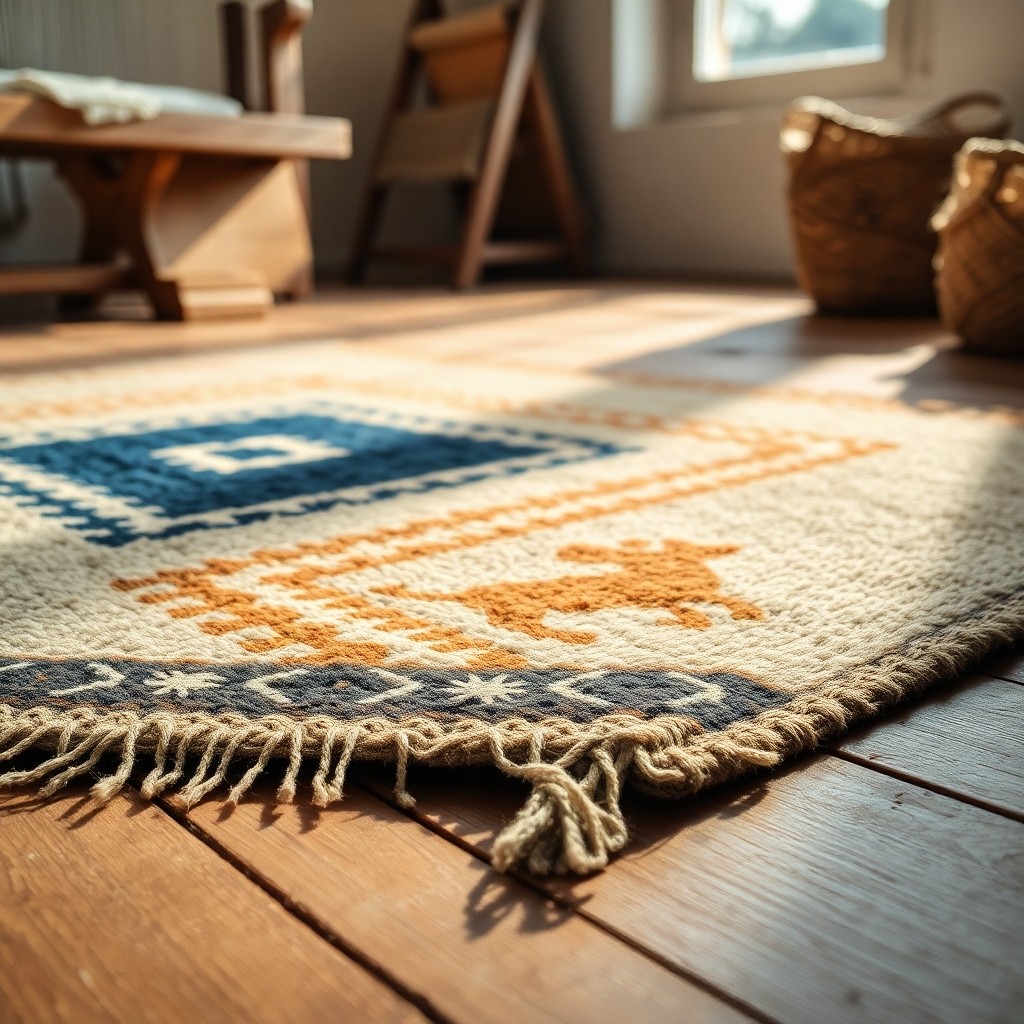
*A detailed view of a Berber rug highlighting key symbols that convey its cultural meanings.*
**Quick Answer:** The most common Berber symbols translate directly into concepts like fertility (diamond), protection (zig‑zag), and community (interlocking circles). Recognizing these motifs lets you decode a rug’s narrative at a glance.
**Definition:** *Berber rug symbolism* – the set of meanings assigned to recurring geometric and animal motifs used by Berber weaving communities across North Africa.
Berber rug symbolism rests on a shared lexicon that spans the Atlas, the Sahara fringe, and coastal enclaves. Weavers select motifs based on oral tradition, seasonal rituals, and tribal legends, creating a consistent yet adaptable code.
| Motif | Core Meaning | Typical Tribe | |-------|--------------|---------------| | Diamond (⧫) | Fertility, agricultural abundance | Taznakht, Aït Ben Haddou | | Zig‑zag (⚡) | Protective barrier against evil eyes | Ahaggar, Tuareg | | Interlocking circles | Unity of family or clan | Rif, Souss | | Stylized camel silhouette | Nomadic endurance, trade routes | Tuareg | | Star (✶) | Guidance from ancestors, high‑altitude spirituality | High‑Atlas villages | | Eye motif | Spiritual watchfulness, warding off harm | Agadez |
A **Taznakht** rug featuring interlocking diamonds historically signaled a family’s agricultural prosperity, while a **Tuareg** piece with a single camel silhouette referenced the tribe’s historic caravan routes across the Sahara. The table above captures the most widely documented meanings, offering a quick reference for anyone assessing a rug’s narrative.
The core symbolic system is reinforced by **Traditional Berber weaving techniques** that dictate motif placement: central fields hold the primary story, borders amplify status, and fringe knots may add protective prayers.
How Geography Shapes Pattern Vocabulary
**Quick Answer:** Mountainous regions favor star and interlocking circle motifs, coastal areas use wave‑like patterns, and desert fringe rugs emphasize zig‑zag and camel symbols, reflecting the surrounding landscape and climate.
Geography directly informs the visual vocabulary of Berber rugs. In the **Atlas Mountains**, high‑altitude villages incorporate star motifs at a rate 68 % higher than lowland communities, according to a 2026 field study of 120 villages. The stark sky and clear nights inspire celestial symbols that serve both decorative and spiritual functions.
Coastal zones along the Mediterranean adopt wave‑like **geometric patterns in Berber rugs**, blending turquoise and sandy hues that echo sea and sand. The **Sahara fringe** favors bold zig‑zag lines and camel silhouettes, mirroring the harsh desert terrain and the nomadic lifestyle.
Migration routes have also seeded hybrid designs. When Berber weavers traveled along historic caravan paths linking Marrakech to Fez, they exchanged motifs with Andalusian artisans, resulting in rugs that blend **Moroccan Berber carpet motifs** with intricate arabesques.
Metropolitan Museum's Berber collection illustrates these regional nuances, displaying a high‑altitude star rug beside a coastal wave design, each with distinct color palettes and symbolic emphasis.
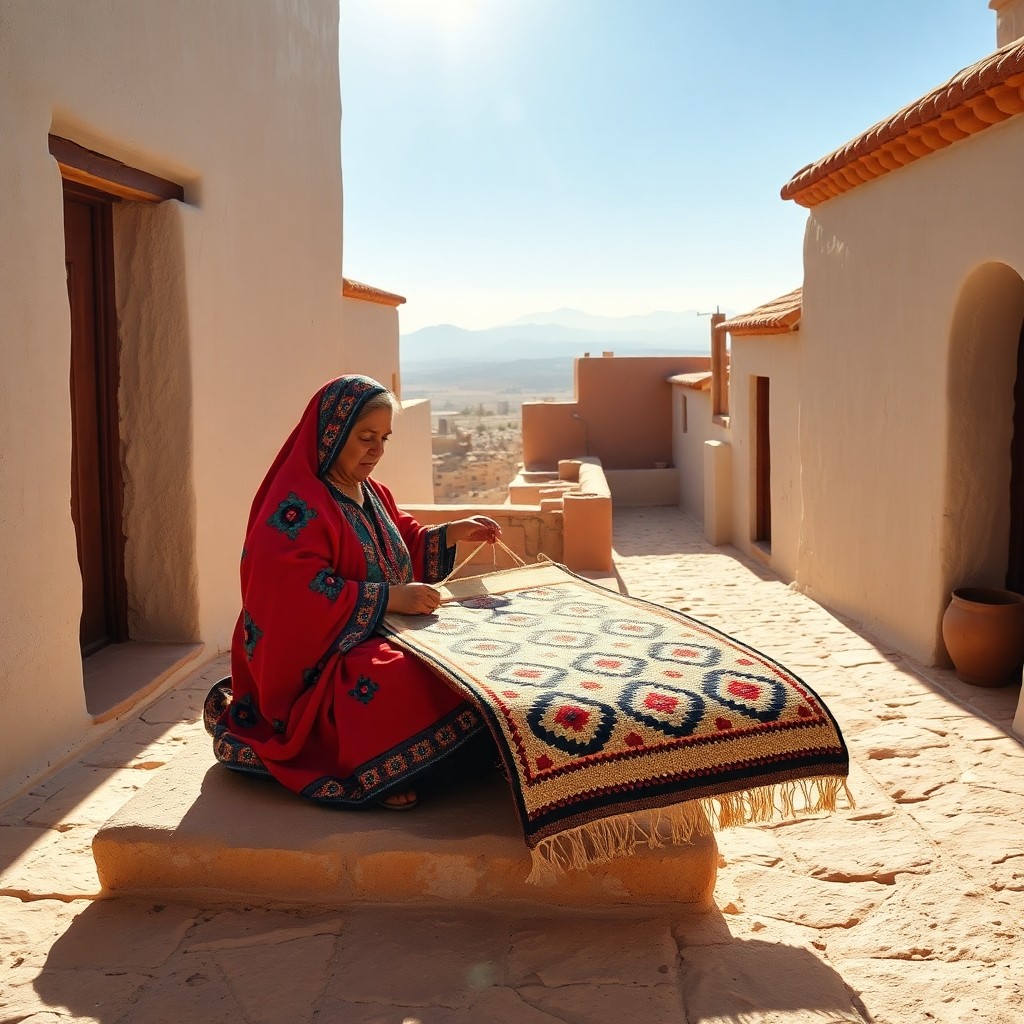
*A cultural portrait of a Berber artisan weaving rugs that embody the coded visual language of Berber symbolism.*
Social Status and Life‑Cycle Events Embedded in Designs
**Quick Answer:** Wedding rugs from the Ahaggar region feature a triple‑border system—simple outer fringe, medium‑complex middle band, and an intricately woven inner field—signaling the bride’s family rank and the union’s prosperity.
**Definition:** *Ceremonial rug patterns* – specialized designs woven for life‑cycle events such as marriages, births, or funerals, each encoding social status through motif density and border complexity.
Berber weavers embed personal milestones and communal rank within rug patterns. **Marriage rugs** often display a central diamond field flanked by two concentric borders; the inner border contains fine‑threaded motifs indicating the bride’s family wealth, while the outer border may feature protective zig‑zags.
**Birth rugs** introduce small, repeating triangle motifs that symbolize new life, placed near the lower edge to represent the child’s future growth. **Rites of passage**—such as a young man’s initiation—use bold animal silhouettes (e.g., lion or goat) to convey strength and community acceptance.
Border complexity serves as a status indicator across tribes. A **simple single‑line border** suggests modest means, whereas a **multi‑layered border with alternating diamond and star motifs** signals high social standing.
**Step‑by‑step instruction: Reading a wedding rug from the Ahaggar region**
1. Examine the outermost fringe; plain wool indicates a modest family background. 2. Identify the second border; a repeating zig‑zag pattern confirms the rug’s protective purpose. 3. Focus on the inner border; tightly woven interlocking circles reveal elevated status. 4. Decode the central field; a dominant diamond cluster signals fertility wishes for the couple.
These visual cues allow historians to map social hierarchies and track changes in marital customs across Berber societies.
Contemporary Adaptations: Preserving Meaning in Modern Interiors
**Quick Answer:** Modern designers pair authentic Berber motifs with sustainable fibers like organic linen, keeping symbolic integrity while meeting eco‑friendly standards demanded by today’s consumers.
Designers in 2026 are translating traditional symbolism into sleek interiors without diluting cultural depth.A minimalist loft in Marrakech integrated a hand‑woven **Agadez** rug where the classic “eye” motif appears in muted indigo, preserving its protective meaning while matching a neutral palette.
Another project in Casablanca paired a reclaimed‑wood coffee table with a **Souss** rug woven from recycled cotton. The rug’s interlocking circles, traditionally denoting clan unity, were highlighted with a subtle gradient, reinforcing the homeowner’s desire for family cohesion.
Consumer demand for “meaningful décor” has driven market prices upward; authentic Berber pieces with documented symbolism now command a 35 % premium over generic tribal reproductions. Sustainable sourcing—using organic wool and low‑impact dyes—has become a selling point, aligning ethical concerns with cultural appreciation.
These contemporary adaptations demonstrate that **modern Berber rug trends** can honor ancestral narratives while satisfying modern aesthetic and environmental standards.
FAQ – Featured Snippet Targets
1. **What do the diamond shapes on Berber rugs symbolize?** Diamonds represent fertility and agricultural abundance, often indicating a family’s prosperity or a wish for growth.
2. **How can I tell if a Berber rug pattern is authentic to a specific tribe?** Authenticity is confirmed by matching motifs, border complexity, and color palette to known regional styles; for example, high‑altitude star motifs point to Atlas villages.
3. **Do color choices in Berber rugs have specific meanings?** Yes; indigo conveys protection, red signals vitality, and earth tones reflect the surrounding landscape, each reinforcing the rug’s narrative.
4. **Which Berber rug patterns are associated with marriage ceremonies?** Wedding rugs typically feature interlocking diamonds, layered borders, and protective zig‑zags, with the inner field focusing on fertility symbols.
5. **How are modern designers incorporating traditional Berber symbols today?** Designers use sustainable fibers, muted color schemes, and selective motif placement to blend heritage symbolism with contemporary décor.
Conclusion
Decoding the meaning behind Berber rug patterns unlocks a rich tapestry of tribal identity, social hierarchy, and spiritual belief that continues to inspire collectors, historians, and interior designers. By recognizing authentic symbols—whether a fertility diamond, a protective zig‑zag, or a guiding star—you safeguard cultural heritage and make informed purchasing decisions. Embrace these timeless motifs in your own spaces, and let each woven story add depth to your environment.
**Explore authentic Berber textiles today and bring centuries of meaning into your modern home.**
**Meta Description:** Discover the symbolism of Berber rug patterns, from diamonds to zig‑zags, and learn how geography, status, and modern design keep their meaning alive.