
The History And Symbolism Of Traditional Berber Jewelry
Introduction
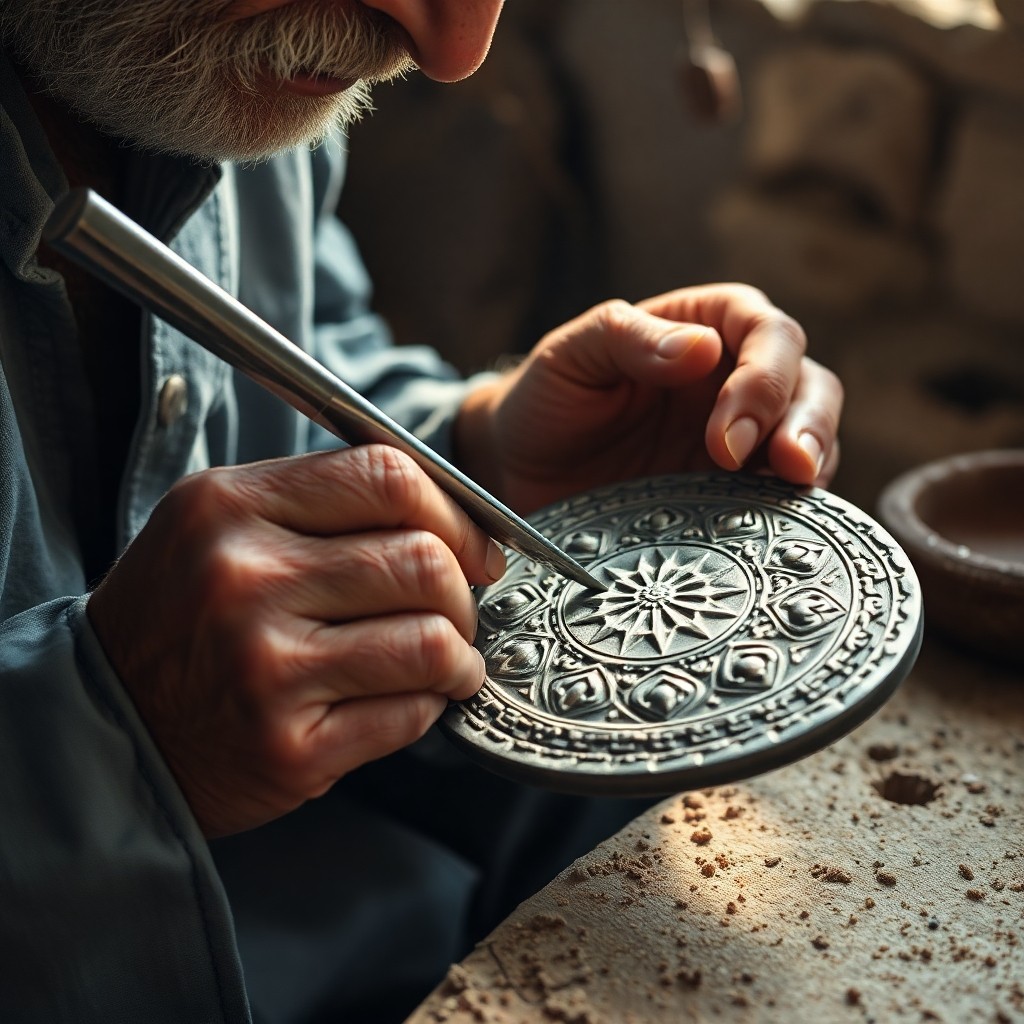
The History and Symbolism of Traditional Berber Jewelry unfolds like a living manuscript stitched in silver, copper, and enamel. From the high Atlas peaks to the dunes of the Sahara, these ornaments have drawn collectors, anthropologists, and fashion designers alike because each piece tells a story of trade, belief, and identity. Traditional Berber jewelry is typically forged from locally sourced bronze or imported silver, occasionally gilded for special occasions, and adorned with intricate geometric patterns, animal motifs, and protective symbols. Artisans in Morocco, Algeria, Tunisia, and Libya have been shaping such adornments for more than a millennium, passing techniques down through matriarchal workshops and male guilds. This article traces the historical layers that have shaped the craft, decodes the visual language embedded in every curve and clasp, and shows how the ancient art form resonates in contemporary design and cultural preservation.
1. Berber Jewelry as a Living Archive: How Pieces Record Tribal History
1.1 Chronological evolution of key motifs
From the 9th‑century bronze pendants discovered in the ruins of Volubilis to the 19th‑century silver filigree of the Aït Atta, recurring motifs have acted as timestamps. The “hand of Fatima” first appears in pre‑Islamic amulets, its open palm stylized to ward off the evil eye. By the 13th century, the motif intertwines with interlaced chevrons that echo the zig‑zag of Berber loom patterns, signaling the spread of caravan trade routes across the Maghreb. The 1800s introduce a wave of floral arabesques, reflecting French colonial exposure to European decorative arts. Each stylistic shift aligns with a documented historical phase, allowing scholars to date otherwise undocumented pieces by comparing motif composition.
1.2 Material shifts reflecting trade and conquest
Early Berber adornments relied on bronze harvested from local ore veins, a metal that could be melted in simple pit furnaces. The arrival of Phoenician merchants in the 7th century BCE introduced high‑purity silver, which quickly became the preferred medium for status pieces because of its reflective brilliance. Arab conquests in the 8th century opened access to gold‑plated filigree imported from the Levant, yet the majority of rural communities continued to favor silver due to its relative affordability. Metallurgical analyses of 1800‑year‑old necklaces show a sharp increase in silver purity—from 78 % to 92 %—coinciding with the rise of trans‑Saharan trade that brought raw silver ingots from Timbuktu to Fez. By the late 19th century, French colonial tax policies incentivized the export of raw silver, prompting artisans to incorporate gold plating as a means of preserving the metal’s visual impact while reducing material costs.
1.3 Case study: The Aït Atta tribe’s silver fibulae as historical markers
A single silver fibula unearthed near Tazenakht in 2015 illustrates how design details encode clan lineage and historic events. The fibula’s central disc bears a stylized camel silhouette flanked by three concentric circles, each representing a generation of Aït Atta warriors who participated in the 1912 Rif Revolt. The metal’s hallmarks include a double‑crown stamp, a hallmark introduced by French colonial authorities to certify silver content. Microscopic examination reveals a tiny incision of a red coral bead, a material traditionally reserved for battle‑ready warriors. Together, these elements pinpoint the fibula’s creation to the 1913‑1914 period, linking it directly to a specific tribal narrative.
2. Symbolic Language of Berber Adornments: Decoding the Visual Vocabulary
2.1 Protective symbols and their mythic roots
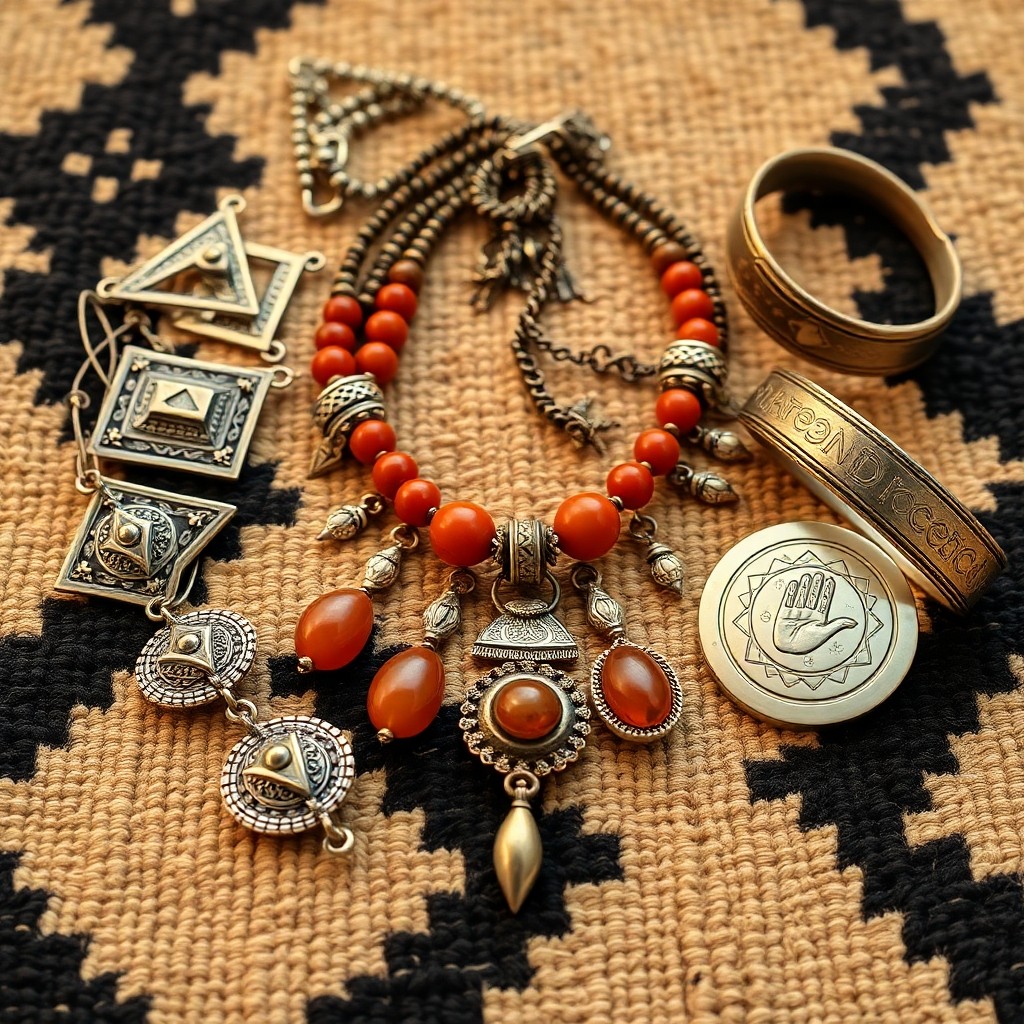
The “eye” motif, rendered as a stylized almond shape with concentric rings, originates from ancient Amazigh cosmology that views the eye as a conduit for both sight and spiritual protection. Mothers traditionally fasten necklaces featuring this symbol onto newborns, believing it deflects malevolent gazes and safeguards the child's spirit. Similarly, the fibula, or *tizerzai*, functions beyond mere garment fastening; its triangular shape mimics the form of a tent or the female womb, symbolizing the protection of the family unit and fertility. These talismans serve as spiritual armor, with every enamel inlay and silver chasing designed to repel negativity and invite baraka, or divine blessing.
2.2 Geometric grammar: Triangles, diamonds, and loom patterns
The visual lexicon of Berber jewelry is deeply rooted in geometry, where shapes function as an alphabet of cultural values. The triangle frequently appears as a symbol of femininity and the elemental structure of the family, often pointing upward to represent the male or downward to signify the female. Diamonds, formed by two opposing triangles, are ubiquitous in pendants and earrings; they traditionally represent the four corners of the earth or the eye, offering a shield against the evil eye. Furthermore, the zig-zag patterns that adorn bracelets and headbands are direct translations of textile weaving techniques found in Berber rugs, bridging the gap between the portable art of jewelry and the stationary art of loom work.
2.3 Color symbolism and material choice
Beyond metalwork, the specific materials incorporated into Berber jewelry carry profound semantic weight. Amber, often imported from the Baltic and traded across the Sahara, is prized not only for its warm hue but for its electrostatic properties; it is believed to draw out pain and negative energy from the body. Red coral, harvested from the Mediterranean, symbolizes vitality and life force, serving as a potent counter to the pallor of illness. Conversely, the use of dark ebony or black enamel in juxtaposition with bright silver creates a high-contrast duality representing the balance between light and dark, day and night. These material choices transform a necklace or headdress into a complex map of health, status, and cosmological balance.
Conclusion
Traditional Berber jewelry remains a potent symbol of Amazigh identity, seamlessly blending the utilitarian needs of nomadic life with a rich spiritual worldview. Through the evolution of motifs from pre-Islamic amulets to colonial-era adaptations, these pieces serve as durable historical records that survive where written texts often do not. By understanding the metallurgical shifts, the protective geometry, and the symbolic materials, collectors and enthusiasts gain deeper insight into a culture that values ornamentation as a form of language and preservation. As contemporary designers increasingly draw inspiration from these ancient patterns, the legacy of the Berber artisan continues to thrive, ensuring that the stories etched in silver and enamel are passed down to future generations.