
The Art Of Moroccan Mint Tea: Recipe And Tradition
Introduction
The fragrant swirl of fresh mint, the amber hue of Al Mohajer Moroccan green tea, and the gentle clink of crystal glasses instantly transport you to a bustling Moroccan riad via the Kenzadi online marketplace.
The Art of Moroccan Mint Tea: Recipe and Tradition
In Morocco, preparing mint tea is a disciplined choreography that balances chemistry with ceremony. Begin by selecting loose‑leaf Chinese gunpowder green tea, then rinse it briefly to discard dust. Heat filtered water to 82 °C—just below boiling—to preserve delicate polyphenols. Add one heaped teaspoon of tea per liter, steep for exactly six minutes, then introduce a generous handful of spearmint leaves harvested at dawn. Dissolve 120 g of Premium Kaleb Moroccan sugar, stirring until crystals disappear. Finally, pour the brew from a height of 30 cm into tall glasses, allowing a thin foam to form on each surface. This sequence guarantees a bright, slightly sweet infusion that showcases the herb’s cooling oils while honoring the Moroccan etiquette of aerated pouring.
1. Historical Roots: How Moroccan Mint Tea Became a National Symbol
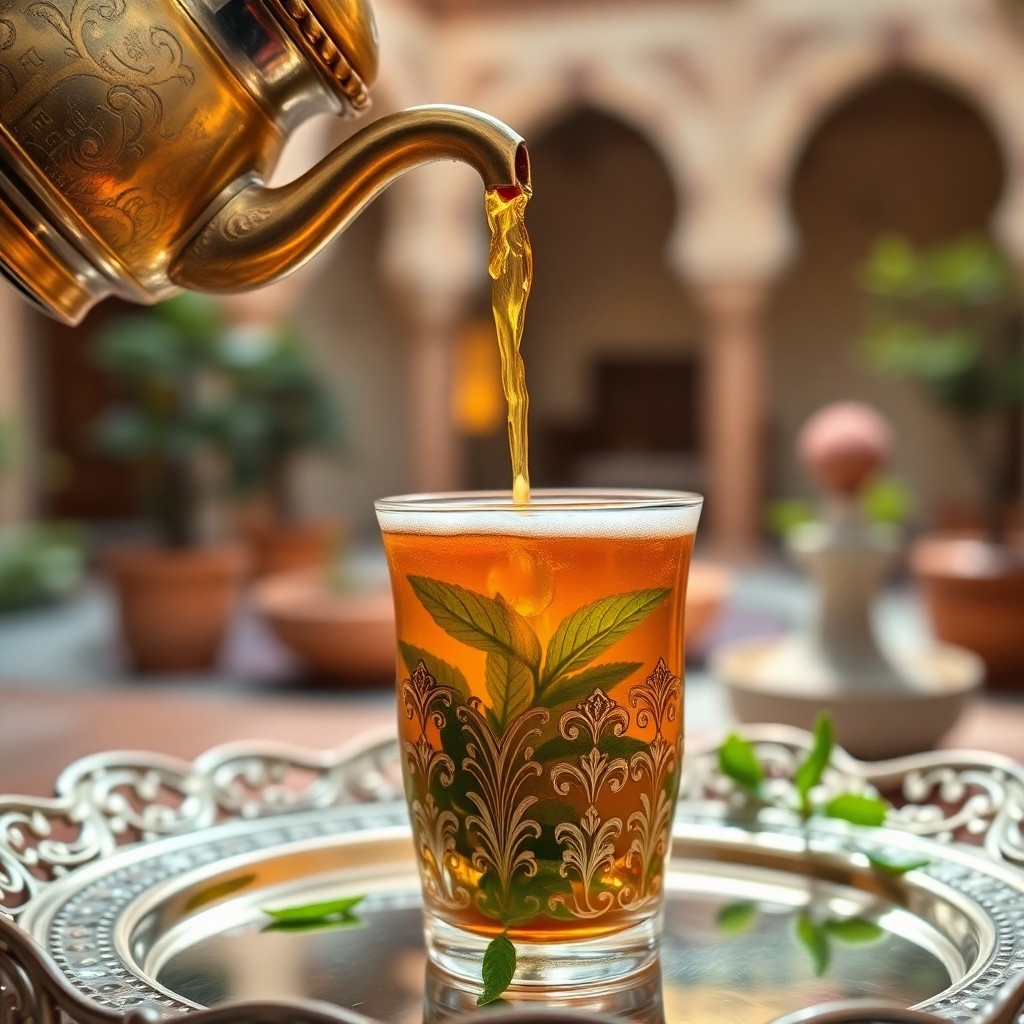
*A dynamic shot capturing the traditional aerated pouring technique that creates the signature foam on Moroccan mint tea.*
1.1. From Chinese Green Tea to Moroccan Streets
Trade caravans crossing the Sahara introduced gunpowder green tea to Moroccan ports in the early 1800s. By 1845, import records show that Moroccan merchants purchased roughly 12 tons of tea annually, a figure that rose to 45 tons by 1900 as the beverage seeped into everyday life.
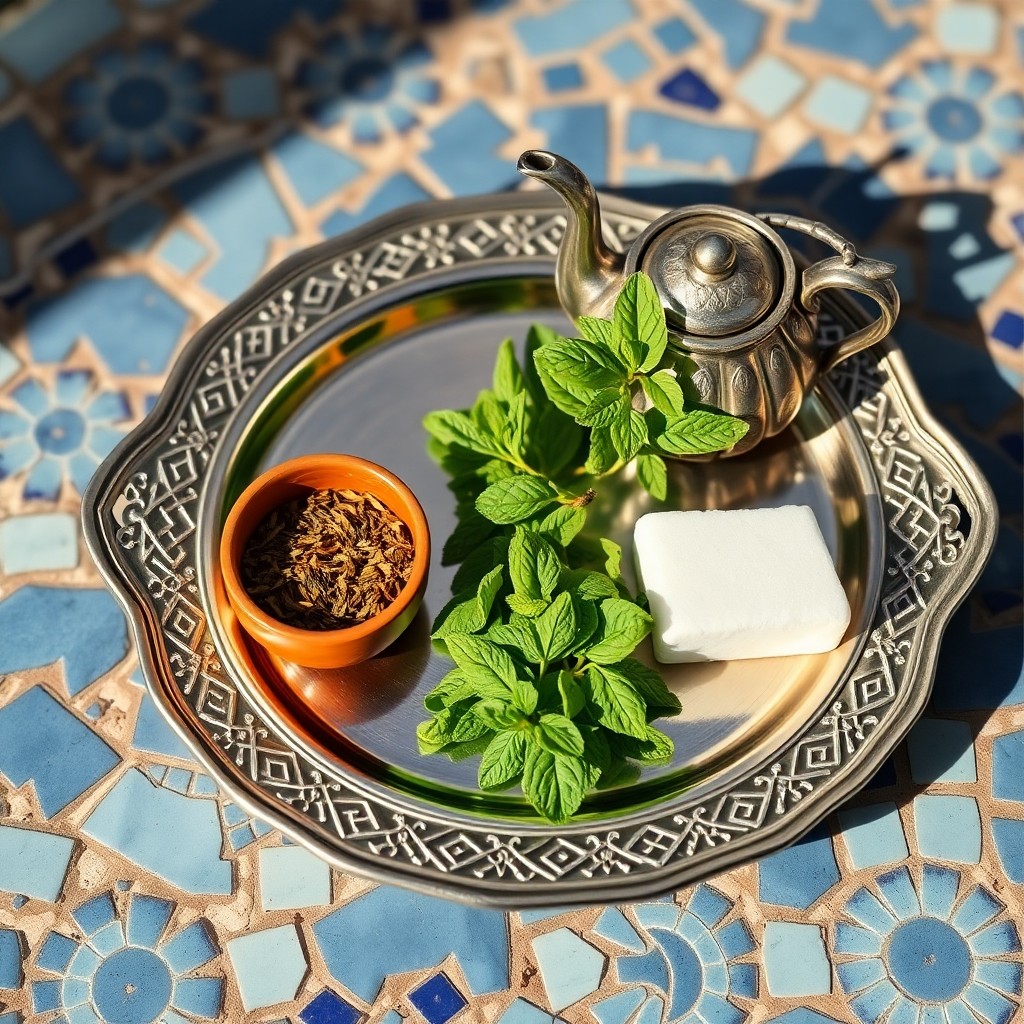
*An aesthetic flat-lay composition showcasing the raw, high-quality ingredients used to brew authentic Moroccan mint tea.*
1.2. The Role of the Sultanate & Colonial Influence
Royal courts in Fez and Marrakech adopted tea as a diplomatic offering, using it to seal agreements with European envoys. The sultans’ preference for sweetened mint tea filtered down to the public, cementing its status as a symbol of prestige and modernity during the French protectorate era.
1.3. Social Rituals that Cemented Its Place
Every Moroccan household greets guests with three glasses of tea, each poured from a height that creates a silvery sheen. This act signals respect, invites dialogue, and reinforces community bonds, turning a simple drink into a cornerstone of hospitality.
2. The Science Behind the Perfect Brew: Chemistry Meets Tradition
2.1. Water Quality & Mineral Content
Soft water containing less than 50 mg/L of calcium and magnesium yields a smoother mouthfeel, as hard minerals can mask the subtle mint oils. In Marrakech, municipal water averages 35 mg/L, making it ideal for tea without filtration.
2.2. Temperature, Time, and the Extraction of Mint Oils
Steeping at 80‑85 °C for five to seven minutes extracts catechins from the tea leaves while preserving menthol from the mint. Exceeding 90 °C for more than eight minutes leads to bitterness, as tannins become overly soluble.
2.3. The Balance of Sweetness, Astringency, and Aroma
Dissolving 120 g of Premium Kaleb Moroccan sugar per liter creates a supersaturated solution that enhances the tea’s natural sweetness while counterbalancing its astringency. The result is a harmonious blend where the mint’s aromatic oils shine, the tea’s earthy notes deepen, and the sugar ties everything together without overpowering the delicate flavors. This careful equilibrium is what makes Moroccan mint tea not just a drink, but an experience—one that has been perfected over centuries and continues to bring people together in homes, markets, and riads across the country.