

The Art Of Moroccan Mint Tea: Recipe And Ceremony
The steam rises like a thin veil when you pour bright green tea over a handful of fresh spearmint, releasing a burst of citrus‑green aroma that instantly transports you to a bustling Moroccan riad. This moment is more than a simple refreshment; it is an invitation to pause, share, and honor the guest who has just arrived. In Morocco, the ritual of serving mint tea is woven into daily life, marking everything from business meetings to family celebrations. Understanding **The Art of Moroccan Mint Tea: Recipe and Ceremony** means appreciating how a single pot can convey generosity, status, and centuries of tradition. To explore Kenzadi’s Moroccan collection and learn more about the culture, visit their website.
1. Historical Roots & Cultural Significance ### 1.1. From the Atlas to the Medina: Origins of the Brew
*A serene and inviting scene depicting the traditional Moroccan mint tea ceremony*
Chinese gunpowder green tea entered Moroccan ports in the late 1800s, carried by French traders who sought a resilient leaf that could survive long sea voyages. By 1885, merchants in Tangier began blending the rolled tea with locally grown spearmint, creating a drink that could withstand the heat of the Sahara while offering a refreshing lift. The combination quickly spread from coastal markets to inland souks, where artisans refined the proportions to suit regional palates.
1.2. Symbolism in Moroccan Society
Offering mint tea signals openness; refusing it can be seen as a breach of etiquette. The host pours three glasses for each guest, a practice that reflects the cultural value of generosity and the belief that three rounds cleanse the spirit. In rural villages, the ability to prepare a perfectly balanced pot also signals the host’s social standing, as the ritual requires both skill and access to high‑quality ingredients, such as traditional Moroccan sugar cubes.
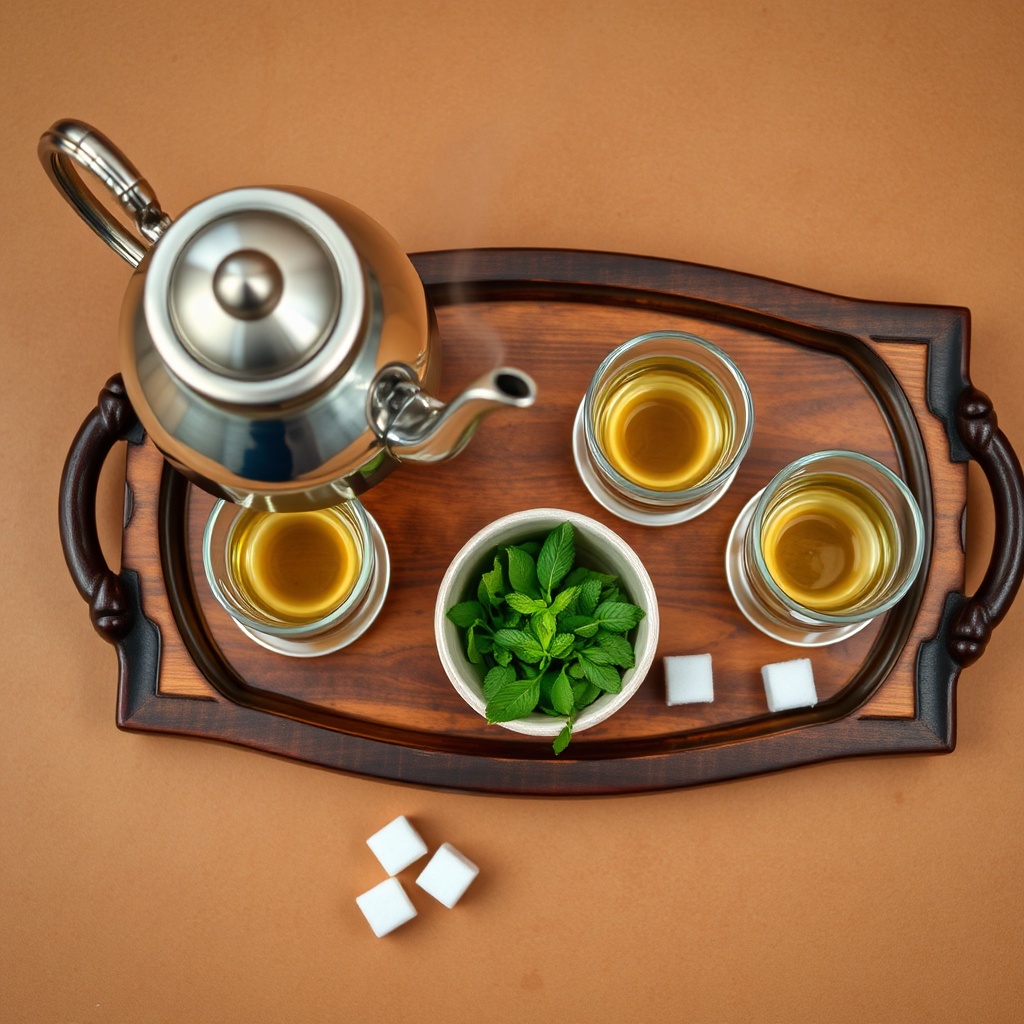
*A detailed and appetizing image showcasing the traditional Moroccan mint tea ingredients and serving setup*
1.3. Regional Variations Across Morocco
In Fez, tea masters prefer a generous handful of wild pennyroyal, giving the brew a slightly peppery edge, while Marrakech vendors lean toward sweet spearmint, resulting in a brighter, more floral profile. Sugar levels also shift: coastal families often add up to five heaping teaspoons per pot, whereas mountain households may use only two, letting the tea’s natural bitterness shine through. A seasoned tea master once explained that “the mountain air preserves the mint’s vigor, so less sugar is needed to balance the flavor.” For the best results, use authentic Moroccan green tea.
2. The Science of Flavor: Balancing Tea, Mint, and Sugar ### 2.1. Green Tea Chemistry – Why Gunpowder Works Best
Gunpowder leaves are tightly rolled, protecting catechins and caffeine until the water reaches a rolling boil. This structure releases a steady stream of polyphenols, which deliver the characteristic astringency that pairs with mint’s coolness. The rolled form also reduces bitterness compared with loose‑leaf varieties, allowing the sweetener to shine without overwhelming the palate.
2.2. Mint’s Aromatic Profile & Its Interaction with Heat
Fresh spearmint contains menthol and rosmarinic acid, compounds that volatilize at temperatures between 80 °C and 95 °C. When you pour boiling water over the leaves, menthol diffuses quickly, creating the signature cooling sensation, while rosmarinic acid adds a subtle earthiness. Steeping the mint for more than five minutes can cause the menthol to degrade, resulting in a flat taste, so precise timing is crucial.
2.3. Sugar’s Role: Sweetness, Mouthfeel, and Preservation
Granulated crystal sugar dissolves instantly in the hot infusion, masking any residual bitterness from the green tea. In addition, sugar raises the osmotic pressure of the liquid, slowing microbial growth—a practical advantage in Morocco’s warm climate. A ratio of one gram of sugar per milliliter of water yields a syrupy mouthfeel that coats the tongue, enhancing the perception of mint freshness.
3. Authentic Recipe: Step‑by‑Step Preparation ### 3.1. Essential Tools & Ingredients Checklist
- 1 liter metal or ceramic teapot with a tight‑fitting lid - Fine‑mesh tea strainer for the initial rinse - 2 tablespoons loose gunpowder green tea (approximately 10 g) - 1 large bunch of fresh spearmint, stems trimmed but leaves intact (about 30 g) - 80 g crystal sugar (roughly 5 heaping teaspoons) - Filtered water at 100 °C, preferably low mineral content - A handcrafted Moroccan tea pot is ideal for the ceremony.
Having these items on a clean countertop ensures a smooth workflow and prevents cross‑contamination of flavors.
3.2. The 3‑Stage Brewing Process (with timestamps)
1. **Rinse & Warm the Pot** – Fill the teapot with boiling water, swirl for 30 seconds, then discard. This step preheats the vessel and removes any metallic aftertaste. 2. **First Infusion (“Wash”)** – Add the gunpowder tea, pour 250 ml of boiling water, and let steep for 2 minutes. Swirl gently, then pour the liquid through a strainer into a separate cup; discard the wash to eliminate initial bitterness. 3. **Second Infusion (Flavor Build)** – Return the tea leaves, add the remaining 750 ml of water, the entire mint bunch, and the measured sugar. Allow the mixture to steep for 5 minutes, then give the pot a gentle swirl to blend the flavors before serving.
3.3. Troubleshooting Common Mistakes
If the brew appears cloudy, you likely over‑steeped the tea; reduce the second infusion to four minutes and strain immediately. Excessive sugar will mask the mint’s aroma; adjust by removing a teaspoon before the final pour. Wilted mint signals that the leaves were stored too long; replace with a fresh bunch and keep the mint refrigerated for no more than 24 hours before use.
4. The Ceremonial Ritual: Hosting, Presentation, & Etiquette ### 4.1. Setting the Scene: Tableware, Seating, and Timing
A low wooden table covered with a brass tray sets the visual tone. Place three ornate silver tea glasses on each side, arranging them from right to left to indicate the serving order. The eldest guest receives the first glass, followed by the host, then the youngest. Begin the ceremony after the main meal, when guests are relaxed and conversation flows naturally.
4.2. The “Pouring Dance” – Technique & Symbolism
Hold the teapot high—about 30 cm above the glass—and pour a thin, steady stream that arcs gracefully, creating a frothy “head” on the surface. This aeration releases volatile oils, intensifying the mint scent. Rotate the pot clockwise after each pour to ensure an even distribution of sugar and mint across all glasses. The rhythmic motion demonstrates the host’s confidence and respect for tradition.
4.3. Conversation & Hospitality Cues
Between pours, pause to allow guests to sip; this silence signals a transition in the dialogue, often prompting a toast to health or gratitude. When the host lifts the pot for a final pour, it indicates the gathering is drawing to a close, inviting guests to stand and exchange farewells. Maintaining eye contact while serving reinforces the personal connection that the tea ceremony embodies.
5. Modern Twists & Health Benefits ### 5.1. Creative Variations: Herbal Add‑Ins & Vegan Sweeteners
Replace a portion of the spearmint with a sprig of rosemary for a piney nuance, or add a splash of orange blossom water (5 ml) to introduce floral brightness. For a vegan alternative, substitute crystal sugar with agave syrup at a 1:1 ratio; the syrup’s lower glycemic index preserves the drink’s sweetness while adding a subtle caramel note.
5.2. Nutritional Profile & Wellness Claims
A standard 250 ml serving delivers approximately 35 mg of catechins, 20 mg of caffeine, and 150 mg of menthol, providing antioxidant support and a mild stimulant effect. The mint aids digestion by relaxing gastrointestinal muscles, while the moderate sugar content supplies quick energy without causing a spike when balanced with the tea’s polyphenols.
5.3. Bringing the Tradition into the Global Kitchen
In a compact New York apartment, use a small stainless‑steel teapot and a single glass to replicate the ceremony; serve the tea on a decorative tray to preserve the visual impact. Coffee shops abroad can schedule a weekly “Moroccan tea hour,” offering the full three‑glass service alongside traditional pastries such as chebakia. This approach introduces the ritual to new audiences while respecting its cultural roots.
Conclusion
Mastering **The Art of Moroccan Mint Tea: Recipe and Ceremony** blends precise chemistry, thoughtful preparation, and heartfelt hospitality. By honoring the historical roots, balancing the flavors of gunpowder green tea, fresh mint, and sugar, and performing the graceful pouring ritual, you create more than a beverage—you craft a shared experience that echoes generations of Moroccan generosity. Try the full ceremony tonight, invite friends to partake, and let the fragrant steam carry stories of the Atlas Mountains into your living room. Share your photos and reflections on social media to inspire others to experience Moroccan tea for themselves.
FAQ
**How do you properly brew authentic Moroccan mint tea?** Rinse the pot, perform a 2‑minute “wash” infusion, discard the liquid, then steep gunpowder tea with fresh spearmint and crystal sugar for five minutes before serving.
**What is the correct order of serving Moroccan mint tea in a ceremony?** Serve the eldest guest first, followed by the host, and then the youngest; repeat this sequence for each of the three glasses.
**Why is gunpowder green tea used instead of other green teas?** Its tightly rolled leaves protect catechins and caffeine until boiled, delivering a steady release of flavor that balances the mint’s coolness without excessive bitterness.
**Can I substitute fresh mint with dried mint and still keep the flavor?** Dried mint loses much of its menthol content; if you must use it, increase the quantity by 1.5 times and steep for only three minutes to avoid a woody taste.
**What are the health benefits of drinking Moroccan mint tea daily?**
The drink supplies antioxidants from green tea, digestive aid from menthol, and a modest caffeine boost; when sweetened responsibly, it also provides quick energy without overwhelming sugar spikes.
**Meta Description:** Discover the history, science, recipe, and ceremony of Moroccan mint tea. Learn step‑by‑step preparation, etiquette, and modern twists for a flavorful experience. To learn more about Moroccan culture and products, visit explore Kenzadi’s Moroccan collection.