
The Art Of Berber Crafts: Handmade Treasures From Morocco
Introduction
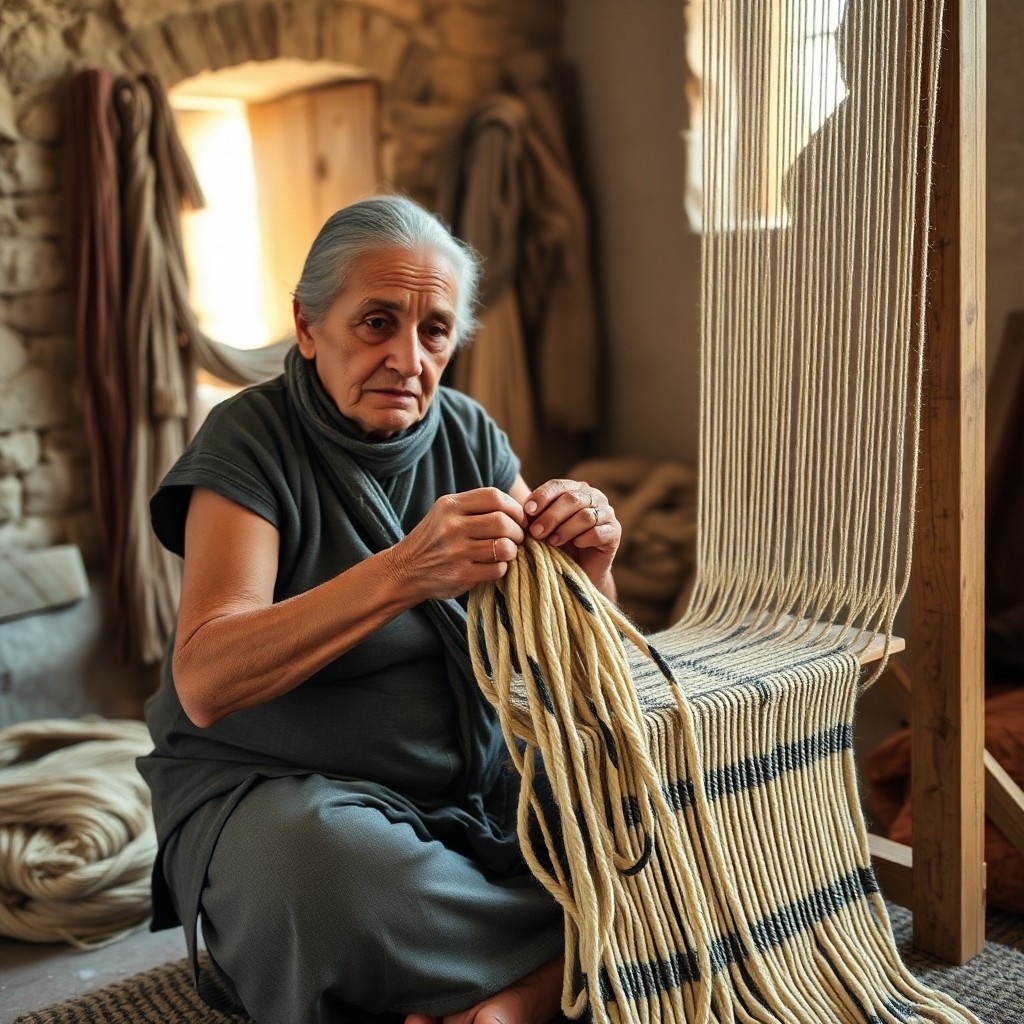
In a small village perched along the ridgeline of Morocco's High Atlas Mountains, a woman sits cross-legged before a vertical loom, her fingers moving through undyed wool with a rhythm passed down through four generations. The air smells of lanolin and dried mint. Each knot she ties carries a meaning — a diamond for protection, a cross-like pattern for fertility, a zigzag for the river that feeds her family's fields. This is the living reality of Berber crafts, a tradition stretching back over three millennia that continues to shape the cultural and economic landscape of North Africa.
The Berber people — who call themselves the Amazigh, meaning "free people" — have inhabited North Africa since before recorded history. Their communities span from the Mediterranean coast of Morocco and Algeria deep into the Sahara, including the Tuareg of Mali and Niger and the Kabyle of Algeria. Despite centuries of external influence, the Amazigh have maintained a distinct identity, and their crafts remain one of the most vivid expressions of that continuity. Today, an estimated 2.5 million artisans and cooperatives across Morocco keep these traditions alive, producing everything from handmade Beni Ouarain rugs to intricate silver fibulae.
From the symbolism encoded in every motif to the economic realities facing today's artisans, the art of Berber crafts: handmade treasures from Morocco represents far more than decorative objects — it is a living archive of Amazigh identity, resilience, and creativity.
1. The Cultural Roots of Berber Craft Traditions
1.1 The Amazigh Identity and Its Influence on Craft
The Amazigh people have maintained continuous craft traditions for over 3,000 years, making their artisan heritage one of the oldest living craft traditions in the world. Archaeological evidence from sites across the Maghreb reveals woven textiles, carved stone tools, and ceramic vessels dating to the pre-Roman period, many bearing motifs still used by Berber artisans today. This remarkable continuity stems partly from the Amazigh's nomadic and semi-nomadic lifestyles, which demanded portable, functional art forms — rugs that served as floor coverings and tent dividers, pottery designed for water storage during long migrations, and jewelry that functioned as both adornment and portable wealth.
Women have always served as the primary custodians of this knowledge. In most Amazigh communities, girls begin learning weaving, pottery, or embroidery between the ages of six and ten, sitting beside their mothers and grandmothers until the techniques become second nature. The skills are not taught through written manuals or formal instruction but through observation, repetition, and oral storytelling — each pattern carries a narrative, each color choice reflects a specific emotional or spiritual intention. As one ethnographer notes, "The loom is not merely a tool for production; it is a space where history is recorded and identity is woven, knot by knot, into the fabric of daily life," emphasizing that Berber crafts are inseparable from the social and spiritual fabric of Amazigh life.
1.2 Symbolism and Meaning Woven into Every Piece
Every Berber craft object communicates meaning through a visual language that predates written records. The diamond motif, one of the most ubiquitous symbols in Berber textiles, represents protection against the evil eye and is often placed at the center of a rug or woven into a blanket given to a newborn. The fibula — a triangular brooch used to fasten garments — symbolizes fertility and feminine power, and its shape recurs in jewelry, textile patterns, and even architectural decoration. Zigzag lines, commonly found along the borders of rugs and blankets, represent flowing water, one of the most precious resources in mountainous and desert environments.
These symbols are deeply connected to the tifinagh script, the ancient Amazigh writing system that remains in use today, particularly among Tuareg communities. Some scholars argue that many textile motifs originated as stylized versions of tifinagh characters, effectively turning woven goods into readable texts. Regional variation adds further complexity: artisans in the Rif Mountains of northern Morocco favor bold geometric patterns in deep reds and blacks, while those in the High Atlas produce more freeform, colorful designs. Sahara communities, by contrast, tend toward minimalist patterns in natural wool tones, reflecting the austere beauty of the desert landscape. The collections at the Musée du Quai Branly in Paris and the Mohammed VI Museum for Modern and Contemporary Art in Rabat provide comprehensive visual guides to these regional differences, mapping specific symbols like the 'eye' and 'zigzag' to their geographic and cultural origins.
2. Moroccan Berber Rugs: A Masterclass in Handweaving
2.1 Types of Berber Rugs and Their Distinct Characteristics
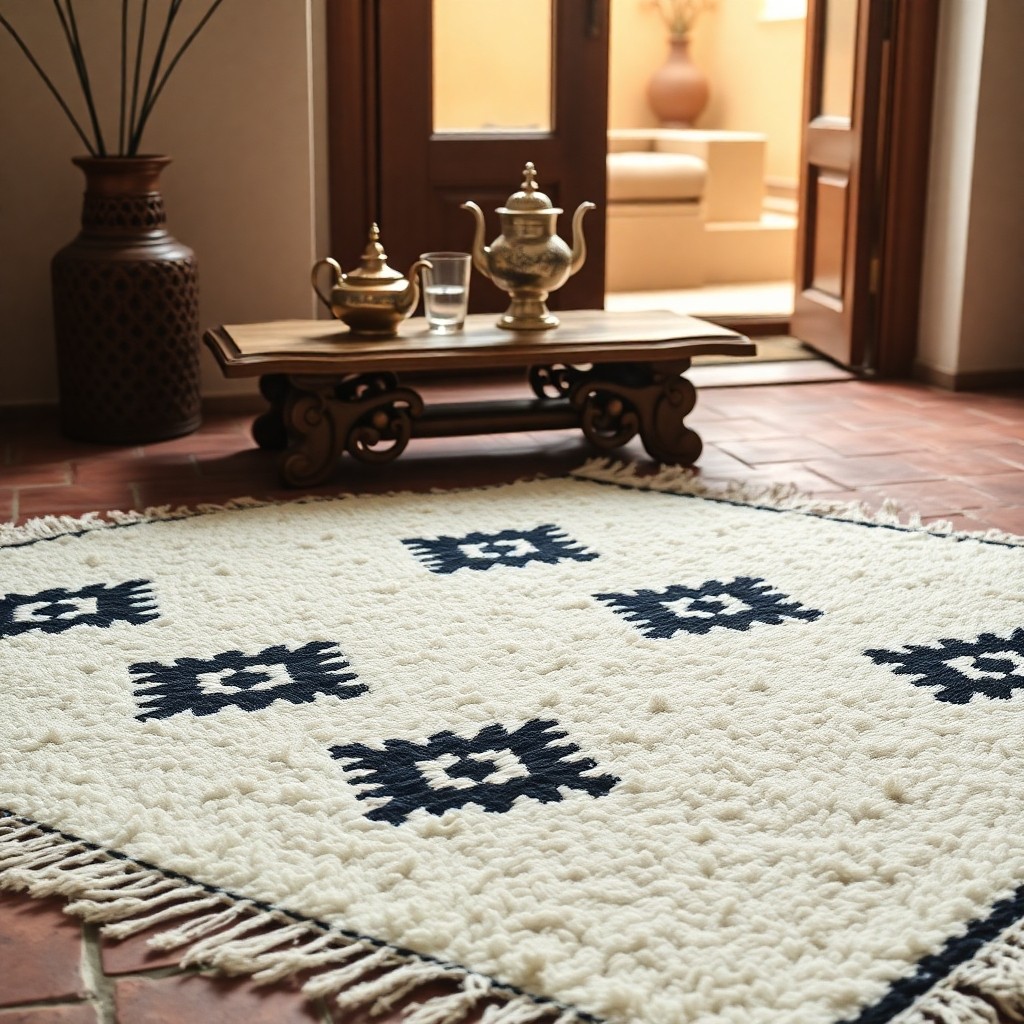
Moroccan Berber rugs encompass a remarkable range of styles, each tied to a specific region and tribal tradition. Beni Ourain rugs, produced by tribes in the Middle Atlas Mountains, are perhaps the most internationally recognized — their cream-colored backgrounds and sparse black geometric patterns have become a staple of contemporary interior design. These rugs are woven from the wool of local sheep breeds, prized for their long, silky fibers that produce a plush, almost luminous pile.
Boucherouite rugs represent a more modern innovation. Emerging in the 1960s and 1970s, these vibrant pieces are woven from recycled fabric scraps — old clothing, nylon stockings, and textile remnants — creating colorful, abstract compositions that reflect both economic necessity and creative ingenuity. Azilal rugs, from the High Atlas, take a different approach: their white or cream backgrounds serve as canvases for colorful, freeform designs that often include dots, stars, and organic shapes in bright pinks, greens, and yellows.
It is also important to distinguish between structural types. Kilim rugs are flat-woven on a horizontal or vertical loom, producing a thin, reversible textile ideal for wall hangings or lightweight floor coverings. Pile rugs, by contrast, are knotted — each strand of wool is individually tied around a warp thread — resulting in a thick, cushiony surface that provides insulation against cold mountain floors. The choice between kilim and pile depends on both practical need and regional tradition. Market analysis from 2023 indicates that an authentic, hand-knotted Beni Ouarain rug measuring 6x9 feet typically retails between $800 and $2,500, depending on density and age, whereas mass-produced imitations often sell for less than $200, lacking the durability and cultural provenance of the genuine article.
2.2 The Weaving Process: From Raw Wool to Finished Rug
The creation of a single Berber rug is a labor-intensive process that can take anywhere from three weeks to six months, depending on size and complexity. It begins with shearing, typically done once a year in spring. The raw wool is then washed — often in mountain streams — to remove lanolin and dirt, then carded to align the fibers and spun into yarn using a drop spindle.
Dyeing follows, using natural pigments derived from local plants, minerals, and insects. Saffron and pomegranate rind produce warm yellows and golds; indigo leaves yield deep blues; poppy petals create rich reds; and henna produces warm browns. The yarn is submerged in dye baths and sun-dried on rocks or lines stretched between trees. Once dyed, the yarn is ready for the loom.
Berber women weave on vertical looms constructed from wooden beams and branches, often set up outdoors or in a corner of the family home. The process is entirely manual — no patterns are drawn on paper or transferred to the loom. The weaver works from memory and improvisation, drawing on a mental library of motifs learned throughout childhood. A distinctive tradition holds that every rug must contain one deliberate imperfection — a single misplaced knot or an asymmetrical line — as a gesture of humility before the divine, acknowledging that only perfection belongs to God. Documentaries produced by the UNESCO-backed 'Safeguarding of the Cultural Heritage of the Atlas' initiative document this process in extraordinary detail, capturing the full arc from raw wool to finished masterpiece.
3. Berber Jewelry, Pottery, and Textiles Beyond Rugs
3.1 Silver Jewelry and the Fibula Tradition
Berber silver jewelry represents one of the most sophisticated craft traditions in North Africa. The fibula — known as tizerzai in Tamazight — is a triangular brooch used to fasten draped garments at the shoulder, serving both a practical function and a ceremonial one. Women wear fibulae in pairs, connected by a chain, and the pieces are often passed down as family heirlooms. Their surfaces are decorated with engraved geometric patterns, and many incorporate enamel inlays in vivid blues, yellows, and greens, as well as beads of coral, amber, and silver coins.
Coral, sourced from the Mediterranean coast, symbolizes vitality and protection. Coins — often Spanish colonial silver pieces — serve as both decoration and a form of stored wealth, allowing women to carry their savings in plain sight. The tradition of Amazigh silverwork was significantly enriched by Jewish silversmiths who lived alongside Berber communities in Moroccan mellahs (Jewish quarters) for centuries. These craftsmen brought advanced metalworking techniques and design influences from Andalusia, creating a cross-cultural exchange that elevated Berber jewelry to extraordinary levels of artistry. The 'Khmissa' fibulae on display at the Musée du Quai Branly showcase the finest examples of this collaborative tradition, featuring intricate granulation work and enamel detailing that rivals European court jewelry in complexity and beauty.
3.2 Pottery, Basketry, and Embroidery
Beyond jewelry and rugs, Berber communities produce a wide range of functional and decorative crafts. In the Souss valley and the coastal city of Safi, potters create hand-built vessels using coil-building techniques — shaping clay by hand without a wheel, then firing in open-pit kilns fueled by wood and dried dung. Safi pottery is particularly renowned for its colorful glazes, often featuring bold geometric patterns in cobalt blue, turquoise, and white on earthenware bodies.
Palm fiber and reed basketry remain essential crafts in desert and oasis communities. Artisans weave palm leaves into mats, baskets, and storage containers using techniques that have remained virtually unchanged for centuries. These lightweight, durable items are perfectly suited to a nomadic lifestyle — they can be rolled up, carried on donkey back, and set up in minutes at a new campsite.
Berber embroidery, while less internationally famous than rug weaving, is equally rich in symbolism and technique. Women embroider ceremonial garments — wedding blankets, festival shawls, and infant blankets — using silk and cotton threads on cotton or wool backgrounds. The embroidery styles of the Rif region feature dense, geometric patterns in bright reds and oranges, while High Atlas embroidery tends toward more open, flowing designs. Recent surveys by the Moroccan Ministry of Tourism indicate that over 300 active pottery cooperatives operate within the Souss-Massa region alone, demonstrating that these traditions, while under pressure, continue to sustain livelihoods in rural communities across Morocco.
4. The Economics of Berber Crafts: Cooperatives, Fair Trade, and Global Markets
4.1 How Women's Cooperatives Are Preserving and Monetizing Craft
The cooperative model has become one of the most effective mechanisms for sustaining Berber craft traditions while providing economic opportunity for rural women. Organizations like the Tazenakht Women’s Cooperative bring together dozens — sometimes hundreds — of artisans who pool resources for raw materials, share workspace, and collectively market their products. These cooperatives typically provide training in quality control, design adaptation for international markets, and basic business skills, enabling artisans to earn incomes that would be impossible through individual production alone.
The economic impact extends beyond the artisans themselves. In many Amazigh communities, cooperative earnings fund children's education, healthcare access, and infrastructure improvements. Women who earn independent income through craft production report greater decision-making power within their households and communities. However, significant challenges persist. Middlemen who purchase crafts at low prices from isolated villages and resell them at enormous markups in Marrakech and Casablanca remain a persistent problem. Factory-made imitations produced in urban workshops undercut authentic handmade goods on price, and inconsistent international demand makes long-term planning difficult. Income data from cooperative networks in the Tiznit region reveals that active members can earn between 3,000 and 5,000 Moroccan Dirhams ($300–$500) per month during peak seasons—a significant increase over the national rural minimum wage and a vital economic boost for isolated households.
4.2 Navigating Authenticity in the Global Marketplace
For international buyers, distinguishing authentic Berber crafts from mass-produced reproductions can be challenging. Key indicators include visible hand-irregularities — slight variations in knot density, asymmetrical patterns, and natural fiber textures. Authentic rugs smell of wool and natural dye rather than chemicals. Many cooperatives now stamp or tag their products with identifying marks, and some participate in fair trade certification programs that guarantee minimum pricing and ethical labor practices.
UNESCO has recognized elements of Amazigh cultural heritage through its Intangible Cultural Heritage program, lending institutional weight to preservation efforts. E-commerce platforms and social media have also transformed the market, enabling artisans and cooperatives to sell directly to international buyers without intermediaries. Instagram, in particular, has become a powerful tool for Berber artisans, who share their work-in-process videos and finished pieces with global audiences. Platforms like Anou, a non-profit marketplace founded in Morocco, demonstrate how digital connectivity is reshaping the economics of traditional craft, allowing a weaver in a remote Atlas village to upload photos and sell her rug directly to a buyer in Tokyo or Toronto within days.
5. The Future of Berber Crafts: Preservation, Innovation, and Cultural Pride
5.1 Threats to Traditional Craft Knowledge
Despite growing international appreciation, Berber craft traditions face serious threats. Urbanization draws young Amazigh people to Moroccan cities and Europe, where traditional weaving skills have no economic application. The average age of a master weaver in many Atlas communities now exceeds 55, and in some villages, no young women have taken up the loom in over a decade. A report by the Moroccan Association of Handicraft Professionals estimates that the population of master weavers under the age of 35 has dropped by nearly 40% in the last two decades, creating a precarious gap in the transmission of knowledge.
Climate change compounds the problem. Natural dye sources — specific plants, insects, and mineral deposits — are affected by shifting rainfall patterns and rising temperatures. Indigo-producing plants require consistent water availability that is becoming less reliable in Morocco's increasingly drought-prone landscape. Cultural appropriation presents another challenge: global fashion brands have repeatedly borrowed Berber motifs and techniques without attribution or compensation, producing machine-made versions that devalue the originals and strip them of cultural context.
5.2 Innovation and Revival Movements
At the same time, a new generation of Amazigh designers and cultural entrepreneurs is driving a revival that honors tradition while embracing innovation. Young designers in cities like Marrakech, Rabat, and Paris are blending Berber weaving techniques with contemporary fashion, creating garments and accessories that speak to both Amazigh heritage and global aesthetics. Interior designers are commissioning custom Berber pieces that adapt traditional motifs to modern color palettes and spatial requirements.
NGO initiatives and government programs are also playing a critical role. Morocco's Ministry of Crafts has invested in training centers that pair master artisans with young apprentices, ensuring that endangered techniques survive. Cultural tourism — including hands-on weaving workshops, village homestays, and craft-focused tours — generates income while educating visitors about the cultural significance of what they are buying. Initiatives like the 'Terrains de Jeu' project, which pairs young designers with master artisans, exemplify this new wave of cultural entrepreneurship, demonstrating that Berber crafts can thrive in the 21st century without sacrificing their soul.
Conclusion
The art of Berber crafts: handmade treasures from Morocco is not a relic of the past but a living, evolving tradition that carries within it the accumulated wisdom of thousands of years. From the symbolic language woven into every rug to the economic lifeline that cooperatives provide to rural women, Berber crafts represent a convergence of art, identity, and survival that deserves both recognition and active support.
Every purchase of an authentic Berber craft is an act of cultural preservation. When you choose a hand-knotted rug over a factory imitation, or a hand-forged fibula over a machine-stamped replica, you are directly sustaining the livelihoods of artisans and their communities. You are helping ensure that the knowledge held by a 60-year-old weaver in the Atlas Mountains will find its way into the hands — and homes — of the next generation.
The Amazigh people have endured empires, colonization, and modernization without losing their identity. Their crafts are proof that culture is not fragile — it is resilient, adaptive, and endlessly creative. To support Moroccan artisans is to invest in that resilience. Visit cooperatives, buy from verified sources, share the stories behind the objects you own, and help ensure that the art of Berber crafts continues to thrive for another three thousand years. To explore authentic Moroccan home décor, visit our online directory of verified Berber artisan cooperatives.
FAQ Section
**What makes Berber crafts different from other Moroccan handicrafts?**
Berber (Amazigh) crafts are distinguished by their specific tribal motifs, hand-knotting and hand-building techniques, and deep symbolic language rooted in pre-Arab North African culture. While Moroccan crafts broadly include Arab-influenced traditions like Fes ceramics and zellige tilework, Berber crafts originate from indigenous Amazigh communities and carry meanings tied to Amazigh spiritual beliefs, social structures, and the natural environment.
**How can I tell if a Berber rug is authentic?**
Authentic Berber rugs show visible hand-irregularities: slight asymmetries in patterns, variations in knot density, and natural wool textures. They are made from raw wool or natural fibers, not synthetic materials. Many cooperatives attach stamps or tags identifying the artisan or cooperative. The rug should feel substantial and have a natural lanolin scent rather than a chemical odor.
**What materials do Berber artisans traditionally use?**
Traditional materials include raw sheep's wool, natural dyes derived from saffron, indigo, pomegranate, poppy, and henna, silver and semi-precious stones for jewelry, palm fiber and reeds for basketry, clay for pottery, and recycled textiles for boucherouite rugs.
**Are Berber crafts a good investment?**
Handmade Berber crafts, particularly rugs and antique silver jewelry, have appreciated significantly in international markets over the past two decades. Factors affecting value include age, rarity, provenance, condition, and the reputation of the artisan or cooperative. Antique pieces with documented histories command premium prices at auction houses and specialty dealers.
**Where can I buy authentic Berber crafts directly from artisans?**
Authentic Berber crafts can be purchased through Moroccan women's cooperatives, fair trade organizations, and verified e-commerce platforms that work directly with artisan communities. Visiting cooperatives in person — particularly in the Atlas Mountains, Souss valley, and around Marrakech — remains the most reliable way to buy directly from the maker. You can also find traditional Moroccan tea pots and other handcrafted items through verified online retailers.
**Meta Description:** Discover the art of Berber crafts: handmade treasures from Morocco. Explore Amazigh weaving, silver jewelry, pottery traditions, and how artisan cooperatives preserve 3,000 years of heritage.