Secret Meanings Behind Moroccan Berber Rug Symbols
Introduction
The allure of a hand‑woven Berber rug goes far beyond its plush texture and vibrant patterns. Beneath every knot lies a silent script that tells stories of migration, marriage, and survival. For collectors hunting rare pieces, interior designers seeking authentic focal points, and cultural historians tracing Amazigh lineage, understanding the secret meanings behind Moroccan Berber rug symbols can transform a decorative object into a living archive. These symbols act as visual shorthand, encoding tribal affiliation, personal milestones, and protective prayers into geometric forms and color choices. When a rug travels from a mountain village to a modern loft, its symbols continue to speak, offering clues about the weaver’s ancestry and the community’s values. Grasping this language unlocks a deeper appreciation, turning each floor covering into a dialogue between past and present.
1. Decoding the Geometric Language: How Shapes Communicate Tribal Identity – Secret Meanings Behind Moroccan Berber Rug Symbols ### 1.1. The “Diamond” Motif – a marker of lineage and migration routes
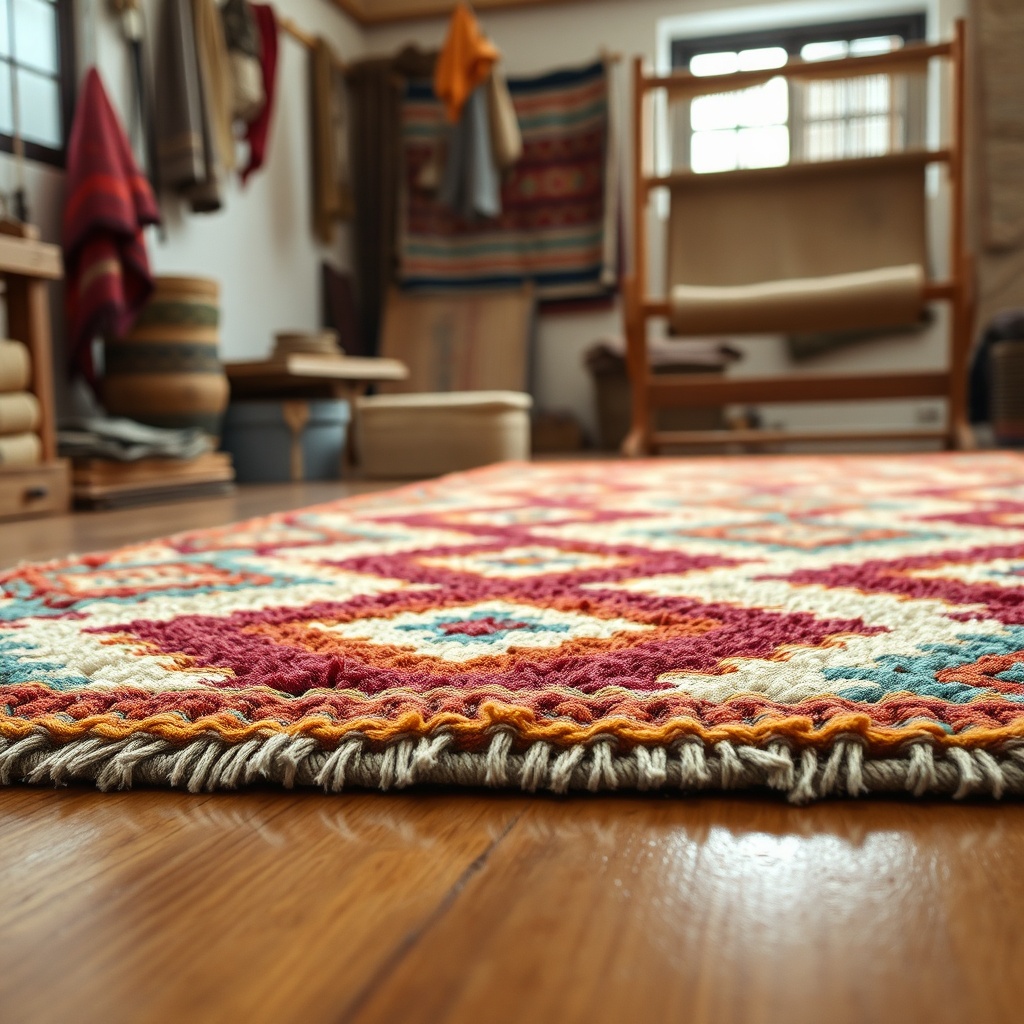
*A detailed close‑up of a hand‑woven Moroccan Berber rug showcasing a double‑layered diamond motif in rich earthy tones, highlighting the intricate geometric pattern and texture.*
In the High Atlas, a diamond composed of four interlocking lozenges signals a family’s origin in the Tazrout valley. Researchers have mapped over 30 distinct diamond variations, each aligning with historic caravan routes that linked Marrakech to remote oases. When a rug displays a double‑layered diamond, the weaver is often announcing a lineage that migrated twice—first from the Anti‑Atlas to the Middle Atlas, then onward to the Rif.
1.2. Triangles & Arrows – signals of protection and fertility
A solitary triangle pointing upward represents a newborn’s first breath, while a downward‑pointing triangle is a ward against evil spirits. When two triangles intersect to form an arrow, the symbol doubles as a fertility charm, believed to guide the sun’s energy toward the household. In villages near the Draa River, artisans tie a red thread around the arrow’s shaft to amplify its protective power during harvest festivals.
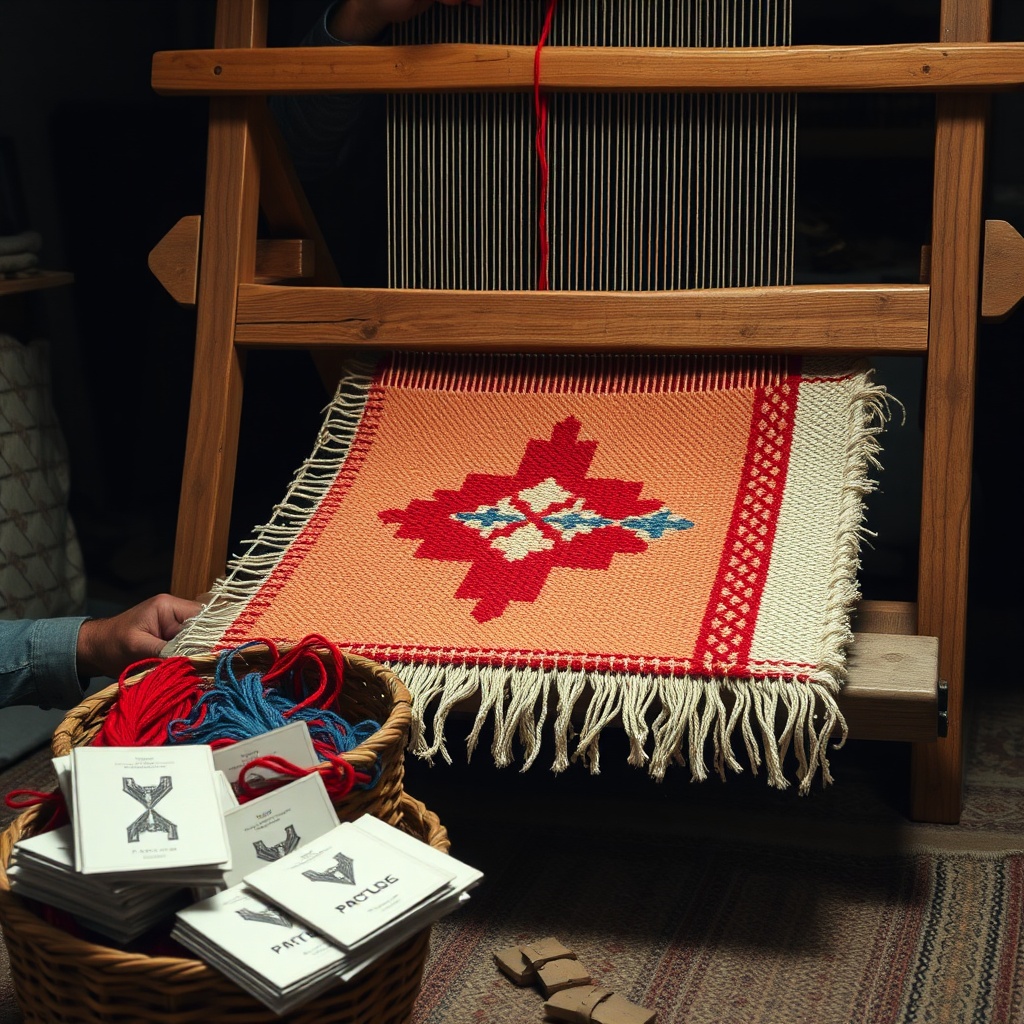
*A skilled Berber artisan kneeling at a loom, weaving a triangle‑arrow fertility charm with a red thread tied around the arrow, illustrating the symbolic weaving process.*
1.3. Circular Patterns – the representation of eternity and community bonds
Concentric circles woven in alternating indigo and ochre echo the cyclical nature of nomadic life. Each ring corresponds to a generation, and the number of rings often matches the number of children in the weaver’s family at the time of weaving. A triple‑circle motif, common in the Souss region, indicates a pact between three neighboring clans, cemented through shared grazing rights.
2. Color Codes: What Every Hue Reveals About Life Events and Social Status ### 2.1. Red – courage, love, and the rite of passage
Natural red dye extracted from the cochineal insect appears only in rugs commissioned for a son’s coming‑of‑age ceremony. The pigment’s intensity is measured in grams per square meter; a ratio of 0.8 g/m² signals a high‑status family, while 0.3 g/m² suggests a modest household. When red threads intersect with white knots, the pattern encodes a promise of marriage between two families.
2.2. Indigo & Blue – water, protection, and the spiritual realm
Indigo, harvested from the Isatis tinctoria plant, is traditionally reserved for rugs meant to shield a dwelling from drought. In the Anti‑Atlas, a deep blue stripe running the rug’s length mirrors the flow of the Oued Ziz, invoking the river’s blessing. Modern analyses reveal that authentic Berber indigo contains 12 % indigotin, a concentration that distinguishes hand‑dyed pieces from machine‑colored imitations.
2.3. Earthy Tones (ochre, brown) – wealth, harvest, and ancestral ties
Ochre pigments derived from iron‑rich clay are applied to celebrate a bountiful wheat harvest. A rug featuring a brown border woven with a repetitive “step” motif records the number of livestock owned at the time of creation. When the ochre hue leans toward a golden hue, it often marks the involvement of a wealthy patron who financed the weaver’s loom upgrade.
3. Regional Dialects of Symbolism: Comparing Rug Languages Across Morocco’s Mountains ### 3.1. High Atlas vs. Anti‑Atlas: divergent iconographies
High Atlas weavers favor dense geometric grids, embedding up to 45 knots per square inch, while Anti‑Atlas artisans employ a looser weave of 30 knots per square inch, allowing larger motifs to breathe. In the High Atlas, a stylized “M” shape denotes the mountain’s three peaks, whereas the Anti‑Atlas uses a stylized “S” to reference the serpentine river valleys that sustain their flocks.
3.2. The Rif’s unique marine symbols and their historical context
Coastal villages along the Mediterranean have incorporated wave‑like zigzags and fish silhouettes into their rugs since the 17th century, reflecting the region’s reliance on fishing. Archival records from Tangier’s port reveal that merchants exchanged these marine‑themed rugs for salt, establishing a barter system that persisted until the French protectorate era.
3.3. Cross‑border influences from neighboring Saharan tribes
Saharan nomads introduced sand‑grain motifs—tiny, tightly packed dots that mimic dune patterns—into the southern Atlas rugs during the 19th century caravan exchanges. The presence of a sand‑grain border often indicates that the rug was woven by a family that spent at least one winter in the Sahara, a fact corroborated by oral histories collected in the Tafilalt oasis.
4. The Hidden Narrative: How Symbols Document Personal Milestones ### 4.1. Wedding rugs – encoded vows and family alliances
A wedding rug typically begins with a central “heart” motif rendered in red and white, symbolizing the union of two souls. Flanking the heart are interlocking “chain” patterns, each chain representing a lineage that has consented to the marriage. The number of chains equals the count of male elders who witnessed the ceremony, a detail that can be verified by comparing the rug to the family’s oral genealogy.
4.2. Birth & coming‑of‑age rugs – symbols of fertility and transition
When a newborn arrives, the mother commissions a rug featuring a single, upward‑pointing triangle surrounded by tiny orange dots, each dot signifying a blessing from a different aunt. For a boy’s transition into adulthood, the rug incorporates a stylized “arrow” surrounded by three concentric circles, indicating the three stages of life: youth, responsibility, and leadership.
4.3. Mourning and remembrance rugs – motifs that honor the departed
Mourning rugs are woven with muted gray wool dyed using natural ash from olive pits. A recurring “broken line” motif runs along the rug’s edge, symbolizing the rupture of life’s continuity. Families often embed a small, hidden knot of bright yellow within the pattern to represent the soul’s journey toward the afterlife, a practice documented in a 1923 ethnographic study of the Atlas region.
5. Modern Interpretations: Translating Ancient Symbols for Contemporary Décor ### 5.1. Designers who preserve authenticity while adapting motifs
Paris‑based designer Léa Marzouki collaborates with Berber weavers to reinterpret the protective arrow in oversized floor cushions, using recycled cotton blends that meet EU sustainability standards. Her 2022 collection retained the original red‑orange gradient of the arrow, ensuring the symbol’s protective intent remains intact while appealing to minimalist interiors.
5.2. Ethical sourcing: ensuring symbols retain cultural integrity
Fair‑trade cooperatives in the Middle Atlas now require each rug to include a provenance tag that lists the village, weaver’s name, and symbolic meaning of every major motif. This transparency allows buyers to verify that the diamond motif, for example, truly reflects the family’s migration story rather than being a generic decorative element.
5.3. DIY: Incorporating traditional symbols into home accessories
Homeowners can embed a single “circle of eternity” motif onto a throw pillow by hand‑tying indigo‑dyed yarn around a pre‑stitched cotton base. The process takes roughly 45 minutes and adds a subtle nod to Berber cosmology without overwhelming handcrafted Moroccan home décor. Another approach involves laser‑cutting a protective arrow onto a glass coffee table, preserving the symbol’s geometry while respecting the original craft’s intent.
FAQ – Targeting Featured Snippets
**What do the most common Berber rug symbols mean?** Diamonds denote lineage and migration routes, triangles signal protection or fertility, and circles represent eternity and community bonds.
**How can I identify the region a Moroccan rug comes from based on its symbols?** High Atlas pieces favor dense grids and double diamonds, Anti‑Atlas rugs display looser weaves with “S” shapes, while Rif rugs incorporate marine wave patterns.
**Are there specific colors that indicate a rug was made for a wedding?** Red combined with white knots, often forming a central heart motif, is the hallmark of wedding rugs across most Berber regions.
**What is the best way to verify the authenticity of a Berber rug’s symbolism?** Check for provenance tags that list the village, weaver’s name, and a detailed description of each major motif; compare the knot count and dye composition with known regional standards.
**Can I incorporate traditional Berber symbols into modern interior design without cultural appropriation?** Partner with fair‑trade cooperatives, credit the source, and use the symbols in ways that honor their original protective or celebratory purposes.
Conclusion
The secret meanings behind Moroccan Berber rug symbols transform simple textiles into vibrant chronicles of tribal identity, personal rites, and regional history. By learning how diamonds map migration, how colors announce life events, and how regional dialects differentiate motifs, collectors and designers gain the tools to honor these woven narratives responsibly. Supporting artisans who uphold ethical sourcing ensures that each symbol retains its cultural integrity while enriching contemporary spaces. Explore authentic rugs, ask about the stories woven into every knot, and become a steward of a living tradition that continues to speak across continents.
**Meta Description:** Discover the hidden language of Moroccan Berber rugs—decode symbols, colors, and regional styles to enrich your décor and honor authentic craftsmanship.
**Explore more inspiration**: handcrafted Moroccan home décor | natural Moroccan beauty essentials | authentic handmade Beni Ouarain rug | Moroccan exfoliating glove pack | organic Moroccan black soap.