
10 Must-Try Moroccan Dishes You Can't Miss
Moroccan cuisine is a sensory journey of layered spices, slow-cooked stews, and communal rituals, and knowing which dishes to prioritize is the key to a truly memorable trip. This guide provides a definitive, curated list of must-try Moroccan dishes for first-time visitors and food enthusiasts. While the core recipes are shared nationwide, you'll find significant regional variations and a clear distinction between street food, home cooking, and fine dining, all of which are essential to understanding the country's rich culinary heritage.
Key Takeaways
- Moroccan food is defined by bold spice blends like ras el hanout and cumin, and the slow-cooked technique of the tagine. - The most iconic dishes are cultural rituals, not just meals: couscous on Friday and mint tea after every social engagement. - Street food offers an accessible entry point, while formal dining highlights the complexity of celebratory dishes like pastilla. - Vegetarian options are abundant and celebrated, from zaalouk to hearty vegetable tagines. - To eat like a local, prioritize freshness, seasonality, and communal sharing over individual plates.
The Complete Answer: What Are the Must-Try Moroccan Dishes?
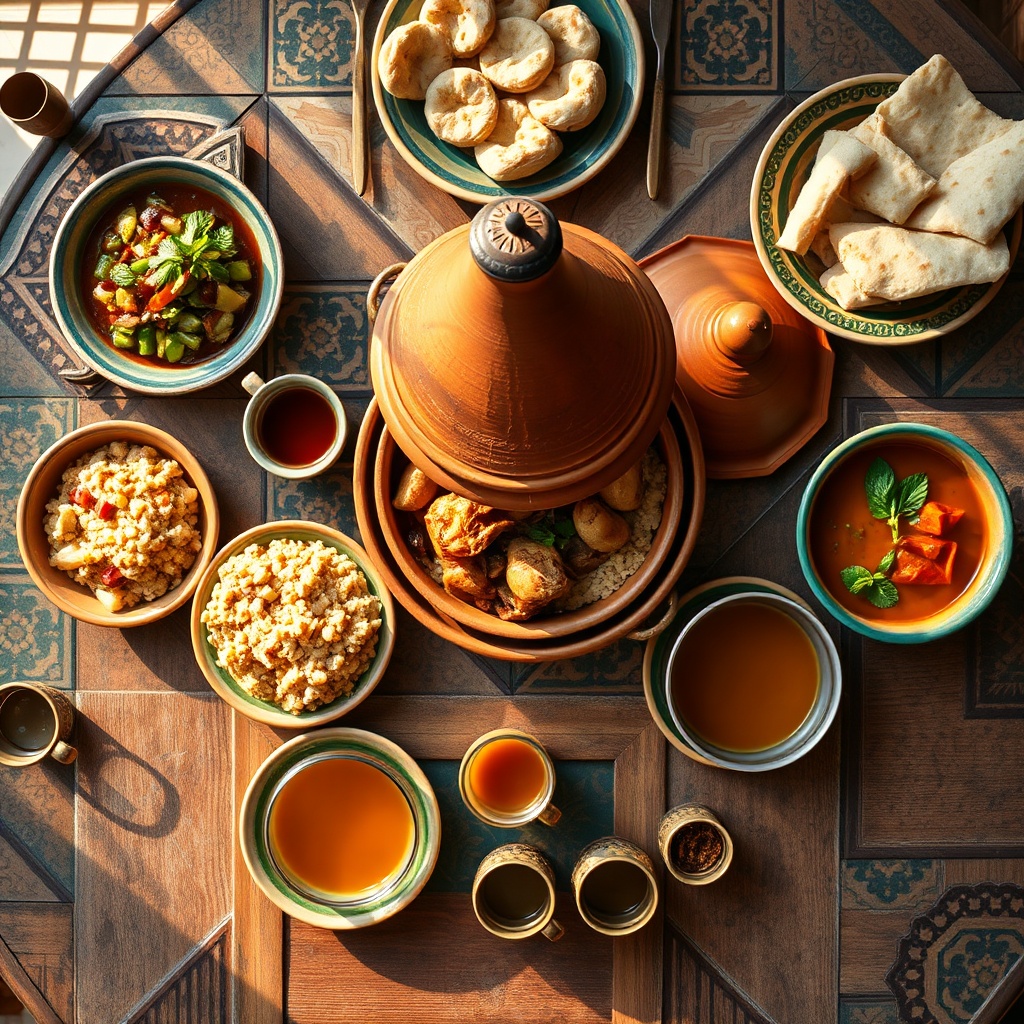
*An overhead view showcasing essential Moroccan culinary staples including tagine, couscous, and mint tea arranged on a festive table setting.*
**Definition:** A definitive list of essential Moroccan dishes that any traveler or food lover should experience to understand the cuisine's core.
The shortlist of must-try Moroccan dishes includes Tagine (chicken with preserved lemon & olives), Couscous (the Friday royal version), Pastilla (a savory-sweet pie), Harira (a tomato-lentil soup), Msemen (a flaky flatbread), Zaalouk (an eggplant salad), Tanjia (a slow-cooked beef specialty from Marrakech), and Mint Tea. These specific dishes represent the core of Moroccan cooking because they demonstrate the balance of sweet, savory, sour, and spicy; the ingenious use of preserved ingredients; and the social importance of shared meals. Use this guide to navigate the culinary landscape, with each section below delving into a category to offer context, variations, and where to find them.
Section 1: The Tagine — Beyond the Cooking Vessel
The tagine is both the conical clay pot and the slow-cooked stew it creates, and it is the cornerstone of Moroccan home cooking. The technique relies on the pot's shape to trap steam, which condenses and recycles moisture, allowing the food to cook in its own juices with minimal added water.
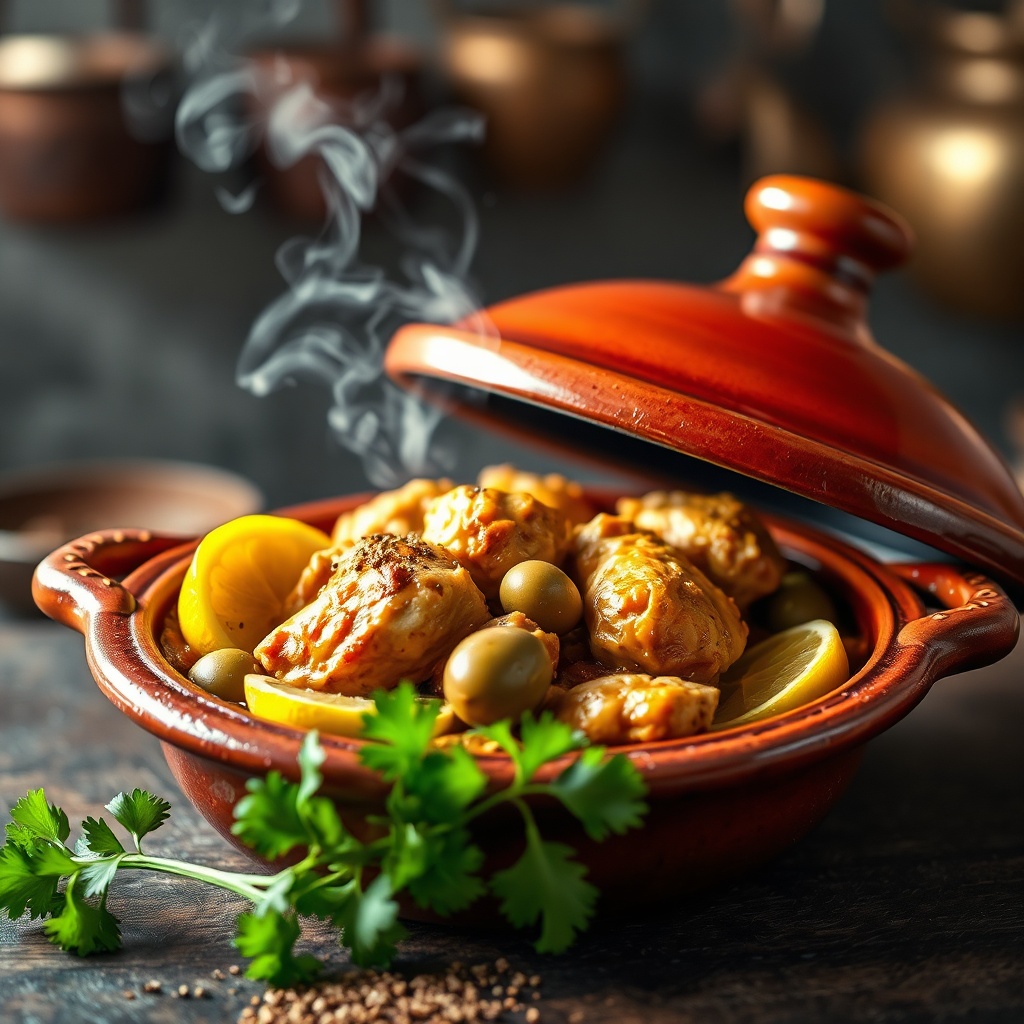
*A detailed macro shot of a classic chicken tagine with preserved lemons and olives, emphasizing the rich sauce and aromatic spices characteristic of Moroccan cuisine.*
The Classic Chicken Tagine with Preserved Lemon and Olives
This is the most famous traditional tagine variety and a perfect introduction to the cuisine. The flavor profile is a masterclass in balance: salty-sour notes from the preserved lemon, a briny punch from the olives, and a sweet-savory depth provided by onions and a pinch of saffron. The chicken is cooked until it is fall-off-the-bone tender, and the sauce is rich and concentrated.
Beef or Lamb Tagine with Prunes and Almonds
This slow-cooked lamb tagine offers a completely different experience, leaning heavily into the sweet-savory contrast that defines many Moroccan celebrations. The meat is braised until tender and then topped with caramelized prunes and toasted almonds, with a dusting of cinnamon. It's a dish often reserved for special occasions, family gatherings, or as a highlight of a festive meal.
Vegetable Tagines: A Vegetarian's Best Friend
Vegetarian Moroccan meals are not an afterthought; they are a cornerstone of the daily diet. A vegetable tagine typically features carrots, zucchini, potatoes, and seasonal squash, slowly simmered in a fragrant broth. Chickpeas add protein and heartiness, while a blend of spices like cumin, turmeric, and ginger gives the dish a robust, satisfying depth that proves you don't need meat for a flavorful meal.
Section 2: The Friday Ritual — Couscous and Its Many Faces
Couscous is not merely a side dish; it is a weekly communal event with specific preparation and etiquette. In Morocco, Friday lunch is the traditional time for the family to gather around a large, shared plate of this steamed semolina.
The Royal Couscous: Seven Vegetables and Tender Meat
The traditional Friday couscous, often called "Royal," is a celebration of the harvest. The steamed semolina is topped with a medley of seven vegetables—such as carrots, turnips, pumpkin, and cabbage—along with tender lamb or beef. The preparation is a labor of love, with the grains traditionally hand-rolled and steamed multiple times to achieve a light, fluffy texture that absorbs the flavorful broth.
Berber Couscous: The Simpler, Rustic Version
In the rural Atlas Mountains, a simpler, rustic version known as Berber couscous is common. This variation uses fewer ingredients, often relying only on whatever seasonal vegetables are available and a simple, uncomplicated broth. The flavor is distinct and earthy, with a more robust texture that reflects the resourcefulness of its origins.
Sweet Couscous (Seffa) — The Dessert Couscous
Seffa is the surprising twist that shows the versatility of the grain. This dessert couscous is steamed, then mixed with cinnamon, sugar, and raisins, and topped with toasted almonds. It's often served with a drizzle of milk or buttermilk, creating a comforting, sweet ending to a meal or a standalone treat.
Section 3: The Pastilla — A Savory-Sweet Pie That Defies Expectations
The pastilla (or bastilla) is the most intricate and celebrated dish of Moroccan cuisine, a testament to its Andalusian roots and its status as a centerpiece for weddings and celebrations. It's a pie that masterfully balances textures and flavors, challenging the Western expectation of savory versus sweet.
Chicken or Pigeon Pastilla: The Classic
The classic pastilla is a showstopper. The filling consists of shredded poultry (traditionally pigeon, but more commonly chicken today) cooked with onions, almonds, cinnamon, and fresh herbs. This mixture is wrapped in layers of crispy warqa pastry—thinner than filo—and baked until golden. The final touch is a dusting of powdered sugar and cinnamon, creating that signature sweet-savory finish.
Seafood Pastilla: The Coastal Variation
A modern twist on the classic, the seafood pastilla is a specialty of coastal cities like Essaouira and Casablanca. This version uses fish or shrimp and vermicelli noodles, seasoned with savory herbs and spices rather than the cinnamon-sugar blend. The result is a lighter, briny, and entirely savory pie that highlights the Atlantic coast's fresh bounty.
How to Eat Pastilla Like a Local
1. Cut the pie into wedges with a sharp knife. 2. Use your hands or a fork to pick up a piece. 3. Savor the contrast between the crispy, sweet top and the moist, savory filling. 4. Pair it with a glass of mint tea to cut through the richness.
Section 4: The Comfort Foods — Soups, Breads, and Street Snacks
Beyond the main courses, the everyday staples of Moroccan food culture are where you'll find the most authentic and accessible flavors. These are the dishes that fuel daily life and define Moroccan street food culture.
Harira: The Soul-Warming Soup
Harira is a rich, tomato-based soup thickened with lentils, chickpeas, and fresh herbs like cilantro and parsley. It's traditionally served to break the fast during Ramadan, but it is enjoyed year-round as a comforting and filling starter. Its complex flavor comes from a blend of spices, including turmeric, ginger, and cinnamon, and it's often served with a squeeze of lemon and a side of dates.
Msemen and Harcha: The Flatbread Duo
Moroccan breakfast is built around these two breads. Msemen is a flaky, square, pan-fried flatbread that is often stuffed with cheese or simply served with honey and butter. Harcha is a crumbly, round semolina bread with a slightly sweet, buttery flavor, best enjoyed with jam or amlou (a paste of almonds, argan oil, and honey).
Street Food Staples: Sardines, Brochettes, and Bissara
The streets of Morocco offer some of the best and most affordable food. Grilled sardines, fresh from the Atlantic, are a staple, typically marinated in chermoula and cooked over an open flame. Brochettes—skewers of meat seasoned with cumin and salt—are a popular snack for any time of day. For a cheap and filling meal, try bissara, a thick fava bean soup topped with olive oil and a generous sprinkle of cumin.
Section 5: The Condiments and Accompaniments That Complete the Meal
Moroccan dishes are never served alone; the condiments are essential to the flavor experience, adding freshness, acidity, and heat to every plate.
Chermoula: The Marinade and Sauce
Chermoula is the quintessential Moroccan marinade and sauce, a vibrant blend of fresh cilantro, garlic, cumin, paprika, and lemon juice. It's used to marinate fish, meat, and vegetables before cooking, and can also be served as a condiment on the side. Variations exist, from fresh and chunky to cooked and smooth, and from mild to fiery.
Preserved Lemons and Olives: The Salty-Sour Duo
Preserved lemons are a key ingredient in many tagines and salads, providing a unique salty-sour flavor that is impossible to replicate with fresh lemons. They are pickled in salt and their own juice for several weeks. Olives, whether green, red, or black, are marinated with herbs, garlic, and chili, and are almost always served as a starter or a side to a meal.
Amlou and Harissa: The Spreads and Heat
Amlou is a rich, nutty spread made from almonds, argan oil, and honey, traditionally eaten for breakfast with bread. It's a healthy and delicious source of energy. Harissa, on the other hand, is a spicy chili paste used as a condiment or a base for sauces. It serves as the primary source of heat in Moroccan cuisine, allowing diners to add spice to their own taste.
Comparison Table: Traditional vs. Modern Moroccan Dining
This table can help you choose between a formal restaurant experience and a street food adventure.
| Aspect | Traditional (Formal/Home) | Modern (Restaurant/Café) | Street Food | | :--- | :--- | :--- | :--- | | **Typical dishes** | Large shared tagine, royal couscous, pastilla | Deconstructed tagines, creative salads, fusion dishes | Msemen, brochettes, bissara, grilled sardines | | **Portion style** | Communal, served in a large central dish | Individually plated, often with a modern presentation | Single-serving, handheld or in a small bowl | | **Atmosphere** | Warm, family-oriented, often in a riad or home | Trendy, stylish, sometimes with a view | Lively, casual, and fast-paced | | **Best for** | A full cultural experience and understanding of home cooking | A more refined or experimental taste of Moroccan flavors | A quick, authentic, and budget-friendly bite |
Step-by-Step Guide: How to Order a Moroccan Meal Like a Local
To navigate a Moroccan menu like a local, follow this simple order:
1. Start with a salad or soup, such as zaalouk (eggplant salad) or harira. 2. Order a main course—a tagine, couscous, or pastilla—and specify if you want it with bread. 3. Ask for a side of condiments: chermoula, preserved lemons, or olives. 4. If you're in a traditional eatery, share the main dish from a common plate. 5. Finish with a dessert like seffa (sweet couscous) or a plate of seasonal fruit. 6. End with a glass of mint tea, poured high to create a frothy top.
FAQ: Common Questions About Moroccan Dishes
**Is Moroccan food very spicy?** No, it's more aromatic than hot. The heat typically comes from harissa, which is served on the side so you can add it to your preference.
**What is the difference between a tagine and a couscous?** A tagine is a slow-cooked stew named after its cooking pot, while couscous is steamed semolina grains, often served with a stew on top.
**Are there vegetarian options in Moroccan cuisine?** Yes, many. Vegetable tagines, couscous with vegetables, zaalouk, bissara, and various breads are all vegetarian-friendly.
**Why is mint tea served with everything?** It's a sign of hospitality and is believed to aid digestion. It is often consumed after meals and during social gatherings.
**What is the best time to experience Moroccan food?** Friday lunch for the traditional couscous, Ramadan evenings for the full iftar spread, and any time of day for street food.
Conclusion
The essential dishes of Moroccan cuisine are more than just food; they are a gateway to the country's soul. From the communal ritual of Friday couscous to the intricate layers of a celebratory pastilla, the flavors are deeply tied to history, hospitality, and the land. To truly understand this North African culinary heritage, go beyond the famous names and explore the regional specialties for yourself. The best way to experience Moroccan cuisine is to eat it as Moroccans do—slowly, generously, and with good company.