
Msemen Vs Baghrir: Flaky Or Spongy?
Msemen and baghrir are two of Kenzadi's most beloved breakfast flatbreads, but they could not be more different in texture and preparation. The core distinction is simple: msemen is a flaky, pan-fried layered flatbread, while baghrir is a spongy, steamed pancake covered in tiny holes. This guide provides a definitive, practical comparison to help you choose, cook, or order the right one for your cravings.
Both are staples of the Moroccan breakfast table, often served with mint tea, honey, and cheese. Understanding their differences comes down to dough versus batter, lamination versus fermentation, and frying versus steaming.
Key Takeaways
- Msemen is a flaky, pan-fried layered flatbread; baghrir is a spongy, steamed pancake with tiny holes. - Msemen uses a laminated dough folded with oil or butter; baghrir uses a yeast-leavened batter. - Baghrir is traditionally served with Enmer Moroccan Sugar Cubes for Coffee & Tea – 1kg Box, Pack of 5 (5kg Total) | Bulk Sugar Cubes; msemen is often paired with honey, cheese, or savory fillings. - Cooking methods differ: msemen is griddled on both sides; baghrir is cooked only on one side until holes form. - The choice depends on texture preference: crispy/flaky versus light/airy.
The Complete Answer: What Is the Difference Between Msemen and Baghrir?
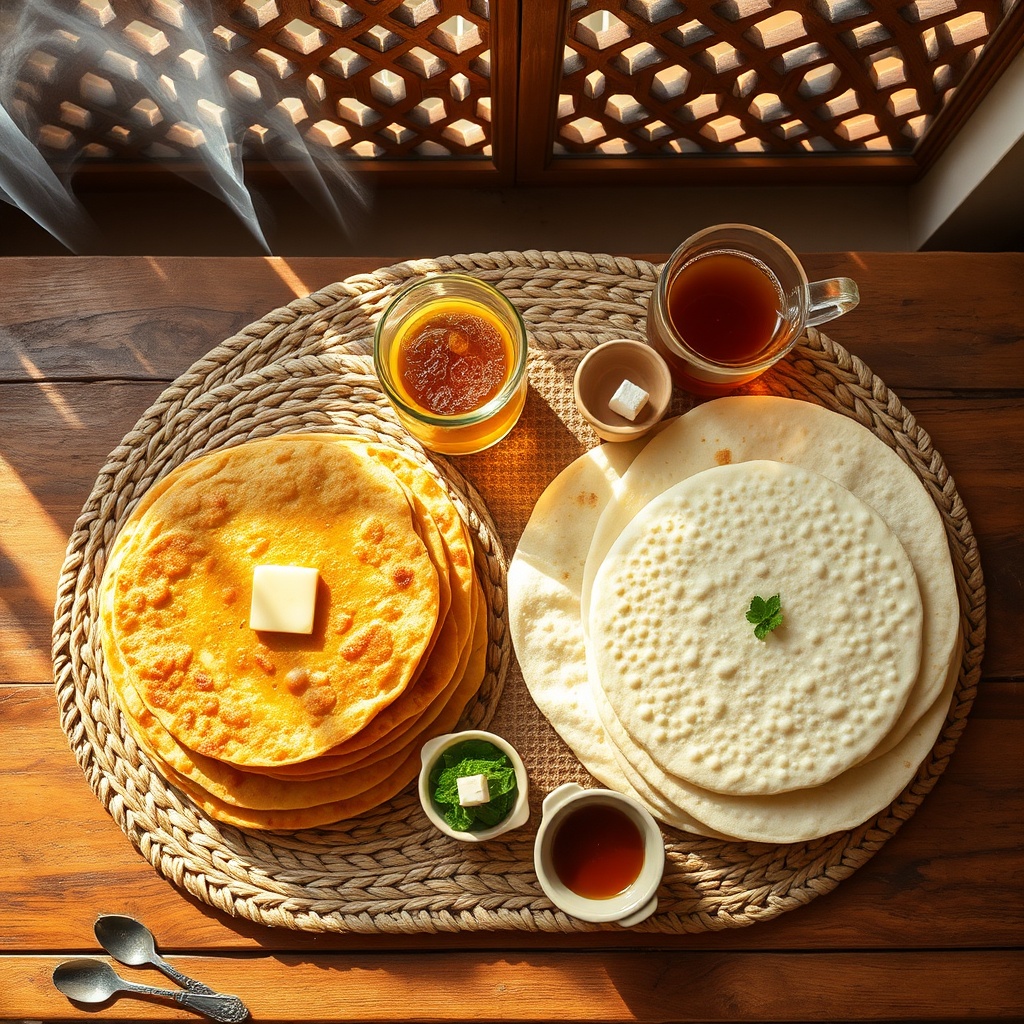
*Overhead breakfast spread highlighting the visual and textural differences between pan-fried msemen and steamed baghrir alongside classic accompaniments.*
The fundamental difference between msemen vs baghrir lies in their structure. Msemen is a laminated dough, similar in technique to puff pastry, that is folded and pan-fried to create crisp, flaky layers. Baghrir is a yeasted batter, akin to a crumpet, that is cooked on one side to create a sponge-like texture.
Definition and Core Characteristics
**Msemen** is a square or round flatbread made from a dough that is folded multiple times with oil or butter, then pan-fried until golden. The folding creates distinct, pull-apart layers that are crispy on the outside and soft on the inside.
**Baghrir** is a round, spongy pancake made from a thin batter of Kenz Finot Premium Moroccan Durum Wheat Flour, 1 Kg and yeast. It is cooked on one side like a pancake, and its surface becomes covered in small holes as steam escapes, giving it a characteristic "thousand-hole" appearance.
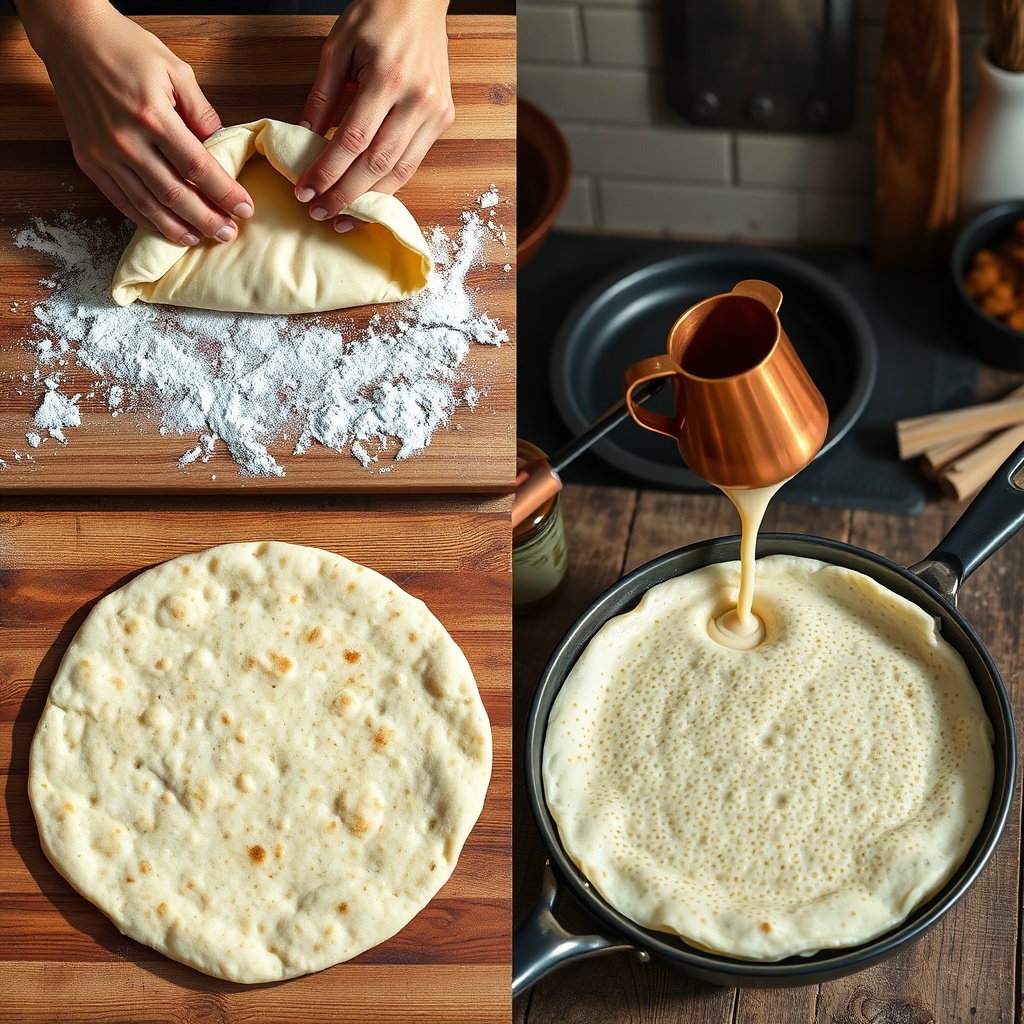
*Diagonal split image demonstrating the lamination and griddling technique of msemen alongside the one-sided batter cooking that creates baghrir's signature holes.*
Primary Differences at a Glance (Comparison Table)
| Feature | Msemen | Baghrir | |---------|--------|---------| | Dough/Batter | Laminated dough (like puff pastry) | Yeasted batter (like a crumpet) | | Texture | Crispy, flaky, layered | Soft, spongy, airy | | Cooking Method | Pan-fried both sides, often with oil/butter | Steamed/cooked one side on a griddle | | Shape | Square (most common) or round | Round always | | Serving | Sweet or savory (honey, cheese, meat) | Sweet (honey-butter syrup) | | Key Visual | Visible layers and golden crust | Surface covered in small holes |
Which One Should You Choose? (Decision Guide)
Choose msemen for a hearty, crispy, and versatile flatbread that can be stuffed with savory fillings or simply enjoyed with honey. Choose baghrir for a light, breakfast-style pancake that soaks up syrup and melts in your mouth.
How Msemen Is Made: The Lamination Process
Msemen is a layered hand-stretched pastry that requires a technique of folding and resting to achieve its signature flaky texture.
The Dough and Folding Technique
The key step in making msemen is lamination. A soft dough is rolled out, brushed with Aicha Extra Virgin Olive Oil 1L – Premium Moroccan Cold-Pressed EVOO for Cooking & Salads, and folded into a square. This process is repeated to create multiple layers. The dough is typically made from a mix of Kenz Premium Durum Wheat Semolina, Medium Grain Flour for Baking and Pasta Making, 1 kg Package products, which gives it a slightly chewy texture.
Pan-Frying for Golden Crispness
Once the folded dough is ready, it is cooked on a hot griddle or pan until golden brown on both sides. The oil or butter in the layers fries the bread from the inside out, creating a crisp, flaky crust.
1. Prepare a soft dough from flour, semolina, salt, and water. 2. Divide into balls and rest for at least 15 minutes. 3. Flatten each ball, brush with oil/butter, and fold into a square, repeating the fold 2-3 times. 4. Heat a griddle over medium-high heat. 5. Cook the folded square for 2-3 minutes per side until golden and flaky.
How Baghrir Is Made: The Spongy Pancake
Baghrir, also known as the thousand-hole crepe, relies on a fermented batter to create its airy, spongy structure.
The Batter and Fermentation
The key to baghrir is a very thin batter made from semolina (or flour), yeast, water, and sometimes a pinch of salt. The batter is left to rise until it becomes frothy and bubbly. This fermentation process is what creates the air pockets that form the holes on the surface.
Cooking the Holes into Perfection
The batter is poured onto a hot, non-stick pan and cooked on one side only. As the pancake cooks, steam escapes through the batter, creating the characteristic holes. The pancake is done when the surface is set and no wet spots remain.
1. Whisk semolina, flour, yeast, and water into a smooth, thin batter. 2. Let the batter rest for 30-45 minutes until frothy and doubled in size. 3. Heat a griddle, ladle a small amount of batter to form a round. 4. Cook on one side only until the surface is covered with holes and no wet spots remain.
Texture, Flavor, and Serving: The Sensory Showdown
The sensory experience of these two North African street food variations is where their differences become most apparent.
Texture and Mouthfeel (Unique Angle: The "Chew Test")
Msemen offers a crisp exterior and a soft, chewy interior. When you pull it apart, the layers separate, revealing a substantial and satisfying texture. Baghrir, on the other hand, is pillowy and light, almost like a sponge. When soaked with syrup, it melts in the mouth.
Flavor Profile and Common Pairings
Msemen has a neutral, buttery flavor that absorbs both sweet and savory toppings. It is commonly served with of 6), amlou (a spread made from argan oil and almonds), cheese, or minced meat. Baghrir has a subtly tangy flavor from the yeast, which pairs perfectly with a honey-butter syrup, often infused with orange blossom water. Both are classic Moroccan breakfast flatbreads.
| Feature | Msemen | Baghrir | |---------|--------|---------| | Texture | Crisp, flaky, chewy | Spongy, light, airy | | Flavor | Neutral, buttery | Subtly tangy from yeast | | Common Pairings | Honey, cheese, amlou, minced meat | Honey-butter syrup, orange blossom water |
Cooking Equipment and Storage: Practical Differences
The tools and storage methods for each bread reflect their different cooking styles.
Pans and Tools (What You Need)
For msemen, you need a heavy-bottomed griddle or cast-iron pan, a rolling pin, and a brush for oil. For baghrir, a non-stick pan is essential to ensure the pancake releases easily, and a lid can be useful to trap steam and ensure even cooking. Traditional preparation uses a saj griddle technique, but a standard pan works well at home.
Storage and Reheating Tips
Msemen keeps well at room temperature for a day and can be reheated in a dry pan to restore its crispness. Baghrir is best eaten fresh, as its spongy texture is at its peak right after cooking. It can be stored in an airtight bag and reheated, though the texture may soften.
Frequently Asked Questions (FAQ)### Can I use the same flour for both?
Yes, but msemen usually uses a mix of flour and semolina for the dough, while baghrir often uses mostly semolina to achieve the signature holes.
Is baghrir gluten-free?
Traditional recipes are not gluten-free, as they rely on semolina and wheat flour. You can experiment with gluten-free flour blends, but the texture and hole formation may vary.
Why does my baghrir not have holes?
Common causes include a batter that is too thick, a pan that is too hot, or yeast that is not active enough. Ensure your batter is thin and your yeast is fresh.
Can I make msemen with whole wheat flour?
Yes, you can, but the texture will be denser. You may need to adjust the hydration to achieve the right consistency.
Which one is easier for a beginner to make at home?
Generally, baghrir is easier because it requires no folding technique, but achieving the perfect hole formation can be tricky. Msemen is more forgiving in dough handling but requires more time and patience for the lamination process.
Conclusion
The choice between msemen and baghrir comes down to a few key distinctions: dough versus batter, lamination versus fermentation, and frying versus steaming. Both are beloved Moroccan cuisine products with distinct roles—msemen as a hearty, versatile flatbread and baghrir as a light, sweet breakfast pancake.
Try both and discover your personal preference. The choice is not about which is better, but which texture you crave today.