
Moroccan Tea Ritual: History, Preparation & Best Tea Sets
Moroccan tea ritual is more than a beverage; it is a living performance where history, chemistry, and design intersect in every pour. A Moroccan host once remarked, “The first glass is as gentle as life, the second is as strong as love, the third is as bitter as death,” capturing the layered symbolism that accompanies each serving. Across the kingdom, adults consume an average of three cups daily, a habit that fuels both social bonding and a steady demand for quality tea leaves like premium Al Mohajer green tea and ornate serveware such as a handmade Moroccan silver tea pot. This article walks you through the ritual’s origins, the science that makes its flavor sing, a precise brewing method you can replicate at home, guidance on selecting a tea set that matches your space and budget, and the ways the tradition is evolving on the world stage.
The Roots of the Ritual: From Berber Caravans to Royal Courts – Moroccan Tea Ritual: History, Preparation & Best Tea Sets
Long before tea arrived in North Africa, Berber tribes traversed the Sahara with caravans carrying dates, wool, and salt. Oral histories from the Atlas Mountains recall that hospitality was offered with herbal infusions made from wild sage or thyme, a practice that signaled safe passage and mutual respect. When Chinese gunpowder green tea reached Moroccan ports in the early 1700s via Dutch traders, it was initially a luxury reserved for coastal elites. The French Protectorate (1912‑1956) intensified imports, turning tea into a national staple; customs records show annual imports rose from 200 metric tons in 1910 to over 1,200 metric tons by 1930.
In Moroccan social life, tea embodies three core values: generosity, patience, and purity. The act of pouring from a height aerates the liquid, creating a frothy crown that guests interpret as a sign of the host’s care. Elders often teach children that refusing a second cup is considered impolite, reinforcing the ritual’s role in strengthening familial and community ties. Anthropologist Dr. Fatima Zahra notes that the tea ceremony functions as a “non‑verbal contract” where each refill renews trust between participants.
The Science Behind the Sip: How Ingredients Interact to Create Flavor
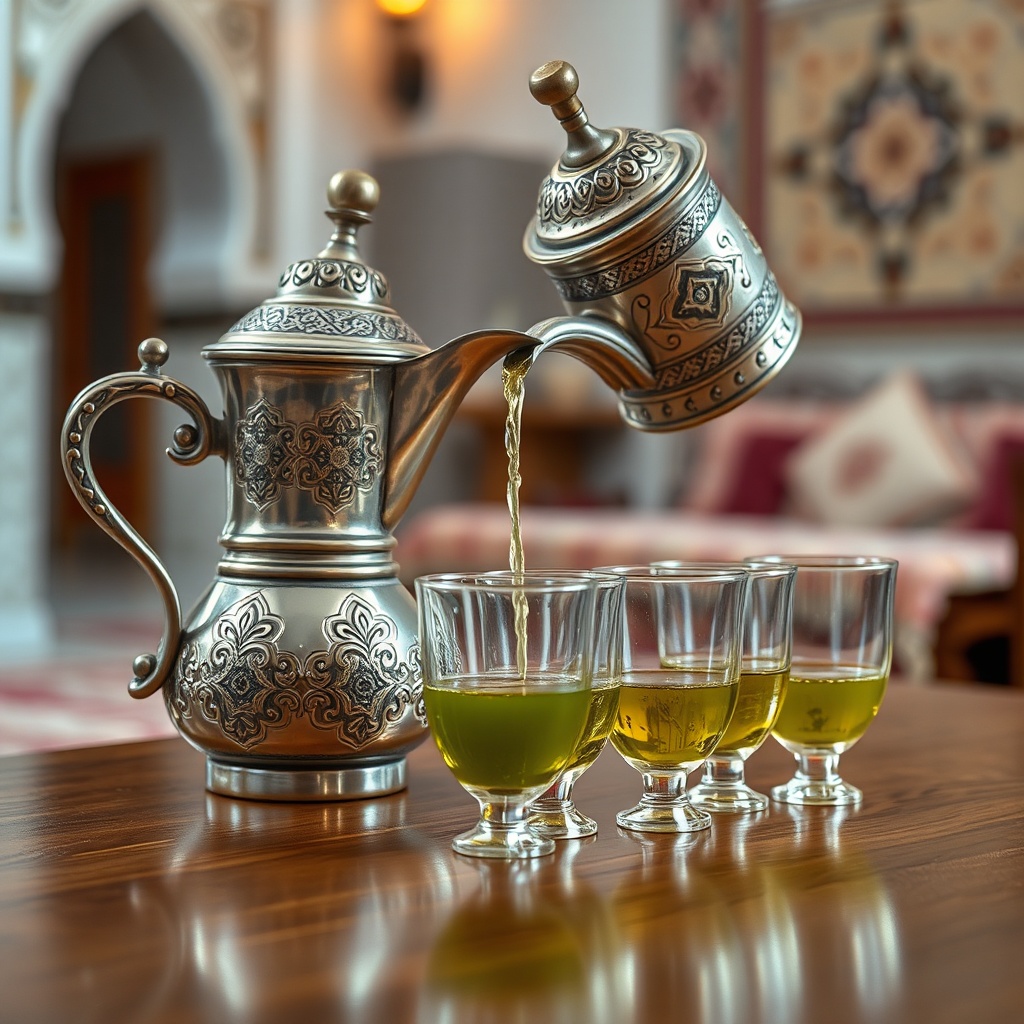
*Showcasing the ornate tea set and its role in the Moroccan tea ritual.*
Gunpowder green tea leaves are tightly rolled, which preserves catechins and limits oxidation during storage. Compared to loose‑leaf Sencha, gunpowder retains approximately 18 % more epigallocatechin gallate (EGCG) after six months, according to a 2021 study published in the Journal of Food Chemistry. This higher antioxidant concentration contributes to the tea’s characteristic astringency, which must be balanced for pleasant sipping.
Spearmint (Mentha spicata) introduces carvone and limonene, volatile oils that bind to bitter receptors on the tongue, reducing perceived bitterness by up to 30 % in sensory tests. Sugar, typically added at a ratio of two teaspoons per 150 ml of liquid, not only sweetens but also increases the solution’s viscosity, slowing the release of tannins and allowing the mint aromas to linger. Water hardness plays a subtle role; calcium ions above 120 mg/L can precipitate polyphenols, dulling flavor. Using filtered water with a hardness of 60‑80 mg/L yields a brighter cup, while a steeping temperature of 80‑85 °C for the first infusion and 90‑95 °C for the second extracts optimal polyphenols without scorching the leaves.
The Ritual in Action: A Precise, Step‑by‑Step Brewing Process
Begin by assembling a berrad (traditional Moroccan teapot), a tray, six small glasses, and a bouchra (tea spoon). A stainless‑steel berrad with a capacity of 1 liter works well for beginners; expect to pay between $25 and $40 for a decent model. Place two teaspoons of gunpowder green tea and a generous handful of fresh spearmint leaves into the pot.
First, rinse the leaves: pour 200 ml of boiling water over them, swirl for ten seconds, then discard the liquid. This step removes dust and awakens the leaves. Next, add 500 ml of fresh hot water (≈85 °C) and let the mixture steep for two minutes. While waiting, dissolve three teaspoons of sugar in the empty glasses.
After the first infusion, pour the tea into a serving glass, then return it to the pot—a technique called “the return” that homogenizes strength. Add another 300 ml of hot water (≈92 °C) and steep for an additional three minutes. The second infusion yields a richer body and deeper aroma.
To serve, lift the berrad at least 30 cm above the glass and pour in a steady, thin stream. The height creates aeration, producing a light foam that signals readiness. Guests traditionally clink their glasses lightly before sipping, a gesture that acknowledges the shared moment.
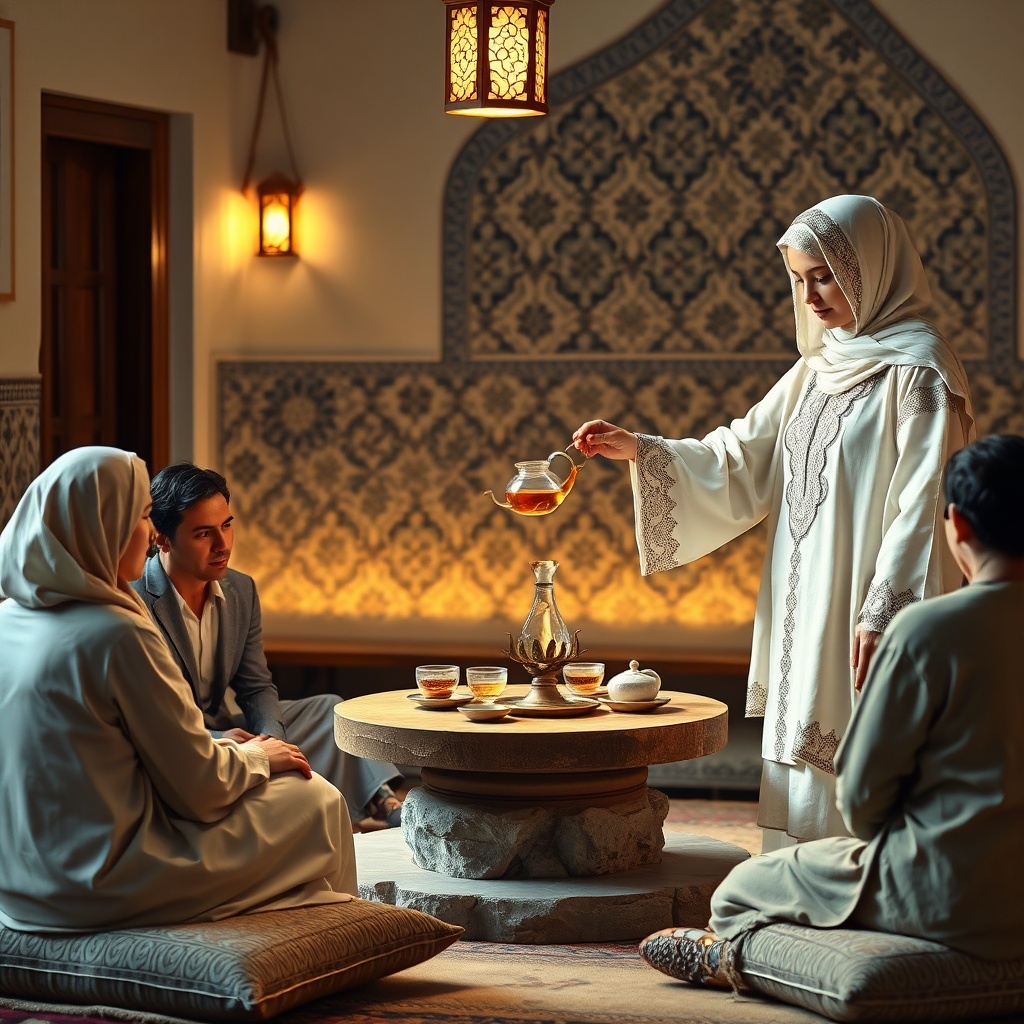
*Illustrating the ceremonial pouring and social aspects of Moroccan tea culture.*
Selecting the Perfect Moroccan Tea Set: Materials, Design, and Budget
Material choice influences both heat retention and visual appeal. Unlacquered brass conducts heat quickly, reaching serving temperature in under two minutes, but requires regular polishing to prevent tarnish. Silver-plated brass offers a brighter finish and antimicrobial properties, with price points ranging from $80 to $150 for a medium‑sized set. Enamel‑coated ceramics provide excellent heat retention and come in vibrant cobalt or turquoise hues; a six‑piece set typically costs $45‑$70. Modern stainless‑steel options resist corrosion and are dishwasher safe, making them practical for daily use; expect to pay $30‑$55 for a basic set.
Design details elevate the experience. Traditional sets feature intricate filigree patterns inspired by Andalusian mosaics, while contemporary interpretations favor clean lines and matte finishes. Glass shape matters: tulip‑style glasses concentrate aromatics, whereas wider tumblers allow the foam to dissipate more slowly. A tray measuring at least 30 cm in diameter accommodates the berrad, glasses, and a small bowl of fresh mint leaves for garnish.
For purchasing, the souks of Marrakech and Fes offer handcrafted brassware directly from artisans; bargaining is customary, and you can often secure a 10‑15 % discount. Cooperatives such as Femmes du Maroc produce ethically sourced silver‑plated sets with profits reinvested in community workshops. Online retailers ship internationally, providing detailed photos and weight specifications; check return policies before ordering. For authentic Moroccan goods at Kenzadi, you can explore a curated selection of traditional and modern tea sets.
Contemporary Twists: How the Moroccan Tea Ritual Is Evolving Globally
Innovation has introduced floral and citrus notes without abandoning the core structure. A popular fusion blends one teaspoon of dried rose petals with the standard gunpowder and mint, steeped for three minutes, yielding a subtle perfume that pairs well with afternoon pastries. Hibiscus (karkade) adds a tart cranberry‑like flavor; use two teaspoons of dried calyces per liter, adjusting sugar to taste. Citrus zest—particularly from Moroccan bergamot—brightens the infusion when added in the final thirty seconds of steeping.
Upscale hotels in Marrakech, such as La Mamounia, have transformed the ritual into a curated experience. Their tea service includes a silver berrad engraved with the hotel’s crest, a selection of three mint variations, and a accompaniment of almond‑filled msemen pastries. Guests receive a brief history card, turning each cup into an educational moment.
Social media amplifies the visual allure of the pour. Instagram reels tagged #MoroccanTea have accumulated over 12 million views in the past year, with top creators showcasing slow‑motion pours that highlight the foam crown. TikTok challenges invite users to replicate the three‑pour tradition while balancing a tray on one hand, generating both humor and appreciation for the skill involved.
Conclusion
The Moroccan tea ritual weaves together centuries of trade, scientific nuance, and artistic design into a practice that feels both timeless and adaptable. By understanding its Berber origins, mastering the precise chemistry of gunpowder tea, spearmint, and sugar, and choosing a set that matches your aesthetic and functional needs, you gain access to a cultural heritage that transcends borders. Whether you serve it in a bustling souk café or a quiet kitchen at home, the act of pouring from a height remains a gesture of welcome and connection.
Ready to try? Download our free “Moroccan Tea Ritual Cheat Sheet” for cheat sheet) to keep the steps, measurements:** 2 tsp gunpowder tea, ½ cup fresh spearmint, 3 tsp sugar per serving, first infusion 85 °C for 2 min, second infusion 92 °C for 3 min, pour height ≥30 cm.
Explore the ritual yourself and share your experience—download the **Moroccan Tea Ritual Cheat Sheet** for a printable guide to temperatures, timings, and set‑care tips.