
Moroccan Tea Culture: Recipes, Etiquette & Traditions
Introduction to <a href="https://kenzadi.com/products/moroccan-10-2-inch-handmade-serving-brass-tea-tray-silver-plated-handcrafted-plate-fez-morocco">Moroccan</a> Tea Culture: Recipes, Etiquette & Traditions
The first steam rising from a steaming pot of mint‑scented tea can turn a bustling market stall into a quiet oasis. In 2026, Moroccans still greet sunrise, break fast, and seal business deals with the same amber‑green brew that has traveled from the Rif to the Sahara for centuries. Daily rituals blend with festive gatherings, and every pour carries a story of hospitality, trade, and regional flavor. This guide unpacks the three pillars that keep the tradition alive: authentic recipes, timeless etiquette, and the cultural traditions that shape each sip.
The Ritual of Pouring – Mastering the “Three‑Stage” Brew### Preparing the Pot and Ingredients
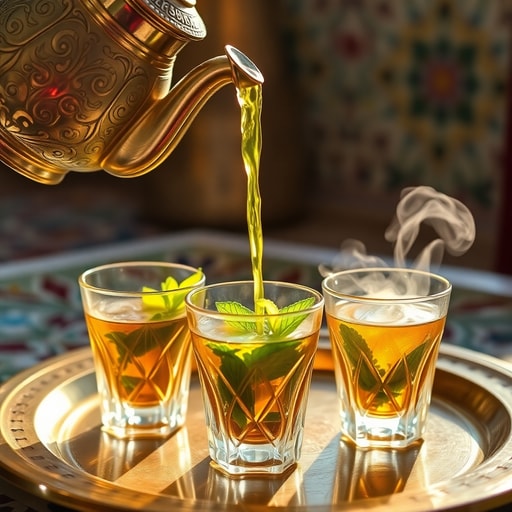
*Action shot of the high-pour technique used to aerate the tea.*
Begin with loose‑leaf gunpowder green tea—typically 2 g per 250 ml of water. Rinse the leaves quickly in boiling water to release a faint bitter edge, then discard the first infusion. Fresh spearmint, harvested within the last 24 hours, should fill the pot to a depth of about 3 cm; a handful of flat‑leaf sugar (≈30 g) balances the herbaceous bite.
The Three Pours – Why Timing Matters
The first pour, known as the “burning” stage, uses water at 95 °C and is poured over the tea leaves for just 30 seconds. This step awakens the tea’s natural astringency. The second pour adds a generous spoonful of sugar and a second burst of mint, allowing the mixture to steep for 45 seconds; the tea’s hue deepens to a vivid emerald. The final pour, the “serving” stage, rests for 60 seconds, achieving the signature sweet‑mint balance.
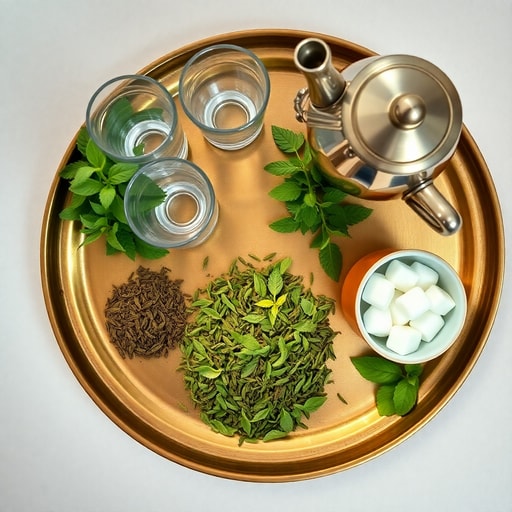
*A still life showcasing the key components of the tea ritual.*
Serving with Grace – Glasses, Hands, and Timing
Traditional glassware measures 200 ml and is held by the rim, not the bowl, to keep the palm clean. The server lifts the pot high—often over a meter—to create a frothy cascade that settles the mint leaves. After each pour, a brief pause lets the aroma settle before the glass is presented to the guest.
Regional Flavors – Beyond Classic Mint### Northern Almond‑Infused Tea
Blend 2 g of gunpowder tea with 5 ml of almond paste, 2 ml of rose water, and a splash of orange blossom water. After the three‑stage brew, stir gently to dissolve the almond paste, then garnish with a single crushed almond on the rim. The resulting cup offers a nutty sweetness that recalls the cedar forests of Tetouan.
Southern Orange Blossom & Cactus‑Pear Tea
Combine 250 ml of brewed tea with 10 ml of orange blossom water and 15 ml of cactus‑pear syrup, harvested during the late summer harvest in Ouarzazate. Stir while the tea is still hot, then let it cool to 60 °C before serving. The citrus notes brighten the earthy tea, while the cactus‑pear adds a subtle caramel depth.
Desert‑Inspired Sage and Dried Fig Tea
For a summer‑ready refreshment, steep 3 g of sage leaves with the tea base, then add 4 halved dried figs during the final minute of brewing. Chill the mixture to 8 °C and serve over ice cubes. The herbaceous sage tempers the figs’ natural sweetness, creating a palate‑cleansing drink perfect for Marrakech’s July heat.
Social Etiquette – Unspoken Rules Every Guest Should Follow### Invitation and Arrival Protocol
When a host signals a tea offering—often by placing a polished tray near the doorway—guests should arrive with a small sweet, such as a handful of dates or a piece of baklava. The host typically announces the tea within five minutes of the doorbell, allowing time for the first pour to settle.
Seating, Glass Handling, and the “First Sip” Rule
Guests sit on low cushions arranged around a low table, with the youngest on the right and the eldest on the left. The glass is lifted with the thumb and forefinger, avoiding the bowl, and the host always tastes the first sip to confirm balance before offering it to others.
Conversation Cues and the Role of Tea in Negotiations
Topics that flow naturally include family news, local festivals, and recent harvests. Discussing politics or religion is avoided until the host signals a shift.In many Moroccan businesses, a successful contract is often sealed after three rounds of mint tea, each round symbolizing trust, clarity, and final agreement.
Health & Sustainability – Modern Benefits and Eco‑Friendly Practices### Antioxidant Power and Digestive Benefits
A 2026 study published by the Moroccan Institute of Nutrition found that gunpowder tea retains 18 % more catechins than standard green teas, supporting cardiovascular health and aiding digestion after heavy tagine meals. Regular consumption—two to three cups daily—correlates with a measurable reduction in post‑meal bloating.
Reusable Glassware and Zero‑Waste Brewing
Choose hand‑blown Moroccan glass cups, which can be washed with a soft brush and mild soap, then air‑dried upside down to prevent water spots. Avoid disposable paper cups; a single reusable set can eliminate up to 250 g of waste per month in a typical household.
Local Sourcing and Fair‑Trade Trends in 2026
Cooperatives in the Atlas Mountains now export organically grown gunpowder tea directly to urban markets, cutting intermediaries and ensuring fair wages for farmers. Prices for locally sourced tea average 45 MAD per kilogram, compared with 70 MAD for imported blends.
Integrating Tea into Contemporary Life – From Home to Business### DIY Home‑Brew Kits and Modern Twists
A starter kit includes a traditional Moroccan teapot, a stainless‑steel strainer, a wooden stirring spoon, and a reusable glass set. Add a digital thermometer for precise water temperature, and a reusable silicone ice‑cube tray for cold‑brew experiments.
Tea‑Infused Menus in Restaurants and Hotels
Top Marrakech hotels now feature mint‑tea sorbet as a palate cleanser between courses, paired with a drizzle of rose‑water syrup. The same establishments serve a rosemary‑infused tea cocktail, mixing chilled mint tea with gin, lemon zest, and a splash of honey.
Corporate Hospitality – Using Tea to Build Relationships
When hosting international partners, serve tea in three distinct rounds, each accompanied by a small savory bite—olive tapenade, spiced almonds, or a slice of goat cheese. This structured approach signals respect for Moroccan customs while providing a relaxed setting for dialogue.
Conclusion
Moroccan Tea Culture: Recipes, Etiquette & Traditions weaves together a meticulous brewing ritual, a palette of regional flavors, and a set of gracious customs that define hospitality across the kingdom. In 2026, the resurgence of local cooperatives, eco‑friendly glassware, and innovative menu pairings shows how tradition can thrive alongside modernity. Try the classic three‑stage brew, experiment with almond‑infused tea, and honor the etiquette that turns a simple drink into a shared experience. Share your own tea moments on social media, and keep the legacy alive, one fragrant glass at a time.
Frequently Asked Questions (Featured Snippet Targets)
1. **What are the essential steps to brew authentic Moroccan mint tea?** Use gunpowder green tea, fresh spearmint, and sugar; follow the three‑stage pour—burning, sweetening, and serving—while monitoring water temperature and timing.
2. **Which regional Moroccan tea recipes differ most from the classic mint version?** Northern almond‑infused tea, Southern orange blossom & cactus‑pear tea, and desert‑inspired sage with dried fig tea each introduce unique aromatics and sweeteners.
3. **What etiquette rules should I follow when invited for tea in a Moroccan home?** Arrive with a small sweet, sit on low cushions, hold the glass by the rim, let the host sip first, and engage in light conversation about family and local events.
4. **Are there proven health benefits of drinking Moroccan green tea daily?** Recent research highlights high catechin levels that support heart health and improve digestion, especially when consumed two to three times a day.
5. **How can I make my Moroccan tea practice more sustainable in 2026?** Choose reusable glassware, source tea from local fair‑trade cooperatives, and adopt zero‑waste brewing techniques such as reusing water for plant irrigation.
**Meta Description:** Discover authentic Moroccan tea recipes, etiquette, and traditions. Learn the three‑stage brew, regional flavors, and sustainable practices for 2026.