
The Ultimate Moroccan Tea Ceremony Guide
The Art of the Moroccan Tea Ceremony
The **Moroccan tea ceremony** is far more than a method of brewing beverages; it is a choreographed ritual of hospitality that defines social interaction across North Africa. Known locally as "At-tay" or jokingly as "Moroccan whiskey" due to its ubiquitous presence, this ceremony involves the precise preparation of **Maghrebi mint tea**, served to guests as a symbol of friendship and respect. The experience is defined by the sensory clinking of small glasses, the aromatic steam of **fresh spearmint**, and the impressive visual of **pouring from height** to create a frothy crown. This guide explores the history, intricate technique, essential etiquette, and the modern evolution of this timeless tradition.
Key Takeaways
- The **Moroccan tea ceremony** is a symbol of hospitality and friendship, serving as a cultural performance rather than just a beverage preparation. - Authentic preparation requires specific ingredients: **Gunpowder tea**, abundant fresh mint, and copious amounts of sugar. - The "high pour" technique is essential for creating the characteristic foam and aerating the tea for optimal flavor. - Drinking three glasses is customary, with each representing a different stage of life or feeling as defined by local proverbs. - Modern practices in 2026 are increasingly focusing on sustainable sourcing of tea leaves and organic mint cultivation.
The Essence of the Moroccan Tea Ceremony: A Definitive Guide
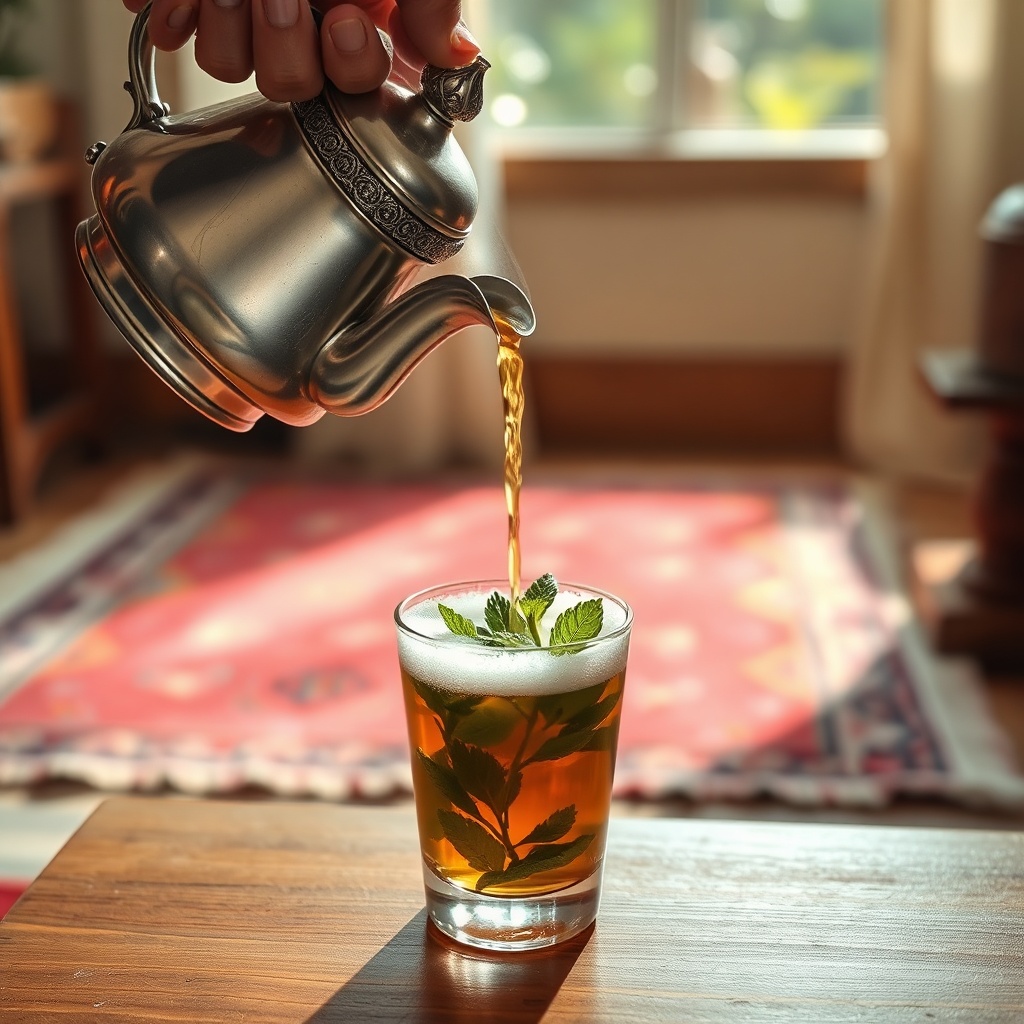
*An action shot highlighting the skill of pouring tea from height to create the signature foam.*
The **Moroccan tea ceremony** functions as a choreographed cultural performance central to Moroccan social life, acting as a bridge between strangers and a reaffirmation of bonds between friends. It is historically a male-dominated preparation, particularly in rural settings where men gather in public squares, yet it is universally enjoyed by all demographics in private homes. The ritual relies on specific core components: the **barrad** (a metal teapot, typically silver or brass), the **kissan** (a large serving tray), and delicate, decorated glasses. Unlike the rapid "grab-and-go" nature of Western coffee culture, this ceremony is about slowing down, encouraging extended conversation, and demonstrating **Moroccan hospitality**. Refusing tea when offered is generally considered impolite unless declined for specific health or religious reasons, as it is viewed as a rejection of the host's generosity.
**Quick Answer:** The Moroccan tea ceremony is a ritual of hospitality involving Gunpowder green tea, fresh mint, and sugar, prepared in a silver pot and poured from a height to create foam. It signifies friendship and welcome.
The Historical Roots
Tea was not native to Morocco but was introduced in the 18th and 19th centuries through complex trade routes connecting Europe, China, and the Maghreb. A pivotal historical moment occurred during the Crimean War (1853–1856) when the British blockade of Baltic ports forced tea merchants to divert their cargos of **Gunpowder tea** to Moroccan ports like Tangier and Agadir. The local population embraced the beverage, evolving it into a distinct national staple. Prior to this, Moroccans consumed herbal infusions, but the introduction of Chinese green tea created a new culinary tradition that seamlessly integrated with the abundant local mint supply.
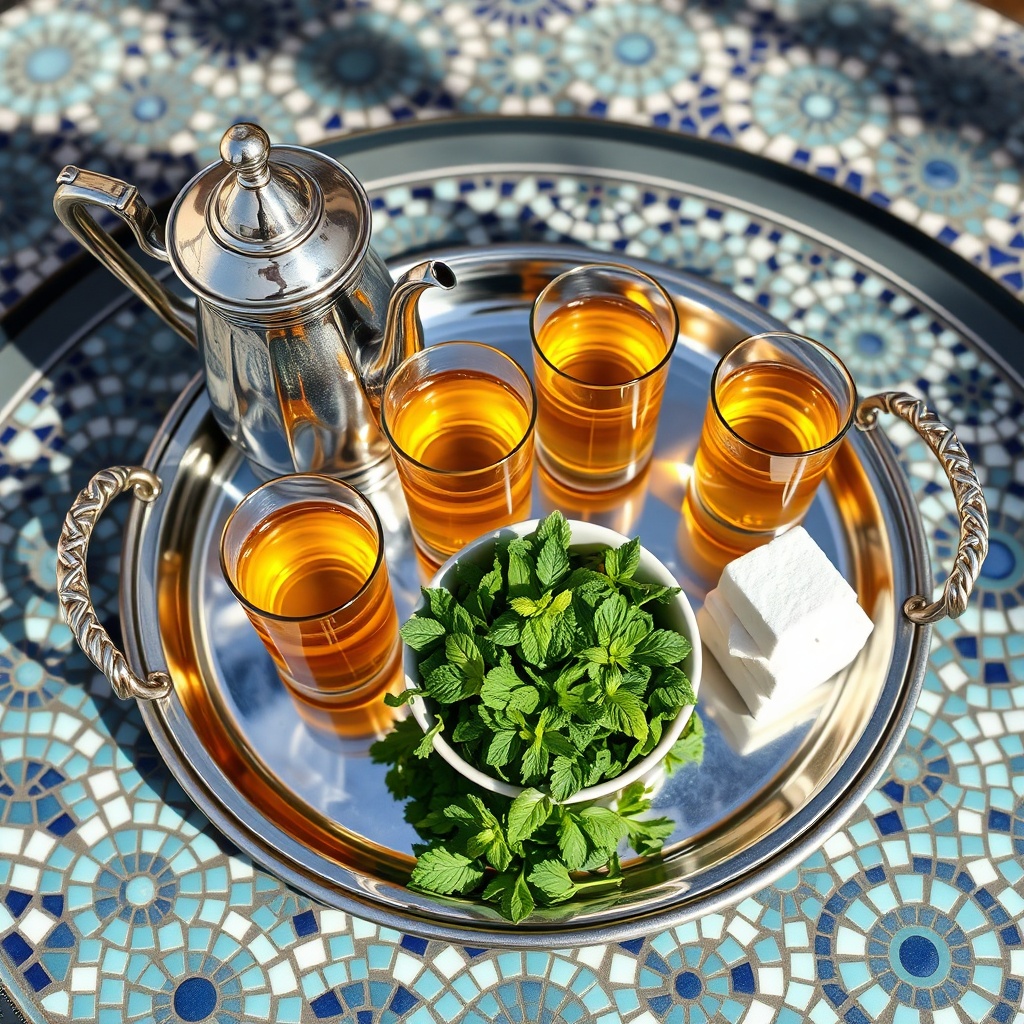
*A detailed composition showcasing the essential ingredients and traditional silverware used in the ritual.*
Cultural Symbolism
Offering tea in Morocco signifies deep trust and the cementing of a bond between host and guest. The preparation time is intentionally long, often taking 20 to 30 minutes, specifically to allow for extended conversation and negotiation. The act of serving is a non-verbal communication of peace, often used to seal business deals or resolve disputes. In a culture where time is viewed relationally rather than transactionally, the tea ceremony forces participants to pause, disconnect from the urgency of daily life, and engage in meaningful human connection.
The Anatomy of the Perfect Pour: Technique and Ingredients
Creating the perfect cup requires mastering **tea preparation steps** that involve rinsing, brewing, and steeping in a specific sequence. The base is always Chinese **Gunpowder tea**, so named because the leaves are rolled into small, shiny pellets that resemble gunpowder grains. These pellets unfold slowly during brewing, releasing a robust flavor that stands up to the sweetness of sugar and the potency of mint. The ratio of ingredients is generous; a typical pot might include two tablespoons of tea leaves, a large handful of mint, and at least five to six teaspoons of sugar, often in the form of large loaves or cubes.
**Quick Answer:** To make authentic tea, use Gunpowder green tea, fresh spearmint (not peppermint), and generous sugar. The key is the "high pour" technique—pouring the tea from a height of 12 <a href="https://kenzadi.com/products/12-2-inch-moroccan-handmade-serving-tea-tray-silver-plated-brass-handcrafted-plate-in-fez-morocco">inch</a>es or more to oxygenate the liquid and create a frothy layer.
Selecting the Right Ingredients
The authenticity of the flavor hinges on using "Na'na" (fresh **spearmint**) rather than dried peppermint, which provides a sweeter, more delicate profile. Dried mint often results in a medicinal taste, whereas fresh Na'na imparts a vibrant, garden-fresh aroma. In rural variations, particularly in the Atlas Mountains, families might add other herbs like wormwood (*chiba*) for bitterness or lemon verbena (*louisa*) for a citrusy aroma. These additions reflect the local biodiversity and are often used for specific medicinal purposes or seasonal availability.
The High-Pour Technique
The high pour is the most dramatic element of the **Moroccan tea ceremony**. The host holds the pot high above the glass—often 12 to 18 inches—and pours a thin, steady stream of liquid. This technique serves two scientific purposes: it cools the tea slightly as it aerates, and it oxidizes the tannins in the **Gunpowder tea**, releasing essential oils that create a complex flavor profile. The goal is to produce a layer of froth, or "kchkoucha," on top of each glass. This foam acts as an insulator, keeping the tea hot while trapping the aromatic compounds inside the glass for the drinker to enjoy first.
**Definition:** **Gunpowder tea** is a form of Chinese green tea where each leaf has been rolled into a small round pellet. Its name comes from the resemblance to the pellets used in early muskets. This rolling process preserves the flavor and freshness of the tea leaves longer than loose leaf tea.
Symbolism in Silver and Glass: Traditional Tea Ware
The equipment used in the ceremony is as important as the liquid itself, blending aesthetic beauty with functional design. The **Moroccan teapot**, or *barrad*, is typically made of heavy metals like brass or silver, which retain heat efficiently. These pots are often adorned with ornate engravings featuring geometric patterns, floral motifs, or calligraphic script. The tray serves as the centerpiece of the gathering, grounding the social interaction and providing a stage for the host's performance. It is usually made of hammered brass or wood and is large enough to hold the pot, glasses, and sugar bowl.
The Significance of the Teapot
In many Moroccan households, the **Moroccan teapot** is a family heirloom passed down through generations, developing a rich patina that tells the story of countless gatherings. Different regions favor different metals; for instance, the city of Fes is famous for its engraved silver work, while other areas might prefer the rustic look of unpolished brass. The shape of the pot is also functional, featuring a long curved spout designed specifically to facilitate the high pour without splashing.
The Artistry of the Glass
Tea glasses are typically colorful, intricate, and sturdy enough to handle hot liquid. They are often decorated with filigree metalwork on the rim or painted with floral designs. The color of the glass can indicate the region of origin or the specific occasion; for example, ruby red glasses might be favored for weddings due to their celebratory connotation, while green glasses are common for daily use. The glass must be thick enough to be held comfortably despite the heat of the tea, yet translucent enough to admire the rich amber color of the brew.
Navigating Social Etiquette: The Unspoken Rules of Service
Understanding **Moroccan dining etiquette** is crucial for participating respectfully in the **Moroccan tea ceremony**. There is a specific hierarchy of serving: the host serves the eldest or most honored guest first, continuing down the line of age or status. A host must always drink a small amount of the first batch themselves to ensure it is safe and of good quality before offering it to guests—a practice rooted in historical traditions of safety and trust. The glass is filled only about three fingers' width high, allowing the liquid to cool rapidly to a drinkable temperature.
**Quick Answer:** When served tea, accept with your right hand. It is polite to drink at least one glass, but three is traditional. If you want more, leave the glass in the tray; if you are finished, you may place it on the table, though the host will often refill it regardless.
The Rule of Three Glasses
A famous proverb governs the consumption of tea: "The first is as bitter as life, the second is as strong as love, the third is as gentle as death." This poetic guideline suggests that the tea evolves in flavor as the sugar dissolves and the mint steeps longer. Stopping at one or two glasses is acceptable, but consuming three signifies the completion of the experience and full acceptance of the host's hospitality. The third glass is often considered the sweetest and most flavorful, representing the peace that comes at the end of a long journey.
Guest Responsibilities
Guests should accept the glass using only the right hand, as the left hand is traditionally considered unclean in Islamic culture. It is customary to compliment the tea's flavor, often by saying "Besseha" (to health) or "M'a salama" (with peace), which is expected and deeply appreciated by the host. Slurping is not considered rude; in fact, it can be a sign of enjoyment. Guests should not stir the tea with a spoon; the act of pouring from the pot has already mixed the sugar and mint perfectly.
The Modern Mint Tea: Sustainability and Evolution in 2026
The tradition is adapting rapidly to contemporary global standards and environmental concerns in 2026. There is a significant shift towards organic farming of mint in the Atlas Mountains, driven by consumer demand to reduce pesticide use and protect the region's biodiversity. Major cities like Marrakech and Casablanca have seen the emergence of specialized "tea houses" that cater specifically to eco-conscious tourists, offering workshops on sustainable brewing. Furthermore, health trends are influencing the recipe, with a growing movement toward reducing sugar content or using natural sweeteners like stevia to address diabetes concerns while maintaining the ritual's integrity.
Ethical Sourcing Trends
Fair Trade organizations have launched new initiatives in 2026 to ensure better wages for tea farmers in the Meknes region, the heart of Morocco's tea trade. These programs focus on transparency in the supply chain, ensuring that the profits from the booming export of Moroccan tea culture are shared equitably. Additionally, there is a concerted move away from plastic tea packaging in favor of biodegradable materials, such as muslin cloth bags for mint and recyclable paper for **Gunpowder tea** canisters, aligning the tradition with zero-waste principles.
Fusion and Variations
Modern chefs are creatively incorporating the tea ceremony into dessert pairings and fusion cocktails, using the tea as a base for reductions and sorbets. The rise of "tea tourism" is notable in 2026, with visitors flocking to riads to learn the ritual in a zero-waste environment. Pop-up events in London and New York this year have showcased the **Moroccan tea ceremony** as a performance art, blending traditional Gnawa music with contemporary mixology. These innovations are not erasing the tradition but rather ensuring its relevance in a globalized, health-conscious world.
FAQ
**What kind of tea is used in the Moroccan tea ceremony?** The ceremony uses Chinese **Gunpowder tea**, a green tea where leaves are rolled into small pellets. This specific type is chosen for its strong flavor which holds up well against sugar and mint.
**Why is Moroccan tea so sweet?** Sugar is used historically as a preservative and a sign of wealth. It also balances the bitterness of the strong green tea and the vegetal taste of the mint, creating a complex flavor profile.
**What is the meaning behind pouring tea from a high height?** Pouring from a height cools the tea and aerates it, releasing essential oils from the mint and tea. It creates the signature frothy foam on top, which is essential for the taste and presentation.
**Can you refuse a cup of tea in Morocco?** While it is technically possible, refusing tea is often considered impolite as it rejects the host's offer of hospitality. It is better to accept a small glass if possible.
**What are the three glasses of tea supposed to represent?** The proverb states: the first is bitter like life, the second is strong like love, and the third is gentle like death. It symbolizes the evolving nature of the human experience.
Conclusion
The **Moroccan tea ceremony** remains the heartbeat of Moroccan social interaction, a timeless practice that transcends mere consumption to become a medium for communication, patience, and generosity. It is a ritual that demands presence, forcing both host and guest to step away from the distractions of the modern world and engage in a shared moment of humanity. Whether you are navigating the souks of Fes or sitting in a quiet riad in Marrakech, the offering of tea is an invitation to connect. As the tradition evolves with sustainable practices in 2026, its core spirit remains unchanged. You are encouraged to try replicating this ceremony at home or, better yet, experiencing it authentically during your travels to fully grasp the warmth of **Moroccan hospitality**. Preserving these traditions connects our fast-paced modern society to its historical roots, reminding us of the value of slowing down.