
Moroccan Tagine Vs French Tagine: Which Wins?
The Tagine products are a symbol of Moroccan cuisine, but the term "tagine" also appears in French cooking—often in confusingly different ways. When comparing **moroccan tagine vs french tagine**, the confusion usually comes down to three overlapping meanings: the vessel, the dish, and the technique. This guide clarifies the fundamental differences, cultural contexts, and practical applications of each style, so you know exactly what to expect when you see the word on a menu or in a recipe.
Key Takeaways
- A Moroccan tagine is both a specific clay cooking vessel and the slow-cooked stew prepared inside it, defined by its conical lid and aromatic spice blends. - A French tagine is not a traditional French dish; it is a French reinterpretation of the Moroccan concept, often using braising techniques, wine, and French herbs. - The primary differences lie in the cooking vessel, the seasoning profile, and the cultural intent—authenticity vs. adaptation. - French tagines typically use a Dutch oven or cocotte, while Moroccan tagines use the unglazed or glazed clay pot with a conical lid. - Understanding the distinction helps you choose the right recipe, equipment, and flavor expectations for your kitchen.
The Complete Answer: What Is the Difference Between Moroccan and French Tagine?
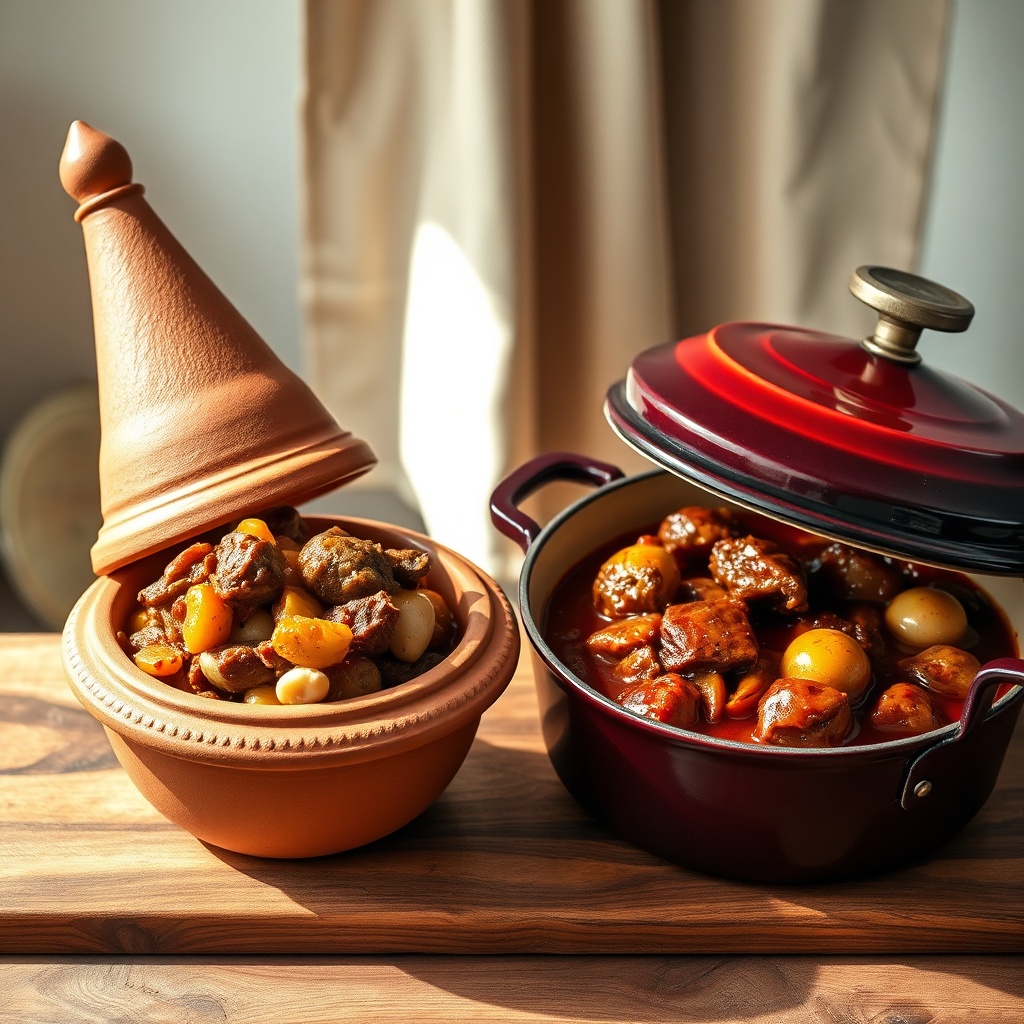
*Visual breakdown contrasting the traditional clay tagine pot and North African spice profile with the French braising method and European herb blend.*
Definition of a Moroccan Tagine
In Moroccan cuisine, "tagine" refers to two things simultaneously: the vessel and the dish. The vessel is a shallow earthenware pot with a distinctive conical lid, traditionally made by artisans showcasing Moroccan crafts in North Africa. The dish is a slow-simmered stew of meat, poultry, or fish cooked with vegetables and often dried fruits.
The conical lid is the defining feature. It traps steam, which then condenses on the inner walls and drips back down onto the ingredients. This self-basting mechanism allows the dish to cook with very little added liquid, resulting in a concentrated, deeply flavored sauce. This style of cooking is rooted in Berber tradition and remains a cornerstone of Moroccan home cooking.
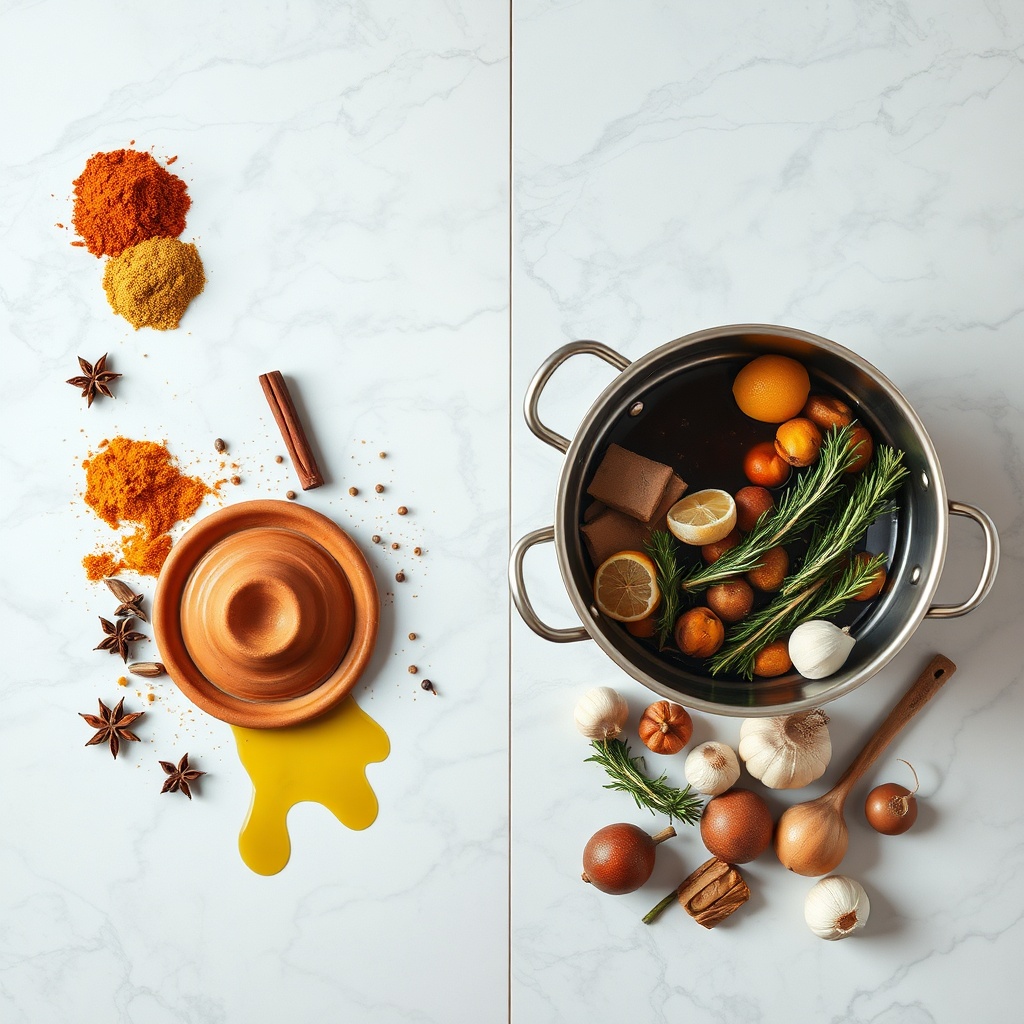
*Ingredient-focused composition highlighting the distinct spice blends, aromatics, and braising methods central to each culinary tradition.*
Definition of a French Tagine
A "French tagine" is not a native French dish. It is a French culinary adaptation of the Moroccan classic. French chefs have embraced the concept of a slow-cooked stew with North African flavors, but they often apply French techniques to the process.
Instead of a clay pot, a French tagine is frequently prepared in a cocotte—an enameled cast-iron Dutch oven. The cooking method may involve browning the meat first, deglazing with wine, and using a mirepoix (onion, carrot, celery) as a flavor base. The spice profile is often simplified, with fresh herbs like thyme and bay leaf taking the place of complex Moroccan blends. The result is a more sauce-like, braised dish that fits within the French culinary tradition.
Core Differences at a Glance
The essential differences between the two styles are summarized below. The French version may include ingredients like olives, preserved lemons, or harissa, but often in a more restrained manner compared to the bold use in Moroccan cooking.
| Aspect | Moroccan Tagine | French Tagine | | :--- | :--- | :--- | | **Primary vessel** | Earthenware clay pot with a conical lid | Enameled cast-iron cocotte (Dutch oven) or modern ceramic tagine | | **Cooking method** | Slow simmering with minimal liquid, relying on steam circulation | Braising: browning first, then adding liquid (wine, stock) to create a sauce | | **Flavor base** | Aromatics like onions, garlic, and ginger with complex spice blends | Mirepoix (onion, carrot, celery) and fresh herbs | | **Signature spices** | Ras el hanout, cumin, cinnamon, ginger, paprika | Thyme, bay leaf, and sometimes a subtle touch of 70g Tube harissa or preserved lemon | | **Liquid content** | Very low; the dish cooks in its own juices | Higher; a visible sauce is created through deglazing and simmering | | **Typical ingredients** | Lamb, chicken, dried fruits (apricots, prunes), almonds, olives | Chicken, beef, mushrooms, white wine, potatoes | | **Serving style** | Served directly in the cooking vessel | Often transferred to a serving dish, possibly a tagine-shaped ceramic bowl for presentation |
Vessel and Cooking Method: The Physical Divide### The Moroccan Tagine Pot: Design and Function
The traditional Moroccan tagine pot is made of clay, either unglazed or partially glazed. The unglazed version is porous and needs to be soaked in water before use to prevent cracking. The pot's design is purely functional: the wide, shallow base holds the ingredients, while the tall, conical lid creates a sealed environment.
This structure is key to the cooking process. As the pot heats, steam rises and condenses on the cool, conical top. The condensed liquid then runs down the sides and back into the stew, ensuring the meat stays moist without needing to be stirred or basted. This low-and-slow cooking method is ideal for tougher cuts of meat, which become tender through long, gentle simmering.
The French Approach: Cocotte and Modern Alternatives
In French cooking, the preferred vessel for a tagine-style dish is the cocotte. This enameled cast-iron pot provides excellent, even heat distribution and can go from stovetop to oven. The French method often begins with browning the meat to create a rich fond—the browned bits that stick to the bottom of the pan.
After browning, the chef deglazes the pan with wine or stock, scraping up the fond to create a flavorful sauce. This technique is central to French braising and produces a more liquid, cohesive sauce than the concentrated juices of a Moroccan tagine. While some French recipes may call for a traditional tagine pot, a covered heavy-bottomed pan is a common and practical substitute.
Comparison Table: Vessel and Technique
| Aspect | Moroccan Tagine | French Tagine | | :--- | :--- | :--- | | **Primary vessel** | Traditional unglazed or glazed clay pot | Enameled cast-iron cocotte (Dutch oven) or modern ceramic tagine | | **Lid shape** | Tall, conical, designed to trap and recirculate steam | Flat or domed, designed for standard braising | | **Heat source** | Low stovetop heat or charcoal brazier | Stovetop for browning, then low heat or oven for simmering | | **Liquid amount** | Minimal; relies on steam and ingredient juices | Generous; stock, wine, or broth added to create a sauce | | **Pre-cooking steps** | Layering ingredients; no browning | Browning meat and sautéing mirepoix before braising | | **Typical cooking time** | 2–3 hours of slow simmering | 1.5–2 hours of covered braising |
Flavor Profile and Spice Blending: The Sensory Distinction### Moroccan Spice Philosophy: Warm, Sweet, and Aromatic
The flavor of a Moroccan tagine is built on complex, warm spice blends. The most famous is TAYEB Ras El Hanout 150g – Authentic Moroccan Spice Blend for Tagines, Couscous, Grilled Meats & Stews, a mixture that can include dozens of spices like cumin, coriander, cinnamon, ginger, and paprika. The goal is a balanced profile that is both aromatic and slightly sweet.
This sweetness is often reinforced with dried fruits such as apricots, dates, or prunes, which melt into the sauce as they cook. The savory elements of the meat are complemented by the salty tang of olives and preserved lemon. The result is a dish that is deeply layered, with flavors that are sweet, savory, and subtly spicy all at once.
French Spice Interpretation: Herbs, Wine, and Savory Depth
French chefs take a different approach to seasoning. Instead of complex spice blends, they often rely on fresh herbs like thyme, rosemary, and bay leaf—sometimes tied together in a bouquet garni. The flavor base is built on mirepoix, a mix of diced onion, carrot, and celery that is slowly sautéed until sweet and soft.
A splash of white wine or vermouth is a common addition, used to deglaze the pan and add acidity and depth. The French version may still include North African ingredients like preserved lemon or olives, but they are used with a lighter hand to complement, rather than dominate, the French flavors. The final dish is often finished with a knob of butter to create a velvety sauce.
Side-by-Side Flavor Comparison
- **Moroccan tagine:** Lamb, apricots, almonds, cinnamon, ras el hanout, preserved lemon. The result is a dry, concentrated stew with a sweet-and-savory profile. - **French tagine:** Chicken, mushrooms, white wine, thyme, mirepoix. The result is a more liquid, sauce-like dish with a savory, herbaceous flavor.
The key distinction is in the final texture and flavor. The Moroccan version is drier and more concentrated, with the sauce reduced to a glaze. The French version is more liquid, with a sauce that is meant to be spooned over the meat.
Cultural Context and Authenticity: Why the Distinction Matters### The Moroccan Tagine as a Cultural Icon
In Morocco, the tagine is more than a recipe; it is a social ritual. The dish is traditionally cooked and served in the same vessel, placed in the center of the table for communal eating. The conical lid is lifted to release a cloud of aromatic steam, signaling the start of the meal.
The dish is deeply rooted in Moroccan heritage, with regional variations that reflect local ingredients. A classic example is chicken with olives and preserved lemon, a staple of Moroccan cooking. Another is beef with prunes and almonds, a sweet and savory combination often served at special occasions alongside Alitkane Whole Wheat Couscous – 1kg | Authentic Moroccan Semolina products. The tagine represents the heart of Moroccan home cooking and hospitality.
The French Tagine as a Culinary Adaptation
The French tagine is a product of culinary exchange. French chefs, particularly those with ties to North Africa, adopted the concept of the tagine and adapted it to French palates. This adaptation often involves simplifying the spice profile and incorporating French techniques like braising and saucing.
This is part of a broader trend of fusion cuisine, where global dishes are reinterpreted with local ingredients and methods. The French version may be served in a modern ceramic tagine for visual appeal, but the cooking method is distinctly French. It is a respectful nod to the original concept, adapted for a different culinary tradition.
Practical Guide: How to Choose and Cook Each Style### Step-by-Step: Cooking a Traditional Moroccan Tagine
1. Select a traditional clay tagine pot and soak it in water for a few hours (if unglazed) to prevent cracking. 2. Layer the base with sliced onions, garlic, and a drizzle of Oued Souss Olive Oil - 1 Liter | Premium Moroccan Extra Virgin Olive Oil. 3. Place the meat or poultry on top, and add spices (ras el hanout, cumin, paprika) and a pinch of saffron. 4. Add dried fruits (apricots, dates) and a small amount of water or broth—just enough to moisten. 5. Cover with the conical lid and place on a low heat source (stovetop at low or a charcoal brazier). 6. Cook slowly for 2–3 hours, checking occasionally to ensure the bottom doesn't burn. 7. Garnish with fresh herbs (cilantro, parsley) and serve directly in the pot.
Step-by-Step: Cooking a French-Style Tagine
1. Heat a cocotte (or heavy-bottomed pan) and brown the meat on all sides. 2. Add mirepoix (diced onions, carrots, celery) and sauté until softened. 3. Deglaze with white wine or stock, scraping up the browned bits. 4. Add fresh herbs (thyme, bay leaf), a touch of Aicha Double Concentrated Tomato Paste 13.05 Oz – Premium Moroccan Tomato Paste for Cooking & Sauces products, and a small amount of preserved lemon or olives. 5. Cover and simmer on low heat for 1.5–2 hours, adding liquid as needed. 6. Finish with a knob of butter or a splash of cream for a velvety sauce. 7. Serve in a tagine-shaped serving dish for visual appeal.
Which One Should You Make? A Decision Guide
If you want an authentic, aromatic, and concentrated stew, choose the Moroccan tagine. It requires a traditional clay pot for the best results and delivers a unique, sweet-and-savory flavor profile.
If you want a braised stew with French elegance, choose the French tagine. It is easier to make in a standard Dutch oven and produces a more liquid, sauce-like dish that is familiar to Western palates. Both can be made in a Dutch oven, but the flavor profiles differ significantly.
FAQ### Is a French tagine the same as a Moroccan tagine?
No—the French tagine is a reinterpretation, using French cooking techniques and often different vessels and spices.
Can I use a Dutch oven to make a Moroccan tagine?
Yes, you can, but the conical lid of a traditional tagine pot is essential for the characteristic moisture retention. A Dutch oven will produce a similar but not identical result.
What spices are essential for a Moroccan tagine?
Ras el hanout, cumin, coriander, cinnamon, ginger, and paprika are typical. These spices create the warm, aromatic foundation of the dish.
Why does a Moroccan tagine require so little liquid?
The conical lid traps steam and recirculates it, allowing the dish to cook in its own juices.
What is the main difference in flavor between the two?
Moroccan tagine is warm, sweet, and aromatic with dried fruits and complex spices; French tagine is more savory, herbaceous, and often includes wine.
Conclusion
The distinction between Moroccan and French tagine comes down to vessel, technique, spice profile, and cultural intent. The Moroccan version is a cultural icon, defined by its clay pot and complex spice blends. The French version is a culinary adaptation, using French techniques and herbs to create a more sauce-like braise.
Neither is inherently better. They serve different purposes and palates. Experiment with both styles, starting with a simple Moroccan lamb tagine or a French chicken tagine with white wine. Understanding the difference enriches your cooking and your appreciation of both culinary traditions.