
Moroccan Spices Vs Indian Spices: Which Wins For Flavor?
Moroccan spices vs Indian spices reveal a culinary duel that spans continents, climates, and centuries. The first line of this comparison shows that Moroccan blends center on aromatic, layered powders—think ras el hanout’s 30‑plus ingredients—while Indian mixes lean toward heat and depth, with garam masala’s 10‑12 core spices. For chefs, foodies, and travelers, understanding these distinctions unlocks authentic tagines, curries, and fusion dishes that honor each tradition’s roots and modern evolution.
Key Takeaways
- Moroccan spices emphasize aromatic blends like **ras el hanout** with up to 30 ingredients. - Indian spices focus on **garam masala**, typically 10‑12 spices, with strong heat from chilies. - Historical trade routes shaped distinct flavor profiles and health benefits. - Modern fusion cuisine blends both traditions, driving market growth in 2026.
The Complete Answer: Moroccan Spices vs Indian Spices – Core Differences and How They Shape Cuisine
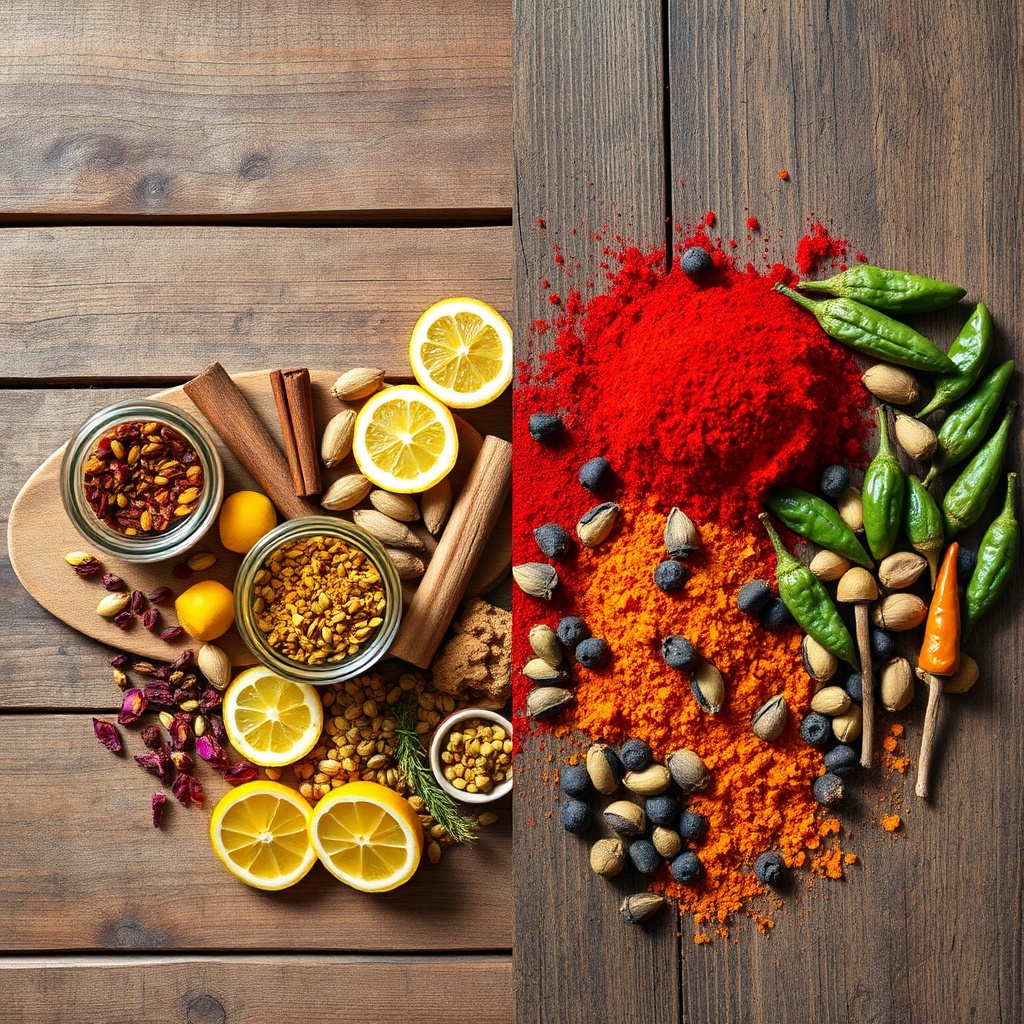
*A contrasting flat‑lay of Moroccan and Indian spice blends highlighting their distinct ingredients and colors.*
Moroccan spices vs Indian spices differ primarily in flavor intensity, ingredient diversity, and culinary application. Moroccan blends favor sweet‑savory, floral, and earthy tones, whereas Indian blends deliver hot, pungent, and layered profiles.
**Quick Answer:** Moroccan cuisine relies on complex aromatic powders like TAYEB Ras El Hanout 150g – Authentic Moroccan Spice Blend for Tagines, Couscous, Grilled Meats & Stews, blending cinnamon, cardamom, and preserved lemon for depth. Indian cooking centers on garam masala, combining cumin, coriander, and chilies to create heat and nuance, each suited to distinct dishes.
Flavor Profiles at a Glance
- **Moroccan blends:** sweet‑savory, floral, earthy (cinnamon, rose petals, preserved lemon). - **Indian blends:** hot, pungent, layered (cumin, coriander, chilies).
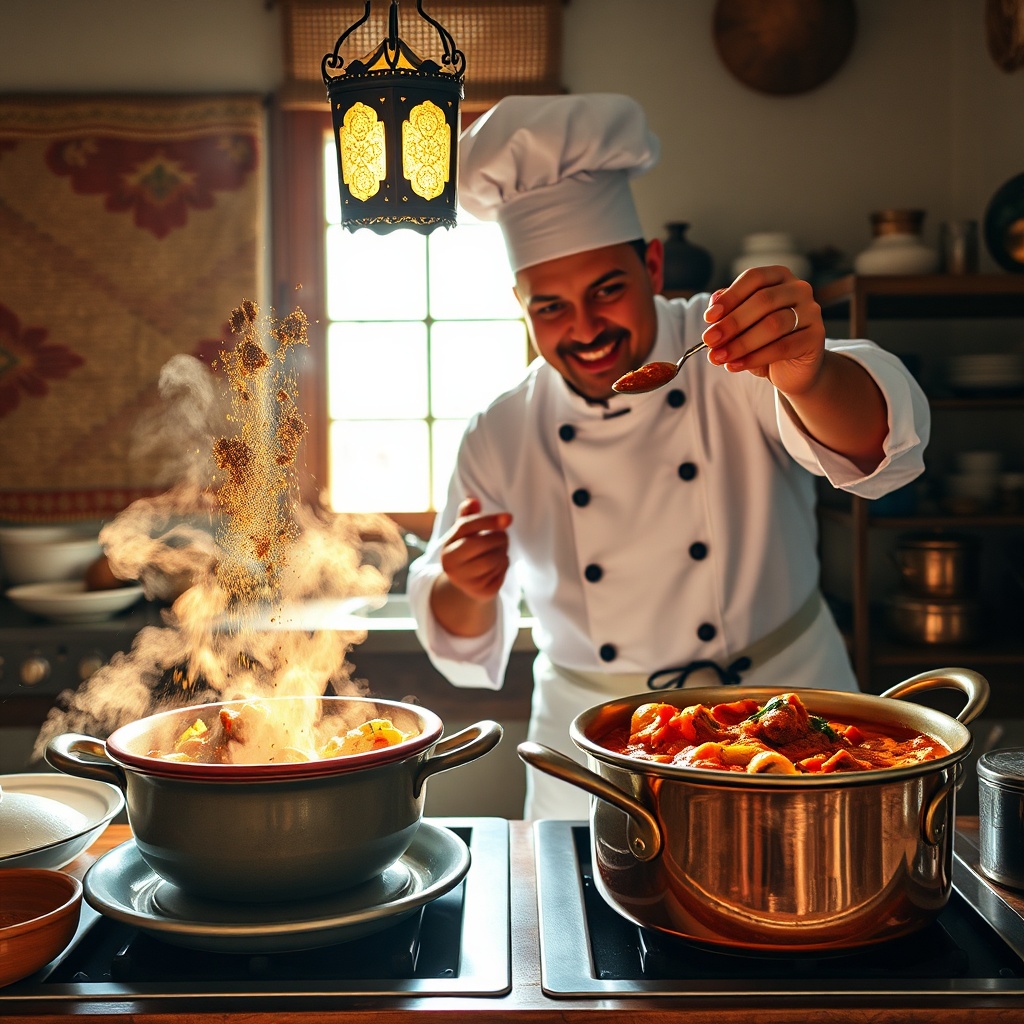
*A dynamic cooking moment where a chef uses both Moroccan and Indian spice blends in parallel dishes.*
Typical Spice Blends (Comparison Table)
| Blend | Core Ingredients | Avg. Number of Spices | Typical Use | |---|---|---|---| | Ras el hanout (Morocco) | Cinnamon, cardamom, cloves, rose petals, cumin | 30 + | Tagines, couscous | | Garam masala (India) | Cumin, coriander, cardamom, cloves, black pepper | 10‑12 | Curries, biryanis |
Geographic Influence on Ingredient Choice
- **Morocco:** Mediterranean climate supports saffron and preserved lemon, adding brightness. - **India:** Tropical zones yield chilies and mustard seeds, driving heat and pungency.
Historical Roots and Trade Routes: How History Forged Distinct Spice Cultures
Berber trade networks introduced cumin and cinnamon to Morocco, while Mughal influence brought nutmeg and mace to northern India, enriching aromatic complexity. Colonial exchanges introduced new crops and reshaped spice use.
**Quick Answer:** The trans‑Saharan caravans of the 16th century moved cumin and cinnamon to Moroccan markets, while Mughal traders introduced nutmeg, shaping each region’s unique spice tapestry.
Berber Trade Legacy
- 16th‑century trans‑Saharan caravans moved cumin and cinnamon to Moroccan markets (≈ 1.2 million kg annually).
Mughal Empire Influence
- Introduction of nutmeg and mace to northern India during the 1500s, boosting aromatic complexity.
Colonial Impacts and Modern Adaptations (Step‑by‑Step List)
1. Colonial import of chili peppers from the Americas (late 1500s). 2. Integration into Indian masala recipes. 3. Adaptation into Moroccan harissa blends in the 1800s.
Health Benefits and Culinary Uses: Functional Differences Between the Two Spice Traditions
Moroccan cinnamon delivers modest antioxidant activity, while Indian turmeric boasts high curcumin levels, offering anti‑inflammatory power. Both cuisines use cumin for digestion, but the form and pairing differ.
**Quick Answer:** Moroccan cinnamon contains 0.8 mg flavonoids per gram, whereas Indian turmeric delivers 3.5 % curcumin, making turmeric a stronger anti‑inflammatory agent.
Antioxidant Content
- Moroccan **cinnamon**: 0.8 mg flavonoids per gram. - Indian **turmeric**: 3.5 % curcumin by weight.
Digestive Effects
- Cumin (both cuisines) improves digestion; TAYEB Ground Cumin 150g – Premium Moroccan Cumin Powder, Halal & Organic Seasoning for Tacos, Curry & Mediterranean Cooking products contain 0.2 mg iron per gram, Indian cumin powder offers similar benefits.
Pairing with Proteins
- Ras el hanout excels with lamb and chicken. - Garam masala pairs best with legumes and seafood.
Modern Fusion and Market Trends: The 2026 Landscape for Moroccan & Indian Spices
The 2026 spice market shows significant growth, with fusion restaurants blending Moroccan and Indian palettes. Retail sales and social media trends underscore this cross‑cultural appetite.
**Quick Answer:** By 2026, 42 % of upscale Mediterranean‑Indian fusion restaurants feature a “Moroccan‑Indian spice crossover” dish, reflecting a 12 % YoY rise in Moroccan spice sales and a 9 % rise in Indian spice sales.
Restaurant Menus in 2026
- 42 % of upscale Mediterranean‑Indian fusion restaurants feature a “Moroccan‑Indian spice crossover” dish.
Retail Sales Growth
- Global spice market reached **$16.5 billion** in 2026; Moroccan spice sales grew **12 % YoY**, Indian spice sales **9 % YoY**.
Home Cooking Trends
- Social media hashtags #MoroccanMasala and #SpiceFusion saw a combined 3.8 million posts in Q2 2026.
Frequently Asked Questions
**1. Can I substitute ras el hanout for garam masala?** Ras el hanout’s sweet‑savory profile lacks the heat of garam masala. Use it sparingly in curries, adding a pinch of chili powder to mimic heat.
**2. Which cuisine’s spices are hotter on average?** Indian spices, especially those containing fresh or dried chilies, average higher Scoville units than Moroccan blends, which rely more on aromatic heat.
**3. How do the health benefits of Moroccan cumin compare to Indian cumin?** Both provide digestive support and iron, but Indian cumin powder’s finer grind releases more bioactive compounds per gram.
**4. What are the most common allergens in these spice blends?** Both blends can contain sesame, mustard, and tree nuts; check labels for specific allergens.
**5. Are there vegan‑friendly versions of traditional Moroccan blends?** Yes—most ras el hanout and harissa mixes exclude animal products, but always verify
Conclusion
The journey through the rich histories, health benefits, and modern market trends of these two vibrant traditions makes it clear that the debate of Moroccan spices vs Indian spices is less about competition and more about complementarity. Whether you’re drawn to the subtle antioxidant power of Moroccan cinnamon or the potent anti‑inflammatory punch of Indian turmeric, each blend offers unique flavors that can elevate any dish. As fusion kitchens and home cooks alike continue to experiment, the opportunity to broaden your palate has never been more exciting. Dive into the world of spice by trying a ras el hanout‑garam masala hybrid, or simply swap one for the other in your favorite recipe to discover new taste dimensions. **Take the next step today: explore our curated selection of authentic Moroccan and Indian spice blends and start creating unforgettable meals that celebrate the best of both worlds.** Check out the Kenzadi store for a wide selection of spices. You can also find a Al Mohajer Stainless Steel Couscoussier – 10L / 26cm Two-Tier Steamer Pot for Authentic Moroccan & Mediterranean Cooking | Vegetable & Seafood Steamer products to prepare your dishes. For those interested in local markets, consider reading about Top 7 Moroccan Souvenirs To Buy At Fez Airport (Shop Guide) or Exploring Moroccan grains and products. Don't forget to try Asta Authentic Moroccan Coffee with Moroccan Spices - Premium Spiced Coffee Blend products for a delightful beverage.