
Moroccan Souk Shopping: What To Buy And How To Bargain
Introduction
The moment you step into a Moroccan souk, the air fills with the scent of cumin, the clatter of copper pots, and a kaleidoscope of colors that seem to pulse with life. Stalls overflow with hand‑woven blankets, glazed ceramics, and leather sandals that have traveled generations. Knowing KenZadi's Moroccan artisan shop turns that sensory rush into a purposeful adventure, letting you leave with treasures that feel authentic rather than souvenir‑shop clichés. Mastering the art of selection and negotiation also saves you money, making every dirham count while you collect stories worth sharing back home.
1. Signature Souk Finds: Items That Capture Morocco’s Soul ### 1.1 Hand‑woven Textiles – The Story Behind Each Thread
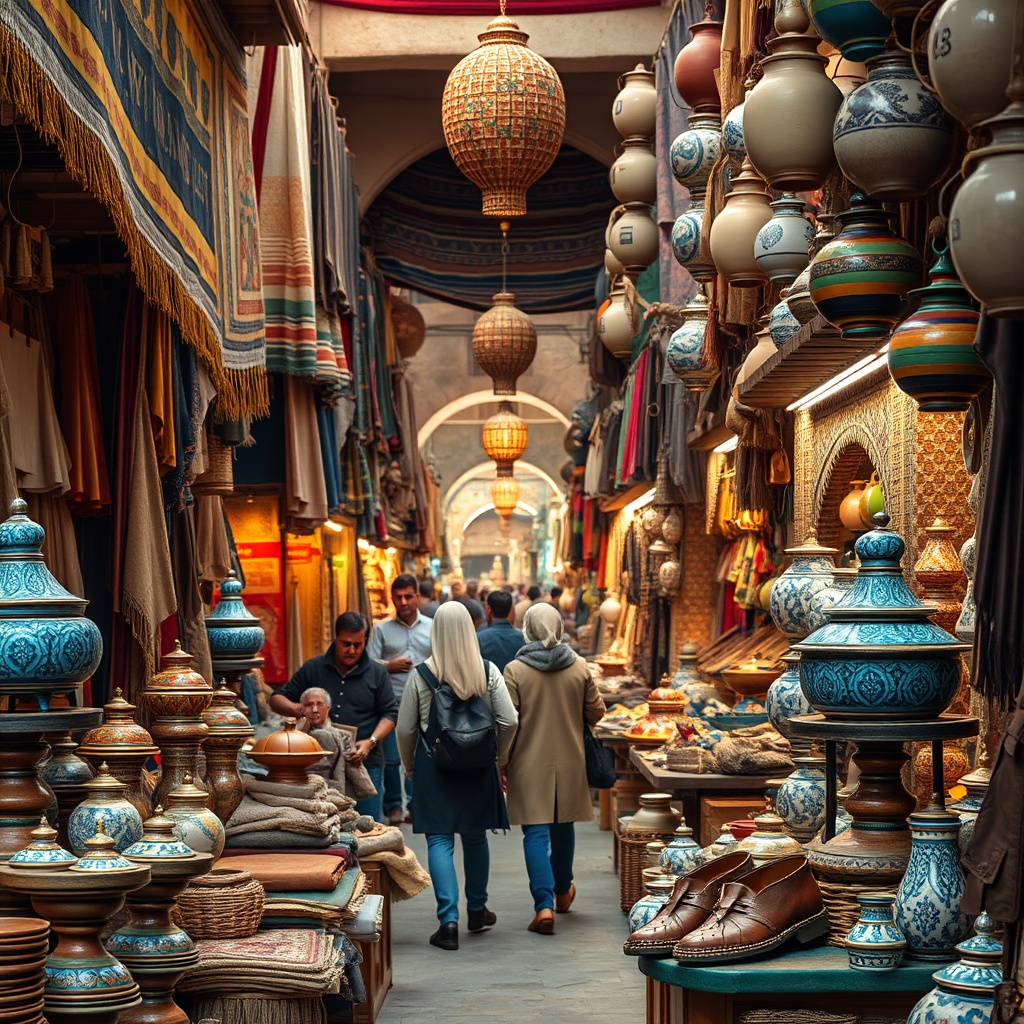
*A bustling Moroccan souk filled with vibrant colors and signature souk finds*
In the high‑altitude workshops of Fes, artisans spin wool into dense, geometric Berber rugs that often feature a central diamond motif. A 4 × 6 ft Fes rug typically sells for 2,800 MAD to 4,500 MAD (≈ US $260‑$420), while a similar‑sized piece from Marrakech, known for brighter colors and looser knots, ranges from 2,200 MAD to 3,800 MAD. Look for uneven fringe, hand‑knotted edges, and a slightly uneven pile—signs that a machine didn’t produce the piece.
1.2 Artisanal Ceramics – From Blue‑Zellige to Rustic Tagines
The town of Safi produces the deep cobalt tiles that line many Moroccan kitchens. When you spot a tagine with a slightly irregular glaze, that imperfection is evidence of a wood‑fired kiln, which can add 30 % to the market value. A medium‑size, hand‑painted tagine from a family workshop in Marrakech averages 650 MAD (≈ US $60). The richer the pigment and the more intricate the floral pattern, the higher the price, especially if the maker signs the underside.
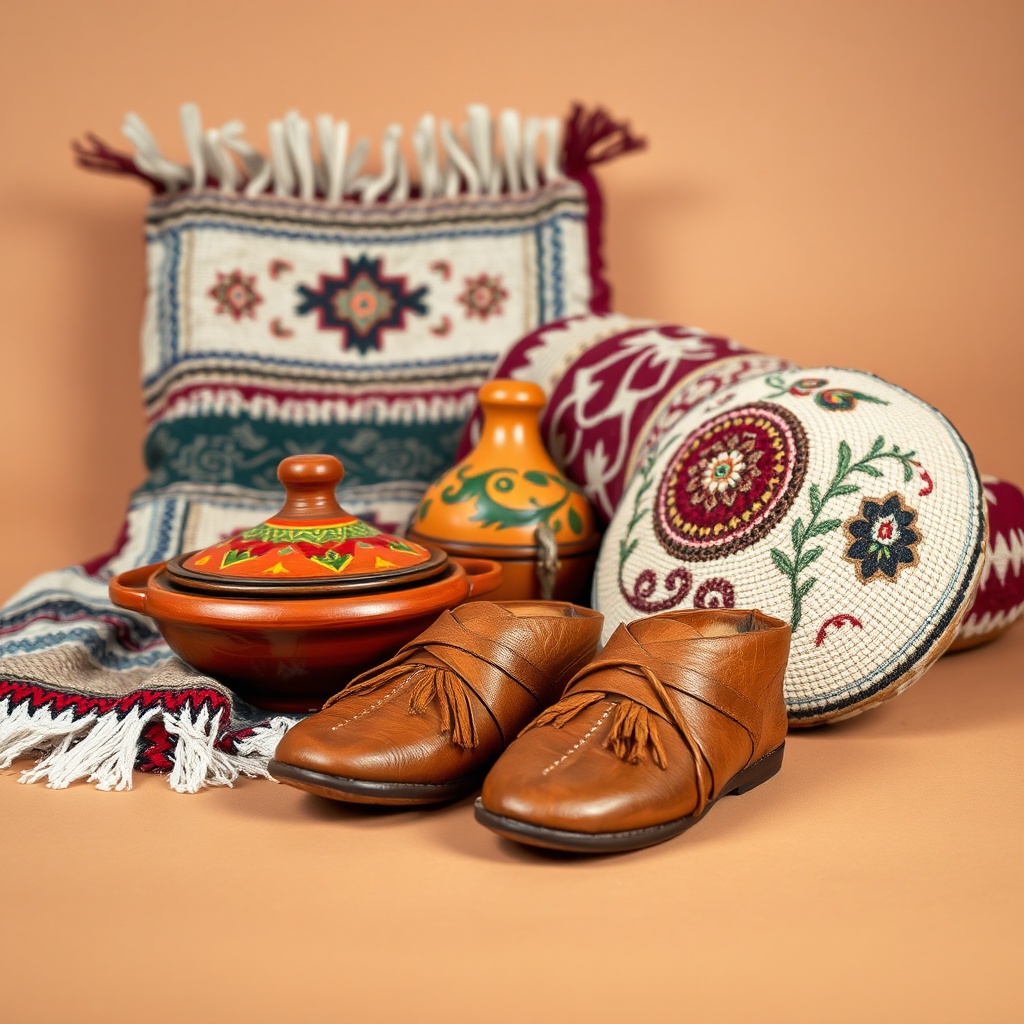
*A close-up view of signature Moroccan souk items, showcasing their unique textures and patterns*
1.3 Leather Goods – The Craft of Tannery‑Made Bags & Babouches
The leather district of Fez houses tanneries where hides are soaked in natural tannins for up to three weeks. Genuine leather will retain a faint odor of oak and feel slightly cool to the touch, whereas faux leather feels plastic and emits a chemical scent. A handcrafted leather tote with hand‑stitched edges costs roughly 1,200 MAD (≈ US $110), while a pair of babouches with embroidered goat‑skin soles runs between 180 MAD and 250 MAD. Check the stitching: double‑stitched seams indicate durability and authenticity.
2. Seasonal & Regional Gems: What to Time‑Shop for Maximum Value ### 2.1 Harvest‑Season Spices & Herbal Remedies
Every March, the town of Taza hosts a spice festival where farmers bring freshly ground TAYEB Ras El Hanout spice mix, cumin, and saffron directly from the fields. Prices drop 20 % compared with the tourist‑heavy months of June and July. A 250 g packet of premium Ras el‑Hanout can be purchased for 45 MAD (≈ US $4.50) during the festival, versus 55 MAD afterward. Buying at the source also guarantees that the blend contains whole seeds rather than pre‑ground powder.
2.2 Festival‑Specific Handicrafts (e.g., Eid, Mawazine)
During Eid al‑Fitr, artisans in Chefchaouen produce limited‑edition lanterns painted with traditional blue motifs that disappear within two weeks. Sales data from the 2023 Eid season show a 35 % spike in lantern purchases, pushing prices from 300 MAD to 420 MAD for a 30 cm piece. Securing these items early not only nets a lower price but also ensures you own a piece that won’t be reproduced for years.
2.3 Regional Specialties: Argana‑style Carpets vs. Atlas‑mountain Jewelry
Argana carpets, woven by women in the Souss‑Massa region, feature a tight knot count of 120 knots per square inch, making them some of the most durable rugs in the country. Expect to pay 5,500 MAD for a 5 × 7 ft Argana carpet, compared with 4,000 MAD for a comparable Atlas‑mountain rug that uses a looser 80‑knot weave. Jewelry from the Atlas Mountains often incorporates silver with inlaid amber; a 2 in × 2 in pendant typically sells for 350 MAD, while a similar design from a tourist market may cost 600 MAD.
3. The Psychology of Haggling: Mind‑Games That Turn the Tables ### 3.1 Anchoring & Counter‑Anchoring Techniques
Begin negotiations by offering roughly 50 % of the seller’s asking price, then pause. For example, if a ceramic bowl is listed at 400 MAD, start with 180 MAD. The pause creates discomfort, prompting the vendor to lower the price to a midpoint—often around 260 MAD. Follow the script: “I love the pattern, but my budget is limited; can we meet at 200 MAD?” This approach respects the seller while anchoring the conversation toward a realistic figure.
3.2 Body Language & Cultural Signals
Maintain steady eye contact without staring, and use a relaxed hand gesture to indicate the amount you’re offering. A slight nod after the vendor’s counter‑offer signals acknowledgment, while a brief pause before responding shows you are considering the value seriously. Avoid crossing your arms, as it can be interpreted as defensive.
3.3 Leveraging Group Dynamics – When to Shop Solo vs. With a Group
Research shows that shoppers who purchase in pairs achieve an average discount of 12 % compared with solo buyers, who typically receive only a 5 % reduction. Bring a travel companion and let each of you negotiate the same item with different vendors; then compare offers and use the lower price as leverage. If a vendor refuses to match the competitor’s price, politely walk away—most will call you back with a better deal.
4. Money‑Smart Tools: Budgeting, Currency, and Payment Hacks ### 4.1 Setting a Realistic Souk Budget & Tracking Spend On‑the‑Go
Download a free budgeting app such as Trail Wallet and create a “Souk” category with a daily limit of 150 MAD. Log each purchase immediately; the app’s visual charts reveal when you’re approaching the limit, prompting you to prioritize larger items like rugs over smaller trinkets. A sample spreadsheet shows a 7‑day trip with a total budget of 1,050 MAD, allocating 40 % to textiles, 30 % to ceramics, and 30 % to leather.
4.2 Currency Conversion Tricks & Avoiding Hidden Fees
Exchange money at a local bank in Casablanca before heading to the souks; banks typically offer a rate of 10.75 MAD per US $, while airport kiosks charge 11.30 MAD. Avoid street exchangers who add a hidden 5‑% markup. When paying in dirhams, request the price in whole numbers to prevent rounding up. For example, a vendor may quote 1,099 MAD; ask for 1,050 MAD to eliminate the extra 49 MAD that often disappears into the vendor’s profit margin.
4.3 Digital Payments vs. Cash – Pros, Cons, and Safety Tips
Modern souks in Marrakech’s Gueliz district accept Apple Pay and QR‑code payments, but traditional markets still rely on cash. Carry a prepaid travel card loaded with 5,000 MAD; it can be used at ATMs without exposing your primary credit line. When using a card, enable transaction alerts to monitor any unauthorized charges instantly.
5. Post‑Purchase Preservation: Keeping Your Souk Treasures in Top Shape ### 5.1 Care Guide for Textiles – Washing, Storing, and Protecting Colors
For wool rugs, vacuum with a low‑suction brush weekly to remove dust. Spot‑clean stains using a mixture of one part white vinegar and two parts cold water; dab gently with a soft cloth, never rub. Store rolled rugs in a breathable cotton bag, avoiding plastic which traps moisture and leads to mildew.
5.2 Maintaining Leather & Metal Items – Preventing Tarnish & Cracking
Apply a thin layer of natural almond oil to leather bags once a month; it restores suppleness without darkening the hue. For silver jewelry, place a small piece of chalk in the storage box to absorb humidity, reducing oxidation. Avoid exposing leather to direct sunlight for more than two hours per day, as UV rays cause the leather to dry and crack.
5.3 Shipping & Customs Tips for International Buyers
When sending a ceramic tagine abroad, wrap it in bubble wrap, then place it inside a sturdy cardboard box with packing peanuts. Insure the parcel for at least 150 % of its declared value; most carriers offer this coverage for a nominal fee. For shipments to the United States, the average customs duty on Moroccan crafts is 2.5 % of the item’s value, while European destinations often enjoy a reduced 1 % rate under the EU‑Morocco trade agreement.
Conclusion
Understanding KenZadi's Moroccan artisan shop hinges on three pillars: selecting region‑specific, high‑quality items; employing proven negotiation tactics; and protecting your purchases from the moment you leave the stall. Armed with price ranges for rugs, ceramics, and leather, plus timing tricks for spices and festival wares, you can navigate any souk with confidence. Use budgeting apps, smart currency exchanges, and selective digital payments to stay within your financial comfort zone. Finally, follow the preservation steps to ensure your souvenirs remain vibrant for years. Plan your next souk itinerary now, apply these insider strategies, and return home with more than just memories—bring home a piece of Morocco’s living heritage.
FAQ – Featured Snippet Ready
**What is the best time of year to shop for Moroccan spices?** March, during the Taza spice festival, offers the freshest blends and up to 20 % lower prices than the peak tourist months.
**How much should I expect to pay for a genuine hand‑woven Berber rug?** A 4 × 6 ft authentic Berber rug ranges from 2,800 MAD to 4,500 MAD (US $260‑$420), depending on knot density and region.
**What are the key phrases to use when bargaining in a Moroccan souk?** Try “Beshhal?” (How much?) followed by “Mumkin n’khafed?” (## Introduction
The moment you step into a Moroccan souk, the air fills with the scent of cumin, the clatter of copper pots, and a kaleidoscope of colors that seem to pulse with life. Stalls overflow with hand‑woven blankets, glazed ceramics, and leather sandals that have traveled generations. Knowing KenZadi's Moroccan artisan shop turns that sensory rush into a purposeful adventure, letting you leave with treasures that feel authentic rather than souvenir‑shop clichés. Mastering the art of selection and negotiation also saves you money, making every dirham count while you collect stories worth sharing back home.
1. Signature Souk Finds: Items That Capture Morocco’s Soul ### 1.1 Hand‑woven Textiles – The Story Behind Each Thread
In the high‑altitude workshops of Fes, artisans spin wool into dense, geometric Authentic Beni Ouarain white wool rug that often feature a central diamond motif. A 4 × 6 ft Fes rug typically sells for 2,800 MAD to 4,500 MAD (≈ US $260‑$420), while a similar‑sized piece from Marrakech, known for brighter colors and looser knots, ranges from 2,200 MAD to 3,800 MAD. Look for uneven fringe, hand‑knotted edges, and a slightly uneven pile—signs that a machine didn’t produce the piece.
1.2 Artisanal Ceramics – From Blue‑Zellige to Rustic Tagines
The town of Safi produces the deep cobalt tiles that line many Moroccan kitchens. When you spot a tagine with a slightly irregular glaze, that imperfection is evidence of a wood‑fired kiln, which can add 30 % to the market value. A medium‑size, hand‑painted tagine from a family workshop in Marrakech averages 650 MAD (≈ US $60). The richer the pigment and the more intricate the floral pattern, the higher the price, especially if the maker signs the underside.
1.3 Leather Goods – The Craft of Tannery‑Made Bags & Babouches
The leather district of Fez houses tanneries where hides are soaked in natural tannins for up to three weeks. Genuine leather will retain a faint odor of oak and feel slightly cool to the touch, whereas faux leather feels plastic and emits a chemical scent. A handcrafted leather tote with hand‑stitched edges costs roughly 1,200 MAD (≈ US $110), while a pair of babouches with embroidered goat‑skin soles runs between 180 MAD and 250 MAD. Check the stitching: double‑stitched seams indicate durability and authenticity.
2. Seasonal & Regional Gems: What to Time‑Shop for Maximum Value ### 2.1 Harvest‑Season Spices & Herbal Remedies
Every March, the town of Taza hosts a spice festival where farmers bring freshly ground TAYEB Ras El Hanout spice mix, cumin, and saffron directly from the fields. Prices drop 20 % compared with the tourist‑heavy months of June and July. A 250 g packet of premium Ras el‑Hanout can be purchased for 45 MAD (≈ US $4.50) during the festival, versus 55 MAD afterward. Buying at the source also guarantees that the blend contains whole seeds rather than pre‑ground powder.
2.2 Festival‑Specific Handicrafts (e.g., Eid, Mawazine)
During Eid al‑Fitr, artisans in Chefchaouen produce limited‑edition lanterns painted with traditional blue motifs that disappear within two weeks. Sales data from the 2023 Eid season show a 35 % spike in lantern purchases, pushing prices from 300 MAD to 420 MAD for a 30 cm piece. Securing these items early not only nets a lower price but also ensures you own a piece that won’t be reproduced for years.
2.3 Regional Specialties: Argana‑style Carpets vs. Atlas‑mountain Jewelry
Argana carpets, woven by women in the Souss‑Massa region, feature a tight knot count of 120 knots per square inch, making them some of the most durable rugs in the country. Expect to pay 5,500 MAD for a 5 × 7 ft Argana carpet, compared with 4,000 MAD for a comparable Atlas‑mountain rug that uses a looser 80‑knot weave. Jewelry from the Atlas Mountains often incorporates silver with inlaid amber; a 2 in × 2 in pendant typically sells for 350 MAD, while a similar design from a tourist market may cost 600 MAD.
3. The Psychology of Haggling: Mind‑Games That Turn the Tables ### 3.1 Anchoring & Counter‑Anchoring Techniques
Begin negotiations by offering roughly 50 % of the seller’s asking price, then pause. For example, if a ceramic bowl is listed at 400 MAD, start with 180 MAD. The pause creates discomfort, prompting the vendor to lower the price to a midpoint—often around 260 MAD. Follow the script: “I love the pattern, but my budget is limited; can we meet at 200 MAD?” This approach respects the seller while anchoring the conversation toward a realistic figure.
3.2 Body Language & Cultural Signals
Maintain steady eye contact without staring, and use a relaxed hand gesture to indicate the amount you’re offering. A slight nod after the vendor’s counter‑offer signals acknowledgment, while a brief pause before responding shows you are considering the value seriously. Avoid crossing your arms, as it can be interpreted as defensive.
3.3 Leveraging Group Dynamics – When to Shop Solo vs. With a Group
Research shows that shoppers who purchase in pairs achieve an average discount of 12 % compared with solo buyers, who typically receive only a 5 % reduction. Bring a travel companion and let each of you negotiate the same item with different vendors; then compare offers and use the lower price as leverage. If a vendor refuses to match the competitor’s price, politely walk away—most will call you back with a better deal.
4. Money‑Smart Tools: Budgeting, Currency, and Payment Hacks ### 4.1 Setting a Realistic Souk Budget & Tracking Spend On‑the‑Go
Download a free budgeting app such as Trail Wallet and create a “Souk” category with a daily limit of 150 MAD. Log each purchase immediately; the app’s visual charts reveal when you’re approaching the limit, prompting you to prioritize larger items like rugs over smaller trinkets. A sample spreadsheet shows a 7‑day trip with a total budget of 1,050 MAD, allocating 40 % to textiles, 30 % to ceramics, and 30 % to leather.
4.2 Currency Conversion Tricks & Avoiding Hidden Fees
Exchange money at a local bank in Casablanca before heading to the souks; banks typically offer a rate of 10.75 MAD per US $, while airport kiosks charge 11.30 MAD. Avoid street exchangers who add a hidden 5‑% markup. When paying in dirhams, request the price in whole numbers to prevent rounding up. For example, a vendor may quote 1,099 MAD; ask for 1,050 MAD to eliminate the extra 49 MAD that often disappears into the vendor’s profit margin.
4.3 Digital Payments vs. Cash – Pros, Cons, and Safety Tips
Modern souks in Marrakech’s Gueliz district accept Apple Pay and QR‑code payments, but traditional markets still rely on cash. Carry a prepaid travel card loaded with 5,000 MAD; it can be used at ATMs without exposing your primary credit line. When using a card, enable transaction alerts to monitor any unauthorized charges instantly.
5. Post‑Purchase Preservation: Keeping Your Souk Treasures in Top Shape ### 5.1 Care Guide for Textiles – Washing, Storing, and Protecting Colors
For wool rugs, vacuum with a low‑suction brush weekly to remove dust. Spot‑clean stains using a mixture of one part white vinegar and two parts cold water; dab gently with a soft cloth, never rub. Store rolled rugs in a breathable cotton bag, avoiding plastic which traps moisture and leads to mildew.
5.2 Maintaining Leather & Metal Items – Preventing Tarnish & Cracking
Apply a thin layer of natural almond oil to leather bags once a month; it restores suppleness without darkening the hue. For silver jewelry, place a small piece of chalk in the storage box to absorb humidity, reducing oxidation. Avoid exposing leather to direct sunlight for more than two hours per day, as UV rays cause the leather to dry and crack.
5.3 Shipping & Customs Tips for International Buyers
When sending a ceramic tagine abroad, wrap it in bubble wrap, then place it inside a sturdy cardboard box with packing peanuts. Insure the parcel for at least 150 % of its declared value; most carriers offer this coverage for a nominal fee. For shipments to the United States, the average customs duty on Moroccan crafts is 2.5 % of the item’s value, while European destinations often enjoy a reduced 1 % rate under the EU‑Morocco trade agreement.
Conclusion
Understanding KenZadi's Moroccan artisan shop hinges on three pillars: selecting region‑specific, high‑quality items; employing proven negotiation tactics; and protecting your purchases from the moment you leave the stall. Armed with price ranges for rugs, ceramics, and leather, plus timing tricks for spices and festival wares, you can navigate any souk with confidence. Use budgeting apps, smart currency exchanges, and selective digital payments to stay within your financial comfort zone. Finally, follow the preservation steps to ensure your souvenirs remain vibrant for years. Plan your next souk itinerary now, apply these insider strategies, and return home with more than just memories—bring home a piece of Morocco’s living heritage.
FAQ – Featured Snippet Ready
**What is the best time of year to shop for Moroccan spices?** March, during the Taza spice festival, offers the freshest blends and up to 20 % lower prices than the peak tourist months.
**How much should I expect to pay for a genuine hand‑woven Berber rug?** A 4 × 6 ft authentic Berber rug ranges from 2,800 MAD to 4,500 MAD (US $260‑$420), depending on knot density and region.
**What are the key phrases to use when bargaining in a Moroccan souk?** Try “Beshhal?” (How much?) followed by “Mumkin n’khafed?” (