
Authentic Moroccan Tea Time Snacks
The Ultimate Guide to Moroccan Snacks for Afternoon Tea
Moroccan snacks for afternoon tea are a vibrant, essential component of the country's social fabric, offering a diverse array of savory flatbreads and honey-soaked pastries that perfectly complement the iconic mint tea, known locally as Atay. Unlike the delicate crustless sandwiches and scones of British high tea, the Moroccan experience is defined by robust textures and contrasting flavors, ranging from the buttery layers of Msemen to the sweet crunch of Ghriba cookies. This culinary tradition is deeply rooted in hospitality, serving not just as a means to satisfy hunger but as a vital ritual for fostering connection and community. In 2026, the appreciation for these authentic flavors has expanded globally, with food enthusiasts seeking to recreate the immersive **Maghrebi tea culture** in their own homes. The balance between sweet and savory is the cornerstone of this spread, ensuring that every sip of tea is accompanied by a bite that delights the palate.
Key Takeaways
* Moroccan afternoon tea centers around Mint Tea (Atay) served with a strategic balance of sweet and savory snacks. * Msemen and Harcha are essential savory breads that provide a hearty, textured base for the tea service. * Honey-drenched pastries like Chebakia and Beghrir offer a distinct texture and sweetness profile that defines the region's dessert offerings. * Presentation is paramount, often involving a communal silver tray and colorful decorated glasses to enhance the visual appeal. * The ritual is about slowing down and socializing, prioritizing human connection over the mere consumption of food.
The Definitive List of Moroccan Snacks for Afternoon Tea
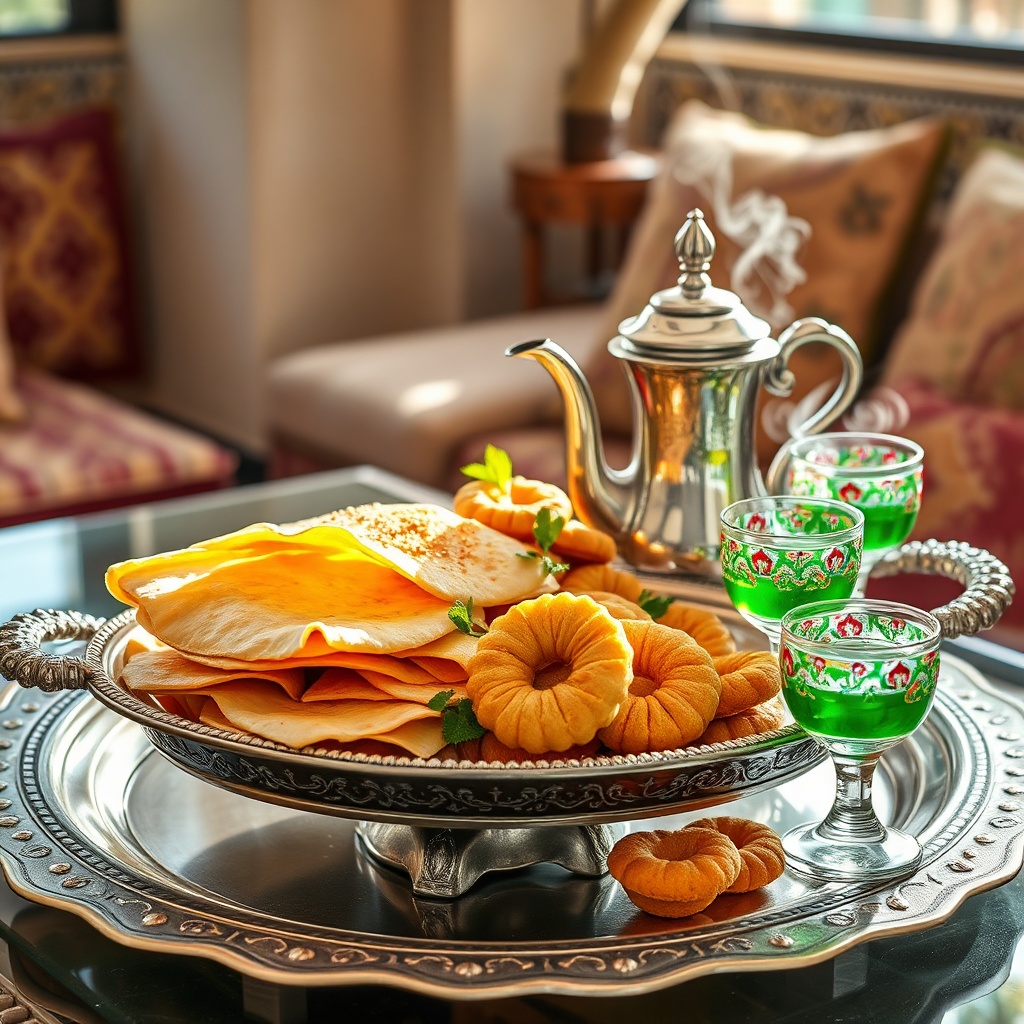
*A wide shot showcasing the communal aspect of Moroccan tea culture with a variety of sweet and savory snacks.*
When curating an authentic tea table, selecting the right **Moroccan snacks for afternoon tea** is crucial for achieving the perfect flavor profile. The most revered spreads always include a mix of savory pancakes and sweet cookies, ensuring that the rich butteriness of the breads is cut by the granulated sugar sweetness of the pastries. **Msemen pancakes** are the undisputed kings of the savory category, offering a flaky, chewy texture that acts as a perfect sponge for honey. On the sweeter side, **Ghriba cookies**—typically made with coconut, sesame, or almonds—provide a crumbly, melt-in-the-mouth experience that pairs effortlessly with the steam from the tea glass. Other staples include **Briouat pastries**, which are triangular parcels filled with either chicken or almonds and fried to golden perfection. No table is considered complete without **Sfenj doughnuts**, which are light, airy, and dusted with sugar for a decadent finish.
**Quick Answer:** The top-tier snacks for any Moroccan tea spread include Msemen (savory pancake), Harcha (semolina bread), Chebakia (honey cookie), and Ghriba (coconut or sesame cookies).
Sweet Honey-Soaked Delicacies
The prevalence of honey in Moroccan patisserie cannot be overstated, as it serves as the primary preservation and flavoring agent for many traditional tea treats. **Moroccan honey treats** are often complex in texture, combining crunch with syrupy saturation. Chebakia is perhaps the most famous example, a flower-shaped cookie made of flour, sesame seeds, and spices, which is fried and then submerged in a honey and orange blossom water syrup. Sellou, a confection made from toasted sesame seeds, almonds, and flour bound together with honey and melted butter, is often served in small molds. It is energy-dense and rich, traditionally consumed during Ramadan but increasingly popular as a standard accompaniment to afternoon tea due to its nutritional profile and satisfying texture.
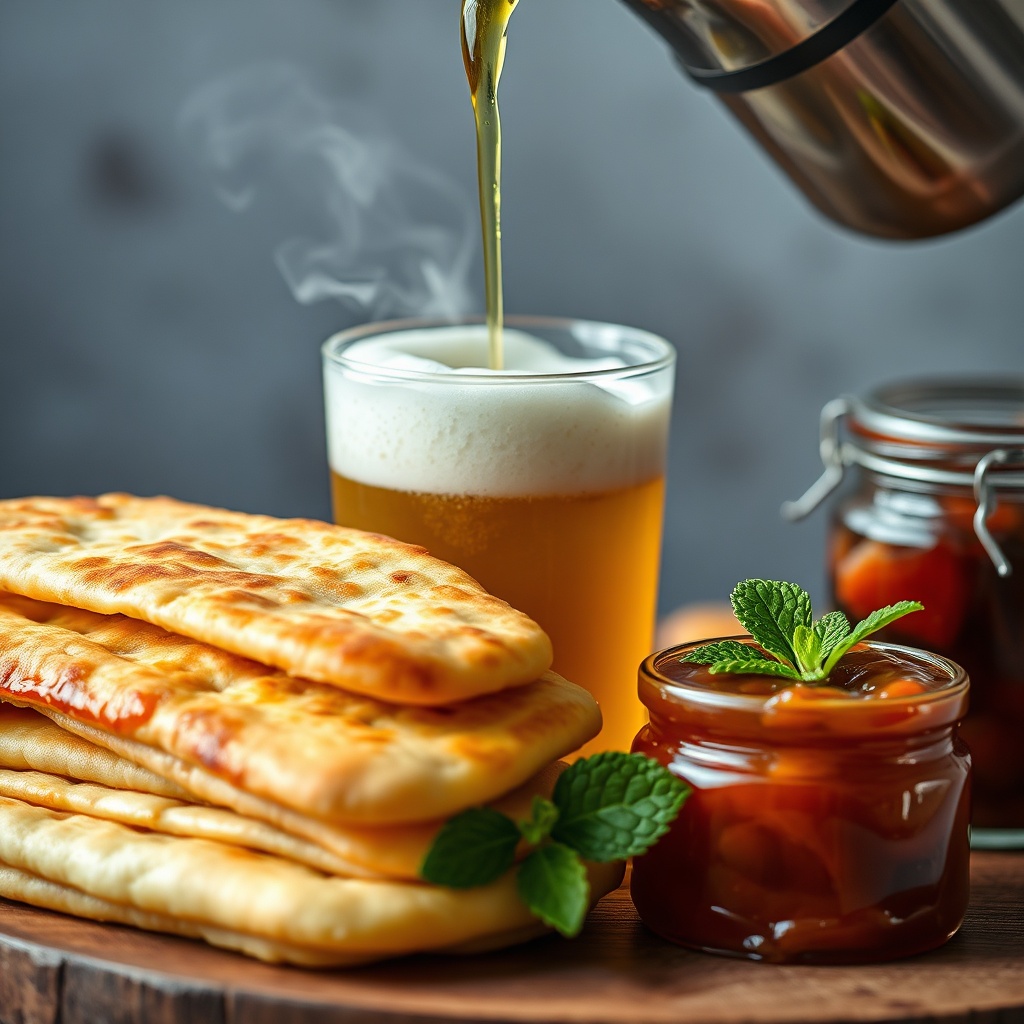
*A detailed texture shot focusing on the specific pastries like msemen and chebakia paired with tea.*
Savory Flatbreads and Pancakes
To counterbalance the intense sweetness of the honeyed items, savory breads play a critical role in the tea ceremony. **Rghaif**, a type of layered pastry similar to Msemen but often rolled into a cylinder rather than a square, provides a hearty bite. These breads are rarely eaten plain; they are typically served with sides of honey, jam, or even cheese. The savory element grounds the meal, allowing the drinker to enjoy multiple rounds of tea without becoming overwhelmed by sugar. The texture of these flatbreads varies from the crispy exterior of a well-fried Msemen to the soft, doughy interior of a freshly made Rghaif, showcasing the versatility of simple ingredients like semolina, flour, and olive oil.
Mastering the Art of Savory Breads: Msemen and Harcha
The savory component of **Moroccan snacks for afternoon tea** relies heavily on the mastery of dough preparation and cooking techniques. **Msemen** and **Harcha** represent the pinnacle of this craft, offering two distinct textural experiences that are universally loved. While Msemen is known for its flaky, laminated structure similar to puff pastry, Harcha offers a crumbly, buttery texture reminiscent of shortbread or cornbread. Both breads are cooked on a griddle or skillet, making them accessible for home cooks while requiring specific techniques to achieve authenticity. The consumption of these breads is a tactile experience; they are often pulled apart by hand and dipped into olive oil, honey, or amlou, making them the perfect vessel for the varied condiments found on a Moroccan tea table.
The Layered Perfection of Msemen
Msemen is a technical marvel in the world of flatbreads. The process involves creating a dough from white flour and semolina, which is then divided into balls and coated in oil or softened butter. The key to its signature layers lies in the folding technique. The dough ball is flattened on an oiled surface and folded into a square, much like an envelope, trapping air and oil between the layers. This folding process is often repeated to maximize the number of flaky layers. Once cooked on a hot griddle until golden brown spots appear, the Msemen becomes crispy on the outside while remaining soft and chewy inside. It is this contrast that makes it an ideal candidate for dipping, as the porous interior absorbs liquids without falling apart.
The Buttery Crumble of Harcha
In contrast to the laminated structure of Msemen, **Harcha semolina bread** relies on the granular texture of fine or medium semolina to achieve its unique consistency. The dough is remarkably simple, usually consisting only of semolina, a little flour, baking powder, salt, water, and generous amounts of butter or oil. Because semolina lacks the gluten elasticity of wheat flour, the dough does not stretch; instead, it is patted into discs or cut into shapes using a cookie cutter. Cooking Harcha requires patience and a gentle touch on the stove to ensure the inside cooks through before the exterior burns. The result is a bread that crumbles at the slightest pressure, offering a rich, buttery flavor that pairs exceptionally well with the strong, minty notes of the tea.
**Definition:** **Harcha** is a traditional Moroccan pan-fried bread made from semolina, known for its crumbly texture similar to cornbread but with a sweeter, richer flavor profile derived from butter or oil.
Sweet Endings: Honey-Drenched Pastries and Cookies
Moving to the sweeter side of the spectrum, the pastries served during tea time are works of art that highlight the region's love for nuts, floral waters, and syrup. **Almond filled pastries** are a staple, with the almond paste being flavored with cinnamon and orange blossom water to create a fragrant filling. In 2026, modern Moroccan pastry trends have seen a return to these traditional roots, with less emphasis on food coloring and more focus on the quality of raw ingredients like almonds and honey. The sweetness of these items is not subtle; it is designed to be the grand finale to the meal, lingering on the palate long after the tea glass is empty. Whether it is the airy sponge of Beghrir or the delicate crunch of Kaab el Ghzal, these sweets are an indispensable part of the experience.
The Airy Texture of Beghrir
Known as the "thousand-hole pancake," **Baghrir crepes** are a fascinating study in food chemistry. The batter, made from semolina, flour, yeast, and baking powder, is left to rise until bubbly. When poured onto a hot pan, the bubbles burst, creating the signature porous surface. Unlike standard crepes, Baghrir is only cooked on one side. They are not meant to be eaten dry; instead, they are drenched in a mixture of melted butter and honey, which seeps into the tiny holes, ensuring every bite is moist and flavorful. This texture provides a lovely contrast to the crunchier cookies and denser breads on the table, adding a lightness that prevents the meal from feeling too heavy.
Delicate Filled Pastries like Kaab el Ghzal
**Kaab el ghzal**, translating to "gazelle ankles," represents the pinnacle of Moroccan pastry finesse. These are crescent-shaped cookies filled with a paste of ground almonds, sugar, and orange blossom water. The dough is rolled out incredibly thin until it is almost translucent, then wrapped around the filling and shaped into a crescent. After baking, the pastry remains pale white, distinct from the golden brown of other cookies, and is immediately dusted with powdered sugar. The result is a tender shell that shatters upon biting, revealing a moist, aromatic almond center. They are elegant and refined, often saved for serving to honored guests during the **Moroccan mint tea ceremony**.
The Perfect Brew: Pairing Snacks with Moroccan Mint Tea
The relationship between the food and the drink in this context is symbiotic; one cannot fully enjoy **Moroccan snacks for afternoon tea** without the properly brewed beverage to accompany them. The tea, typically a strong Chinese gunpowder green tea, is brewed with generous amounts of fresh spearmint and sugar. This intense sweetness is not accidental; it is necessary to cut through the richness of buttery Msemen and the oily texture of dips like Amlou. Furthermore, the "sheeba," or the layer of foam on top of the tea, acts as a texture that cleanses the palate between bites. Understanding this pairing is essential for hosting an authentic event, as the temperature and sweetness of the tea dictate the pace of consumption.
**Quick Answer:** The strong sweetness of Moroccan mint tea is essential to balance the savory, buttery flavors of snacks like Msemen and the rich density of honey-soaked pastries.
The Ritual of Atay Preparation
The preparation of Atay is a performance in itself. The tea is first steeped in the teapot with boiling water to "awaken" the leaves, a process called "the spirit." This liquid is then poured out and set aside. Fresh mint and copious amounts of sugar are added to the pot, followed by more boiling water. The crucial step involves pouring the tea from a height into a glass and then back into the pot, usually two to three times. This aerates the tea, creating the signature foam or sheeba. When finally served, the tea is poured from a height of at least a foot into small, slim glasses, allowing the stream to cool slightly as it falls and ensuring the foam rises to the top.
Balancing Sweetness with Mint
Achieving the right balance of sugar to mint is a skill that varies by household, but the general rule for tea time in 2026 is a robust sweetness. The mint provides a refreshing, herbal counterpoint to the sugar, preventing the drink from becoming cloying. When eating oily or sugary snacks like Fekkas (hard biscotti-like cookies) or Sellou, the hot tea acts as a solvent, washing away the fat and resetting the taste buds. If the tea is not sweet enough, it can taste bitter against the honey-drenched pastries. Hosts should taste the tea before serving to ensure the sugar has fully dissolved and the mint flavor is vibrant but not overpowering.
Hosting a Moroccan-Inspired Tea Salon in 2026
Bringing this experience into the modern home requires attention to atmosphere and presentation. Contemporary hosting trends in 2026 emphasize the communal aspect of the ritual. Rather than individual plates, a large, central tray acts as the focal point of the gathering. This encourages guests to reach out, share, and engage with the food directly. The setting should evoke the warmth of a Moroccan salon, using textiles and tableware that reflect the country's rich artisanal heritage. It is not just about the taste, but the visual and tactile experience of the gathering.
Presentation and Serving Trays
The visual impact of the tea service is nearly as important as the flavor. A traditional large silver tray, or "siniya," is used to hold the teapot, glasses, and all the **Moroccan snacks for afternoon tea**. The glasses should be colorful, typically featuring intricate patterns in ruby red, emerald green, or deep blue. Arranging the food requires attention to height and color contrast; stack the Msemen in a basket, arrange the cookies on a decorative plate, and place the honey in a small serving pot. This abundance creates a sense of generosity and luxury that is central to Moroccan hospitality.
Modern Accompaniments like Amlou
While traditional items remain popular, modern hosts are incorporating Amlou as a sophisticated dip for their breads. Amlou is a thick, brown paste made from roasted almonds, honey, and argan oil. It has a nutty, complex flavor profile that is incredibly nutritious. Serving Amlou alongside Harcha or Msemen adds a gourmet touch that elevates the tea service from a simple snack to a decadent tasting experience. It is particularly popular in 2026 as a nod to the superfood trend, combining traditional ingredients with modern health consciousness.
**Definition:** **Amlou** is a Moroccan dip consisting of roasted almonds, honey, and argan oil, prized for its rich flavor and high nutritional value, often served with bread during tea time.
Conclusion
The sensory experience of the Moroccan tea hour is a tapestry woven from the clinking of glasses, the aroma of fresh mint, and the diverse textures of exceptional food. It is a slow, communal event that stands in stark contrast to the fast-paced nature of modern life, reminding us of the importance of connection. Whether you are savoring the flaky layers of a Msemen or the sweet crunch of a Ghriba, each element is designed to bring people together. You do not need to prepare an entire feast to participate; starting with a simple Harcha and a pot of mint tea is enough to transport your guests to the heart of Morocco. Embrace the ritual, and let the flavors guide your afternoon.
FAQ
**What is the most popular Moroccan snack for tea?** Msemen is arguably the most popular savory snack due to its versatility and beloved texture, while Chebakia holds the top spot for sweet treats, especially during special occasions.
**Can I prepare Moroccan tea snacks in advance?** Yes, many snacks like Msemen, Harcha, and various cookies can be prepared in advance. Msemen and Harcha freeze exceptionally well and can be reheated on a griddle before serving to restore their crispness.
**What is the difference between Msemen and Harcha?** Msemen is a flaky, layered pancake made from flour and semolina dough that is folded like an envelope, whereas Harcha is a crumbly, bread-like disc made primarily from semolina, resembling the texture of cornbread.
**Is Moroccan mint tea served with sugar?** Yes, authentic Moroccan mint tea is almost always served with a significant amount of sugar. It is typically brewed as a very sweet syrup to balance the bitterness of the green tea and complement the savory snacks.
**What type of mint is used for Moroccan tea?** Fresh spearmint (*Mentha spicata*) is the traditional variety used. It is distinct from peppermint, offering a milder, sweeter flavor that is essential for the authentic taste of Atay.
The ritual of Moroccan tea time offers a delightful escape from the daily grind, blending rich flavors with cherished traditions. From the nutty richness of Amlou to the comforting warmth of fresh bread, every bite invites you to slow down and savor the moment. Integrating these **Moroccan snacks for afternoon tea** into your hosting repertoire will undoubtedly impress your guests and create lasting memories. Whether you stick to classic favorites or try modern twists, the key is generosity and connection. Ready to transform your next gathering? Gather your ingredients, brew a fresh pot of mint tea, and start exploring these delicious recipes today to bring the magic of Morocco into your home.