
Moroccan Mint Tea: History, Meaning & Preparation
Moroccan Mint Tea: History, Meaning & Preparation
Understanding the Moroccan tea ceremony offers insight into the country's soul, where every cup tells a story of hospitality and tradition. Often called "Berber whiskey," this beverage is not merely a drink but a gesture of welcome that binds social fabric across the Maghreb. As of 2026, the ritual remains unchanged, preserving centuries-old techniques in a modern world.
**Quick Answer:** Moroccan Mint Tea is a symbol of hospitality in Morocco, prepared with green tea, fresh mint, and sugar using a theatrical high-pour technique that creates foam. The ritual serves as both welcome and social bonding, with refusing a cup considered impolite.
What is Moroccan Mint Tea and Its Cultural Core?
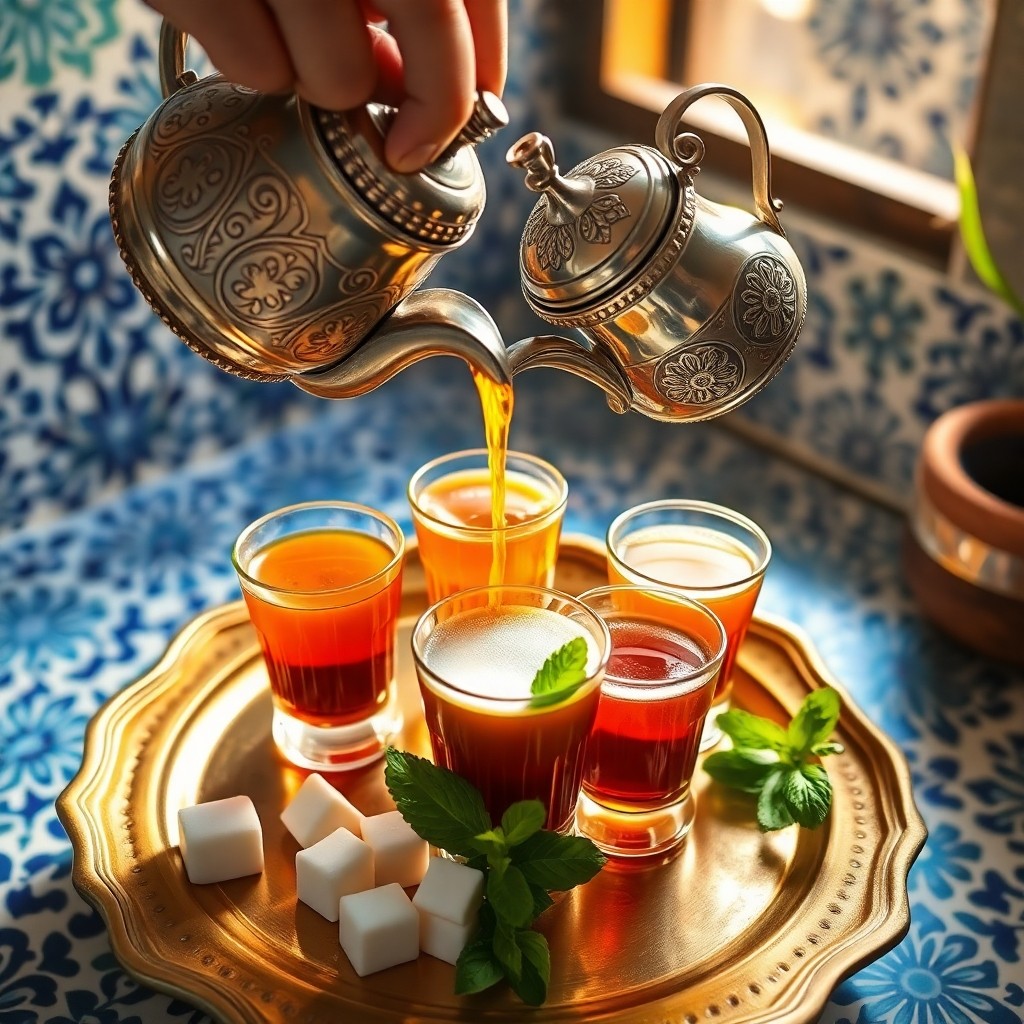
To define Moroccan Mint Tea strictly as a recipe is to miss its essence entirely. It is a structured social event defined by specific vessels, primarily **Moroccan crafts** like the silver Barrad teapot and decorated glasses. Whether in the bustling souks of Marrakech or a quiet home in the Atlas Mountains, the presence of the tea tray signals that you are welcome. The preparation is always performed in front of guests to honor them, transforming a simple drink into an art form.
The ceremony represents a trinity of values: friendship, tradition, and relaxation. It is served throughout the day, but the late afternoon preparation holds particular significance as a moment of respite. Refusing a cup is traditionally considered impolite, as sharing tea implies sharing a bond of trust.
**"Berber whiskey"** is a colloquial term for Moroccan mint tea, referencing its cultural importance in North African communities. Despite the name, it contains no alcohol—this nickname emphasizes tea's role as the region's beloved daily ritual and social lubricant, often consumed in quantities that rival spirits in other cultures.
The Anatomy of Flavor
The distinct taste of Moroccan tea comes from a specific balance of three ingredients: green tea, fresh mint, and sugar. The star of the show is **Al Mohajer**, known locally as *Tabeh*, or what the export market often refers to as "Gunpowder" tea due to the leaves being rolled into small pellets. This tea variety is chosen for its strong tannins, which provide a robust backbone capable of standing up to the sweetness of the sugar and the freshness of the mint.
Unlike other tea cultures where steeping times are precise, the Moroccan method involves "washing" the tea. A small amount of boiling water is poured over the leaves, swirled, and immediately drained. This removes the dust and bitterness from the dried leaves. Fresh spearmint is then added—preferably the *Na'na* variety native to the region—along with a generous amount of sugar. The mixture is brought to a boil over charcoal, allowing the flavors to meld into a syrupy consistency.
**Quick Answer:** The "washing" technique involves rinsing tea leaves with a small amount of boiling water, then immediately draining. This removes dust and bitterness from dried leaves, preparing them for the main brewing process. Use approximately 200ml of water per 50g of tea for effective washing.
The Art of the High Pour
The most theatrical aspect of the ritual is the pouring technique. Holding the pot high above the glass is not for show, but rather a functional necessity. By holding the **Moroccan 8 Cups Tea Pot Handmade Serving Medium Brass Silver Plated Teapot Hand Carved In Fes Morocco online** at least 12 inches above the glass, the liquid cools slightly and oxygenates. This aeration creates the signature golden foam on top, known as *kchkoucha*, which is essential for the texture and flavor profile.
A skilled host pours a single stream into multiple glasses without stopping, ensuring each guest receives a glass with an equal amount of foam. The first glass is often poured back into the pot to mix the sugar that settles at the bottom, ensuring a consistent taste from the first pour to the last. This high pour requires a pot with a long, curved spout designed specifically for this purpose, highlighting the ingenuity of traditional design.
**Quick Answer:** Pour from a minimum height of 12 inches (30cm) to create proper aeration and foam (*kchkoucha*). The distance allows the tea to cool slightly while oxygenating, which develops the characteristic golden layer. Professional tea servers can maintain a continuous stream across 6-8 glasses without interruption.
Step-by-Step Preparation Guide
To prepare authentic Moroccan Mint Tea, gather these essentials: 50g of Gunpowder green tea, a large bunch of fresh spearmint (approximately 30-40 leaves), and 300-400g of sugar depending on taste preference. Begin by rinsing the teapot with hot water to warm it, then add the dry tea leaves. Pour 200ml of boiling water over the leaves, swirl gently, and discard this first infusion after 30 seconds.
Return the tea to the pot and add the fresh mint leaves, bruising them slightly to release oils. Add sugar gradually while stirring. Pour in fresh boiling water (about 1 liter) and bring to a rolling boil over medium heat for 2-3 minutes. Remove from heat and let steep for 5 minutes before beginning the high-pour service.
For the pour, hold the teapot at arm's length above the glasses, maintaining a steady stream. Fill each glass three-quarters full, allowing the foam to rise naturally. Serve immediately while hot, typically accompanied by traditional Moroccan pastries or dates.
Preserving Tradition in Modern Morocco
Today's Moroccan Mint Tea continues to serve as the cornerstone of social interaction, from casual family gatherings to formal business meetings. In 2026, urban cafes in Casablanca and Rabat maintain this tradition while adapting to faster-paced lifestyles, offering the ritual at any hour of the day. The tea ceremony remains a universal language of welcome, transcending generational and cultural boundaries while preserving its essential character.
Meta Description: Discover the history, meaning, and preparation of Moroccan Mint Tea. Learn about the cultural rituals, ingredients like Gunpowder tea, and the high-pour technique that defines this symbol of hospitality in 2026.