
Moroccan Lifestyle: A Day In The Life Of A Berber Family
Moroccan Lifestyle: A Day in the Life of a Berber Family
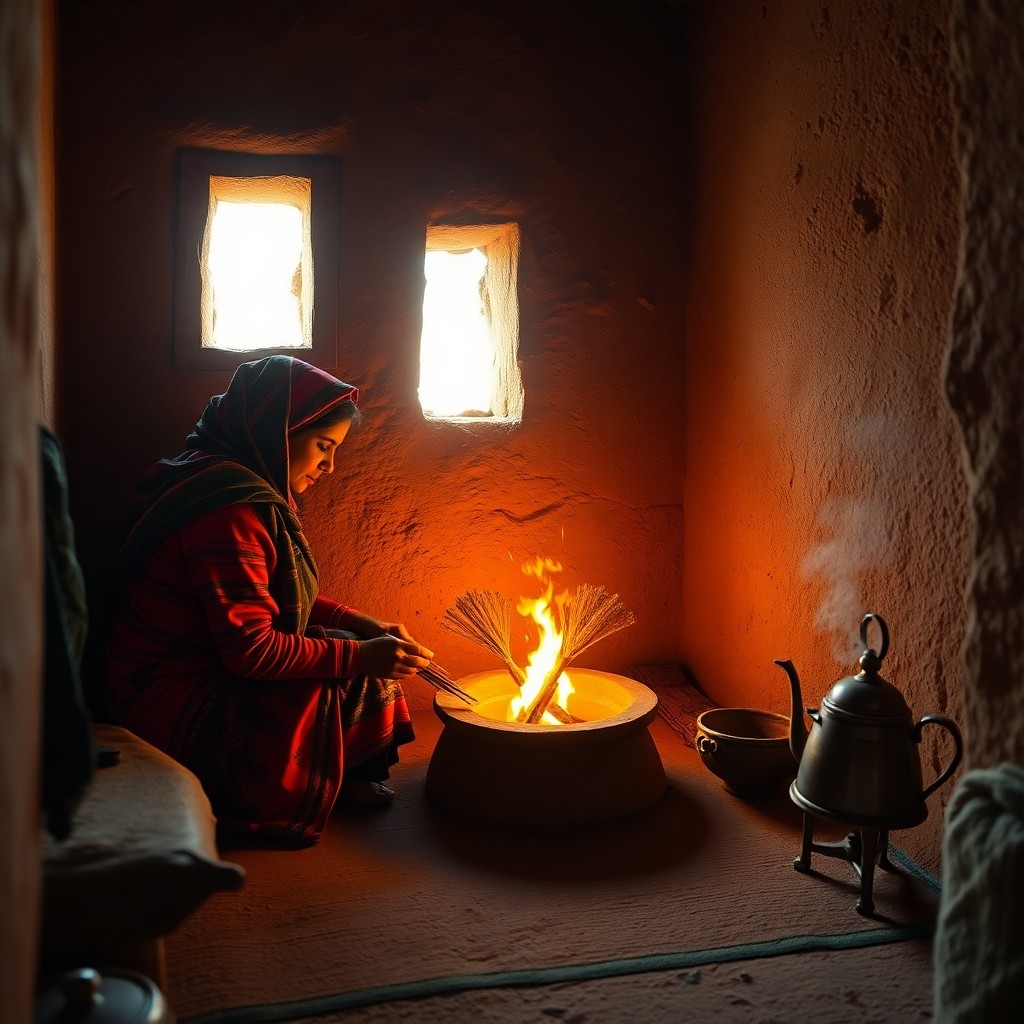
The first sound is not an alarm clock. It is the call to prayer — a resonant, unhurried voice drifting through cold mountain air, bouncing off mud-brick walls, sliding through cracked wooden shutters. In a village in the Ourika Valley, at roughly 1,200 meters elevation in the High Atlas, the sky is still a deep indigo. A rooster has not yet crowed. But inside a compact, earthen-walled home, a woman is already moving. She strikes a match. The small flame catches dried brush, then kindling, then a chunk of olive wood, and the hearth glows orange against clay walls that hold the cold like a memory. This is how a Berber family begins its day — not with haste, but with ritual, purpose, and an unbroken chain of customs stretching back millennia.
The Berber people, who call themselves Amazigh — "the free people" — have inhabited North Africa for over 4,000 years, long before Arab, Roman, or Phoenician arrivals. Today, roughly 14 million Moroccans identify as Amazigh, and their influence saturates everything from the country's cuisine and music to its architecture and social codes. Yet for most outsiders, Berber life remains a postcard: a kasbah silhouette, a carpet in a Marrakech shop, a face in a documentary. The hour-by-hour account that follows moves beyond these surface impressions, offering an intimate portrait rooted in real customs, food, labor, and the communal values that have sustained these mountain communities across centuries.
Waking Before the Sun: Dawn Rituals and the First Meal
The 5 AM Start: Prayer, Fire, and Fresh Air
*Captures the intimate morning ritual of a Berber woman starting the day by lighting the traditional hearth in her mud-brick home in the High Atlas mountains, as described in the article's opening scene.*
By the time the Fajr prayer finishes echoing from the village mosque, the mother — let's call her Fatima, a common Amazigh name — has already been awake for twenty minutes. She rises in the dark, navigates by touch through a narrow corridor to the main room, and lights the kanun, a traditional clay brazier placed at the center of the household's primary living space. In mountain villages across the High Atlas and Anti-Atlas ranges, the kanun serves as the home's beating heart. It heats water, warms the room, and provides the coals over which mint tea will be prepared throughout the day. Dried rosemary and thyme sometimes get tossed onto the embers, filling the room with a sharp, herbal smoke that Berber families consider both purifying and welcoming.
Fatima's eldest daughter, perhaps eleven or twelve years old, is the second to rise. Her responsibilities begin immediately: checking on three younger siblings sleeping on woven mats in an adjacent room, adjusting blankets against the mountain chill, and beginning to sweep the packed-earth floor with a hand-made broom of bound twigs. In Berber households, age determines duty with quiet precision. The eldest girl is essentially a second mother. The eldest boy, meanwhile, will soon be expected to assist his father with livestock or water collection. There is no negotiation, no allowance, no complaint. These roles are understood as naturally as gravity.
The father, Hassan, steps outside to perform his ablutions at a spigot near the courtyard wall. The morning air at this altitude hovers around 5°C even in spring. He pulls a heavy wool djellaba — the hooded cloak worn by virtually all Moroccan men and women — over his shoulders and walks to the village mosque, a squat, square building with a modest minaret, for congregational prayer. The walk takes three minutes. In Berber villages, nothing is far from anything.
A Berber Breakfast: Bread, Oil, and Tea
Back inside, Fatima begins assembling the morning meal. The centerpiece is khobz, a round, dense flatbread roughly 25 centimeters across, baked the previous evening in a clay oven called a four a maar — a dome-shaped structure built into the courtyard wall, heated with olive wood embers. The bread is torn, not sliced, and arranged on a woven palm-fiber plate. Beside it goes a small clay bowl of olive oil — cold-pressed, likely from trees the family tends themselves — and a darker, thicker substance: amlou.
Amlou is the signature Amazigh spread, and every Berber family has a slightly different recipe. The base ratio is roughly two parts blazed almonds to one part argan oil to one part raw mountain honey. The almonds are toasted over the kanun until fragrant, then ground with a stone mortar and pestle. Argan oil — sometimes called "liquid gold," produced almost exclusively in southwestern Morocco — is stirred in slowly, followed by honey harvested from mountain apiaries. The result is a rich, nutty paste with a faintly smoky depth. Fatima spreads a spoonful onto a torn piece of khobz, drizzles olive oil over it, and hands the first portion to her father-in-law, who lives with the family. He is the eldest. He eats first.
Then comes the tea. Moroccan mint tea — atay in Tamazight — is not a beverage. It is a ceremony, a social contract, and a measure of a household's warmth. Fatima places a brass teapot, called a berrad, over the kanun's coals. She adds a generous handful of fresh spearmint (mentha spicata), a few cubes of sugar loaf — roughly 30 grams per pot — and boiling water. Once steeped, she pours the first glass and tastes it, then pours from a height of 30 to 40 centimeters back into the pot to aerate the liquid and create the characteristic thin foam layer, called the rweida. She then pours for each family member, always starting with the eldest, always serving three glasses. The first is mild, the second sweeter, the third more mint-forward. A well-known Amazigh proverb captures it: "The first glass is as bitter as life, the second as strong as love, the third as gentle as death." No one leaves the table before the third round.
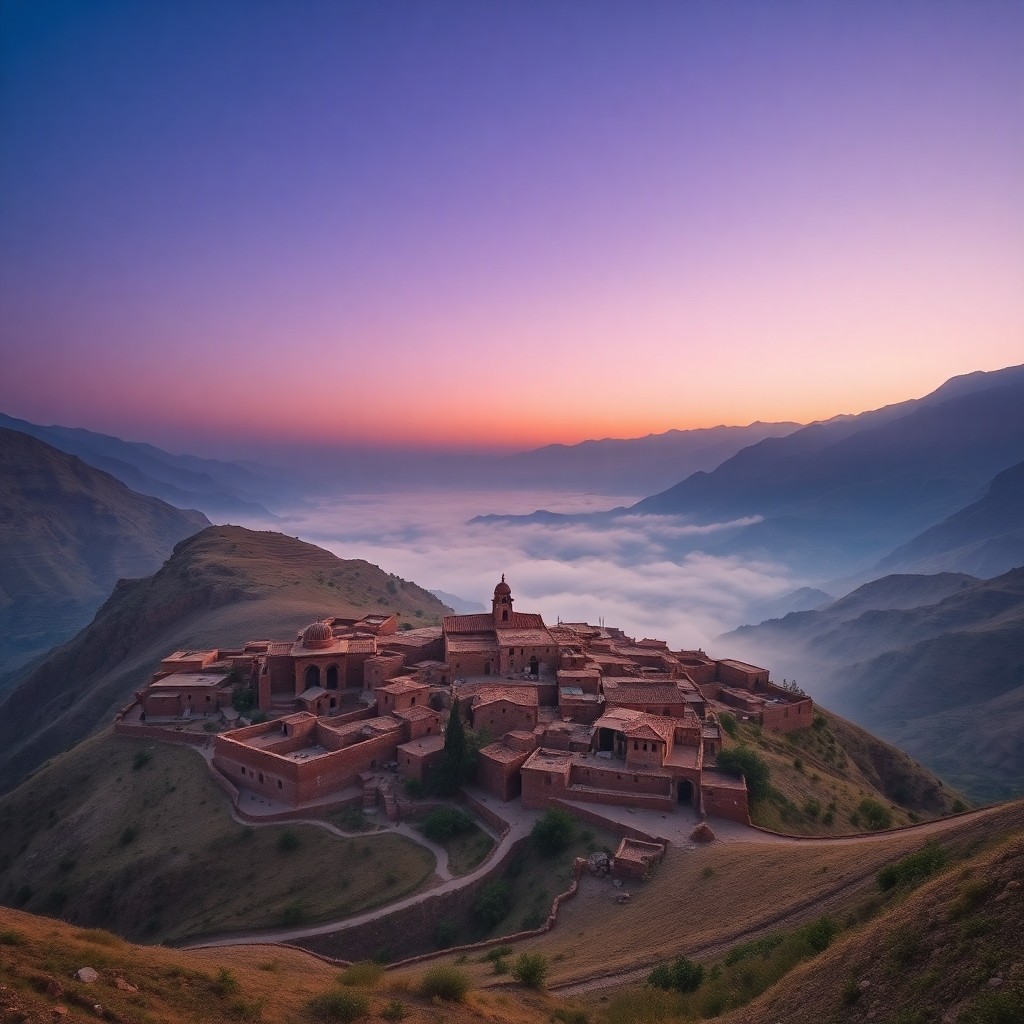
*A mud-brick Amazigh village nestled in the High Atlas mountains at dawn, with terraced fields climbing the surrounding hillsides and the first light catching the edges of flat-roofed earthen homes.*
The Working Day: Agriculture, Craft, and Gender Roles in the Village
Men in the Fields: Terraced Farming and Argan Groves
By 7 AM, Hassan and his two teenage sons have already left the house. Their destination is a series of narrow terraced fields carved into the hillside above the village — some no larger than 200 square meters each. These terraces, built and maintained over generations, prevent erosion on steep mountain slopes and create micro-plots suitable for barley, figs, almonds, and in lower elevations, argan trees. Roughly 45 percent of Morocco's rural Amazigh families remain directly dependent on subsistence agriculture, according to data from the Haut-Commissariat au Plan. The average landholding in the High Atlas is between one and three hectares — enough to sustain a family if the rains cooperate, but rarely enough to generate surplus income.
The work is seasonal and relentless. In spring, barley and wheat require weeding and irrigation management. In late summer and early autumn, figs and almonds demand intensive harvesting. Hassan's sons climb the fig trees, picking fruit with practiced hands, while Hassan himself repairs terrace walls damaged by winter runoff. This is grueling physical labor performed at altitude, often beginning before the sun clears the eastern ridge and continuing until the midday call to prayer signals a halt.
What makes this system sustainable is twiza — a communal labor tradition that functions as an unwritten social contract. When Hassan's neighbor needs help repairing a terrace wall or harvesting almonds before a storm, Hassan and his sons go. No money changes hands. When Hassan's fields need the same, his neighbors return the labor. Twiza extends beyond farming to house-building, well-digging, and even funeral preparations. It is the structural backbone of Amazigh village life, a system of mutual obligation that has kept these communities functional for centuries without formal governance structures.
Water management follows a similarly communal logic. Many Berber villages in the Atlas rely on khettara — underground irrigation channels that tap into groundwater tables on higher slopes and transport water by gravity over distances of up to several kilometers. Maintaining a khettara requires collective effort: annual cleaning of sediment, repair of collapsed sections, and equitable distribution of water according to a time-based rotation system managed by a village elder called the qayam. No single family owns the water. Everyone depends on it. Everyone maintains it.
Women's Work: Weaving, Water, and Household Economy
While the men work the fields, Fatima's day follows its own demanding rhythm. After cleaning the breakfast dishes and settling the youngest child with her eldest daughter, she walks to the communal fountain at the village's lower edge. The walk takes seven minutes downhill. She carries a large plastic jerrycan — a modern replacement for the traditional clay water pot, though some older women still use the originals. The fountain is more than a water source. It is the village's social nerve center for women. Here, news is exchanged, marriages are discussed, grievances are aired, and friendships are reinforced. Fatima might spend twenty minutes talking with three or four other women before heading home, her jerrycan full, her social obligations met.
By mid-morning, Fatima sits at her vertical loom — a simple wooden frame strung with warp threads, propped against the courtyard wall. She is weaving a handira, a traditional sequined wedding blanket, though she also produces simpler wool rugs for sale. Each motif she weaves carries meaning passed down from her mother and grandmother. The diamond shape, called afsi, represents protection against the evil eye. A zigzag line, azal, symbolizes water and fertility. A series of small crosses, tawurt, invokes the four cardinal directions and the balance of natural forces. These are not decorative choices. They are a visual language, a form of communication that predates written Tamazight by centuries. In some older Amazigh communities, women who could not read or write still "read" these symbols fluently, interpreting a rug's message as clearly as a letter.
Fatima's weaving generates independent income. When she completes a rug — a process that can take two to four weeks of intermittent work — she sells it at the weekly souk, the rotating rural market that visits a different village each day of the week. A medium-sized wool rug might fetch 300 to 800 dirhams (roughly $30 to $80 USD), money Fatima controls directly. In Berber households, women's income from crafts, egg sales, and surplus dairy products is considered theirs by custom and by Islamic law. This financial autonomy, often overlooked by outside observers, gives women significant behind-the-scenes influence over household decisions.
Midday Pause: The Centrality of the Main Meal
Cooking the Tagine: A Slow, Sacred Process
The Dhuhr prayer — the midday call — marks the day's pivot point. Hassan and his sons return from the fields, dusty and thirsty. The family reunites for the only meal of the day where everyone sits together. This is not negotiable. It is the social and nutritional anchor of Berber domestic life.
Fatima has been preparing the tagine since 10 AM. Today's version is a lamb-and-prune tagine, a classic High Atlas combination. The preparation follows a precise sequence. First, she places a clay tagine pot — the conical lid still off — over the kanun's coals. She adds a generous pour of olive oil, then layers sliced onions across the bottom. Lamb shoulder pieces, bone-in and roughly 500 grams total, go on top of the onions. The spices follow in order: a teaspoon of ground ginger, half a teaspoon of turmeric, a pinch of saffron threads crumbled into a tablespoon of warm water, and salt. No browning, no searing — the tagine's conical lid traps steam and circulates it, slow-cooking the meat in its own juices. She adds a cinnamon stick, a handful of pitted prunes, a tablespoon of honey, and a scattering of toasted almonds. The lid goes on. Then she waits.
The tagine cooks for approximately 90 minutes over low, steady heat. Fatima adjusts the charcoal periodically, adding or removing pieces to regulate temperature. There is no timer, no thermometer. She judges by smell — the moment the sweetness of prunes and honey begins to mingle with the savory depth of the lamb, she knows it is nearly done. This is knowledge transmitted through thousands of repetitions, not recipes.
Eating as a Family: Bread as Utensil, Hands as Bond
When the tagine is ready, Fatima places the clay pot on a low round table — a tabla, about 40 centimeters high — around which the family sits on floor cushions and woven mats. The eldest male, Hassan's father, is positioned at the head of the gathering. No one touches the food until he says "Bismillah" — "In the name of God" — and takes the first bite. This protocol is absolute. Children who reach early are gently corrected. Guests, if present, are served the best pieces — a lamb shank, a cluster of prunes — before anyone else.
The family eats from a shared plate, using torn pieces of khobz as utensils. The technique is specific: you pinch a piece of bread between your thumb, index, and middle fingers, use it to scoop sauce and food, and bring it to your mouth with your right hand. You eat only from the section of the plate directly in front of you. Reaching across another person's zone is considered disrespectful. The bread itself is never placed on the ground — it is too sacred. In Berber culture, bread, or aghrum, is a blessing. Dropping a piece means picking it up, kissing it, and placing it higher — on a windowsill or shelf — as a sign of reverence.
After the meal, a copper basin and pitcher are passed around for hand-washing. Rosewater is poured over each person's hands — three times each. Then the teapot returns to the kanun, and the second round of mint tea is prepared. A Berber proverb, often repeated at this moment, states: "A guest is a gift from God, and the table is his sanctuary." Even within the family, the meal is treated as a sacred trust, a daily renewal of bonds that no hardship can sever.
Afternoon and Evening: Community, Storytelling, and Rest
The Souk, the Mosque, and Social Visits
The afternoon hours between Asr (mid-afternoon prayer) and Maghrib (sunset prayer) belong to the village's public life. Hassan walks to the village square, a dusty open area near the mosque where men gather to talk, trade small goods, and exchange news. If it happens to be Thursday, he might walk further — to the weekly souk held in a larger village two kilometers away. The souk is a sensory overload: mounds of spices in ochre and crimson, bolts of fabric, livestock pens bleating with goats, and vendors calling out prices in a mix of Tamazight and Darija. Hassan might buy a bag of sugar, a new sickle blade, or simply sit with other men and listen to the radio broadcast from a shopfront speaker.
The mosque serves as the men's social hub as much as their spiritual one. After Maghrib prayer, small groups form outside to discuss village matters — a disputed water allocation, a proposed road repair, a marriage arrangement. These conversations are informal but consequential. Decisions affecting the entire village are often shaped here, in these post-prayer gatherings, long before any formal meeting occurs.
Meanwhile, Fatima visits relatives and neighbors. If a woman in the village recently gave birth, Fatima will bring a gift — typically a kilogram of sugar, a packet of tea, or a small jar of amlou. New mothers are visited frequently during the first forty days after childbirth, a period considered both celebratory and vulnerable. These visits reinforce the social fabric that twiza maintains in the fields. Women's networks are the village's emotional infrastructure.
Evening: Stories by Lamplight Before Sleep
After Isha, the evening prayer, the family gathers one final time. In villages without reliable electricity — and many remote Amazigh communities still lack grid power — a kerosene lamp or a small solar-powered LED light provides the only illumination. Fatima's mother-in-law, the family's grandmother, takes her place on a cushion near the kanun, which has been banked with coals for warmth.
She begins to speak. Tonight, she tells the story of Aïcha Kandisha — a well-known figure in Amazigh and broader Moroccan folklore. Aïcha Kandisha is a mythical woman-spirit who appears to travelers at night, particularly near rivers and wells. She is beautiful, seductive, and dangerous. The grandmother's version is specific: Aïcha was once a real woman, a princess, who was betrayed by her lover and drowned herself in a river. Now she haunts the waterways, luring men to their doom. The children listen with wide eyes. The youngest, perhaps four years old, clutches her mother's arm. But no one leaves. The story is both entertainment and education — it teaches children to respect water, to be cautious at night, and to understand that betrayal carries consequences beyond the visible world.
These oral sessions are the Amazigh classroom. Without relying on written texts — Tamazight was primarily oral until the recent adoption of Tifinagh script — grandmothers transmit language, values, history, and ecological knowledge through narrative. A single evening's story might encode lessons about animal behavior, seasonal patterns, family loyalty, and spiritual caution. The tradition is ancient, but it is also fragile. As satellite television and smartphones enter these villages, the grandmother's audience shrinks. Some families still insist on the nightly story. Others have traded it for a Turkish drama on a phone screen.
Bedtime comes early — typically between 8 and 9 PM. The family sleeps on woven mats and thin mattresses, pulled into the main room for warmth. By 5 AM, the call to prayer will sound again, and the cycle will resume.
How Modern Life Is Reshaping Berber Daily Rhythms
Phones, Migration, and the Pull of the City
The transformation is visible even in the most remote villages. Hassan's eldest son, now nineteen, owns a smartphone — a second-hand Android device he purchased in Marrakech during a visit last year. He charges it using a small solar panel mounted on the roof. At night, he scrolls through Facebook, watches football highlights, and occasionally video-calls a cousin who works in a textile factory in Casablanca. Satellite dishes, once rare, now dot rooftops across the High Atlas, pulling in Arabic-language channels from Egypt, Saudi Arabia, and Turkey. The evening storytelling hour has, in many households, been replaced by a dubbed Turkish soap opera playing on a screen propped against the wall.
Rural-to-urban migration has accelerated dramatically. Morocco's Haut-Commissariat au Plan reported that between 2004 and 2014, the country's rural population declined by approximately 1.2 million people, with young men constituting the majority of migrants. In many Berber villages, the demographic is visibly skewed: women, children, and elderly men dominate daily life, while men between eighteen and forty are absent, working in construction, agriculture, or service jobs in cities like Marrakech, Casablanca, or Tangier. They send remittances home — often 500 to 1,000 dirhams per month — that fund school fees, medical expenses, and home improvements. But their absence reshapes everything: the labor balance, the emotional landscape, the very definition of family.
The tension is real and unresolved. Urban employment offers economic survival that subsistence farming cannot. But it erodes the communal structures — twiza, storytelling, collective prayer — that define Amazigh identity. Young men who spend five years in Casablanca return speaking Darija more fluently than Tamazight, eating different foods, and viewing village life with a mixture of nostalgia and impatience. Some return permanently. Others do not.
What Endures: Language, Hospitality, and Identity
Yet the core holds. Tamazight remains the language of the home, the field, and the heart. In 2011, Morocco's new constitution officially recognized Tamazight as a national language alongside Arabic — a milestone that Amazigh activists had demanded for decades. The recognition has had tangible effects: Tamazight is now taught in primary schools across Berber-speaking regions, Tifinagh script appears on government buildings, and state-funded cultural festivals celebrate Amazigh heritage. The UNESCO recognition of Amazigh cultural practices as intangible heritage has further bolstered pride and visibility.
In classrooms across the High Atlas, children now learn to write their ancestral language using Tifinagh characters — a script their grandparents never used in daily life. This shift is profound: a grandmother who speaks Tamazight fluently but cannot read it now watches her granddaughter write homework in the same language, using characters that connect to ancient Libyan-Berber inscriptions carved in rock over 2,000 years ago. Parents report that children bring the language home, correcting elders' pronunciation and insisting on Tamazight terms their families had gradually replaced with Arabic equivalents. The classroom has become a site of cultural transmission that runs parallel to — and sometimes in tension with — the oral tradition of the grandmother's evening stories.
Hospitality remains non-negotiable. A stranger arriving at a Berber home at any hour will be offered tea, bread, and a seat before any question is asked. This is not performance. It is a deeply internalized moral code rooted in the Amazigh concept of nif — honor, which is demonstrated most clearly through generosity. Oral tradition, gendered but complementary roles, and reverence for bread, water, and fire persist even as smartphones glow in the dark.
The Berber family's day is a study in resilience — ancient rhythms adapting without breaking. The kanun still glows at dawn. The teapot still pours from height. The grandmother still speaks, even if fewer ears are listening. And the call to prayer still arrives first, before everything else, as it has for over a thousand years.
Conclusion
A day in the life of a Berber family traces an arc from pre-dawn firelight to lamplight stories, from terraced fields to communal tea, from the grandmother's voice to the youngest child's sleeping breath. What emerges is not a quaint portrait of a vanishing world but a living system of values — community over individualism, hospitality over suspicion, oral tradition over written record, collective obligation over personal gain. These are not romantic abstractions. They are daily practices, repeated with the same consistency as the seasons that govern the barley harvest and the almond bloom.
Understanding the Amazigh way of life matters because it challenges the reductive narratives that reduce North African indigenous culture to carpets and kasbahs. Behind every woven motif is a woman who controls her own income. Behind every shared meal is a social contract that predates modern governance. Behind every grandmother's story is an entire educational system that requires no textbooks, no classrooms, no tuition.
The depth of these traditions reveals itself through sustained attention — reading the symbols woven into a handira, learning why the third glass of tea tastes different from the first, understanding that a communal labor system called twiza has sustained mountain villages for centuries without a single written law. This knowledge, passed from mother to daughter and father to son across millennia, deserves the same careful preservation that Berber families give to their bread, their water, and their fire.
**Meta Description:** Discover the daily rhythms of a Berber family in Morocco's High Atlas — from dawn prayers and amlou breakfast to tagine meals, weaving traditions, and oral storytelling.