
Ultimate Moroccan Leather Pouf Styling Guide
Mastering Moroccan leather pouf styling, you must prioritize scale relative to your room dimensions and choose a hue that either complements or strategically contrasts your existing palette, following the principles of Ottoman furniture. In 2026, home décor trends 2026 emphasize the "Japandi" fusion—hybridizing Japanese minimalism with Scandinavian functionality—which pairs exceptionally well with the organic imperfections of hand-stitched Moroccan leather pouf. Whether you utilize the pouf as casual seating, a footrest, or a sculptural accent, its placement dictates the flow of movement and visual weight within the room. By focusing on material authenticity and spatial awareness, you can integrate this versatile element seamlessly into both contemporary and traditional Moroccan incense interiors.
Key Takeaways
- Choose the right size and shape to match your space. - Coordinate pouf color with your existing palette for cohesion. - Use the pouf to define zones, add texture, and introduce sustainable accents. - Blend bohemian and modern elements for a unique look. - Maintain Moroccan leather pillow care to ensure longevity and eco‑friendly styling.
Definitive Guide to Styling a Moroccan Leather Pouf in Any Room
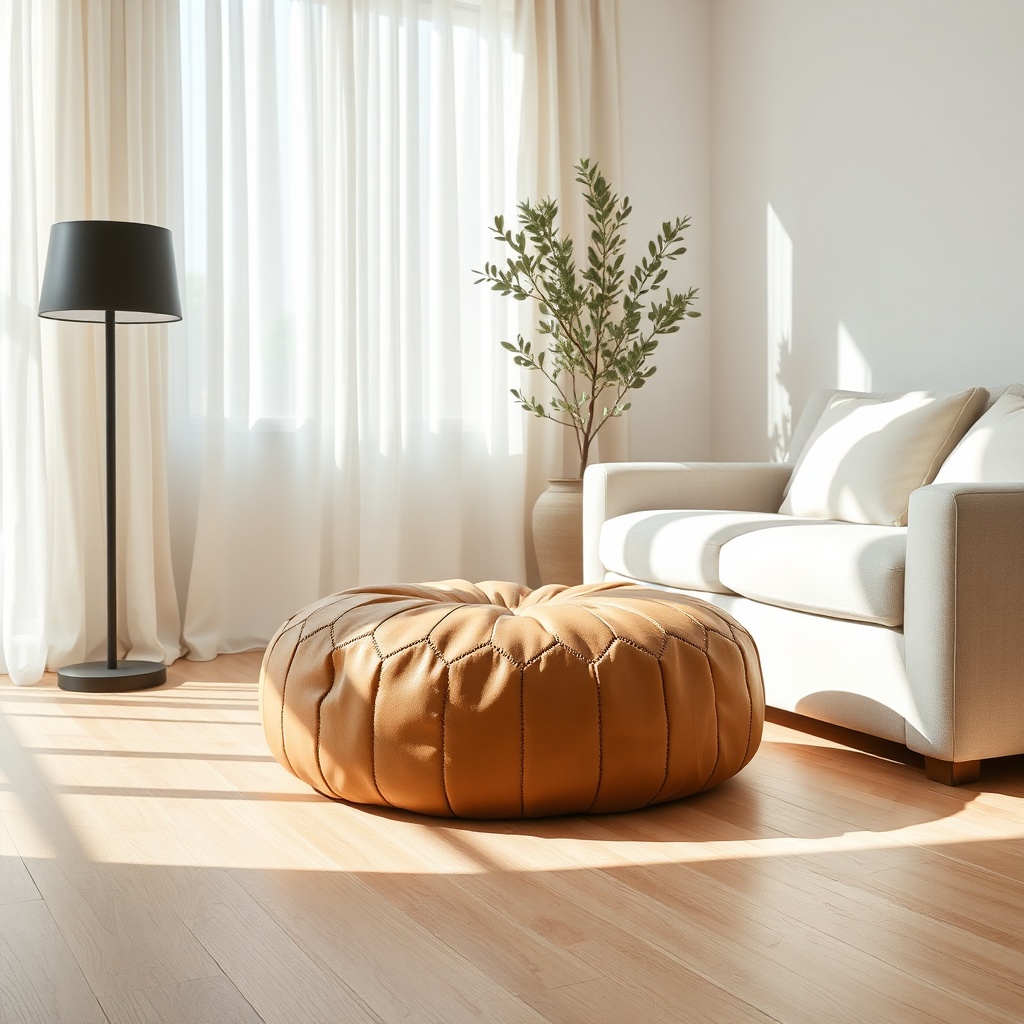
*A spacious, minimalist living room demonstrating how to style a beige Moroccan leather pouf within a Japandi interior design theme.*
Successful **Moroccan leather pouf styling** relies on understanding the interplay between the pouf’s cylindrical or square geometry and the linear architecture of modern homes. You should treat the pouf as a movable anchor that can soften sharp corners or fill awkward voids without cluttering the visual field. When considering **Leather pouf placement tips**, always ensure there is at least 18 inches of clearance around the piece to facilitate easy movement, particularly in high-traffic zones. The goal is to create a sense of intentional design rather than accidental clutter. By adjusting the pouf's position, you alter the room's focal point instantly, making it one of the most flexible décor tools available.
**Quick Answer**
The ideal spot for a Moroccan leather pouf is approximately 12-18 inches in front of your primary seating. This distance allows for comfortable use as a footrest while keeping traffic paths clear. In smaller spaces, tuck it partially under a console table when not in use to maintain an open floor plan.
Choosing the Right Size and Shape for Your Space
Selecting the correct dimensions is critical for maintaining visual balance. In a compact 400-square-foot studio apartment, a single 20-inch round pouf prevents the room from feeling overcrowded, whereas a larger 600-square-foot living room can accommodate two 24-inch square poufs or a cluster of three round ones. If you have low-profile furniture, such as a Scandinavian-style sofa with 14-inch seat height, choose a low pouf around 12-15 inches tall to maintain a consistent sightline. Conversely, if your seating is deep and high, a taller 18-inch pouf provides better ergonomic support. Always measure the floor area where the pouf will live to ensure it does not block vents or door swings.
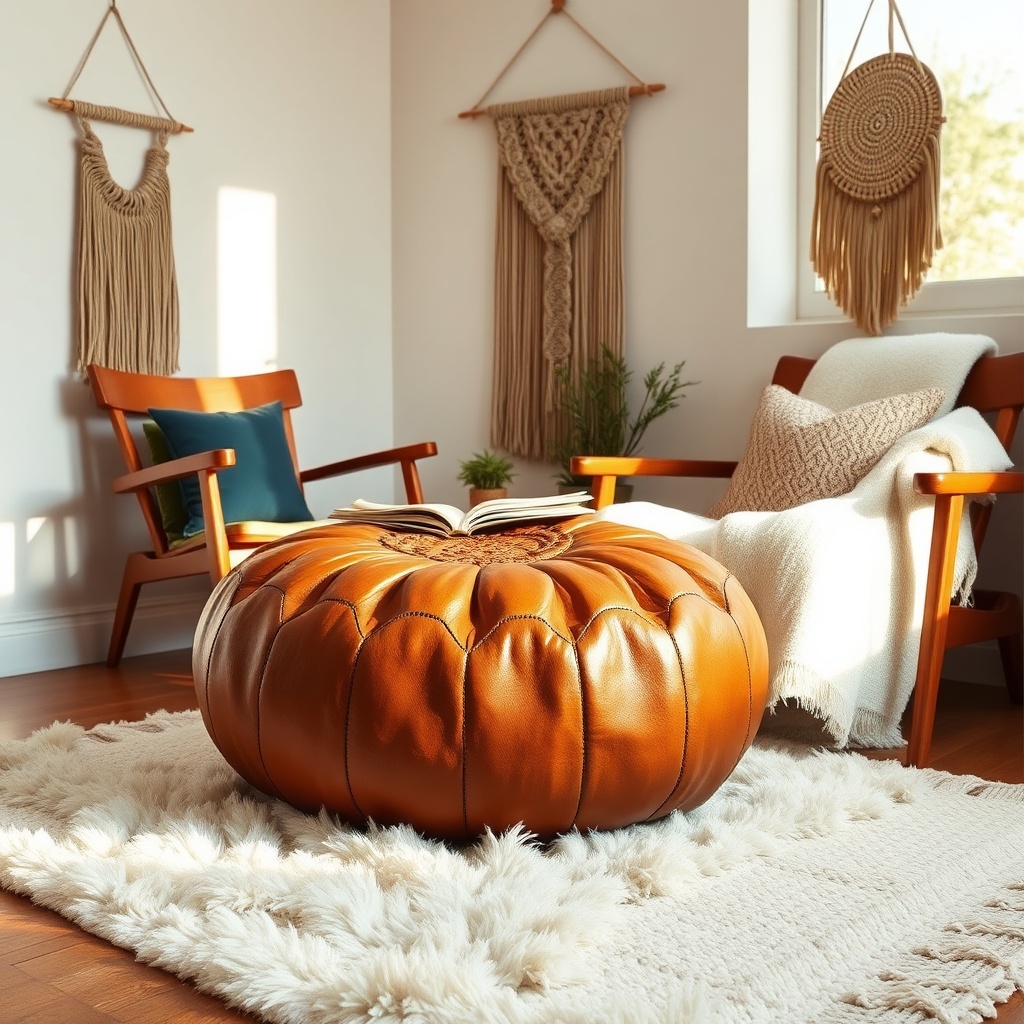
*A close-up view of a cognac Moroccan leather pouf styled as a seat in a warm, textural corner with a vintage chair.*
Color Coordination with Existing Palette
The **Traditional Moroccan color palette** often features rich, natural dyes, but coordinating these with modern interiors requires a strategic approach. According to 2026 interior design forecasts, warm terracotta has seen a 40% increase in popularity as an accent color, pairing beautifully with cognac or henna-dyed leather. Muted sage, another leading trend for 2026, offers a cool contrast that makes the warmth of natural leather pop without clashing. If your walls are painted in cool greys or crisp whites, opt for a vintage white or bone-colored leather pouf to add texture without introducing heavy color saturation. For rooms with dark wood floors, a black or dark brown leather pouf creates a sophisticated, monochromatic grounding effect.
Functional Roles: Seating, Footrest, or Accent Piece
Versatility is the hallmark of the Moroccan pouf, and repurposing it throughout the day maximizes its utility in your home. In the morning, use the pouf as a standalone seat near a window for a coffee nook, creating a moment of pause. During the day, shift it to the living area to function as a footrest, relieving pressure from your sofa. When entertaining guests, pull two or three poufs into the center of the room to provide instant, flexible additional seating. At night, place a decorative wooden tray on top of the pouf to convert it into a makeshift side table next to a reading chair. This rotation of roles demonstrates **Small space Moroccan styling** by ensuring every square foot serves multiple purposes.
Creating a Bohemian-Meets-Modern Fusion with a Moroccan Pouf
Achieving a **boho chic pouf** look within a modern framework requires restraint and a focus on texture rather than excessive ornamentation. **Moroccan boho décor ideas** in 2026 lean towards "quiet luxury," meaning you should avoid cluttering the space with too many patterns. Instead, let the intricate stitching of the leather serve as the primary pattern. Pair the pouf with sleek, matte finishes on cabinetry and lighting to create a bridge between rustic craftsmanship and contemporary design. The key is to allow the pouf to stand out as a piece of art while integrating smoothly into the clean lines of a modern room. This fusion creates a space that feels curated, collected, and effortlessly welcoming.
**Definition: Bohemian-Meets-Modern**
A design style that blends the free-spirited, layered aesthetic of bohemian décor with the clean lines, neutral palettes, and functional simplicity of modern minimalism. It emphasizes natural materials and global influences but maintains a clutter-free environment.
Layering Textiles for Visual Depth
**Layering rugs with leather poufs** creates an inviting, multi-dimensional surface that draws the eye. Start with a large, neutral base rug, such as a hand-knotted wool or jute variety, to define the area. Over this, add a smaller, vintage-style flat-weave or Berber rug with subtle geometric patterns to introduce visual interest. Place the leather pouf directly on top of this layered foundation. The contrast between the soft wool rugs and the firm, glossy leather creates a tactile experience that is essential to boho styling. To enhance this effect, drape a textured throw blanket casually over the nearby sofa, ensuring the fringe or weave interacts visually with the pouf's stitching. This approach adds warmth without overwhelming the senses.
Mixing Metal Accents and Natural Materials
In 2026, metal finishes play a crucial role in defining the character of a room. Current data indicates that brushed gold and matte black are the dominant metal finishes, accounting for over 60% of fixture sales in contemporary markets. These metals complement the earthy tones of **Moroccan leather pouf styling** by adding a touch of industrial or refined elegance. A brushed brass floor lamp arching over a leather pouf creates a stunning silhouette, while matte black table legs provide a stark, modern contrast. You should also incorporate raw wood elements, such as a teak side table or a driftwood sculpture, to reinforce the organic connection. The combination of cool metal, warm leather, and natural wood prevents the space from feeling too sterile or too rustic.
Balancing Minimalism with Exotic Flair
To maintain a minimalist aesthetic while incorporating exotic flair, follow a specific arrangement plan. First, clear the immediate area around the pouf of any unnecessary knick-knacks to let the piece breathe. Second, position the pouf off-center within a seating arrangement to create dynamic asymmetry. Third, limit the exotic accessories to just one or two other items, such as a single woven basket or a ceramic vase, to avoid visual competition. This strategy ensures that the pouf acts as a statement piece rather than part of a chaotic collection. By keeping the surrounding lines clean and the colors muted, the pouf’s exotic nature is highlighted through contrast rather than competition.
Using Moroccan Leather Poufs to Define Zones in Open-Plan Homes
In open-concept layouts, an **open-plan zone divider** is essential for creating distinct functional areas without constructing walls. Moroccan poufs serve as excellent, non-permanent barriers that visually separate spaces while maintaining airiness. You can utilize these mobile accents to delineate a transition from a dining area to a lounge space or to mark the boundary of a reading nook within a larger living room. **Morocan-inspired living room layouts** often rely on furniture placement to suggest rooms, and poufs are the perfect tool for this because they are lightweight and lack the visual bulk of sofas or armchairs. They signal a change in activity without blocking the line of sight, preserving the spacious feel of the open plan.
**Quick Answer**
To use poufs as room separators, arrange two rectangular poufs perpendicular to your sofa back. This creates a physical and visual boundary that defines the "living room" zone from a walkway or dining area. The low height ensures the separation feels subtle and cohesive rather than divisive.
Placement Strategies for Visual Separation
Imagine a rectangular open-plan room combining the kitchen, dining, and living areas. To delineate the lounge zone, place two large Moroccan leather poufs at the outer edge of the main seating arrangement, effectively creating a corner that anchors the space. Avoid placing them directly in the center of the room; instead, position them to create a subtle "L" shape that turns an open corner into a cozy nook. If you need to separate the dining area from the lounge, align a row of three smaller poufs along the invisible boundary line. This placement acts as a low fence that guides foot traffic around the seating area rather than through it, establishing a clear zone for relaxation.
Pairing with Complementary Furniture Pieces
A cohesive seating cluster often involves pairing the pouf with low-slung furniture to maintain a consistent profile. A low, wide coffee table—preferably wood or stone—serves as an excellent companion to the pouf. Arrange the pouf on one side of the table and a low-profile armchair on the other to create a balanced, intimate conversation circle. This setup is particularly effective in **Combining leather pouf with floor cushions**; you can place a large floor cushion on the opposite side of the pouf to create a relaxed, floor-level seating alternative. Ensure that the table height corresponds to the pouf height; a 12-inch high pouf pairs best with a coffee table around 14-16 inches tall to allow for easy access to drinks or books.
Lighting and Texture Pairings to Enhance Zones
Lighting plays a pivotal role in defining zones, and 2026 statistics show that 75% of interior designers prefer warm LED pendants (3000K temperature) for living areas to create a cozy ambiance. Hang a pendant light low over the seating cluster defined by your poufs to visually lower the ceiling and make the area feel intimate. Combine this with soft textures like a shearling rug or velvet cushions to amplify the sense of comfort. **Moroccan lanterns and pouf coordination** is a classic styling technique; placing a perforated metal lantern near the pouf casts intricate shadows that highlight the leather's texture. This interplay of light and shadow physically and visually separates the zone from the brighter, more utilitarian areas of the open-plan home.
Sustainable Styling: Ethical Leather and Eco-Friendly Décor Pairings
As environmental awareness grows, **sustainable leather pouf** options have become a priority for conscientious decorators. Styling your home with these pieces involves more than just aesthetics; it reflects a commitment to ethical consumption and longevity. In 2026, **eco-friendly home styling** is not just a trend but a standard, with consumers increasingly demanding transparency about material origins. By choosing authentic, vegetable-tanned leather poufs, you are investing in a biodegradable product that ages gracefully, reducing the need for replacements. Pairing these poufs with other sustainable elements creates a home environment that feels responsible yet luxurious, proving that style and ethics can coexist beautifully.
Verifying Ethical Sourcing of Moroccan Leather
To ensure your purchase supports responsible practices, use a specific checklist when vetting suppliers. First, confirm that the leather is vegetable-tanned using natural barks and roots, avoiding toxic chromium. Second, ask if the poufs are hand-stitched by local artisans in cooperatives that pay fair wages, rather than mass-produced in factories. Look for certifications or membership in fair-trade organizations. Third, inquire about the source of the hides; ethical sellers often use by-products from the food industry, ensuring that no animals are killed solely for their skin. By asking these questions, you contribute to the preservation of traditional Moroccan craftsmanship and ensure your décor choices align with your values.
Pairing with Recycled or Upcycled Accessories
To reinforce the sustainable narrative, pair your leather pouf with furniture and accessories that have a past life. A reclaimed-wood sideboard, with its visible knots and weathered grain, creates a stunning textural contrast next to the smooth leather. You might also choose a coffee table made from old wagon wheels or metal industrial scraps to add character. Upcycled glass vases or terracotta pots made from recycled clay further enhance this eco-conscious aesthetic. This combination tells a story of resourcefulness and respect for materials. The warmth of the leather complements the raw, often rugged aesthetics of recycled wood and metal, creating a grounded, authentic atmosphere that feels connected to the earth.
Maintaining Longevity to Reduce Waste
Proper **Leather pouf maintenance and conditioning** is the most effective way to reduce waste and extend the life of your décor. Follow this step-by-step routine to keep your pouf looking its best. First, dry dust the pouf weekly with a soft, lint-free cloth to prevent dirt from settling into the crevices. Second, every two to three months, apply a high-quality, natural leather conditioner (beeswax-based is ideal) to keep the hide supple and prevent cracking. Third, if the pouf gets wet, blot it immediately with a dry cloth and let it air dry away from direct heat sources. Finally, rotate the pouf monthly if it sits in direct sunlight to ensure even fading. This care routine preserves the leather's natural patina, ensuring the pouf remains a staple in your home for decades.
FAQ – Quick Answers for Moroccan Leather Pouf Styling### How large should a Moroccan leather pouf be for a standard living room?
For a standard living room, aim for a diameter or width of 20 to 24 inches. This size is large enough to be functional as a footrest or extra seat but proportionate enough not to overwhelm a standard sofa setup.
Can a leather pouf be used outdoors on a patio?
Generally, no. Genuine vegetable-tanned leather is susceptible to water damage and UV fading. If you need outdoor styling, look for synthetic alternatives that mimic the look, or keep the pouf strictly for covered, sun-protected porches.
What colors complement traditional Moroccan leather tones in 2026?
Traditional browns and cognacs pair excellently with the 2026 trending colors of warm terracotta, muted sage, and deep charcoal. These earthy, grounded tones enhance the natural warmth of the leather without competing for attention.
How do I clean and condition a Moroccan leather pouf safely?
Use a dry cloth for regular dusting. For cleaning, use a slightly damp cloth with mild soap, avoiding soaking the leather. Condition every few months with a natural beeswax polish to maintain moisture and prevent cracks.
Is it okay to mix a Moroccan pouf with contemporary minimalist furniture?
Absolutely. The intricate texture and organic shape of a Moroccan pouf provide the perfect contrast to the sleek, clean lines of minimalist furniture, adding a layer of warmth and visual interest to a modern space.
Conclusion
Mastering **Moroccan leather pouf styling** elevates your interior design by merging functionality with global artistry. The core strategies involve selecting the correct size for your proportions, harmonizing colors with the 2026 palette of terracotta and sage, and using the pouf as a versatile tool for defining open spaces. By blending bohemian textures with modern minimalism, you create a home that feels both curated and comfortable. Prioritizing sustainable, ethically sourced leather and maintaining it with proper care ensures that your style choices are environmentally responsible and long-lasting. Whether you are breaking up a large living area or adding a finishing touch to a cozy nook, the Moroccan leather pouf remains an timeless, adaptable asset. Take the opportunity to experiment with placement and layering, and watch how this single piece transforms the dynamics of your room.