
Moroccan Leather Pouf: 5 Things To Check Before Buying
Moroccan leather poufs have become a staple in modern interior design, bringing a touch of handcrafted North African heritage into homes around the world.
A Moroccan leather pouf is a round, cushion-like seat or footstool made from leather, traditionally goat or sheepskin, that is hand-stitched by artisans in cities like Marrakech. Its appeal lies in its versatility—it can serve as a footrest, extra seating, a coffee table, or a decorative accent—and in the unique character of the vegetable-tanned leather, which develops a rich patina over time. This guide covers everything you need to know, from verifying authenticity and choosing the right leather to caring for your pouf and styling it in your space.
**Quick Answer:** A Moroccan leather pouf is a round, hand-stitched leather ottoman, traditionally made in Morocco from vegetable-tanned goat or sheep leather. It is a versatile piece of furniture used as a footrest, seat, or table, and is prized for its durability and the unique patina it develops with age.
Key Takeaways
- Moroccan leather poufs are hand-stitched from vegetable-tanned leather, typically in Marrakech, and are known for their durability and unique patina. - They serve multiple functions: footrest, extra seating, coffee table, or decorative accent. - Proper care — including conditioning and avoiding direct sunlight — extends their lifespan significantly. - Authenticity matters: look for visible hand-stitching, natural leather grain, and a genuine leather smell (not synthetic). - Filling choices (wool, foam, or recycled materials) affect shape retention and comfort.
The Complete Answer: What Is a Moroccan Leather Pouf?
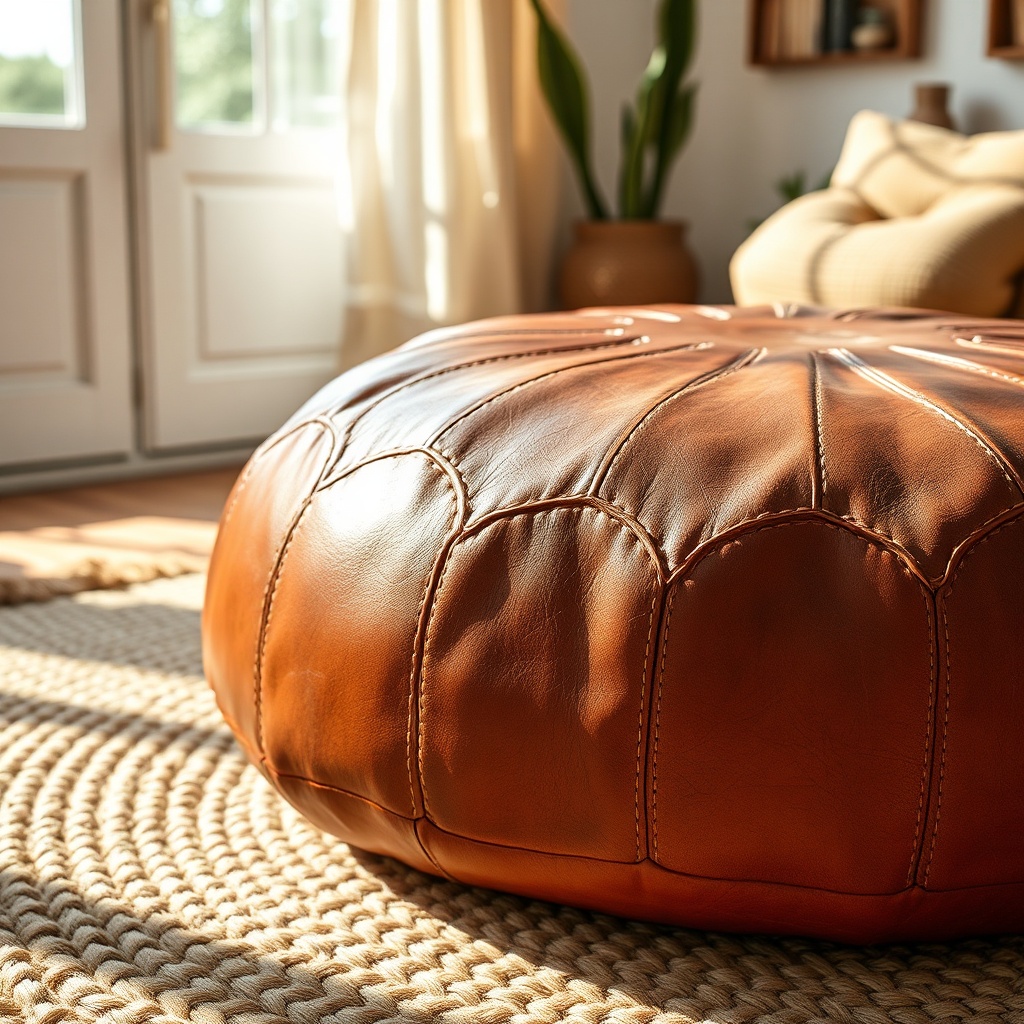
*Detailed view of a Moroccan leather pouf emphasizing hand-stitching, vegetable-tanned leather grain, and rich patina in a warm, artisanal setting.*
A Moroccan leather pouf is a versatile, round leather seat that is deeply rooted in traditional Amazigh craftsmanship. These pieces are more than just furniture; they are functional art that brings a sense of nomadic lifestyle decor into a modern home.
Definition and Core Characteristics
A Moroccan leather pouf is a round, cushion-like seat or footstool made from leather, traditionally goat or sheepskin, tanned using natural methods. Its key features include hand-stitched seams, a distinctive star or geometric embossed pattern, and a zipper or hidden closure that allows for refilling.
**Definition:** A Moroccan leather pouf is a round, handcrafted ottoman made from vegetable-tanned leather, traditionally produced by artisans in Morocco. It is characterized by its hand-stitched construction, geometric patterns, and a zipper for refilling, making it a functional and decorative piece of furniture.
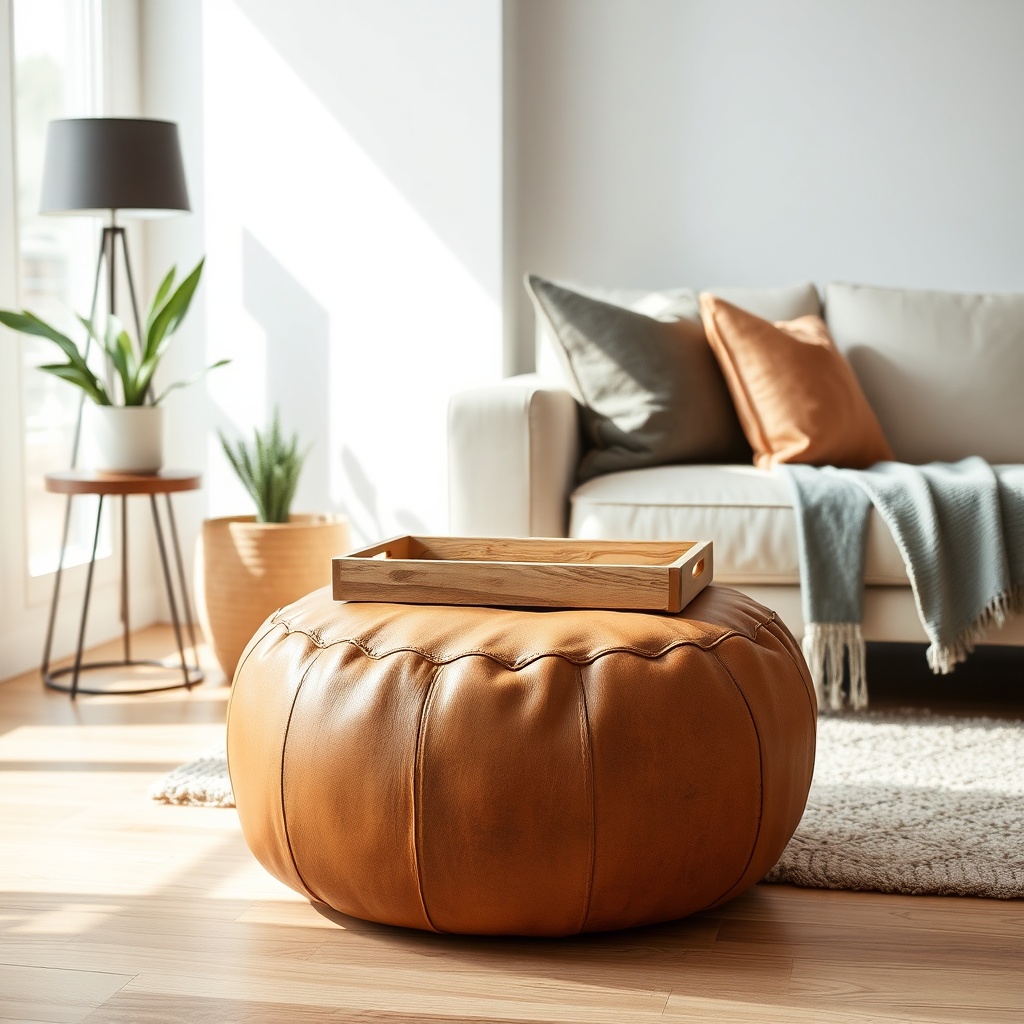
*Lifestyle image showing a Moroccan leather pouf used as a footrest and coffee table alternative in a bright, modern living space.*
Why They Are Unique Compared to Other Ottomans
The leather is vegetable-tanned, a process that gives it a natural, earthy scent and allows it to develop a rich patina over time. This is different from the chrome-tanned leather used in many mass-produced furniture pieces, which is treated with chemicals and does not age in the same way. The hand-stitching is the other hallmark of a genuine Moroccan leather pouf. Each stitch is placed by hand, making every pouf slightly different, a testament to the traditional Amazigh craftsmanship that defines these pieces.
Common Uses in a Home
The versatility of a Moroccan leather pouf is unmatched. It can be used in almost any room for almost any purpose:
- As a footrest in front of your favorite armchair. - As a low seating option for an extra floor seating arrangement. - As a side table when topped with a tray. - As a decorative accent in a living room, bedroom, or reading nook.
How to Choose the Right Moroccan Leather Pouf (Buying Guide)
Selecting the right Moroccan leather pouf involves more than just picking a color. You need to consider the authenticity, the type of leather, the filling, and the size.
Authenticity Check: Handmade vs. Machine-Made
To ensure you are getting a genuine, handcrafted pouf, you need to look closely at the details. Authentic poufs will have visible signs of human workmanship.
- **Look for uneven stitches:** Hand-stitching is rarely perfectly uniform. The spacing and tension of the thread will vary slightly, which is a sign of authenticity. - **Check for natural leather imperfections:** Genuine vegetable-tanned leather will have a natural grain, with small variations in color and texture. It should not look perfectly smooth or have a synthetic finish. - **Smell the leather:** A genuine leather pouf will have a strong, earthy, and natural leather smell. Machine-made poufs often have a chemical or synthetic odor.
Leather Types and Quality Grades
The type of leather used significantly affects the feel, durability, and price of the pouf.
- **Goat leather:** This is the most traditional and common type. It is known for being soft with a fine, tight grain, and it becomes even softer with use. - **Sheep leather:** This leather is more supple and has a softer, more luxurious feel. It is often used for high-end poufs but is slightly more delicate than goat leather. - **Cow leather:** This is thicker, heavier, and more durable, making it a good choice for high-traffic areas, though it is less common for traditional Moroccan poufs.
The tanning process is also crucial. Look for **genuine vegetable-tanned leather**, which is the traditional and more eco-friendly method. It is what allows the leather to develop that beautiful patina over time.
Filling and Shape Retention
The filling determines how firm your pouf will be and how well it holds its round shape.
- **Wool:** This is the traditional choice. It is firm, holds its shape well, and is naturally breathable. - **Foam:** This is a common and more affordable alternative. It provides a comfortable, medium-firm seat. - **Shredded foam or recycled textiles:** These are often used to fill the core, providing bulk and shape.
The filling affects the pouf's firmness, height, and its ability to maintain its round shape. A well-filled pouf will be firm and resilient, not saggy or lumpy.
Size and Proportions
Standard sizes for a round Moroccan leather pouf are roughly 20–22 inches in diameter and 12–14 inches in height. When choosing a size, consider its intended use. If you plan to use it as a footrest, a standard size is perfect. For extra seating, you might prefer a larger pouf. If you have limited space, a smaller pouf might be more appropriate. You can also find **custom sized leather pouf options** from many artisans.
Step-by-Step: How to Care for and Maintain a Moroccan Leather Pouf
A well-maintained Moroccan leather pouf can last for decades. This leather pouf maintenance guide covers the essential steps to keep yours looking and feeling its best.
Step 1: Initial Conditioning
When you first get your pouf, apply a leather conditioner or a natural oil like neatsfoot. This helps to protect the leather, keep it soft, and prevent it from drying out and cracking.
Step 2: Regular Dusting and Cleaning
Use a soft, dry cloth to dust your pouf regularly. This prevents dirt from building up in the grain of the leather. Avoid using water and harsh chemicals, as these can damage the leather.
Step 3: Spot Cleaning for Stains
If you get a stain, gently blot it with a slightly damp cloth and a small amount of mild soap. Be careful not to rub, as this can spread the stain. Dry the area immediately with a clean, dry cloth.
Step 4: Preventing Sun Damage and Fading
Keep your pouf away from direct sunlight and heat sources, such as radiators. Prolonged exposure to sunlight can cause the leather to fade and crack.
Step 5: Refilling and Restoring Shape
Over time, a pouf may flatten. To restore its shape, simply unzip the bottom closure and insert more filling—wool or foam—until it is firm and holds its round shape again.
Step 6: Long-Term Storage
If you are not using your pouf for an extended period, store it in a cool, dry place. Stuff it with extra filling to help it maintain its shape while in storage.
Moroccan Leather Pouf vs. Other Ottomans: A Comparison
To understand the value of a Moroccan leather pouf, it helps to compare it with other types of ottomans.
Comparison Table: Moroccan Leather Pouf vs. Fabric Ottoman vs. Leather Storage Ottoman
| Feature | Moroccan Leather Pouf | Fabric Ottoman | Leather Storage Ottoman | | :--- | :--- | :--- | :--- | | **Material** | Genuine vegetable-tanned leather | Fabric (linen, cotton, velvet, etc.) | Leather or faux leather | | **Style** | Handcrafted, bohemian, artistic, geometric patterns | Modern, traditional, or patterned | Classic, structured, formal | | **Durability** | Very durable; leather is strong and develops a patina | Less durable; can stain, tear, and fade | Durable, but can scratch or crack | | **Maintenance** | Requires conditioning; easy to spot clean | Requires vacuuming and professional cleaning | Requires dusting and occasional conditioning | | **Price Range** | Varies by size and leather quality | Generally more affordable | Varies widely, often more expensive | | **Best For** | Boho chic interior styling, extra floor seating, footrests | A structured, cushioned seat in a formal setting | Adding hidden storage to a living room |
Why Choose a Moroccan Pouf Over a Conventional Ottoman
A Moroccan leather pouf offers a unique artisanal aesthetic that is hard to replicate with mass-produced furniture. It is lightweight and portable, making it easy to move from room to room. It can be used as a casual seat or a table, and its design adds a sense of cultural heritage to your home. The main downsides are that it offers less structured support than a conventional ottoman and does not have built-in storage.
Which One Fits Your Lifestyle?
Consider your decor style, seating needs, and household when making your choice. If you have pets or children, a leather pouf is easier to clean than a fabric one. If you need a formal piece of furniture, a conventional ottoman might be a better fit. For a relaxed, boho chic interior styling, a Moroccan pouf is a perfect choice.
Styling Ideas and Interior Design Tips
The versatility of a Moroccan leather pouf extends to its styling. Here are a few ways to incorporate it into your home.
Using a Pouf as a Coffee Table
Place a large wooden tray on top of your pouf to create a stable surface for drinks and books. Add a small candle or a plant for height. This is a great way to create a functional table without the visual weight of a traditional coffee table.
Creating a Cozy Seating Corner
Pair two or three poufs with a low table or a rug to create a relaxed, meditative space. This arrangement is perfect for a reading nook or a casual conversation area. It adds a nomadic lifestyle decor element that feels both inviting and grounded.
Mixing Poufs with Different Textures and Colors
Combine a neutral leather pouf with a colorful woven blanket or a patterned rug. The contrast in textures and colors will make the pouf stand out. You can also use a pouf in a children's room as a soft, safe seat.
Placement in Different Rooms
- **Living room:** Place it next to the sofa as an extra seat or footrest. - **Bedroom:** Put it at the foot of the bed as a stylish and functional accent. - **Entryway:** Use it as a seat for putting on or taking off shoes.
Frequently Asked Questions (FAQ)
Are Moroccan leather poufs comfortable to sit on?
Yes, but they are firm and low to the ground. They are best used as a footrest or an occasional seat rather than for long periods of sitting.
How do I know if a Moroccan leather pouf is authentic?
Look for hand-stitching, natural leather grain, and a genuine leather smell. Avoid poufs that have perfectly uniform stitching, a synthetic finish, or a chemical odor.
Can I use a Moroccan pouf outdoors?
Not recommended. Leather can be damaged by moisture and direct sunlight. Use it indoors or on a covered patio.
How long does a Moroccan leather pouf last?
With proper care, it can last for decades. The leather develops a beautiful patina over time, making it even more attractive as it ages.
What is the best filling for a Moroccan leather pouf?
Wool is the traditional choice and holds its shape well. Foam is a more affordable and widely available alternative that also provides good support.
Conclusion
A Moroccan leather pouf is more than just a piece of furniture; it is a piece of art that embodies traditional Amazigh craftsmanship. By checking for authenticity, understanding the leather quality, and providing proper care, you can invest in a quality piece that will age beautifully and add character to your home. Whether used as a footrest, a seat, or a design statement, a Moroccan leather pouf is a timeless and functional addition to any interior.