
Why Is Moroccan Harira Soup A Ramadan Icon?
Finishing with the Signature Touch
Regional Variations and Modern Adaptations
The Classic Fassi (Fez) Style
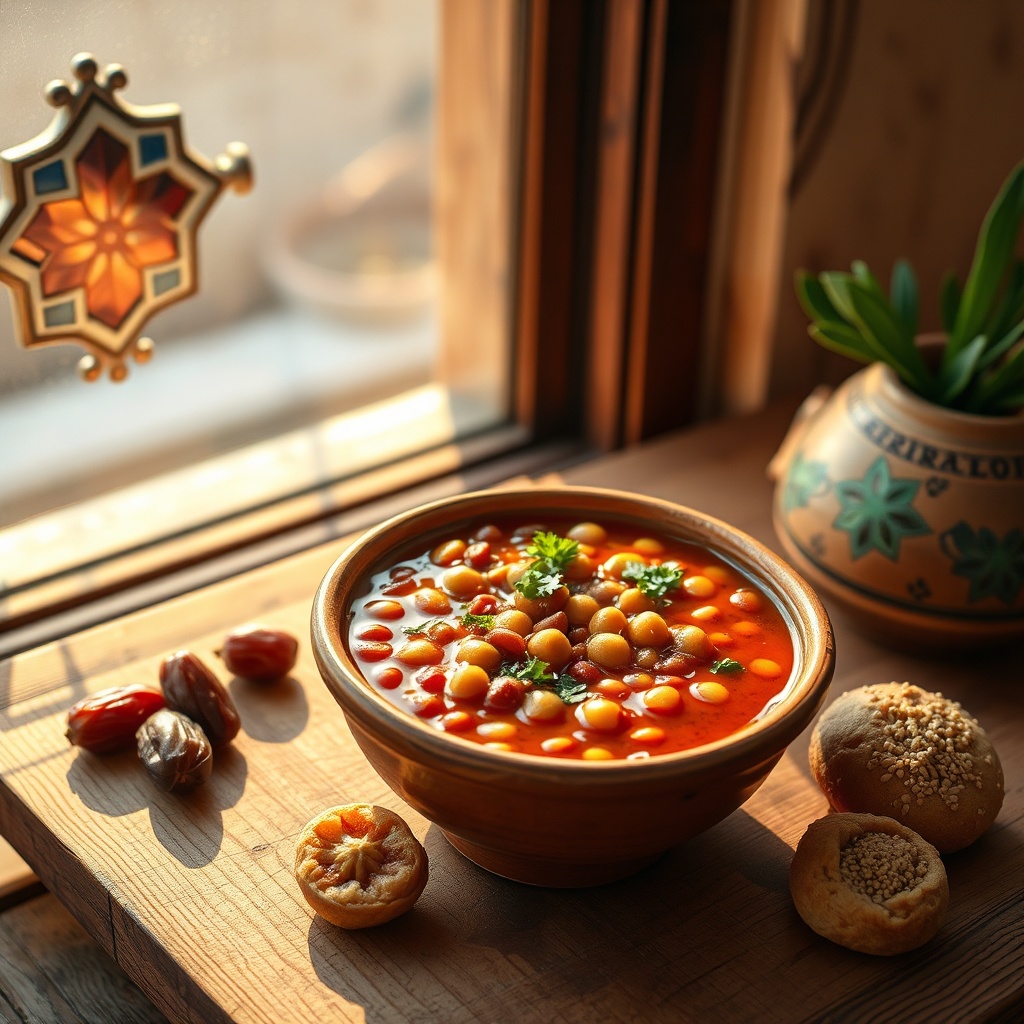
*A timeless serving arrangement highlighting the authentic pairing of hearty Harira with sweet dried fruits and honey-glazed pastries.*
The Fassi style, from the city of Fez, is considered the classic and most elaborate version of Harira. It is richer and more complex, often with a higher proportion of herbs. The use of beef or lamb with bone is traditional, as the bone adds a deeper, more intense flavor to the broth. In Fez, it is a tradition to serve Harira with a side of dates and other dried fruits.
Coastal Variations (Tangier, Rabat, Casablanca)
In coastal regions like Tangier, Rabat, and Casablanca, the influence of the sea is felt in the local cuisine. While less common, some coastal home cooks add small amounts of fish or seafood to their Harira. These variations are often lighter and more broth-based than the inland versions. The influence of Mediterranean ingredients like olives and preserved lemon can also be found in some coastal recipes.
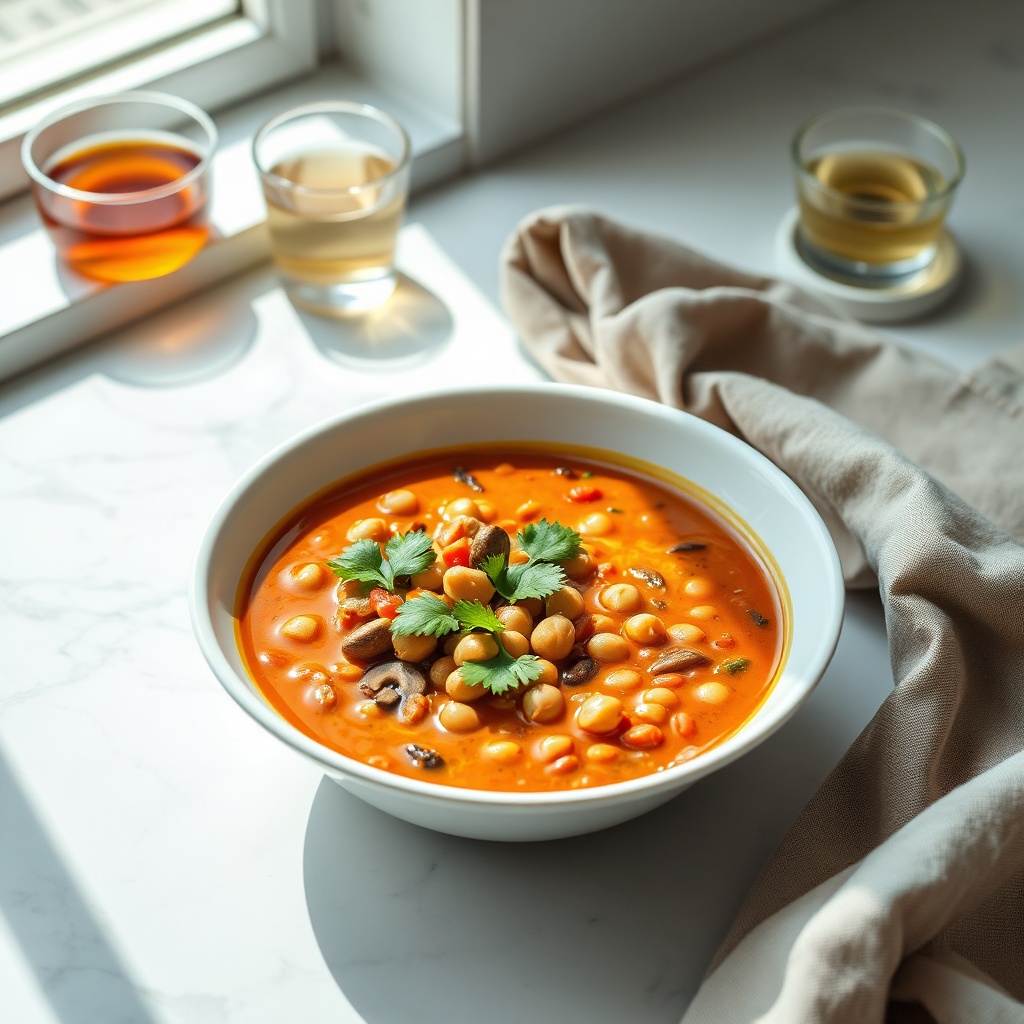
*A contemporary, meat-free version of the classic soup emphasizing earthy mushrooms, legumes, and clean plating techniques.*
Modern and Vegetarian Adaptations
Home cooks and restaurants are creating plant-based versions of Harira. These adaptations substitute the meat with vegetable broth and often use mushrooms for umami, along with extra chickpeas and lentils to make the soup more substantial.
There is a growing trend of Harira in contemporary Moroccan restaurants. Chefs are elevating the dish with modern plating and presentation while keeping the traditional flavors intact. Some are even offering a slow cooker harira recipe or an instant pot Moroccan soup version for convenience, making this traditional dish more accessible to home cooks.
How to Serve Harira: The Complete Moroccan Experience
Traditional Accompaniments
Serving harira with dates is a time-honored tradition. The sweetness of the dates provides a quick source of energy after a day of fasting and complements the tangy flavors of the soup. Dried figs are also a common accompaniment for the same reason.
The tradition of serving chebakia (sesame-honey pastries) alongside Harira is essential to the complete experience. These flower-shaped, deep-fried pastries are coated in honey and sesame seeds, providing a sweet contrast to the savory soup.
Fresh bread, known as khobz, is also an important part of the meal. It is used for dipping into the thick soup, ensuring that every last drop is enjoyed.
Harira as Part of the Iftar Meal
**Quick Answer:** Harira is the first food consumed after sunset during Ramadan, providing quick energy and hydration after a day of fasting.
Harira is positioned as the first food consumed after sunset during Ramadan. Its role is to provide quick energy and hydration after a day of fasting. The combination of broth, legumes, and complex carbohydrates helps restore the body's energy levels gently.
The communal aspect of sharing the soup with family and neighbors is a vital part of the iftar meal. It is a time of togetherness and gratitude, where the act of sharing Harira symbolizes community and generosity.
Storing, Freezing, and Reheating
For storing leftovers, allow the soup to cool completely before transferring it to an airtight container. It can be kept in the refrigerator for up to four days.
Harira also freezes exceptionally well. Portion the soup into freezer-safe bags or containers and freeze for up to three months. This makes it a convenient meal to have on hand.
The best method for reheating is to do so gently on the stovetop over low heat. Stir occasionally to prevent the bottom from sticking. If the soup has thickened too much, a splash of water or broth can be added to thin it back to the desired consistency.
Frequently Asked Questions (FAQ)
What is the main flavor of Moroccan Harira soup?
The main flavor is a complex, tomato-forward tanginess, balanced by warm spices like ginger and cinnamon, and finished with fresh herbs and a squeeze of lemon.
Can I make Harira without meat?
Yes, Harira can be easily made vegetarian. Simply omit the meat and use vegetable broth. To add depth, you can increase the amount of chickpeas and lentils, or add mushrooms for a savory, umami flavor.
What is the difference between Harira and other lentil soups?
Harira is distinct because of its tomato-forward base, its use of both lentils and chickpeas, and its unique thickening agent called "tedouira." It is also traditionally served during Ramadan as part of the iftar, making it a culturally significant dish.
How long does Harira soup last in the refrigerator?
Harira will last for up to four days when stored properly in an airtight container in the refrigerator.
Can I freeze Moroccan Harira soup?
Yes, Harira freezes very well. Allow it to cool completely, then portion it into freezer-safe containers. It can be frozen for up to three months.
Conclusion
Harira is more than just a recipe; it is a cultural emblem of Morocco. It represents the heart of Moroccan hospitality and the spirit of Ramadan, bringing families and communities together around a shared bowl of warmth and nourishment. Its complex flavors and velvety texture are a testament to the country's rich culinary heritage.
The ingredient list is accessible, and the cooking process, while requiring some patience, is straightforward. Making it at home is a rewarding experience that brings a piece of Moroccan tradition into your kitchen.
From its traditional role in the Ramadan iftar to its popularity as a comforting everyday soup, Harira is incredibly versatile. Whether you follow a classic recipe or a modern vegetarian adaptation, the dish's soul remains the same.
Sharing a bowl of Harira is sharing a piece of Moroccan hospitality. It is an invitation to sit down, slow down, and enjoy a meal that has been nourishing people for generations.