
Moroccan Decor: Bringing The Sahara Into Your Home
Moroccan Decor: Bringing the Sahara into Your Home
Step into a Moroccan riad and you immediately feel the difference: walls that seem to breathe, light that dances through pierced metal screens, and textures that invite you to touch everything. This is the power of Moroccan interior design—a style that engages every sense and transforms a standard room into a warm, immersive escape. When you embrace **Moroccan Decor**, you curate a sensory experience that balances bohemian interior design spirit with the timeless allure of the Sahara desert aesthetic. The foundation of this transformation begins with the walls themselves, where ancient plaster techniques replace the flat uniformity of standard construction.
The Art of Tadelakt: Creating Seamless Desert Walls
If you want to capture the true essence of a Moroccan riad, you must look beyond standard latex paint and embrace the tactile luxury of Tadelakt. This ancient plaster technique, native to Marrakesh, transforms ordinary walls into smooth, seamless surfaces that seem to glow with an inner light. Unlike flat, matte paint that sits on top of a surface, Tadelakt becomes part of the architecture, creating a soft, organic finish that mimics the curvature of sand dunes. It is the ultimate textured wall finish for those seeking to eliminate the visual noise of modern construction.
Understanding the Ancient Lime Plaster Process
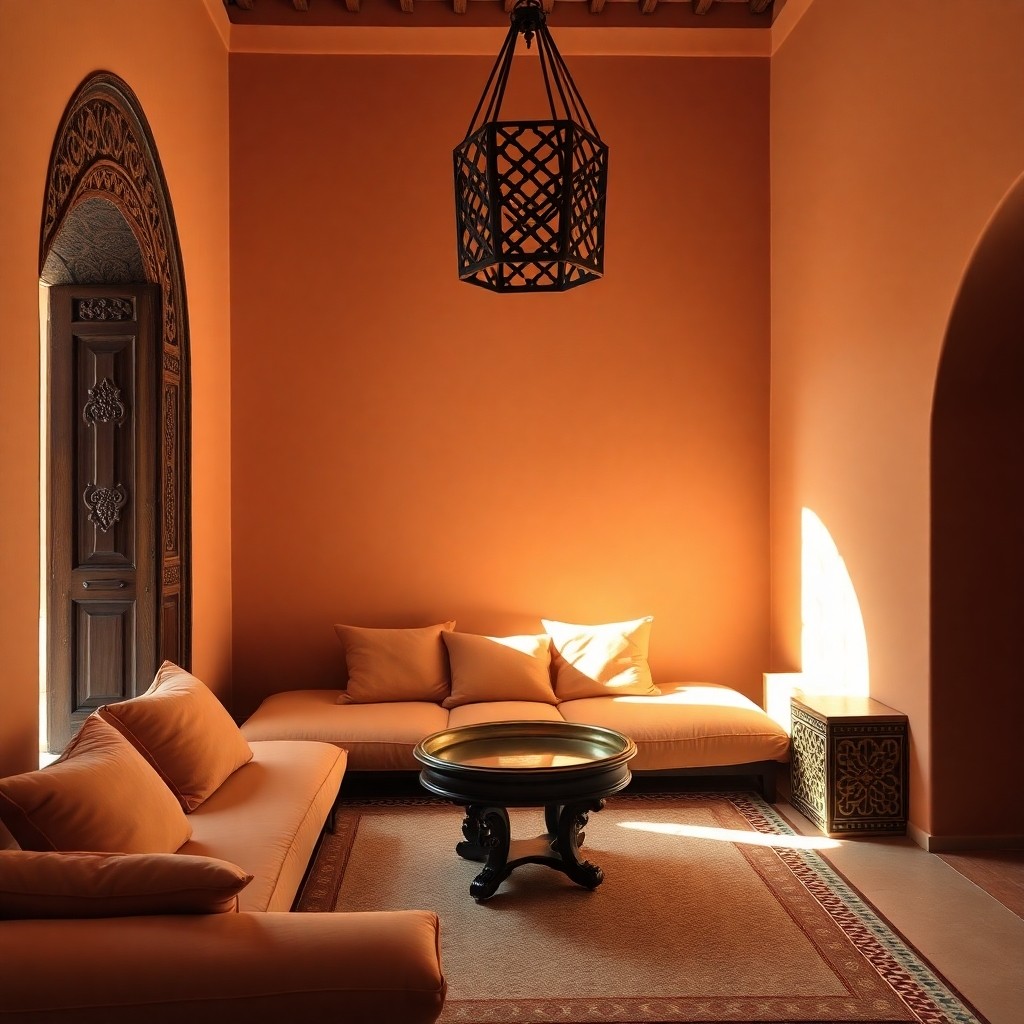
*A beautifully designed Moroccan room showcasing the smooth, seamless Tadelakt plaster finish on walls, bathed in warm natural light that highlights the organic texture and earthy color palette.*
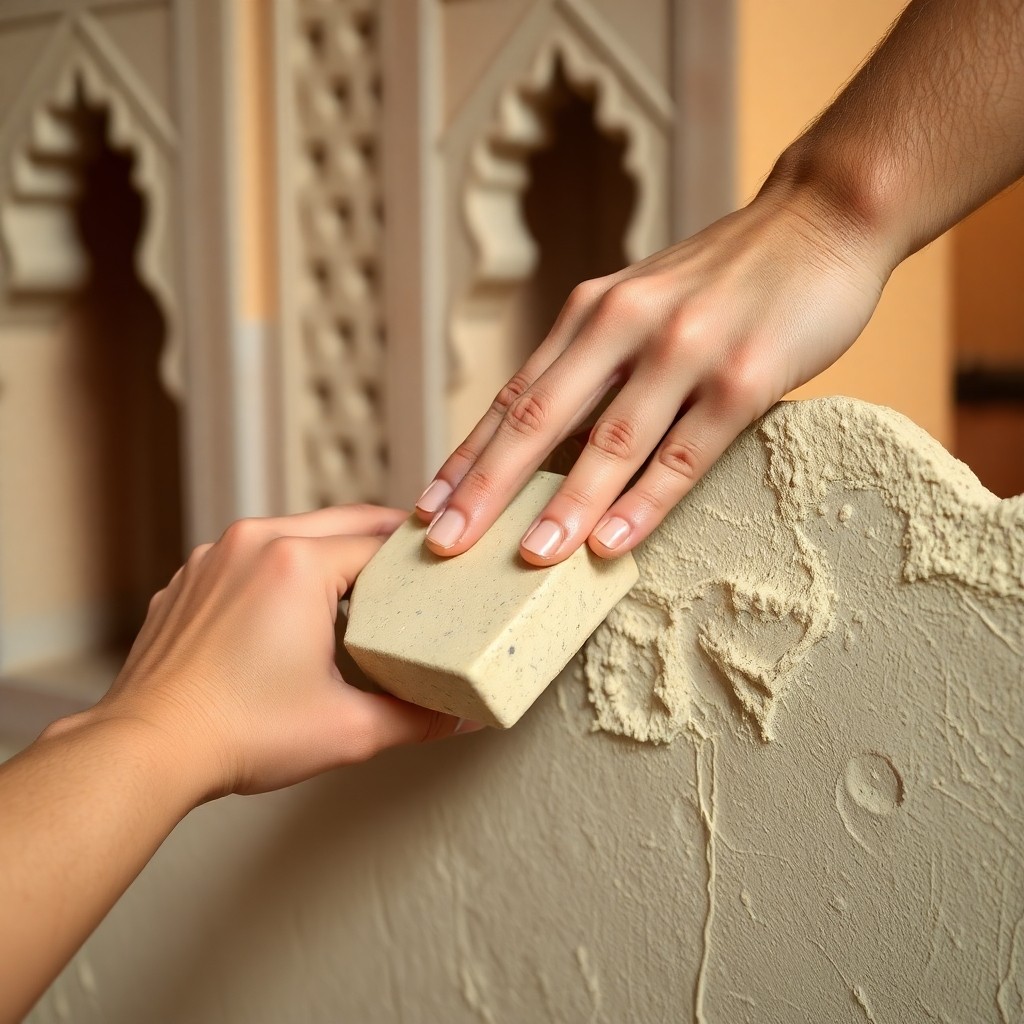
Tadelakt is not just a finish; it is a chemical reaction. The process begins with a specific limestone plaster containing lime that is applied in multiple thin layers. Once cured, it is treated with a black soap made from olive oil and pressed with a smooth river stone until the surface compresses and polishes to a shine. This treatment carbonates the lime, making the surface water-resistant and incredibly durable. It is superior to standard drywall or paint because it lacks the uniform rigidity of synthetic materials; instead, it offers a living, breathing "cave-like" feel that regulates humidity naturally.
**Tadelakt Application vs. Standard Venetian Plaster**
| Feature | Tadelakt | Venetian Plaster | | :--- | :--- | :--- | | **Base Material** | Hydraulic Lime (natural limestone) | Slaked Lime + Marble Dust | | **Water Resistance** | Waterproof (due to black soap treatment) | Water-resistant (requires wax sealant) | | **Finish Tool** | Polished with a river stone | Burnished with a metal trowel | | **Maintenance** | Periodic re-application of soap | Periodic re-waxing | | **Aesthetic** | Matte to soft sheen, organic | High gloss, marble-like |
DIY Alternatives for the Modern Home
Authentic Tadelakt requires a master artisan, but you can replicate the visual effect using modern lime washes or clay paints. These products offer the same depth of color and texture without the labor-intensive polishing process. Look for mineral-based paints that absorb into the substrate rather than forming a film on top. This allows the wall to "breathe" and creates a mottled, varied appearance that hides imperfections beautifully.
For the best results, consider brands like **Borghese** or **Romabio** for their Classico Limewash, which is widely available in the US and Europe. If you are in the UK, **Bauwerk Colour** offers specialized mineral paints designed to mimic the soft, chalky finish of traditional Moroccan plaster. Applying these with a cross-hatch brush technique will yield the textured, layered look essential for this style.
*A detailed view of the traditional Moroccan Tadelakt plastering technique, where skilled artisans polish lime plaster with a smooth river stone to create the signature seamless, water-resistant wall finish.*
Illuminating the Night: The Strategic Use of Shadows
Lighting in Moroccan design is never purely functional; it is an architectural tool used to manipulate atmosphere and mood. In the harsh brightness of the Sahara sun, shadows are a relief, and this principle translates directly into interior design. By using Moroccan lanterns, you transform light from a simple utility into a patterned art form. The goal is to create pockets of intimacy and mystery, turning a plain room into a space of shifting geometric shadows that feel alive.
Metalwork and Shadow Projection
The hallmark of Moroccan lighting is the "henna lamp" or pierced metal lantern. These fixtures are typically crafted from brass or copper and feature intricate geometric cutouts. When a bulb is placed inside, the light escapes only through these perforations, casting a web of star-like patterns across the ceiling, walls, and floor. This mimics the interplay of sunlight filtering through palm fronds or latticed screens in a desert courtyard.
To maximize this effect, avoid central ceiling lights. Instead, place a large filigree floor lantern in a dark corner of the room. Position it so that the light casts upward and outward, transforming a blank wall into a canvas of moving shapes. This creates a focal point that draws the eye and adds immediate architectural interest without the need for renovation.
Layering Light Sources with Warmth
The color temperature of your bulbs is critical. A cool white LED (4000K+) will destroy the ambiance, making the space feel clinical and harsh. To achieve the cozy, amber glow of a desert evening, you must stick to warm color temperatures. Aim for bulbs rated at 2700K or lower; for an even more authentic candlelit feel, look for 2200K "extra warm" bulbs.
According to the American Lighting Association, warmer light temperatures (2700K and below) significantly increase the perceived comfort and relaxation of a room compared to cooler spectrums. By layering these warm sources—using a combination of floor lamps, tabletop tea lights, and wall sconces—you create a dynamic lighting scheme that allows you to adjust the energy of the room from vibrant to restful with the flick of a switch.
The Wabi-Sabi Connection: Incorporating Beni Ouarain Rugs
The minimalist Japanese philosophy of Wabi-Sabi, which finds beauty in imperfection and transience, finds a perfect visual partner in the Moroccan Berber rug. Specifically, the authentic handmade Beni Ouarain rug, handwoven by the Berber tribes in the Atlas Mountains, offers a stark, organic contrast to the rigid precision of modern manufacturing. These rugs are not factory-perfect; they feature asymmetrical lines and varying pile heights that celebrate the human hand behind the work.
Why the "Shaggy" Texture Works in Minimalist Spaces
In a contemporary home filled with sleek glass, steel, and sharp angles, a Beni Ouarain rug acts as a necessary visual and physical softener. These rugs are famous for their thick, cream-colored pile made from undyed, living wool. The texture is plush and inviting, begging to be walked on barefoot. Beyond comfort, the dense wool fibers provide excellent acoustic dampening, absorbing sound and reducing echo in rooms with hardwood floors or high ceilings.
When shopping for an authentic piece, pay attention to the knot count and pile height. A genuine vintage Beni Ouarain typically features a pile height between 0.8 to 1.2 inches (2-3 cm). The knot density is often lower than Persian rugs, giving it that distinct, shaggy looseness. Avoid machine-made replicas with uniform backing; look for the irregularities in the weave that prove it was made on a loom.
Styling Asymmetrical Patterns
The beauty of a Beni Ouarain lies in its abstract, diamond-shaped line patterns, usually rendered in dark brown or black wool on a cream background. Because the design is monochromatic and geometric, it is surprisingly versatile. It does not fight with bold colors; rather, it grounds them.
To style this effectively, pair the rug with a color palette that includes earthy, grounding tones. A combination of **Terracotta** and **Sage** works exceptionally well. The warmth of the terracotta echoes the desert sand, while the sage provides a muted, botanical contrast that highlights the cream wool of the rug without competing for attention. Allow the rug to be the "imperfect" centerpiece and keep the surrounding furniture streamlined to let the texture shine.
Architectural Curves: Softening the Linear Home
Modern architecture is obsessed with the rectangle: square rooms, rectangular doors, boxy windows. This rigidity can feel stifling. Moroccan design, deeply rooted in Moorish architecture, seeks to break this linearity with the arch. The arch is not just a structural element; it is a psychological trigger that signals transition and mystery, guiding the eye from one space to another fluidly, much like the passage ways of a traditional riad.
The "Riad" Doorway Effect
One of the most impactful changes you can make is replacing standard rectangular door frames with rounded or pointed arches. This modification, known as the "Riad doorway effect," instantly softens the junction between rooms. It suggests that what lies beyond is a sanctuary, separate from the hustle of the main living area.
While tearing out drywall is a major renovation, you can achieve a similar effect with pre-fabricated arch kits. These are lightweight polyurethane or plaster architraves that fit over existing door casings. A popular method involves installing a pre-fabricated arch kit and painting it the same color as the walls to blend seamlessly, creating the illusion of a structural architectural curve.
Curved Furniture as a Structural Substitute
For those who rent or cannot alter their walls, furniture is the answer. You can echo the flow of Moorish arches by introducing curved silhouettes into your decor. Look for pieces that reject the right angle. A camel bone chair with a curved back, a large round mirror leaning against the wall, or a kidney-shaped vanity can introduce the necessary geometry.
To successfully implement this, try incorporating these three specific pieces:
1. **A Bouclé Curved Sofa:** The fabric adds texture, while the shape softens the room. 2. **A Round Brass Coffee Table:** The metal reflects light, and the circle breaks up linear floor plans. 3. **A Scallop-Edge Console Table:** The wavy edge provides a rhythmic, architectural detail that mimics carved plasterwork.
Zellige Tilework: Adding Micro-Texture to Flat Surfaces
If Tadelakt provides the soft backdrop, Zellige tiles provide the sparkle. These terracotta tiles are glazed in enamel and fired at high temperatures, resulting in a surface that is uneven, irregular, and deeply luminous. Unlike the flat, uniform finish of standard subway tile, Zellige possesses depth and color variation that catches light from every angle. They act like jewelry for the kitchen or bathroom, adding a layer of luxury that is visually complex yet sophisticated.
The Irregularity of Glaze and Color
When you first see Zellige, you might mistake the variations in color and the chipped edges for defects. In reality, these are the features that define the tile's value. Each tile is hand-chipped from a block of dried clay, ensuring no two pieces are exactly alike. The glaze pools slightly in the center of the tile and thins at the edges, creating a subtle light-to-dark variation that gives the wall a "living" quality.
This artisanal quality comes with a higher price tag. You should expect to pay significantly more for Zellige than for ceramic alternatives. Generally, Zellige tiles range from **$20 to $50 per square foot**, while standard ceramic subway tiles average between **$3 and $10 per square foot**. This price reflects the labor-intensive process of hand-chipping and firing, but the visual impact is unmatched.
Small-Scale Applications for High Impact
Because Zellige is visually busy and expensive, it is best used in targeted applications rather than covering every wall. A small surface can become a stunning focal point. Consider using Zellige on a fireplace surround to create a warm glow, a kitchen backsplash behind the stove to add a splash of color, or a bathroom vanity nook to create a spa-like retreat.
**Pro-Tip on Grout:**
The secret to a high-end Zellige installation is the grout color. To make the installation look seamless and continuous, avoid contrasting grout. Instead, match your grout color exactly to the primary color of the tile. For example, if you are using white Zellige, use a bright white grout. This minimizes the visual grid lines, allowing the texture and variation of the glaze to take center stage without the distraction of heavy grout joints.
Conclusion
Transforming your living space with elements of the Sahara does not require a complete overhaul or a plane ticket to North Africa. It is about shifting your focus from the mass-produced to the handmade, and from the flat and uniform to the textured and deep. By integrating the smoothness of Tadelakt, the intricate shadows of metal lanterns, the organic pile of Beni Ouarain rugs, the softness of architectural curves, and the sparkle of Zellige tiles, you curate an environment of warmth and authenticity. Start small with a single lantern or a textured rug, and let the desert winds slowly reshape your home into a sanctuary of global interior design.
Frequently Asked Questions (FAQ)
**Q: What are the main colors used in Moroccan decor?**
The palette is firmly rooted in the earth. You will find a base of neutral sands, warm terracottas, and deep clays. These are typically contrasted with rich, saturated accents that reflect the vibrant markets and spices, such as turquoise, magenta, and deep saffron yellow.
**Q: Is Moroccan style expensive to implement?**
It can be, but it doesn't have to be. The most accessible entry point is through textiles and lighting, which are often budget-friendly. You can mix high-end investment pieces like an authentic Beni Ouarain rug or Zellige tiles with affordable finds like poufs, brass trays, and woven baskets to keep costs manageable while achieving the look.
**Q: Can I mix Moroccan decor with modern furniture?**
Absolutely. In fact, Moroccan pieces often look best when paired with modern, minimalist furniture. This concept, sometimes called "Eclectic Modernism," uses a neutral, contemporary backdrop to let the intricate patterns and rich textures of Moroccan items pop without creating visual clutter.
**Q: What is the difference between Berber and Arab Moroccan design styles?**
The distinction lies in the origin and aesthetic. Arab Moroccan design, found in imperial cities like Fez and Marrakesh, is characterized by intricate geometry, detailed zellige tilework, and ornate wood carving. Berber design, hailing from the rural Atlas and Rif mountains, is more organic and abstract, featuring bold geometric symbols and thick, piled weaves in the textiles, focusing more on texture than mathematical precision.
**Meta Description:** Transform your space with Moroccan decor. Discover how to use Tadelakt, lanterns, and Beni Ouarain rugs to bring the warmth of the Sahara into your home.