
What Makes Moroccan Cuisine Unique?
Moroccan cuisine is a centuries-old culinary tradition shaped by Berber, Arab, Andalusian, and Mediterranean influences, defined by its complex spice blends, slow-cooked tagines, and a deep culture of hospitality. It is not a single style of cooking but a rich tapestry of regional flavors that ranges from the seafood of the Atlantic coast to the hearty stews of the Atlas Mountains and the simple, nomadic dishes of the Sahara. At its heart, Moroccan cuisine is about transforming humble ingredients—grains, vegetables, and meats—into aromatic, layered meals through patience and masterful spice use.
Key Takeaways
- Moroccan cuisine is a centuries-old fusion of Berber, Arab, Andalusian, and Mediterranean culinary traditions, defined by its complex spice blends and slow-cooked dishes. - The tagine is both a cooking vessel and a cooking method, producing tender, aromatic stews through gentle steaming and braising. - Preserved lemons and ras el hanout are the two most iconic flavor agents, used across savory dishes from chicken to lamb. - Couscous is a weekly tradition, typically served on Fridays, and is steamed rather than boiled. - Mint tea, known as "Berber whiskey," is a ceremonial drink that marks hospitality and social connection.
What Is Moroccan Cuisine? A Definitive Overview of Its Core Identity, Spices, and Cooking Philosophy
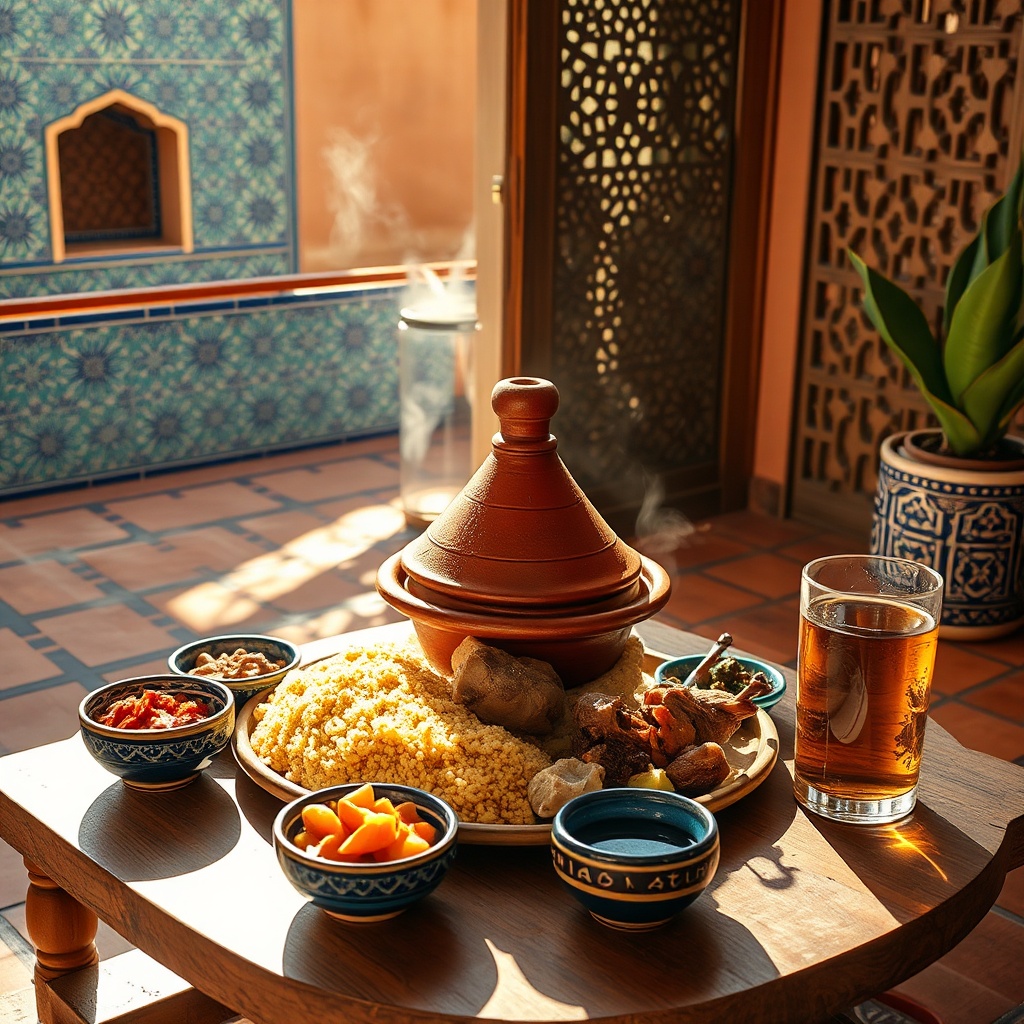
*A communal dining composition showcasing the heart of Moroccan culinary tradition, highlighting slow-braised stews, signature spice blends, and ceremonial mint tea.*
Moroccan cuisine is the culinary expression of a nation that has been a crossroads of civilizations for over a thousand years. It is characterized by a signature spice palette, the central role of the tagine, and a philosophy of slow cooking that prioritizes depth of flavor over speed. The cuisine is not just about sustenance; it is a social ritual where meals are shared, bread is used as a utensil, and every dish is an opportunity to show generosity to guests.
The Foundation: A Fusion of Berber, Arab, Andalusian, and Mediterranean Influences
The roots of Moroccan cuisine lie in the indigenous Berber (Amazigh) people, who cultivated grains, olives, and figs and developed the use of clay-pot cooking. The arrival of Arab dynasties in the 7th century introduced new spices, dried fruits, and the concept of sweet-savory pairings that remain central today. Later, the Andalusian influence—brought by Muslims and Jews who fled Spain—added refined pastry techniques and the use of almonds, cinnamon, and citrus. The Mediterranean and Atlantic coasts contributed a wealth of seafood and olive oil, while sub-Saharan trade routes introduced ingredients like dates and peanuts.
**Definition:** The Berber (Amazigh) people are the indigenous inhabitants of North Africa, and their culinary traditions form the foundational layer of Moroccan cuisine, including the use of clay tagines, couscous, and flatbreads.
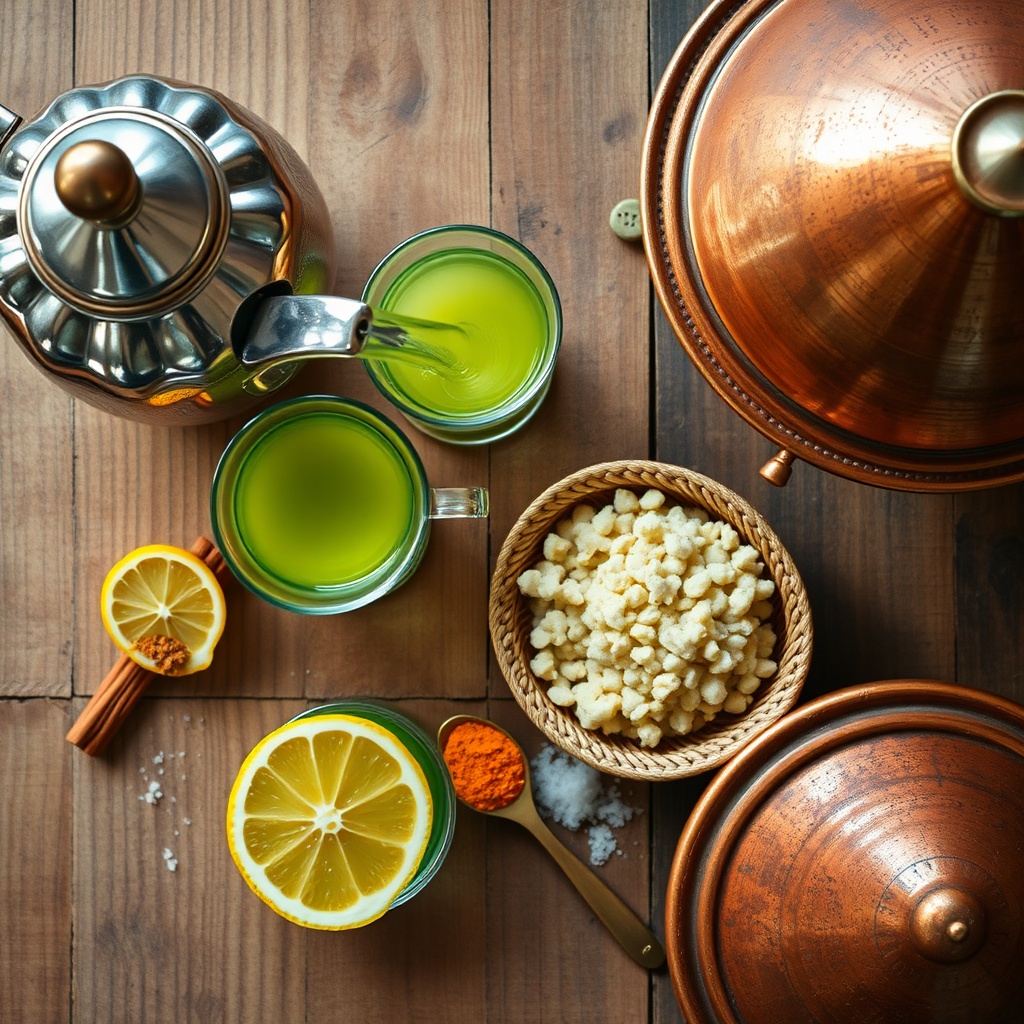
*A detailed ingredient-focused shot emphasizing the iconic flavor agents, traditional brewing rituals, and aromatic spice foundations of Moroccan cooking.*
The Signature Spice Palette: Ras el Hanout, Cumin, Saffron, and Preserved Lemon
The defining characteristic of Moroccan cuisine is its aromatic depth, achieved through a careful balance of spices. Ras el hanout, meaning "head of the shop," is the most famous blend, often containing dozens of spices like cardamom, nutmeg, cinnamon, and dried rose petals. Cumin, coriander, ginger, and paprika are used individually to build layers of flavor, while saffron is reserved for special dishes like couscous and pastilla. Perhaps most iconic is the preserved lemon—a whole lemon brined for weeks in salt and lemon juice—which adds a unique tangy, salty depth to chicken, lamb, and fish tagines.
The Central Role of the Tagine and Communal Dining
The tagine is both the name of the conical clay pot and the stew cooked within it. The vessel's shape is ingenious: the wide base holds the ingredients, while the tall, conical lid traps steam, condenses it, and returns it to the dish, allowing food to cook with minimal liquid. This slow-cooking technique produces exceptionally tender meat and vegetables that absorb the full complexity of the spices. Communal dining is equally essential; dishes are placed in the center of the table, and everyone eats from the same tagine using pieces of bread to scoop up the food, reinforcing the idea that a meal is a shared, sensory experience.
The Complete Answer: What Defines Moroccan Cuisine as a Culinary Tradition?
Moroccan cuisine is defined by three interconnected principles: the mastery of spices, the embrace of slow cooking, and the celebration of sweet-savory contrasts. These pillars are consistent across the country, even as the specific ingredients change from region to region. Understanding these principles is the key to appreciating and replicating the cuisine at home.
The Three Pillars: Spices, Slow Cooking, and Sweet-Savory Balance
The first pillar, spices, is about layering rather than heat. Moroccan dishes are rarely "hot" in the chili sense; instead, they are warm, aromatic, and complex. The second pillar, slow cooking, is a practical necessity that became a philosophy. Tagines, couscous, and soups like harira are simmered for hours, allowing flavors to meld and meats to become fall-off-the-bone tender. The third pillar, sweet-savory balance, is the most distinctive. Dried apricots, prunes, and raisins are combined with meat, while cinnamon and honey are used in savory sauces, creating a flavor profile that is uniquely Moroccan.
The Geography of Flavor: Coastal, Mountain, and Desert Ingredients
The geography of Morocco dictates what lands on the table. Along the Atlantic and Mediterranean coasts, fish and seafood are the stars, often prepared with chermoula—a marinade of garlic, cilantro, lemon, and paprika. In the Atlas Mountains, the cuisine is heartier, relying on lamb, root vegetables, and legumes to sustain people through cold winters. In the Sahara, the food is simple and nomadic, centered on dates, millet, and dried meats. This geographical diversity ensures that Moroccan cuisine is never monotonous, offering a different experience with every region visited.
The Cultural Rituals: From Friday Couscous to Wedding Feasts
Many of Morocco's culinary traditions are tied to the rhythm of the week and the calendar of life. Friday couscous is a sacred weekly tradition for families, following the communal prayer. Ramadan transforms the culinary landscape, with dates and harira soup breaking the fast at sunset. Weddings and birth celebrations are marked by elaborate multi-course feasts featuring pastilla, roasted lamb, and mountains of couscous. These rituals show that Moroccan cuisine is not just about eating but about marking time, celebrating community, and honoring guests.
The Essential Spice Pantry and Flavor Building Blocks
Building a Moroccan pantry is the first step toward authentic cooking. A handful of key ingredients—spices, preserved lemons, and condiments—can transform simple ingredients into a dish that tastes like it came from a Moroccan kitchen.
**Quick Answer:** The essential Moroccan pantry includes ras el hanout, cumin, coriander, ginger, paprika, saffron, preserved lemons, green olives, garlic, and fresh herbs like cilantro and parsley.
Ras el Hanout: The "Head of the Shop" Blend and Its Variations
Ras el hanout is the pinnacle of the Moroccan spice trade. The name literally means "head of the shop," referring to the best spice blend a merchant could offer. While there is no single recipe, it typically includes a mix of up to 30 spices such as cardamom, nutmeg, mace, cinnamon, cloves, allspice, and dried rose petals. Some blends include unusual ingredients like cubeb pepper or even dried orchid root. Each spice merchant has their own proprietary blend, and the composition can vary significantly from one city to another.
Preserved Lemons: The Brine-Cured Secret to Tangy Depth
Preserved lemons are a cornerstone of Moroccan cooking, used to add a salty, tangy, and slightly bitter depth to tagines and salads. To make them, whole lemons are quartered, packed with salt, and left to cure in their own juice for several weeks. The result is a soft, mellow lemon that is nothing like the fresh fruit. In Morocco, they are used liberally, often added at the end of cooking to brighten a dish.
The Supporting Cast: Cumin, Coriander, Cinnamon, Ginger, and Saffron
Beyond the star blends, individual spices play crucial roles. Cumin and coriander are used in almost every savory dish, often in tandem. Cinnamon is used in both sweet and savory contexts, such as in lamb tagines with prunes or in pastilla. Ginger provides a warming, slightly pungent note in meat dishes and soups. Saffron, the most precious spice, is reserved for festive occasions like couscous and pastilla, lending a golden hue and a subtle floral flavor.
Harissa: The Condiment That Adds Heat and Complexity
Harissa is a fiery, aromatic chili paste made from dried red chilies, garlic, caraway, coriander, and olive oil. Unlike many chili sauces, it is complex and fragrant rather than just hot. It is served as a condiment at the table, stirred into soups and stews, or used as a marinade for meats and fish. The heat level can vary widely, and each region of Tunisia and Morocco has its own variation.
The Tagine Method: A Step-by-Step Guide to Authentic Slow Cooking
Cooking in a tagine is a ritual that rewards patience. The following steps outline the traditional method, which can be adapted for a Dutch oven or a slow cooker if a clay tagine is not available.
**Quick Answer:** A tagine is cooked by layering ingredients in a clay pot, adding a small amount of liquid, and simmering over low heat so the conical lid creates a steam-circulating environment that braises the food to perfection.
Step 1: Selecting and Preparing the Tagine Vessel (Seasoning and Soaking)
Before first use, a new clay tagine should be soaked in water for several hours or overnight to prevent cracking. It is then dried, rubbed with olive oil, and heated gently to season the clay. Many cooks also recommend placing a metal diffuser between the tagine and the heat source to distribute heat evenly and prevent the base from cracking.
Step 2: Building the Flavor Base — Aromatics, Spices, and Oil
The cooking process begins in the base of the tagine. Olive oil is heated gently, and aromatics like onions, garlic, and ginger are sautéed until softened. The spice blend—often ras el hanout, cumin, and paprika—is then added and toasted for a minute to release its essential oils.
Step 3: Layering Ingredients — The Order of Meat, Vegetables, and Liquid
Layering is the key to a successful tagine. The meat is placed in the center of the pot, surrounded by vegetables. Vegetables that take longer to cook, like carrots and potatoes, are placed at the bottom, while quicker-cooking vegetables like tomatoes and zucchini are layered on top. A small amount of liquid—water, broth, or a mix with preserved lemon juice—is added, but the tagine should never be submerged.
Step 4: The Steaming Process — Low Heat, Tight Lid, and Patience
The lid is placed on the tagine, and the heat is reduced to the lowest possible setting. The conical lid is the genius of the design: steam rises, condenses on the cooler sides of the cone, and drips back down onto the food. This self-basting process means the dish cooks in its own juices, requiring very little added liquid. The tagine should cook for 1.5 to 3 hours, depending on the meat.
Step 5: Finishing Touches — Garnishes, Preserved Lemon, and Fresh Herbs
In the final minutes of cooking, garnishes are added to brighten the dish. Preserved lemon wedges, green olives, and fresh herbs like cilantro and parsley are scattered on top. Some recipes call for a final drizzle of olive oil or a sprinkle of toasted almonds. The tagine is then brought to the table with the lid still on, and the lid is lifted in front of the guests to release the aromatic steam.
Regional Variations: How Moroccan Cuisine Differs Across the Country
While there is a common core to Moroccan cuisine, each region has its own distinct identity shaped by geography and history.
Coastal Cuisine: Fish and Seafood from the Atlantic and Mediterranean
The coastal cities of Essaouira, Agadir, and Tangier are known for their fresh fish and seafood. Fish is often grilled or baked in a tagine with chermoula—a vibrant marinade of garlic, cilantro, lemon juice, and paprika. Sardines, a staple of the Atlantic, are often stuffed with a spicy filling and fried.
Mountain Cuisine: Hearty Stews and Berber Traditions from the Atlas
In the Atlas Mountains, the cuisine is robust and comforting. Lamb and beef are common, cooked slowly with root vegetables, dried legumes, and hearty spices. The Berber people have their own culinary traditions, including a simple, rustic tagine made with whatever ingredients are available. Bread is often baked in a communal oven or on a curved metal griddle over an open fire.
Desert Cuisine: Nomadic Simplicity from the Sahara
The Sahara is a land of scarcity, and its cuisine reflects that. The diet is based on dates, milk, and grains. A classic desert dish is a tagine of camel meat with dates, a combination of sweet and savory that is uniquely suited to the environment. Couscous is also common, prepared with whatever vegetables are available.
Urban vs. Rural: The Contrast of Fassi, Marrakchi, and Amazigh Styles
The imperial cities each have their own culinary signature. Fassi cuisine, from Fez, is the most refined and elaborate, often considered the "haute cuisine" of Morocco. It features complex dishes like pastilla and intricate sweet-savory tagines. Marrakchi cuisine, from Marrakesh, is more rustic and bold, with a focus on slow-cooked meats and vibrant street food. Amazigh (Berber) cooking, found in the mountains and desert, is simpler and relies on fewer ingredients, letting the natural flavors shine.
The Bread and Couscous Pillars: Staples That Anchor Every Meal
No meal in Morocco is complete without bread, and no week is complete without couscous. These two staples are the anchors of the Moroccan table.
Khobz and Msemen: The Daily Breads of Morocco
Khobz is the round, crusty loaf of bread that accompanies nearly every meal. It is used as a utensil to scoop up tagine and salads. Msemen is a flaky, square flatbread made from layered dough that is pan-fried, often served with honey and cheese for breakfast. Both are deeply embedded in daily life, and the act of tearing and sharing bread is a symbol of hospitality.
Couscous: The Friday Ritual and Its Proper Steaming Technique
Couscous is more than a side dish; it is a weekly ritual. The granular semolina is traditionally steamed multiple times over a simmering broth in a couscoussier, a two-tiered pot. The steaming process is crucial: it must be done twice or three times, fluffing the grains with oil and water between each steaming, to achieve a light, separate texture. The couscous is then topped with a stew of vegetables and meat, often with caramelized onions and raisins.
**Definition:** A couscoussier is a two-part cooking pot. The bottom pot holds the simmering broth and stew, while the top pot is a perforated steamer basket that holds the couscous grains, allowing them to absorb the steam from the broth below.
The Role of Bread as a Utensil and a Symbol of Hospitality
In Morocco, bread is treated with reverence. It is never wasted, and a piece of bread is used to pinch food from a shared dish. The right hand is used for eating, and the bread is folded to scoop up sauce and meat. Offering bread to a guest is one of the first acts of hospitality, and a meal without bread is considered incomplete.
Sweet and Savory: The Iconic Dishes That Define Moroccan Dining
The sweet-savory combination is the most distinctive hallmark of Moroccan cuisine. These iconic dishes showcase this balance perfectly.
Pastilla (B'stilla): The Sweet-Savory Pie of Celebration
Pastilla is a show-stopping, multi-layered pie that is traditionally served at weddings and celebrations. It is made with a thin, flaky pastry (warqa) filled with pigeon or chicken, almonds, and a fragrant spice blend that includes cinnamon, saffron, and ginger. The filling is seasoned with a mixture of sweet and savory elements, and the top of the pie is dusted with powdered sugar and cinnamon. The result is a harmonious blend of crispy pastry, tender meat, and a sweet-savory spice profile.
Lamb or Beef Tagine with Prunes and Apricots
This is one of the most beloved Moroccan tagines. The meat is slow-cooked with onions, cinnamon, ginger, and saffron until it is meltingly tender. The sauce is sweetened with prunes, apricots, and honey, and the dish is typically garnished with toasted almonds and sesame seeds. The combination of rich, savory meat and sweet, sticky fruit is a quintessential Moroccan experience.
Harira: The Hearty Tomato-Lentil Soup for Breaking the Fast
Harira is a thick, rich soup made with tomatoes, lentils, chickpeas, and a generous amount of fresh herbs. It is flavored with ginger, cinnamon, and cumin, and often thickened with a flour-and-water mixture. It is traditionally served to break the fast during Ramadan, accompanied by dates and a squeeze of lemon. Harira is also a staple in many Moroccan households as a comforting everyday meal.
Zaalouk and Taktouka: The Essential Cooked Salads
Moroccan meals often begin with a selection of cooked salads. Zaalouk is a smoky, cooked salad made with eggplant, tomatoes, garlic, and paprika, similar to a dip. Taktouka is a cooked salad of grilled peppers and tomatoes, flavored with garlic and olive oil. Both are served cold or at room temperature, scooped up with bread, and are essential components of a traditional Moroccan spread.
The Moroccan Tea Ceremony and Hospitality Culture
The tea ceremony is the social centerpiece of Moroccan life. It is a symbol of hospitality, friendship, and the art of taking time to enjoy the company of others.
The Ritual of Mint Tea: Preparation, Pouring, and Politeness
Mint tea, known as "Berber whiskey," is prepared with green tea, a large bunch of fresh mint, and a generous amount of sugar. The tea is boiled in a silver teapot, and the brewing process is a performance. The tea is poured from a height into small, ornate glasses, creating a layer of foam known as the "crown." This pouring technique aerates the tea and is a sign of skill. Refusing a glass of tea is considered impolite, as it is a direct rejection of the host's hospitality.
The Tea Service: Glassware, Tray, and the "Crown" of Foam
The tea service is an integral part of the ritual. A decorative silver tray holds a teapot and several small, ornate glasses, often decorated with gold. The glasses are filled to show the color of the tea, and the "crown" of foam on top is a mark of quality. The tea is usually served with Moroccan pastries, such as chebakia (sesame cookies) or kaab el ghazal (gazelle horns), which are rich with honey and almonds.
How Tea and Sweets Frame Social Occasions
Tea is served at every social occasion, from a casual visit to a formal business meeting. It frames conversations, punctuates meals, and provides a moment of pause in the day. The ritual of pouring and serving tea is a way for the host to demonstrate care and generosity. It is customary for the host to pour a small amount into a glass, taste it, and adjust the sweetness before serving to guests.
Key Takeaways (Reprise) — A Quick Reference for Readers
- **Moroccan cuisine** is a fusion of Berber, Arab, Andalusian, and Mediterranean traditions. - Spices, slow cooking, and sweet-savory balance are the three pillars of the cuisine. - The tagine is a cooking vessel and method that produces tender, aromatic stews. - Preserved lemons and ras el hanout are the most iconic flavor agents. - Couscous is a weekly Friday tradition, steamed rather than boiled. - Mint tea is a ceremonial drink that signifies hospitality and social connection. - Regional variations range from coastal seafood to hearty mountain stews and simple desert fare.
Frequently Asked Questions About Moroccan Cuisine
What is the most famous Moroccan dish?
The most famous Moroccan dish is arguably the tagine, a slow-cooked stew named after the conical clay pot it is cooked in. Chicken tagine with preserved lemons and olives is perhaps the most iconic version, but lamb with prunes and vegetables are also extremely popular.
Is all Moroccan food very spicy?
No, Moroccan food is not typically "hot" in the chili sense. It is flavorful and aromatic, using warm spices like cumin, cinnamon, ginger, and ras el hanout to build complexity. Heat, when present, comes from condiments like harissa, which is served on the side so diners can adjust the spice level to their preference.
What is the difference between a tagine and a couscous?
A tagine refers to both the clay pot and the stew cooked within it, featuring meat and vegetables simmered in a spiced sauce. Couscous is the steamed semolina grain that is typically served with a separate stew on top, traditionally on Fridays. The cooking methods are distinct: a tagine is a braise, while couscous is steamed.
Can I make Moroccan food without a tagine?
Yes, you can. A heavy-bottomed Dutch oven or a slow cooker is an excellent substitute for a tagine. The key is to maintain low, even heat and use a tight-fitting lid to trap steam. The flavor will be very similar, even if the presentation is different.
What are the essential spices for a beginner's Moroccan pantry?
For a beginner, the essential spices are cumin, paprika, ginger, cinnamon, and coriander. From there, adding a good-quality ras el hanout blend and saffron will elevate your cooking. Preserved lemons and green olives are also crucial ingredients to have on hand for authentic flavor.
Comparison Table: Tagine vs. Couscous vs. Pastilla — When Each Dish Is Served
| Dish | Primary Cooking Method | Typical Occasion | Key Flavor Profile | Vessel Used | |------|------------------------|------------------|-------------------|-------------| | Tagine | Slow braise/steam in a clay pot | Everyday meals, family gatherings | Savory, spiced, often with preserved lemon or olives | Tagine pot | | Couscous | Steaming over broth | Friday communal lunch, festive gatherings | Light, fluffy, paired with sweet-savory stews | Couscoussier | | Pastilla | Baked pie with thin pastry | Weddings, celebrations, special events | Sweet-savory with cinnamon, almonds, and saffron | Round baking dish |
Conclusion: Embracing Moroccan Cuisine Beyond the Recipe
Moroccan cuisine is more than a collection of recipes; it is a philosophy of cooking and living that emphasizes patience, generosity, and the joy of sharing. Its unique flavor profile, born from a rich history of cultural exchange, offers a world of culinary discovery that is both accessible and rewarding for home cooks.
Practical Tips for Home Cooks to Start Cooking Moroccan Today
Start by building your spice pantry with the essentials: ras el hanout, cumin, paprika, ginger, and cinnamon. Seek out preserved lemons or make your own—they are a game-changer. Begin with a simple chicken tagine with preserved lemons and olives, or a hearty vegetable tagine. Use a Dutch oven if you don't have a clay tagine, and don't rush the cooking process; the slow simmering is what builds the flavor.
The Deeper Cultural Appreciation: Food as a Window to Moroccan Life
Cooking Moroccan food is a way to connect with a culture that values hospitality above all else. The act of making a tagine, steaming couscous, or pouring mint tea is a meditation on slowness and care. By embracing these traditions, you are not just making a meal; you are participating in a ritual that has been practiced for centuries.
Final Encouragement to Explore Regional Diversity and Authentic Spices
The best way to understand Moroccan cuisine is to explore its diversity. Try a coastal fish dish, a hearty mountain tagine, and a sweet-savory pastilla. Seek out authentic ras el hanout from a reputable spice merchant, and don't be afraid to adjust the spice levels to your taste. The journey into Moroccan cooking is one of discovery, and the rewards are a table full of color, aroma, and flavor that will impress and delight.