
Best Authentic Moroccan Couscous With Vegetables Recipe
Authentic Moroccan couscous with vegetables recipe centers on steaming semolina granules to a fluffy texture and pairing them with a rich, spiced vegetable broth. This traditional North African dish relies on the aromatic spice blend ras el hanout and a colorful medley of root vegetables and legumes to create a balanced, nutritious meal. Unlike instant versions, the proper method involves steaming the grain multiple times to ensure each grain remains separate and light, absorbing the flavors of the vegetables without becoming mushy.Preparing this dish in 2026 remains a celebration of communal eating and vibrant spices, offering a versatile base that adapts to seasonal produce while staying true to its Moroccan heritage.
Key Takeaways
- Authentic Moroccan couscous uses semolina grain steamed to a fluffy texture. - A balanced vegetable mix (carrot, zucchini, chickpeas) provides color, nutrients, and traditional flavor. - Steaming time and spice ratios are critical for authentic taste and texture. - Health benefits include high fiber (≈5 g per serving) and plant‑based protein (≈6 g). - Proper storage keeps the dish fresh for up to 4 days in the refrigerator.
The Complete Answer: Authentic Moroccan Couscous with Vegetables Recipe
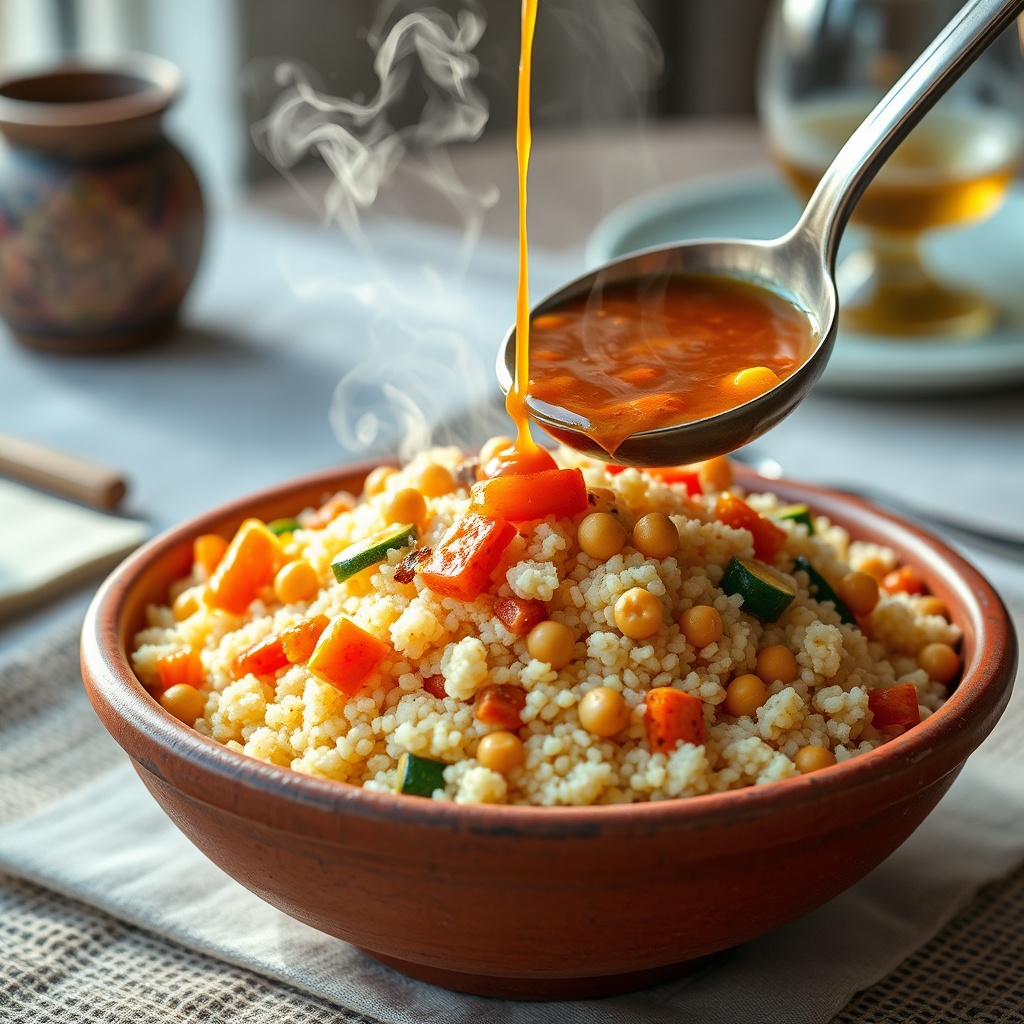
*A close-up of the finished dish, highlighting the fluffy texture of the semolina and the colorful vegetable medley.*
The definitive Moroccan couscous with vegetables recipe requires patience and attention to the steaming process, which distinguishes it from quick-soak instant versions. This dish combines the nutty flavor of semolina with the sweetness of caramelized vegetables and the complex heat of North African spices. The key is to cook the vegetables in a broth that infuses the couscous later, creating a cohesive flavor profile. You must use a large pot for the vegetables and a steamer basket or couscousier for the grain to ensure perfect texture.
Step‑by‑Step Numbered Recipe
1. Measure 1 cup of medium-grain semolina couscous into a bowl; rinse briefly under cold water to remove excess starch and drain immediately. 2. Bring 1 ¼ cups of water mixed with ½ tsp of salt and a tablespoon of olive oil to a rolling boil in a saucepan. 3. Pour the boiling water over the rinsed couscous, cover the bowl tightly with a lid or plastic wrap, and let it steam for exactly 5 minutes. 4. Uncover the bowl and fluff the grains thoroughly with a fork to break up any clumps, then drizzle with 2 tbsp of olive oil. 5. Dice 1 large carrot, 1 medium zucchini, and 1 red bell pepper into uniform ½‑inch cubes to ensure even cooking (≈2 cups total). 6. Sauté the diced vegetables in 1 tbsp of olive oil in a large skillet over medium heat for 4 minutes until they begin to soften. 7. Add ½ cup of cooked chickpeas, ¼ cup of golden raisins, and 1 tsp of ras el hanout spice blend to the skillet, stirring constantly to coat the vegetables. 8. Transfer the spiced vegetable mixture into the bowl with the couscous, combine gently, and place the mixture back into the steamer for 3 minutes to meld flavors. 9. Garnish the finished dish with 2 tbsp of freshly chopped cilantro and 2 tbsp of toasted sliced almonds for a crunchy texture contrast. 10. Serve hot in a large communal bowl, offering harissa paste on the side for those who desire extra heat.
**Quick Answer:** The core of this recipe involves steaming semolina with boiling water, sautéing vegetables with ras el hanout, and combining them for a final steam. This method ensures the couscous remains fluffy while fully absorbing the aromatic spices and vegetable juices.
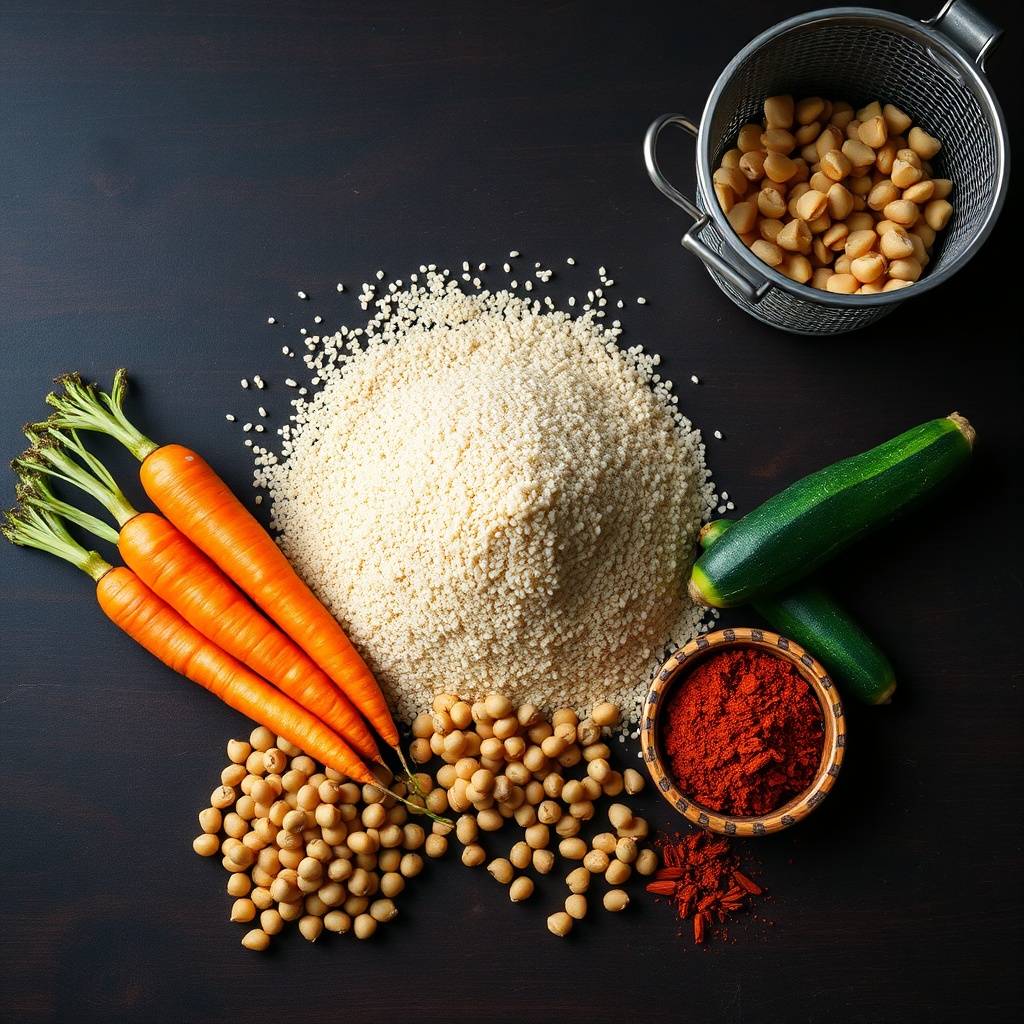
*A flat lay of the key components, emphasizing the fresh vegetables and spices used in the recipe.*
Quick Ingredient Checklist
- Semolina couscous, extra virgin olive oil, water, sea salt. - Carrots, zucchini, red bell peppers, canned chickpeas, golden raisins. - Ras el hanout, fresh cilantro, sliced almonds, harissa paste.
Nutritional Snapshot (per serving)
- **Calories:** 200 kcal - **Protein:** 6 g - **Fiber:** 5 g - **Fat:** 4 g
Ingredient Deep Dive
Selecting the right components is essential for executing an authentic Moroccan couscous with vegetables recipe. The quality of the semolina dictates the mouthfeel, while the freshness of the vegetables determines the vibrancy of the final dish. Understanding the nutritional profile of each ingredient helps in balancing the meal for optimal health benefits without compromising flavor.
Core Grain & Nutritional Profile
Semolina, the coarsely ground endosperm of durum wheat, serves as the foundation of this dish. It is prized for its high gluten content, which gives the cooked grains a firm yet tender texture that resists mushiness. From a nutritional standpoint, 1 cup of dry couscous provides approximately 6 g of plant-based protein and negligible fat, making it a lean energy source. It also delivers essential minerals, including roughly 150 mg of magnesium, which supports muscle and nerve function. While refined semolina is traditional, whole wheat versions offer more fiber, though they alter the slightly nutty flavor profile characteristic of the Moroccan couscous with vegetables recipe.
**Definition:** Semolina — A coarse, pale-yellow flour made from durum wheat, primarily used in making pasta and couscous. It has a high gluten content, giving cooked dishes a distinct chewy and firm texture.
Vegetable Selection & Seasonal Variations
The traditional vegetable mix relies on root vegetables for sweetness and heartiness. Carrots, zucchini, turnips, and pumpkin are staples that hold their shape during the steaming process. However, the recipe is highly adaptable to seasonal availability. In spring, you can add fresh peas and fava beans to introduce a burst of sweetness and bright green color. During autumn, substituting pumpkin or sweet potatoes with butternut squash deepens the earthy notes. Using a mix of colors—orange carrots, green zucchini, and red peppers—ensures the dish is visually appealing and rich in diverse antioxidants.
Spice Blend & Authentic Ratios
The soul of the dish lies in the spice blend, specifically ras el hanout, which translates to "head of the shop" in Arabic. This complex North African spice mix typically contains cardamom, cumin, coriander, cinnamon, and turmeric. For every 2 cups of vegetables, you should use approximately 1 tsp of ras el hanout to achieve a fragrant but not overpowering flavor. If you prefer a sweeter profile, adding ½ tsp of cinnamon complements the raisins and root vegetables beautifully. Avoid using pre-mixed generic curry powders, as they lack the specific floral and citrus notes required for authentic flavor.
**Quick Answer:** Use 1 tsp of ras el hanout per 2 cups of vegetables for authentic flavor. This blend of cardamom, cumin, and cinnamon provides the signature North African aroma without overwhelming the natural taste of the fresh produce.
Cooking Techniques & Timing
Mastering the texture of couscous requires understanding the difference between boiling and steaming. While many quick recipes call for soaking the grain in boiling water, the traditional method involves steaming the semolina over the simmering vegetable broth. This technique, often using a specialized pot called a couscousier, allows the grains to expand and aerate, resulting in a lighter, fluffier final product.
Steaming the Couscous Correctly
Using a traditional metal steamer or a couscousier set over boiling water allows for even steam distribution. The ideal steaming time is 5 minutes at 100 °C for the initial hydration. If you are using an Instant Pot, the "Steam" setting for 8 minutes at a pressure of 0.9 bar produces a slightly softer, more moist grain, which some home cooks prefer. The critical step is fluffing the grains with a fork immediately after steaming to release excess steam and prevent clumping. A light coating of olive oil or melted butter during the fluffing process separates the granules and adds richness.
**Definition:** Couscousier — A traditional two-part pot used in North African cooking. The bottom pot holds the stew or broth, while the top perforated pot holds the couscous, allowing it to steam slowly as the broth cooks below.
Simmering Vegetables for Optimal Texture
Vegetables should be cooked until tender but not falling apart. Carrots typically require about 4 minutes of sautéing or simmering to become tender-crisp. Zucchini cooks faster, needing only about 3 minutes to maintain its structure. Chickpeas, being already cooked, only need about 2 minutes in the pan to absorb the spices and heat through. Staggering the addition of vegetables—adding carrots first, followed by zucchini and finally chickpeas—ensures that every component reaches the perfect texture simultaneously.
Comparison Table: Traditional Steamer vs. Instant Pot
| Method | Time (min) | Water Needed | Texture Outcome | |-----------------|------------|--------------|-----------------| | Metal Steamer | 5 | 250 ml | Fluffy, separate grains | | Instant Pot | 8 (steam) | 200 ml | Slightly softer, more moist |
**Quick Answer:** A metal steamer takes 5 minutes and yields fluffy, separate grains, while an Instant Pot takes 8 minutes and results in a moister texture. Choose the metal steamer for the most authentic texture closest to traditional methods.
Flavor Variations & Health Benefits
The Moroccan couscous with vegetables recipe is incredibly versatile, allowing for numerous adaptations that cater to different dietary needs and taste preferences. By adjusting the ingredients slightly, you can transform the dish from a simple side to a protein-packed main course or a sweet and savory delight. These variations do not compromise the health benefits, which are substantial due to the high fiber and micronutrient content.
Adding Dried Fruits for Sweet Balance
Incorporating dried fruits like raisins, apricots, or dates introduces a natural sweetness that contrasts beautifully with the savory spices. Adding ¼ cup of raisins not only enhances flavor but also contributes an additional 2 g of fiber and roughly 15 % of your daily iron requirement. This sweet-savory combination is a hallmark of Moroccan cuisine, balancing the heat of the harissa paste and the earthiness of the cumin. Ensure you add the dried fruits during the last few minutes of cooking so they plump up without becoming too soft or dissolving into the dish.
Protein Boost Options
While chickpeas provide a solid base of plant-based protein, you can easily boost the protein content to make the dish a complete meal. A ½ cup of chickpeas adds approximately 3 g of protein per serving. For a heavier option, grilled lamb strips (100 g) pair exceptionally well with the spices, adding about 25 g of protein. Alternatively, roasted chicken or spiced tofu cubes are excellent substitutes for those avoiding red meat. These additions make the Moroccan couscous with vegetables recipe a substantial main course suitable for dinner parties or hearty lunches.
Health Impact: Fiber & Antioxidants
This dish is a nutritional powerhouse, delivering approximately 5 g of total fiber per cup, which is about 20 % of the daily value. Fiber aids in digestion and helps maintain stable blood sugar levels. The inclusion of carrots and bell peppers provides high levels of β‑carotene, with a single serving offering roughly 300 % of the daily value for Vitamin A. These antioxidants support immune function and eye health. Furthermore, the use of olive oil contributes heart-healthy monounsaturated fats, which are essential for cardiovascular health.
**Quick Answer:** This dish is rich in fiber (≈5 g per serving) and antioxidants. Carrots and peppers provide over 300 % DV of Vitamin A, while olive oil adds heart-healthy fats, making it a nutritionally balanced meal.
Serving, Storage, & Pairings
Presentation plays a significant role in the enjoyment of this dish. In Moroccan culture, couscous is often served in a large communal platter, symbolizing unity and hospitality. How you plate the dish and what you serve alongside it can elevate the dining experience from a simple weeknight dinner to a festive occasion.
Plating Presentation Tips
For an authentic presentation, mound the couscous in the center of a large shallow serving bowl or platter. Create a shallow well in the middle of the couscous and place the sautéed vegetables and chickpeas into this depression, allowing the vibrant colors to pop against the pale yellow semolina. Drizzle a tablespoon of high-quality extra virgin olive oil over the top for a glossy finish. You can also sprinkle a pinch of additional cinnamon or paprika on the vegetables for a burst of color. Garnishing the edges with fresh cilantro leaves and toasted almonds adds a professional touch that hints at the textures within.
Refrigeration Shelf Life
Proper storage is essential for maintaining the texture and flavor of leftover couscous. Store the dish in an airtight container in the refrigerator, where it will remain fresh for up to 4 days. When reheating, sprinkle a splash of water or vegetable broth over the couscous to prevent it from drying out, then microwave covered or warm in a skillet. This method revives the moisture and helps separate the grains again. Avoid freezing couscous if possible, as the thawing process can make the grains mushy and compromise the texture significantly.
Best Pairings
The ideal pairing for a Moroccan couscous with vegetables recipe is a traditional tagine, either made with chicken, lamb, or purely vegetables for a vegan feast. The slow-cooked stew complements the fluffy texture of the couscous perfectly. Harissa sauce is a must-have condiment; serving 1 tbsp per person allows guests to adjust the spice level to their liking. To cleanse the palate and balance the spices, serve hot mint tea (250 ml) sweetened with sugar at the end of the meal. The cool, refreshing mint cuts through the richness of the olive oil and the heat of the spices.
Frequently Asked Questions### 1. Can I use whole‑wheat couscous instead of semolina?
Yes, you can substitute whole-wheat couscous for semolina to increase the fiber content. However, whole-wheat grains have a stronger, nuttier flavor and a denser texture. You may need to increase the cooking liquid slightly and steam for an extra minute or two to achieve the desired tenderness.
2. How do I make the dish gluten‑free?
To make this recipe gluten-free, substitute the semolina couscous with quinoa, millet, or a certified gluten-free couscous made from corn or rice flour. Ensure that your spice blends, particularly ras el hanout, are certified gluten-free as some pre-mixed versions contain fillers with wheat.
3. What is the ideal water‑to‑couscous ratio for a fluffier texture?
The ideal ratio for fluffy couscous is generally 1:1.