
How To Make Moroccan Couscous Recipe In 8 Steps
Moroccan Couscous Recipe: The Complete Guide to Authentic North African Cooking
The definitive **moroccan couscous recipe** is a triple-steamed dish of hand-rolled durum wheat semolina, served beneath a slow-simmered broth of meat and vegetables and seasoned with the complex North African spice blend ras el hanout. This guide covers everything you need to recreate the authentic version at home: the essential ingredients, an 8-step cooking method, the five techniques that guarantee fluffy grains, protein variations, and the seven mistakes that ruin the dish. Moroccan couscous is not a quick side dish — it is a cultural cornerstone of Moroccan crafts and North African cuisine, a Friday ritual that rewards patience with extraordinary depth of flavor.
Key Takeaways
- Authentic Moroccan couscous is hand-rolled semolina steamed **three separate times** over a simmering broth — not boiled like pasta or instant couscous. - The signature spice blend, **ras el hanout**, typically contains 20+ spices including cumin, coriander, turmeric, and saffron. - The ideal water-to-couscous ratio is **1:1.5** (1 cup dry couscous to 1.5 cups liquid) for perfectly hydrated, fluffy grains. - A traditional Moroccan couscous takes **2–3 hours** from start to finish, with the steaming process alone requiring 45–60 minutes across three cycles. - The dish is always served with the broth and vegetables **mounded on top of the grain**, never mixed in — the diner combines them at the table.
The Complete Answer: What Is Authentic Moroccan Couscous?
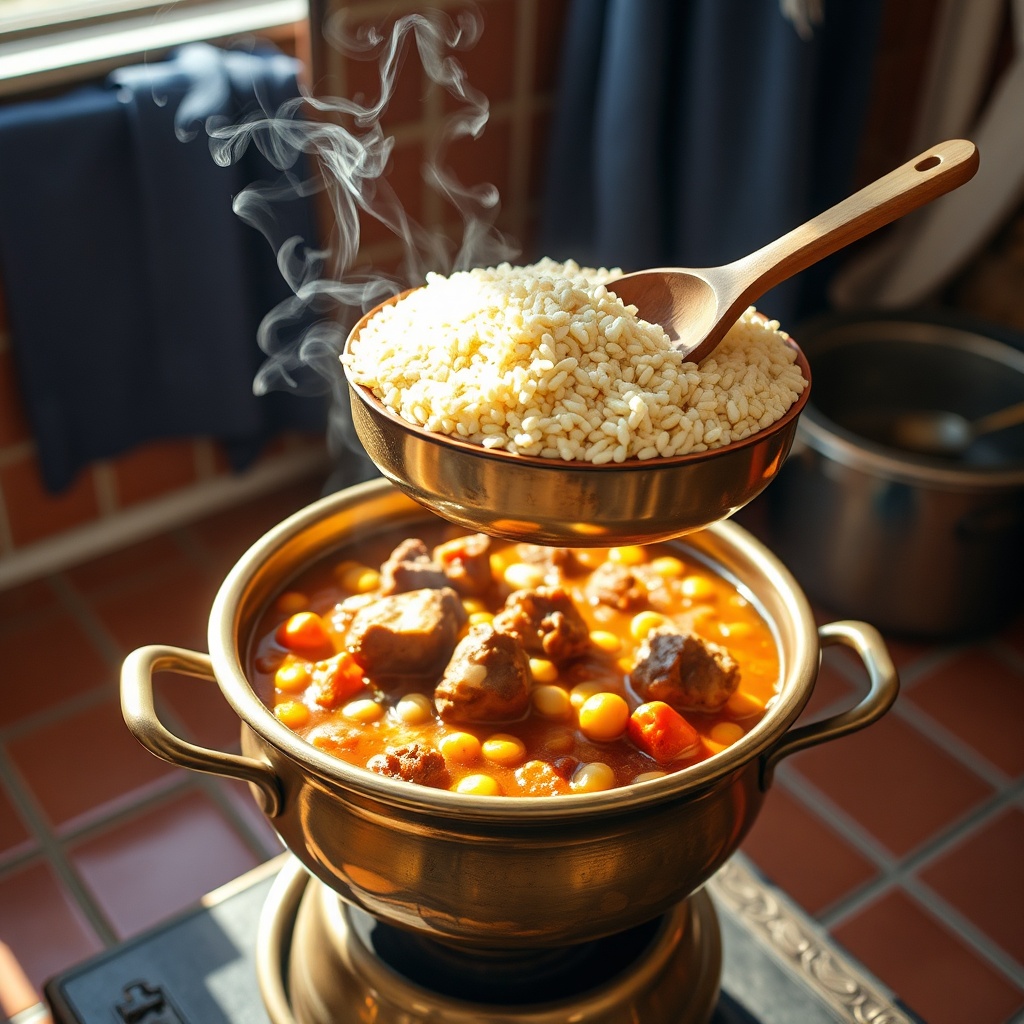
*Illustrates the traditional triple-steaming method central to the recipe guide.*
Moroccan couscous is a Berber-origin dish of steamed, hand-rolled durum wheat semolina granules, served with a slow-cooked stew of meat, vegetables, and a deeply spiced broth called *marka*. Unlike instant couscous (pre-steamed and dried), authentic **traditional Moroccan couscous** requires a **triple-steaming process** over a pot of simmering broth in a *couscoussier* — a two-tiered pot that allows the grain to absorb flavor from the stew below while cooking.
**Quick Answer:** Authentic Moroccan couscous is hand-rolled semolina steamed three times over a spiced meat broth in a traditional couscoussier. The triple-steaming process hydrates the grains gradually, producing a light, fluffy texture that instant couscous cannot replicate. The dish takes 2–3 hours and is always served with vegetables and broth mounded on top.
Couscous is a dietary staple for **60+ million people** across North Africa, and global production exceeds **7.5 million tons annually**, according to Couscous - Wikipedia online. The dish is so culturally significant that UNESCO inscribed "knowledge and practices of couscous" on the Intangible Cultural Heritage list in **December 2020**. Three defining characteristics set it apart: the grain itself (hand-rolled semolina), the broth (*marka*), and the layered steaming vessel that cooks both simultaneously.
**Definition:** *Couscoussier* — a traditional two-tiered cooking pot, similar to a Seafood Steamer, with a perforated upper basket that holds the couscous while steam from the simmering broth below cooks it. The perforations allow flavor-laden steam to pass through the grains.
Essential Ingredients: Building the Foundation of Flavor
The quality of your **moroccan couscous recipe** hinges on the ingredients you choose. Every component, from the grain grade to the spice blend, contributes to the final texture and aroma.
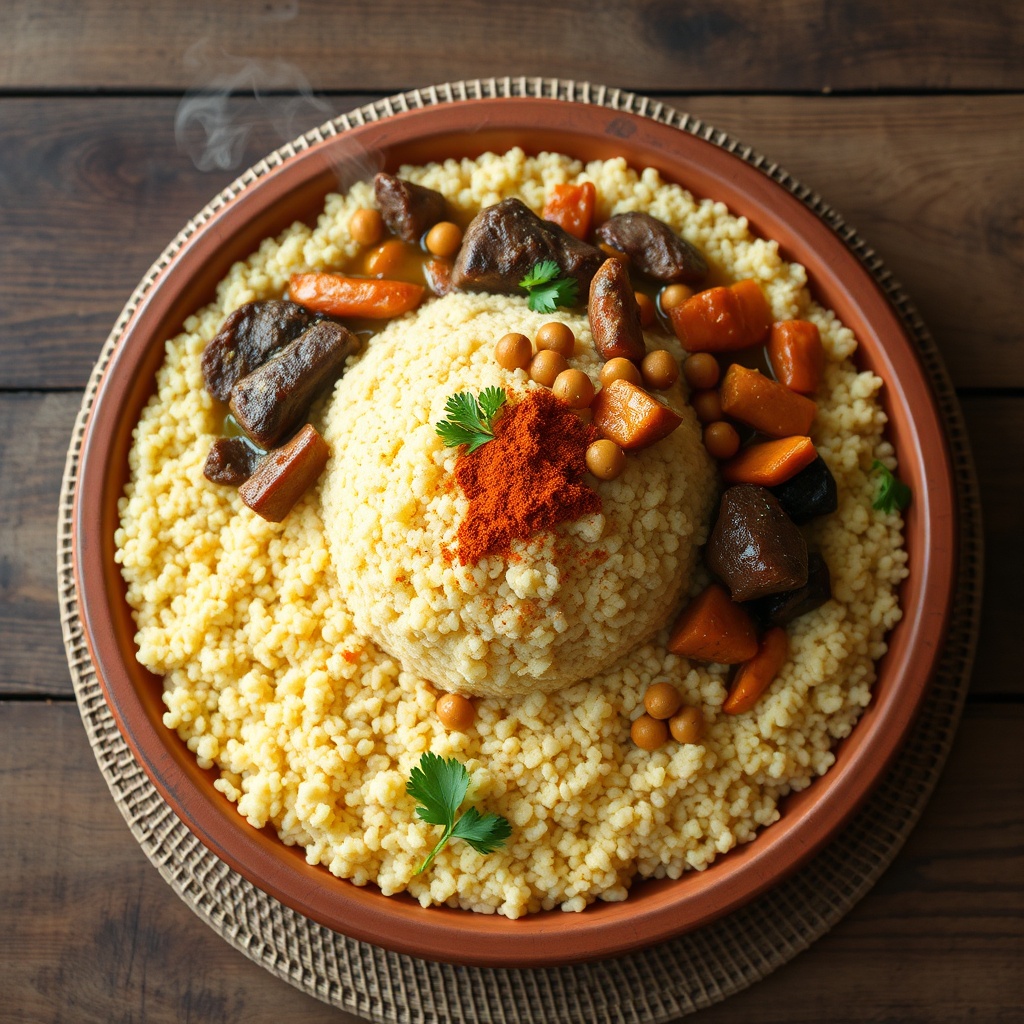
*Showcases the classic serving style where broth and toppings are layered over the grains, exactly as detailed in the guide.*
The Semolina: Choosing the Right Couscous
Authentic Moroccan recipes call for Authentic Alitkane Moroccan Couscous Premium Moyen 1kg products, which strikes the perfect balance between absorption and texture. Fine couscous works for salads but turns mushy under a heavy stew. **M'hamsa**, the artisanal hand-rolled variety, takes longer to steam but delivers a superior, almost pearl-like bite. One cup of dry couscous yields **3 cups cooked** — enough for two generous servings.
The Spice Blend: Ras el Hanout and Beyond
The heart of the flavor lies in TAYEB Ras El Hanout 150g – Authentic Moroccan Spice Blend for Tagines, Couscous, Grilled Meats & Stews, a blend that can contain **20–40 individual spices** depending on the merchant. Core components include cumin, coriander, turmeric, ginger, saffron, and paprika. Moroccan cooks also use **smen** (aged fermented butter) as a secret flavor booster — a single teaspoon transforms the broth with a deep, savory funk.
**Definition:** *Smen* — aged fermented butter with a sharp, cheese-like aroma. It adds an unmistakable umami depth to Moroccan stews and couscous broths. Substitute with clarified butter if unavailable.
The Protein and Vegetables: Regional Variations
A traditional *couscous royal* features **7 vegetables**: carrots, zucchini, turnips, pumpkin, chickpeas, cabbage, and green beans. Protein options range from chicken and lamb to beef or merguez sausage. The seasonal rule governs the vegetable selection: winter couscous uses hearty root vegetables, while summer versions feature fresh tomatoes and green beans.
Step-by-Step: How to Make Moroccan Couscous from Scratch
Mastering **how to steam couscous** properly is the difference between a memorable meal and a sticky disaster. Follow this method precisely, and you will achieve the light, separate grains that define the dish.
Preparing the Broth and Meat
Building the *marka* starts with sautéing sliced onions in olive oil until golden, then adding your meat and browning it on all sides. Cover with water and simmer for **45 minutes** before adding vegetables in stages based on their cooking time. Add ras el hanout, turmeric, and saffron at the very start so the spices bloom in the oil.
The Traditional Three-Stage Steaming Method
The critical technique involves moistening the couscous with salted water, rubbing it between your palms to break clumps, then steaming for **15–20 minutes**. After each cycle, dump the couscous onto a large tray, break it apart with a fork, sprinkle with more salted water, and rest for 5 minutes. Repeat **two more times** — each cycle hydrating the grains further.
Assembling and Serving the Final Dish
The traditional presentation mounds the couscous in a large communal platter called a *guedra*, with vegetables and meat arranged on top and the broth served on the side. Diners combine elements at the table, scooping with bread or a spoon.
**Numbered Step List (8 steps):**
1. Toast the dry couscous in Aicha Extra for 2–3 minutes until fragrant. 2. Moisten with **1 cup salted water per 2 cups couscous**; rub with hands for 5 minutes to break clumps. 3. Place in the top basket of the couscoussier; steam over the simmering broth for **15 minutes**. 4. Empty onto a large tray; break apart with a fork; sprinkle with more salted water; let rest 5 minutes. 5. Return to the steamer for a second **15-minute** cycle; repeat the breaking-apart process. 6. Steam a third time for **15–20 minutes**; the grains should be tender but al dente. 7. Toss with **2 tablespoons of olive oil or smen** and fluff thoroughly. 8. Mound on a platter, top with vegetables and meat, and serve with broth on the side.
The 5 Critical Techniques for Fluffy, Non-Clumpy Couscous
These **fluffy couscous tips** come from generations of Moroccan home cooks. Each technique addresses a specific point of failure in the steaming process.
Technique 1: The Rubbing and Moistening Method
The "working" of the grains — rubbing them between your palms with salted water for **5–7 minutes** before the first steam — is non-negotiable. This step activates the starch and prevents clumping by coating each granule evenly.
Technique 2: The Triple-Steam Process
Skipping cycles produces gummy results. Each 15-minute cycle hydrates the grain by approximately **30% more** than the previous one, gradually expanding the semolina without turning it to paste.
Technique 3: The Fork-Fluffing Finish
Use a fork or your fingers, never a spoon — stirring crushes the delicate grains. Fluff immediately after the final steam while the grains are still warm and pliable.
Technique 4: The Olive Oil Coating
Toss with **1–2 tablespoons of olive oil or smen** per 2 cups of dried couscous after the final steam. This seals in moisture, adds shine, and prevents the grains from sticking together.
Technique 5: The Resting Period
Allow the finished couscous to rest, covered, for **5–10 minutes** before serving. This redistributes moisture evenly throughout the mound, ensuring every bite is consistently tender.
Chicken vs. Lamb vs. Vegetable: Choosing Your Couscous Protein
Your protein choice transforms the character of the dish, from a mild weeknight dinner to a celebratory feast.
Chicken Couscous (Couscous Beldi)
The most common home preparation: chicken simmered for **40–50 minutes** with onions, saffron, and ginger. Best for weeknight adaptations, this version pairs beautifully with preserved lemon and green olives.
Lamb Couscous (Couscous M'fawwar)
The celebratory version: lamb shoulder or neck, cooked for **1.5–2 hours** until falling off the bone. The rich, gamey flavor pairs with caramelized onions, raisins, and a generous spoonful of smen.
Vegetable Couscous (Couscous Tfaya)
The vegetarian option: chickpeas, carrots, zucchini, pumpkin, and cabbage simmered in a spiced broth for **30–40 minutes**. Often served with *tfaya* — a sweet caramelized onion and raisin topping that balances the savory broth.
**Comparison Table:**
| Feature | Chicken (Beldi) | Lamb (M'fawwar) | Vegetable (Tfaya) | |---|---|---|---| | Cooking Time | 40–50 min | 1.5–2 hours | 30–40 min | | Flavor Profile | Mild, aromatic, saffron-forward | Rich, gamey, deeply savory | Light, sweet-savory balance | | Best Occasion | Weekly family dinner | Festivals, weddings, Friday gatherings | Vegetarian meals, summer | | Key Additions | Saffron, ginger, preserved lemon | Cinnamon, smen, chickpeas | Caramelized onions, raisins, chickpeas | | Regional Origin | Fes, Meknes | Marrakech, the Atlas Mountains | Rabat, coastal regions |
7 Common Mistakes That Ruin Couscous (and How to Fix Them)
Even experienced cooks encounter **couscous cooking mistakes**. Here are the most frequent failures and their solutions.
Mistake 1: Using the Wrong Water-to-Couscous Ratio
Too much water creates a mushy paste; too little produces dry, hard grains. The correct ratio is **1:1.5** for steamed couscous — measure carefully every time.
Mistake 2: Skipping the Pre-Steaming Rinse
The initial moistening and rubbing step is non-negotiable — it activates the starch and prevents clumping. Skip it, and you will fight sticky grains for the rest of the process.
Mistake 3: Stirring Instead of Fluffing
Stirring crushes the delicate grains. Always use a fork or your fingertips to separate them gently, preserving the light, airy texture.
Mistake 4: Overcooking the Vegetables
Add vegetables to the broth in stages — carrots and turnips first (20 minutes), zucchini and pumpkin last (10 minutes) — so everything finishes simultaneously and retains its shape.
Mistake 5: Adding Spices Too Late
Spices need time to bloom in the broth. Add ras el hanout and turmeric **at the start** of cooking, not at the end, or the flavors will taste raw and disjointed.
Mistake 6: Using Fine Couscous for a Hearty Tagine
Fine couscous is for salads; the robust texture of medium or M'hamsa is required to hold up to a heavy stew. Choose your grain grade based on the dish you are building.
Mistake 7: Rushing the Resting Period
Skipping the final 5–10 minute rest traps steam and makes the couscous sticky. Patience is part of the recipe — the rest is where the texture settles.
FAQ: Moroccan Couscous Questions Answered
**How long does it take to cook authentic Moroccan couscous?**
The full process takes **2–3 hours**, including 45–60 minutes of steaming across three cycles and 45–60 minutes for the broth and meat. The hands-on time is roughly 45 minutes; the rest is simmering and steaming.
**Can I make Moroccan couscous in a rice cooker?**
Yes, as a shortcut: use a **1:1.5 couscous-to-liquid ratio**, add spices and oil, and cook on the standard rice setting. The texture will be softer but acceptable for weeknight meals when time is short.
**Is Moroccan couscous gluten-free?**
No. Couscous is made from **durum wheat semolina** and contains gluten. For a gluten-free alternative, use millet or quinoa-based "couscous," which mimic the shape but offer a different texture.
**What is the difference between couscous and quinoa?**
Couscous is a wheat-based pasta-like grain (gluten-containing, **~176 calories per cooked cup**), while quinoa is a gluten-free seed (**~222 calories per cooked cup**) with higher protein and fiber. They are not interchangeable in traditional recipes.
**Can I prepare Moroccan couscous a day ahead?**
Yes. Steam the couscous fully, then refrigerate in an airtight container. Reheat by steaming over simmering water for **5–7 minutes** or microwaving with a damp paper towel to restore moisture.
Conclusion
Authentic Moroccan couscous rewards patience — the triple-steaming method, the layered spices, and the communal serving ritual are what separate a true Moroccan dish from an instant substitute. Mastering this **moroccan couscous recipe** unlocks a versatile foundation for countless variations, from the saffron-forward chicken version to the rich lamb celebration dish and the sweet-savory vegetable rendition. Start with the chicken couscous recipe this Friday, master the steaming rhythm, and then experiment with lamb or vegetable versions. Your family will thank you, and you will understand why this dish has fed North Africa for centuries. Gather your ingredients, set aside three hours, and discover the difference that authentic technique makes.