
Moroccan Beghrir Recipe: 5 Tips For Perfect Holes
Moroccan Beghrir Recipe: The Ultimate Guide to Semolina Pancakes with Honey Butter
Introduction
The **Moroccan beghrir recipe** produces a spongy, yeast-risen semolina pancake — famously called the "thousand-hole pancake" — that soaks up warm honey-butter syrup like a sponge. This guide covers everything from authentic batter ratios to the one-sided frying technique that creates those iconic honeycomb pockets.
Beghrir (also spelled baghrir, begrir, or khringo) is a breakfast staple across Morocco, served during Ramadan for suhoor and at family gatherings. The batter is made from fine semolina, yeast, and water — no eggs or milk in the traditional version — and must ferment for 45–90 minutes before cooking. The result is a pancake with a crispy bottom and a porous top that traps melted butter and honey in every hole.
According to Moroccan food historian Salma El Ouazzani, beghrir appears in Moroccan cookbooks dating back to the 13th century, making it one of the oldest documented pancake recipes in North Africa.
**Definition — Beghrir:** A traditional Moroccan pancake made from a fermented fine semolina batter, characterized by its spongy texture and the hundreds of tiny holes on its surface that absorb butter and honey. Also spelled baghrir, begrir, or khringo. The name "thousand-hole pancake" comes from its distinctive honeycomb appearance.
Key Takeaways
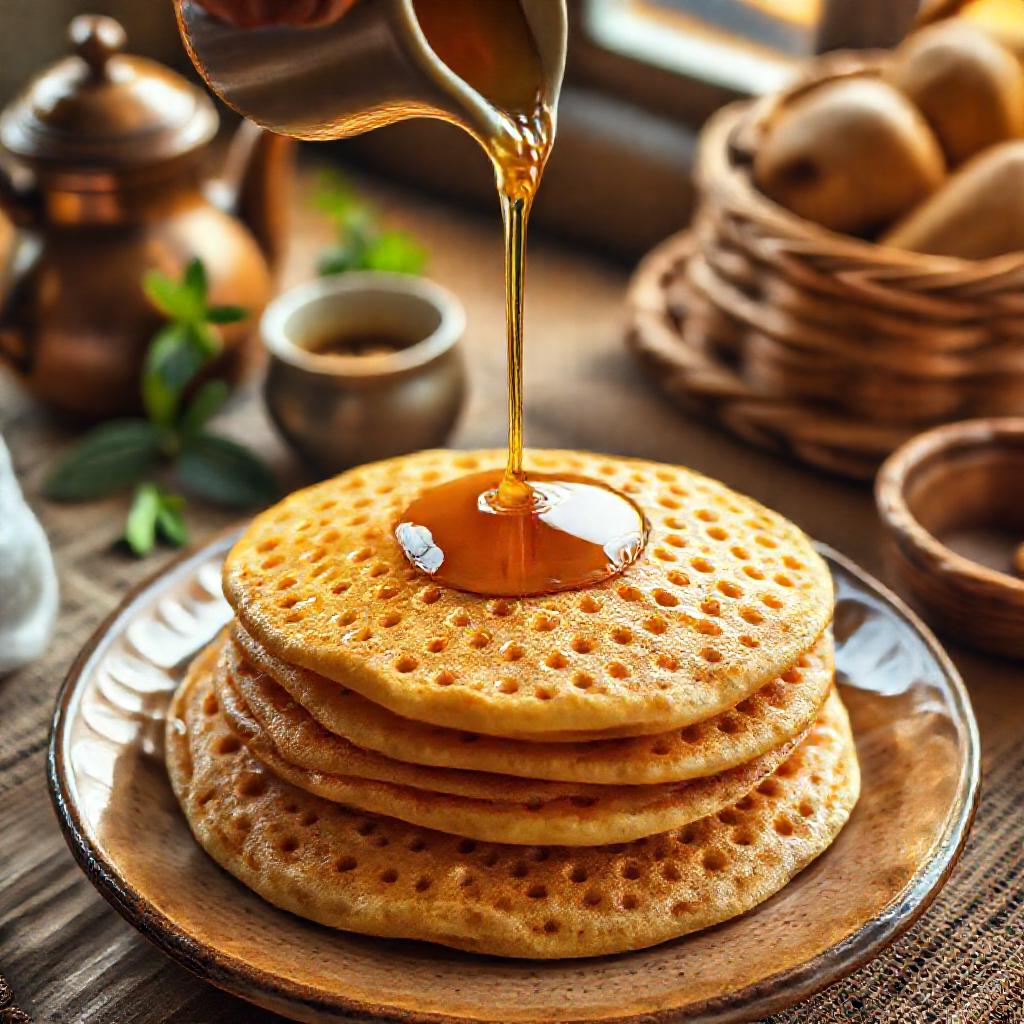
*A close-up of beghrir pancakes showcasing the characteristic porous texture, with honey butter being poured over.*
- Beghrir uses fine semolina, yeast, and water — no eggs or milk in the traditional version - The batter must ferment 45–90 minutes until bubbles form; this fermentation creates the signature holes - Beghrir is cooked on ONE side only over medium heat — flipping ruins the texture - Classic serving: warm beghrir dipped in melted butter and honey, often with orange blossom water - A 250g semolina batch yields 12–15 pancakes (15cm diameter) and takes about 30 minutes of active cooking
**Quick Answer:** What sets beghrir apart from other pancakes? It is a yeast-risen semolina pancake cooked on one side only, producing a porous, honeycomb-like surface that soaks up honey-butter syrup. The batter needs just four ingredients — fine semolina, lukewarm water, yeast, and salt — plus a 45–90 minute fermentation rest before cooking. Each pancake cooks in 2–3 minutes over medium heat, and the holes that form on top are what make beghrir uniquely absorbent.
The Complete Answer: What Is Moroccan Beghrir and How Is It Made?
Beghrir is a traditional Moroccan pancake made from a fermented semolina batter, cooked on one side until the surface becomes riddled with small holes. The holes are not decorative — they are the direct result of carbon dioxide bubbles released during cooking, and they act as tiny reservoirs that trap melted butter and honey.
**Quick Answer:** Beghrir is a yeast-risen semolina pancake cooked on one side only, producing a spongy surface riddled with holes that absorb honey-butter syrup. The batter combines fine semolina, lukewarm water (35–40°C), active dry yeast, sugar, and salt, then rests 45–90 minutes before cooking. Each pancake takes 2–3 minutes over medium heat.
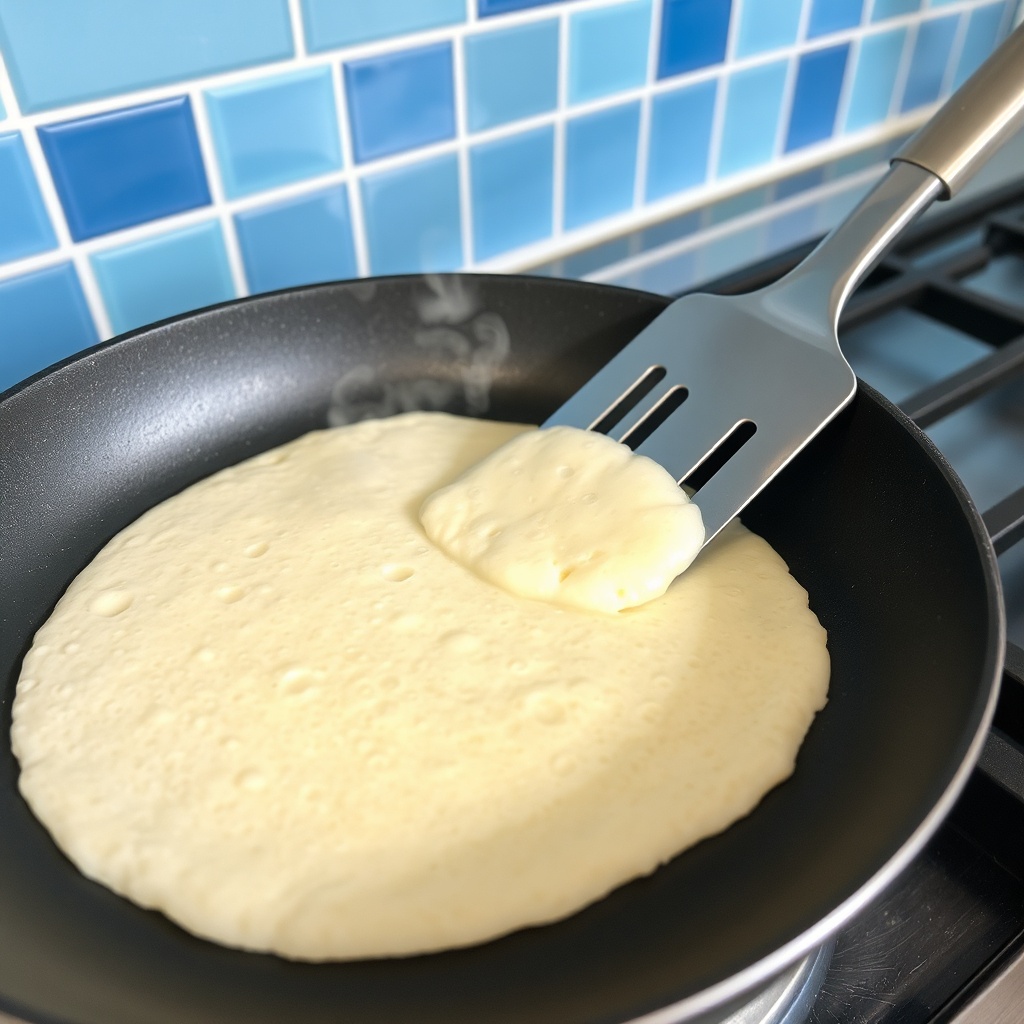
*A step-by-step cooking shot showing the one-sided frying technique and bubble formation on a beghrir.*
The Moroccan Beghrir Recipe in Brief
**The core recipe:** Combine 250g fine semolina, 250ml lukewarm water, 7g active dry yeast, 1 teaspoon sugar, and ½ teaspoon salt. Blend until smooth, cover, and rest for 60 minutes. Heat a non-stick pan over medium heat, pour a ladleful of batter, and cook for 2–3 minutes until the top is dry and covered in holes. Never flip. Serve immediately with honey-butter syrup.
The Cultural Significance of Beghrir in Moroccan Cuisine
Beghrir is a breakfast staple across Morocco, served during Ramadan for suhoor (the pre-dawn meal) and at family gatherings. Unlike msemen (layered fried flatbread) or harcha (griddled semolina bread), beghrir is distinguished by its porous, sponge-like texture that is specifically designed to absorb liquid toppings. Where msemen is crisp and flaky and harcha is crumbly and dense, beghrir's thousand holes act as tiny cups that capture every drop of honey and melted butter, making it the ideal base for sweet accompaniments.
Beghrir holds a special place in Moroccan cuisine as a symbol of hospitality and generosity. It is often the first thing served to guests alongside mint tea, and its presence on the table signals warmth and welcome. During Ramadan, beghrir is a staple for suhoor because the complex carbohydrates in semolina provide sustained energy throughout the fasting day. It is also commonly served at weddings, religious celebrations, and weekend family breakfasts, where it brings generations together around the table. Street vendors across Morocco sell fresh beghrir from dawn until mid-morning, and home cooks often prepare large batches to share with neighbors — a practice that reinforces community bonds. The pancake's versatility also allows for regional variations: in Fez, beghrir is sometimes enriched with orange blossom water, while in the Sahara, cooks may add dates or argan oil to the batter.
Conclusion
The thousand-hole semolina pancake is more than a recipe — it's a window into Moroccan culinary tradition that has survived for centuries, from 13th-century cookbooks to modern breakfast tables. Mastering the **Moroccan beghrir recipe** comes down to three simple principles: ferment the batter until bubbles form, cook on one side only, and serve warm with generous amounts of honey and melted butter. The beauty of beghrir lies in its simplicity — just semolina, water, yeast, and salt transform into something remarkably spongy and satisfying. Whether you're preparing suhoor during Ramadan or looking to expand your breakfast repertoire, the thousand-hole pancake rewards patience with texture you simply cannot achieve with conventional pancakes. The next time you crave something different, skip the ordinary pancake mix and try this authentic Moroccan specialty. Gather your fine semolina, warm water, and honey, and experience the joy of watching those signature holes form across the surface. Your kitchen will smell like a Moroccan café, and your family will thank you.
Frequently Asked Questions
1. Why do I need to cook beghrir on only one side?
The one-sided cooking method is what creates the signature spongy texture. When the batter hits the hot pan, the bottom cooks and browns while the top remains exposed to the air. The carbon dioxide trapped in the fermented batter expands and escapes through the surface, creating the distinctive holes. If you flip the pancake, the holes close up and the texture becomes dense and bread-like. The entire top surface should look dry and covered in tiny craters before you remove it from the pan — this takes about 2–3 minutes over medium heat. Flipping also causes the pancake to deflate, losing its airy structure.
2. Can I make beghrir without semolina?
Traditional beghrir relies on fine semolina (also called smida) for its characteristic texture. However, you can substitute all-purpose flour or a combination of flour and semolina in equal parts. Keep in mind that the texture will differ — pure flour beghrir will be softer and less grainy, while a flour-semolina blend gives a closer approximation to the authentic version. For a gluten-free option, use a fine rice flour or a gluten-free flour blend, though you may need to adjust the water ratio slightly since gluten-free flours absorb liquid differently. For the most authentic results, source fine semolina from a Middle Eastern grocery store or online.
**Definition — Smida:** The Arabic term for fine semolina, the key ingredient in authentic beghrir. Smida is made from coarsely ground durum wheat and gives beghrir its distinctive grainy texture and structure. It is available at Middle Eastern grocery stores and online retailers.
3. Why is my batter too thick or too thin?
The batter should have a consistency similar to heavy cream — pourable but not watery. If it's too thick, the pancakes will be heavy and the holes won't form properly. If it's too thin, they'll spread too much and become crisp rather than spongy. Several factors affect consistency: semolina brands absorb water differently, the water temperature matters (use lukewarm water around 35–40°C), and resting time affects thickness as the semolina absorbs liquid. If your batter thickens too much during the 45–90 minute rest, simply stir in a tablespoon of lukewarm water at a time until it reaches the right consistency. Always blend the batter well — lumps prevent even hole formation.
4. How long can I store beghrir batter and cooked pancakes?
The fermented batter can be stored in the refrigerator for up to 24 hours in a covered container. Be aware that it will continue to ferment and may develop a slightly sour flavor. Before cooking, let it come to room temperature and stir well — you may need to add a little water to restore the correct consistency. Cooked beghrir pancakes freeze beautifully for up to 3 months. Stack them with parchment paper between each pancake, wrap tightly in plastic wrap, and place in a freezer bag. To reheat, steam them briefly or warm them in a covered pan over low heat with a splash of water. They'll be nearly as good as fresh, though the holes may be slightly less pronounced.
5. Can I add flavorings or make beghrir savory?
Absolutely. While the classic version is served sweet with honey and butter, beghrir is versatile. For a sweeter batter, add a teaspoon of orange blossom water or a pinch of cinnamon and nutmeg. Some Moroccans add anise seeds or sesame seeds to the batter for extra aroma. For savory variations, reduce or eliminate the sugar and sprinkle the cooked surface with chopped herbs, grated cheese, or za'atar before serving. You can also serve savory beghrir alongside soups, stews, or grilled meats instead of bread. The neutral flavor of the pancake makes it adaptable to both sweet and savory applications.