
How To Style Your Living Room With Authentic Berber Rugs
Introduction
The surge of interest in handcrafted Moroccan home decor has turned Berber rugs into a staple for design‑savvy homeowners. When you hear “authentic Berber,” the mind often pictures a hand‑woven, wool‑rich tapestry that carries centuries of tribal symbolism. In contrast, synthetic versions mimic the visual texture but lack the irregular fringe, natural dyes, and tactile depth that define a true Berber piece. This guide walks you through every decision point—from decoding the rug’s cultural roots to protecting its fibers after years of foot traffic. According to a recent industry survey, **68 % of interior designers now prioritize authentic textiles** when curating living‑room schemes.
1. The Cultural Narrative: How to Style Your Living Room with Authentic Berber Rugs ### 1.1. Origin Stories – From the Atlas Mountains to Modern Homes
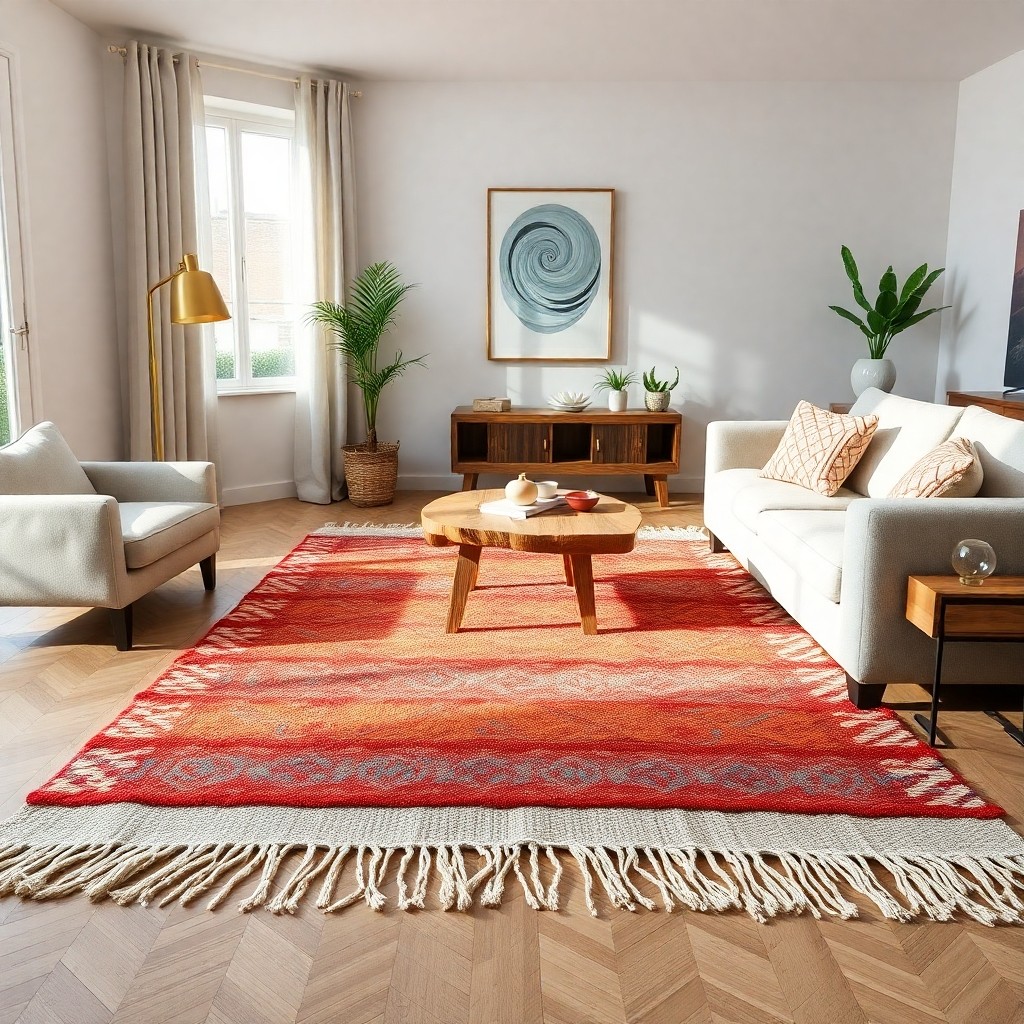
*A stylish living room featuring a handcrafted Berber rug as a focal point, blending Moroccan tradition with modern decor.*
Berber weaving emerged among the Aït Ben Haddou tribes, who spun hand‑spun wool on vertical looms high in the Atlas Mountains. Motifs such as the “diamond star” represent fertility, while the “zig‑zag” echoes the rhythm of desert winds. Traditional materials include raw sheep’s wool harvested in winter, which retains loft and resilience.
*“Each knot tells a story of my family’s harvest; the colors are the sunrise over our village,”* says Fatima El‑Mansouri, a weaver from the Souss region.
1.2. Spotting Authenticity – Materials, Dyeing Methods, and Craftsmanship Marks
A reliable checklist helps you separate genuine pieces from factory‑made replicas:
- **Hand‑spun wool**: fibers vary in length, creating a subtle uneven surface. - **Natural dyes**: indigo, madder root, and pomegranate rind produce earthy reds, blues, and ochres that fade gracefully. - **Irregular fringe**: ends are uneven, often left intentionally rough. - **Loose weave**: you can feel the individual knots when you run a finger across the surface.
A side‑by‑side image comparison (authentic vs. mass‑produced) illustrates these distinctions.
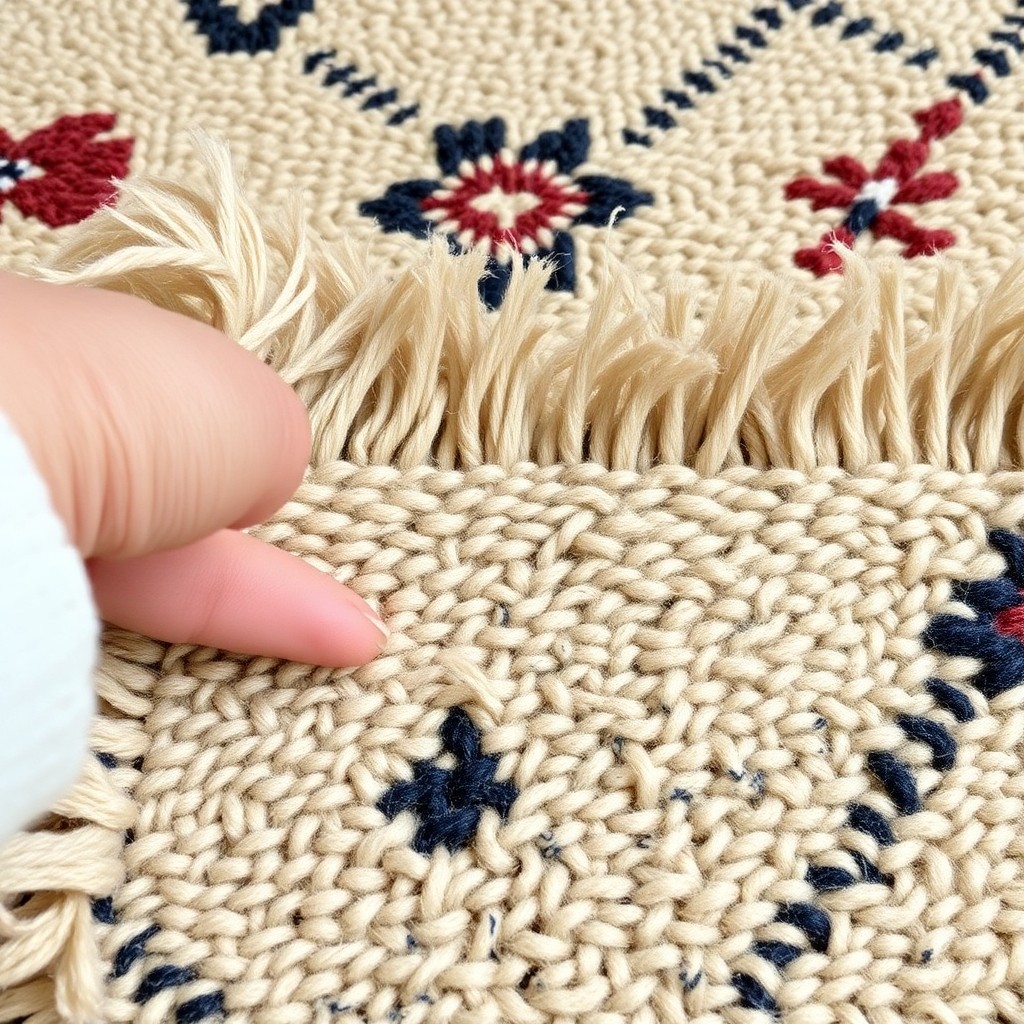
*Detailed view of an authentic Berber rug's texture, dyes, and craftsmanship, illustrating the markers of genuine handwoven pieces.*
1.3. The Emotional & Sustainable Value of Hand‑Made Rugs
Choosing a hand‑woven Berber rug supports fair‑trade cooperatives that reinvest earnings into community schools and water projects. Environmentally, natural wool is biodegradable, and plant‑based dyes avoid synthetic chemicals. Studies show that a properly cared‑for hand‑woven Berber rug can last **80 years or more**, whereas synthetic alternatives typically degrade after 15 years of heavy use.
2. Precision Fit: Selecting the Perfect Berber Rug for Your Living Room Layout ### 2.1. Measuring the Space – A Step‑by‑Step Layout Formula
1. Measure room length and width in feet. 2. Subtract the total footprint of permanent furniture (sofa, media console, coffee table). 3. Add a 24‑inch clearance on each side to maintain visual breathing room.
For a 14 ft × 12 ft room with a 9‑ft sofa and a 6‑ft media unit, the calculation reads: (14 × 12) – (9 × 3) = 168 sq ft; then add 4 ft of clearance, resulting in a recommended rug size of **8 × 10 feet**.
A diagram of a living‑room floor plan with measurement overlays demonstrates the formula in practice.
2.2. Matching Patterns & Colors to Existing Décor
When the sofa is a muted taupe, select a rug whose dominant hue is a deep indigo or rust orange to create contrast without overwhelming the space. If accent chairs showcase teal, a rug featuring subtle teal threads woven into a geometric lattice can tie the palette together.
A mood board featuring three distinct color schemes—neutral‑gray with crimson accents, navy‑blue with mustard highlights, and ivory with sage‑green threads—offers visual guidance.
2.3. Balancing Scale – When to Go Large, Medium, or Small
A large rug (9 × 12 ft) anchors an open‑plan living area, allowing all furniture legs to rest on the surface, which unifies disparate zones. A medium rug (6 × 9 ft) works best in apartments, creating a “floating” effect that visually expands the room. A small rug (4 × 6 ft) can serve as a decorative runner beneath a coffee table, adding texture without dominating the floor.
A case study of a 500‑sq‑ft studio demonstrates how a 6 × 9 ft Berber rug visually stretches the space, making the living area feel 15 % larger.
3. Textural Harmony: Layering Fabrics, Furniture, and Lighting Around Your Berber Rug ### 3.1. The 3‑Layer Rule – Base, Bridge, and Accent Layers
- **Base**: the authentic Beni Ouarain rug itself, providing warmth and cultural depth. - **Bridge**: a natural‑fiber rug pad (jute or felt) that adds cushioning and protects the wool from floor abrasion. - **Accent**: woven poufs, linen throws, or handmade leather pouf from Marrakech that echo the rug’s texture.
Step‑by‑step, lay the pad flat, center the rug, then arrange accessories so each layer supports the next.
3.2. Color Theory in Practice – Using the Rug’s Palette to Guide Accessories
If the rug’s dominant hue is a burnt‑orange, pair it with complementary teal cushions for a vibrant contrast. For an analogous scheme, choose accessories in adjacent shades—scarlet, amber, and deep gold—to maintain harmony.
A color wheel graphic highlights a typical Berber red‑orange palette, marking complementary teal and analogous amber zones.
3.4. Light Play – Highlighting Texture with Ambient and Accent Lighting
Place a floor lamp with a matte‑black shade at a 45‑degree angle to cast soft shadows across the rug’s weave. Add dimmable LED strips behind a low media console to create a gentle glow that emphasizes the rug’s fringe. Switching from warm 2700 K to cool 3500 K light can reveal subtle variations in natural dye depth.
Before‑and‑after photos (placeholder) illustrate how strategic lighting transforms the rug’s presence from background to centerpiece.
4. The Rug as Focal Point: Arranging Furniture and Art to Celebrate Your Berber Piece ### 4.1. Furniture Placement Techniques that Keep the Rug Front‑and‑Center
- **Floating layout**: Position the sofa 12‑inch away from the rug edge, allowing the front legs to sit on the rug while the back remains on the floor. - **Anchored layout**: Align all four legs of the sofa on the rug, creating a cohesive platform.
A floor‑plan sketch shows both arrangements, indicating traffic flow and visual balance.
4.2. Complementary Wall Art & Décor that Echo Rug Motifs
Select a metal wall sculpture featuring interlocking triangles that mirror the rug’s “diamond star” pattern. Alternatively, choose a large canvas printed with a muted version of the rug’s geometric lattice, reinforcing the design language.
A curated gallery of wall art inspired by Berber geometry provides concrete examples, from tribal‑style tapestries to contemporary abstract prints.
4.3. Creating Conversational Zones Around the Rug
Arrange two side tables at opposite ends of a 9‑ft rug, each topped with a brass lamp. Place a low, upholstered pouf in the center to invite relaxed seating. Add a narrow bookshelf along one wall to house coffee‑table books, completing a “conversation circle” that encourages lingering.
A step‑by‑step layout guide details measurements: side tables 30 in from each rug edge, pouf centered, and bookshelf positioned 18 in from the nearest wall.
5. Longevity Lab: Maintaining and Protecting Your Authentic Berber Rug in a High‑Traffic Living Room ### 5.1. Routine Care – Vacuuming, Spot‑Cleaning, and Rotating Strategies
| Frequency | Action | Recommended Tool | |-----------|--------|-------------------| | Weekly | Light vacuum (no beater bar) | Brushless handheld | | Monthly | Deep vacuum with low‑suction setting | Adjustable‑height wand | | Seasonal | Rotate 180° to even wear | Two‑person lift |
Vacuum using a brushless head to avoid pulling fibers. Rotate the rug every three months to prevent uneven fading.
5.2. Dealing with Spills & Stains Without Damaging Natural Dyes
1. Blot immediately with a white, lint‑free cloth; avoid rubbing. 2. Apply a mixture of lukewarm water and a few drops of pH‑neutral wool cleaner. 3. Gently dab the area, then rinse with a damp cloth. 4. Pat dry with a towel and allow air drying away from direct sunlight.
A video tutorial (placeholder) demonstrates the technique in real time, ensuring the dye’s integrity remains intact.
5.3. Protective Measures – Furniture Pads, Rug Runners, and Sunlight Management
Place felt pads under all heavy furniture legs to distribute weight evenly and prevent indentations. Use a low‑profile runner at entryways to capture grit before it reaches the rug. To curb fading, install sheer curtains that filter UV rays; studies show that **direct sunlight can cause up to 30 % color loss after five years**.
Conclusion
You now have a step‑by‑step roadmap for how to style your living room with authentic Berber rugs—from understanding the cultural narrative and measuring the perfect size to layering textures, arranging focal points, and preserving the rug’s longevity. Investing in a genuine Berber piece enriches your space with heritage, sustainability, and a tactile story that synthetic alternatives cannot match. Apply the outlined plan, photograph the transformation, and share your before‑and‑after moments with fellow design enthusiasts.
FAQ
**What makes a Berber rug “authentic” versus a replica?** Authentic rugs are hand