
How To Make Couscous Taste Better: 7 Tricks
How to Make Couscous Taste Better: A Complete Flavor Transformation Guide
Couscous is one of the most versatile and quick-cooking grains you can keep in your pantry, yet it often ends up as a bland, forgettable side dish. The problem isn't the couscous itself—it's the way most of us cook it. Learning how to make couscous taste better is about treating it as a flavor sponge rather than a filler, and building layers of taste at every stage of cooking. With a few simple techniques, you can transform this neutral grain into a dish that stands on its own.
The secret to great couscous lies in a systematic approach: toast the grains, cook them in a flavorful liquid, season aggressively, and finish with fat, acid, and texture. This guide gives you a complete, actionable method that goes far beyond "just add salt."
- Toasting couscous in fat before adding liquid unlocks a nutty, complex flavor base and is the single most impactful upgrade. - Replacing water with broth or an infused liquid is the easiest and most immediate flavor boost. - Texture is flavor: fluffing properly and adding fat after cooking prevents clumping and improves mouthfeel. - Layer flavors at every stage—aromatics in the cooking liquid, mix-ins after cooking, and a finishing sauce or acid at the end. - The "flavor triangle" of fat, acid, and salt is the key to balancing any couscous dish.
The Complete Answer: The 5-Step Method to Transform Couscous Flavor
**Quick Answer:** To make couscous taste better, toast the grains in olive oil or butter first, cook them in a flavorful broth instead of water, add aromatics and spices to the liquid, then fluff with a fat and an acid, and finish with fresh herbs, nuts, or cheese.
This five-step method is the foundation for every couscous dish you'll ever make. Each step builds on the previous one, creating a final result that's far more complex and delicious than the sum of its parts.
Step 1: Toast the Couscous in Fat Before Cooking
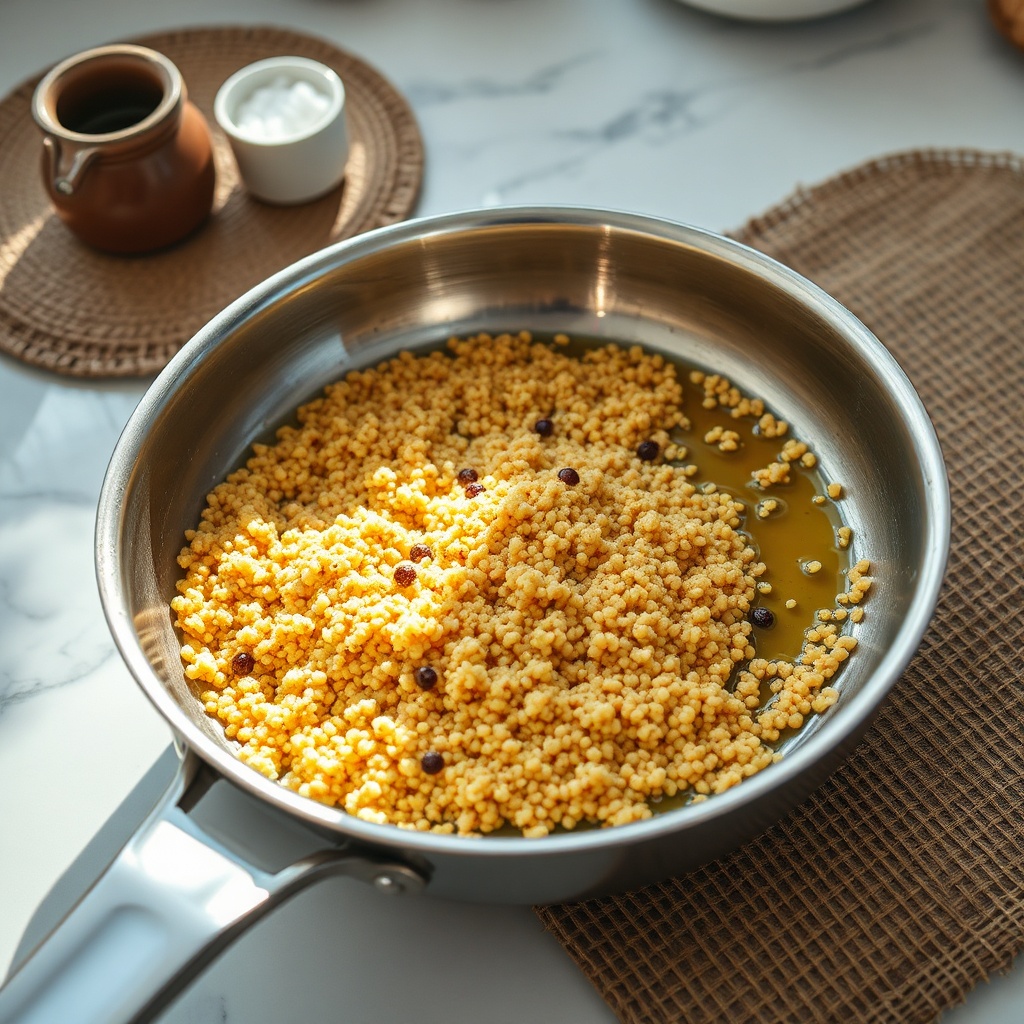
*Visual demonstration of the first critical step for enhancing couscous flavor through dry-toasting in fat before hydration.*
Heat a tablespoon of olive oil or butter in a saucepan over medium heat. Add the couscous and stir constantly for 2–3 minutes until it smells nutty and turns slightly golden. This step is the foundational flavor builder—it adds a roasted, toasted note that plain boiling simply cannot achieve.
Toasting the grains also coats each piece in fat, which helps them cook more evenly and stay separate after cooking. You'll notice the aroma shift from raw and starchy to warm and fragrant, which is your signal that the couscous is ready for liquid.
Step 2: Choose Your Cooking Liquid Wisely
Replace water with chicken, vegetable, or beef broth for instant depth. For a vegetarian or vegan twist, use a mushroom or miso broth—both add a savory, umami-rich character that water never will. If you don't have broth on hand, infuse plain water with aromatics like garlic, onion, bay leaf, and peppercorns by simmering them for a few minutes before adding the couscous.
**Definition:** Miso broth is a savory liquid made by dissolving fermented soybean paste in water or stock. It adds a deep, salty, umami flavor that pairs exceptionally well with the nuttiness of toasted couscous.
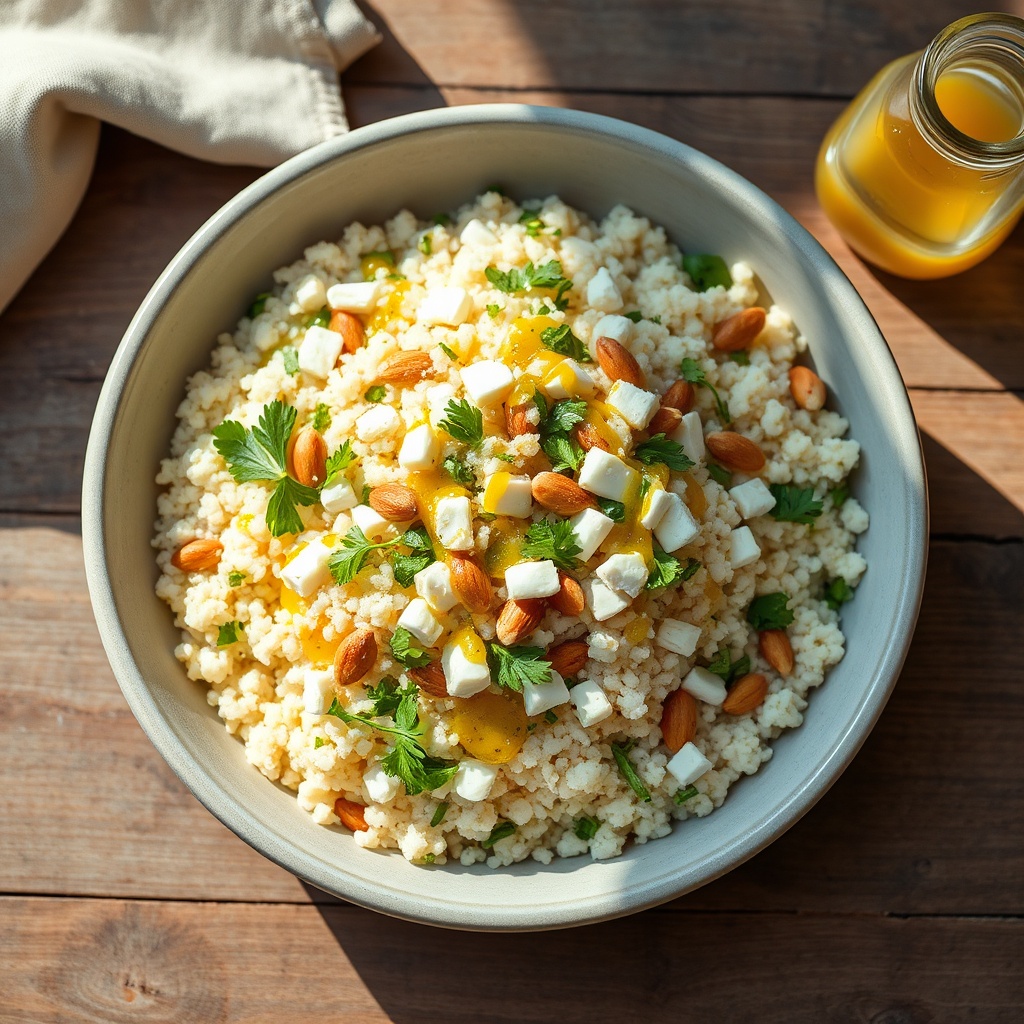
*Showcases the completed dish after applying the five-step flavor transformation method, highlighting texture, fat, acid, and fresh mix-ins.*
Step 3: Add Aromatics and Spices to the Cooking Liquid
Sauté minced garlic, shallots, or onions in the same fat you used for toasting before adding the liquid. This releases their natural sugars and creates a flavor base that permeates the grains as they cook.
Stir ground spices—cumin, coriander, turmeric, paprika, or ras el hanout—into the toasted couscous before adding the liquid. Heating spices in fat "blooms" their essential oils, intensifying their flavor and aroma significantly.
Step 4: Fluff with Fat and Acid
After the couscous has absorbed the liquid and rested, fluff it with a fork. Immediately fold in a tablespoon of butter or a generous drizzle of good olive oil, along with a squeeze of lemon juice or a splash of vinegar. The fat adds richness and helps separate the grains, while the acid cuts through that richness and brightens the entire dish.
This step is where the "flavor triangle" comes together. Salt (from your broth or added directly), fat, and acid work together to create a balanced, satisfying flavor that keeps you coming back for more.
Step 5: Add Textural and Flavorful Mix-Ins
Fold in fresh herbs like parsley, mint, or cilantro for brightness. Add toasted nuts such as almonds, pine nuts, or pistachios for crunch. Scatter in dried fruit—raisins, apricots, or cranberries—for a sweet contrast, and crumble in feta or goat cheese for creaminess and salt.
These mix-ins add contrast and interest, turning a simple side dish into something you'd be proud to serve to guests. The key is to add them gently after cooking so they retain their distinct textures and flavors.
Section 1: Flavor Profiles — Matching Couscous to Your Main Dish
Different flavor profiles work better with different mains. Choosing a direction before you start cooking helps you select the right aromatics, spices, and mix-ins.
Mediterranean/Herbaceous Profile
This profile focuses on lemon, olive oil, fresh herbs like mint, parsley, and dill, and crumbled feta cheese. The bright, clean flavors pair beautifully with grilled fish, chicken skewers, or lamb chops. Use a light hand with spices—a little oregano or sumac is enough—and let the herbs and citrus do the heavy lifting.
North African/Spiced Profile
This is the classic couscous flavor profile, featuring ras el hanout, harissa, apricots, almonds, and preserved lemon. The warm, complex spices pair perfectly with tagines, roasted vegetables, or merguez sausage. The sweetness of dried fruit balances the heat of the spices, while the almonds add crunch.
Middle Eastern/Buttery Profile
This profile emphasizes toasted pine nuts, caramelized onions, and a generous amount of butter or ghee. The rich, savory flavors complement roasted chicken, kofta, or grilled kebabs. Caramelizing the onions takes time but is well worth it—they add a deep, sweet umami that transforms the entire dish.
Section 2: Texture Is Flavor — Mastering the Perfect Fluffy Grain
Texture is just as important as taste when it comes to couscous. A mushy, clumpy pile of grains will ruin even the most flavorful seasoning.
The Ratio & Hydration Rule
The standard ratio is 1:1.5 (couscous to liquid) for fine couscous, but the type of couscous changes this. Pearl couscous, which is larger and rounder, needs more liquid (about 1.75 to 2 cups per cup of couscous) and a longer cooking time. Using exactly the right amount of liquid is crucial—too much makes a mushy paste, too little makes it dry and hard.
The Steaming vs. Absorption Method: A Comparison
| Method | Texture Result | Time Required | Best For | |---|---|---|---| | Absorption | Softer, more tender grains | 5 minutes | Busy weeknights, quick side dishes | | Steaming | Light, fluffy, distinct grains | 15+ minutes | Special occasions, traditional dishes |
The absorption method is what most home cooks use—you simply add the couscous to boiling liquid, cover, and let it sit off the heat. The steaming method is more traditional and labor-intensive, involving moistening the grains, steaming them in a couscoussier, and fluffing them multiple times. The result is noticeably lighter and fluffier, but it requires more time and equipment.
The Resting and Fluffing Technique
After cooking, let the couscous rest covered for 5 minutes off the heat. This allows the grains to absorb any remaining liquid and steam evenly. Then use a fork to fluff gently, not a spoon, to separate the grains without crushing them. Run the fork through the couscous in a lifting motion, breaking up any clumps without mashing them together.
Section 3: The 7 Mix-Ins That Instantly Elevate Couscous
These seven mix-ins are the fastest way to add flavor, texture, and visual appeal to any couscous dish. Use them individually or combine several for a more complex result.
1. Fresh Herbs (Parsley, Mint, Cilantro)
Adds brightness and a fresh, clean finish. Use a generous handful just before serving. Herbs are the last thing you add, as heat will wilt them and dull their vibrant flavor.
2. Toasted Nuts (Almonds, Pine Nuts, Pistachios)
Provides crunch and a rich, nutty flavor. Toast them in a dry pan over medium heat until fragrant, shaking frequently to prevent burning. This takes only a few minutes and dramatically improves their flavor.
3. Dried Fruit (Raisins, Apricots, Cranberries)
Offers a sweet contrast to savory elements. Rehydrate them in warm water or juice for plumpness before adding, or simply fold them in dry—they'll soften slightly from the residual heat of the couscous.
4. Crumbled Cheese (Feta, Goat Cheese, Parmesan)
Adds creaminess and saltiness. Stir in gently to avoid breaking the grains. Feta and goat cheese are especially good for Mediterranean-style dishes, while Parmesan works well with roasted vegetables.
5. Caramelized Onions or Shallots
Imparts a deep, sweet umami flavor that transforms the entire dish. Cook them low and slow in olive oil or butter until they're deeply golden and jammy—this takes about 20–30 minutes but is well worth the effort.
6. Roasted Vegetables (Peppers, Zucchini, Cherry Tomatoes)
Adds body, color, and smoky depth. Roast them with olive oil and salt until tender and slightly charred, then fold into the couscous. The caramelized edges of the vegetables add a wonderful contrast to the soft grains.
7. Legumes (Chickpeas, Lentils)
Turns a side dish into a hearty main. Adds protein and a creamy texture. Canned chickpeas are a convenient option—just rinse and drain them before adding.
Section 4: The Flavor Boosters — Sauces, Oils, and Finishing Touches
The final layer of flavor comes from what you add just before serving. These finishing touches can elevate a good couscous dish to an exceptional one.
The Finishing Oil: Why Quality Matters
A drizzle of high-quality extra-virgin olive oil or a flavored oil—chili, garlic, or herb-infused—at the end is the simplest way to add a final layer of richness. The oil coats each grain, adding a silky mouthfeel and a boost of flavor. Don't use your everyday cooking oil for this; save a good one for finishing.
The Finishing Acid: Lemon, Vinegar, or Pomegranate Molasses
A squeeze of acid cuts through the richness and brightens the entire dish. Use it right before serving so the bright flavor doesn't cook off. Lemon juice is the most common choice, but a splash of red wine vinegar or a drizzle of pomegranate molasses adds a different, more complex tang.
The Finishing Sauce: Tahini, Harissa, or Yogurt Dressing
Create a sauce to serve alongside or drizzle over the couscous for an extra flavor dimension. A simple lemon-tahini sauce—whisk together tahini, lemon juice, water, and a pinch of salt—adds creaminess and nutty depth. A spicy harissa yogurt—stir harissa paste into plain yogurt—adds heat and cooling contrast.
Section 5: Common Mistakes That Make Couscous Taste Bad
Avoiding these common pitfalls is just as important as following the right techniques.
Mistake 1: Using the Wrong Liquid-to-Grain Ratio
Too much liquid makes a mushy paste; too little makes it dry and hard. Always measure carefully and adjust based on the type of couscous you're using. Fine couscous needs a 1:1.5 ratio, while pearl couscous needs more liquid.
Mistake 2: Not Toasting the Couscous
Skipping the toasting step loses the chance to build a nutty, toasted flavor base. This is the easiest and most impactful upgrade you can make—it takes just 2–3 minutes but changes the flavor profile entirely.
Mistake 3: Overcooking or Under-Fluffing
Overcooking leads to a sticky, clumpy mess; under-fluffing leaves it in a solid block. Set a timer and remove the couscous from heat as soon as it's done, then fluff thoroughly with a fork.
Mistake 4: Forgetting to Season the Cooking Liquid
If the liquid is bland, the couscous will be bland. Always season the liquid with salt and aromatics before adding the grains. This is the only chance you get to flavor the couscous from the inside out.
Key Takeaways (Recap)
- Toasting the couscous in fat is the most important step for building a deep, nutty flavor. - Always substitute water with a flavorful broth or infused liquid. - Use the "flavor triangle" (salt, fat, acid) to balance the final dish. - Add mix-ins (herbs, nuts, dried fruit, cheese) after cooking for texture and contrast. - Avoid common mistakes like using too much liquid or skipping the resting/fluffing step.
Frequently Asked Questions (FAQ)
How do you make couscous not bland?
The key is to toast the couscous in olive oil or butter before adding liquid, and to cook it in a flavorful broth instead of water. Additionally, always finish it with a fat (olive oil or butter) and an acid (lemon juice or vinegar) to balance the flavors.
Do you need to rinse couscous before cooking?
No, you should not rinse couscous before cooking. It is not a rice or grain that needs washing; rinsing it can cause it to become mushy and clumpy. Couscous is already pre-steamed and ready to absorb liquid directly.
What is the best liquid to cook couscous in?
Chicken or vegetable broth is the best choice for adding flavor. For an extra boost, you can infuse the broth with aromatics like garlic, onion, and bay leaves. If you're making a vegan or vegetarian dish, mushroom or miso broth are excellent alternatives.
How much liquid do I need for 1 cup of couscous?
For fine couscous, the standard ratio is 1 cup of couscous to 1.5 cups of liquid. For pearl couscous, you may need slightly more liquid (1.75 to 2 cups) and a longer cooking time.
Can you make couscous taste better without broth?
Yes. If you don't have broth, you can toast the couscous in butter or olive oil and cook it in water that has been simmered with aromatics (a whole garlic clove, onion, peppercorns, and a bay leaf). Finishing with a flavorful oil and a squeeze of lemon juice also helps a lot.
Conclusion
The journey from bland to brilliant is all about layering flavor at every step—from toasting the grains to the finishing drizzle. Treat couscous as a flavor sponge, not a filler. Every ingredient you add, from the cooking liquid to the final garnish, gets absorbed into the grains and contributes to the final taste.
Try the 5-step method with one of the flavor profiles above, then experiment with your own mix-ins and finishing sauces. Once you master the technique, couscous will become a go-to side dish that you can adapt to any meal in minutes.