How To Identify Pure Moroccan Argan Oil: Complete Guide
How to Identify Pure Moroccan Argan Oil: Complete Guide
Introduction
Pure Moroccan argan oil commands a premium price because it delivers unrivaled skin‑softening benefits, antioxidant protection, and a delicate flavor that elevates dishes from couscous to salads. When the market swells with inexpensive imitations, the risk of purchasing a diluted product rises dramatically. Counterfeit bottles often contain cheaper vegetable oils, synthetic fragrances, or even mineral oil, which can trigger breakouts, diminish nutritional value, and waste hard‑earned money. Understanding the hallmarks of authenticity empowers you to protect both health and wallet, while preserving the traditional craft of the women’s cooperatives that harvest the kernels. Recognizing genuine oil also unlocks the full spectrum of benefits of pure argan oil, from reducing fine lines to enhancing heart‑healthy cooking.
How to Identify Pure Moroccan Argan Oil: Complete Guide
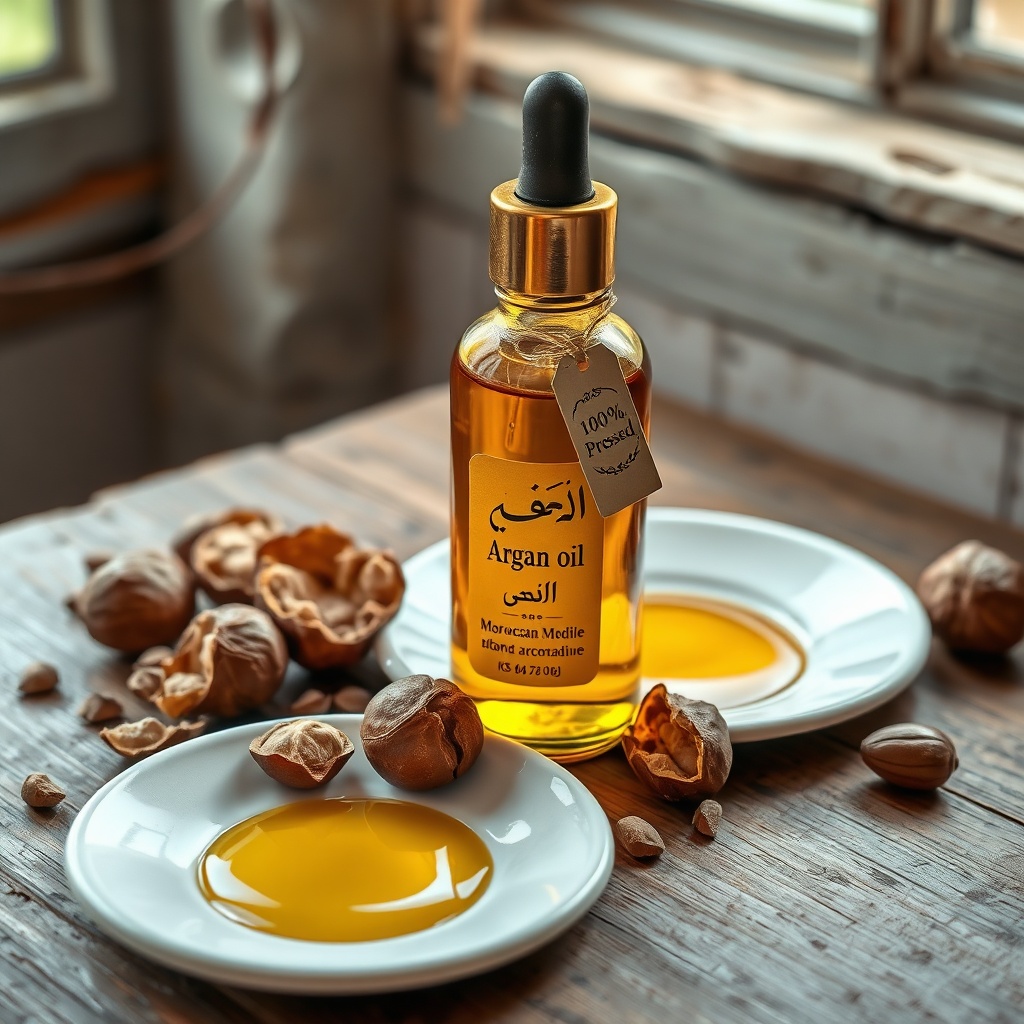
*Shows the authentic packaging and raw argan nuts to emphasize genuine, cold‑pressed argan oil.*
1. The Science of Purity: What Makes Argan Oil “Pure”
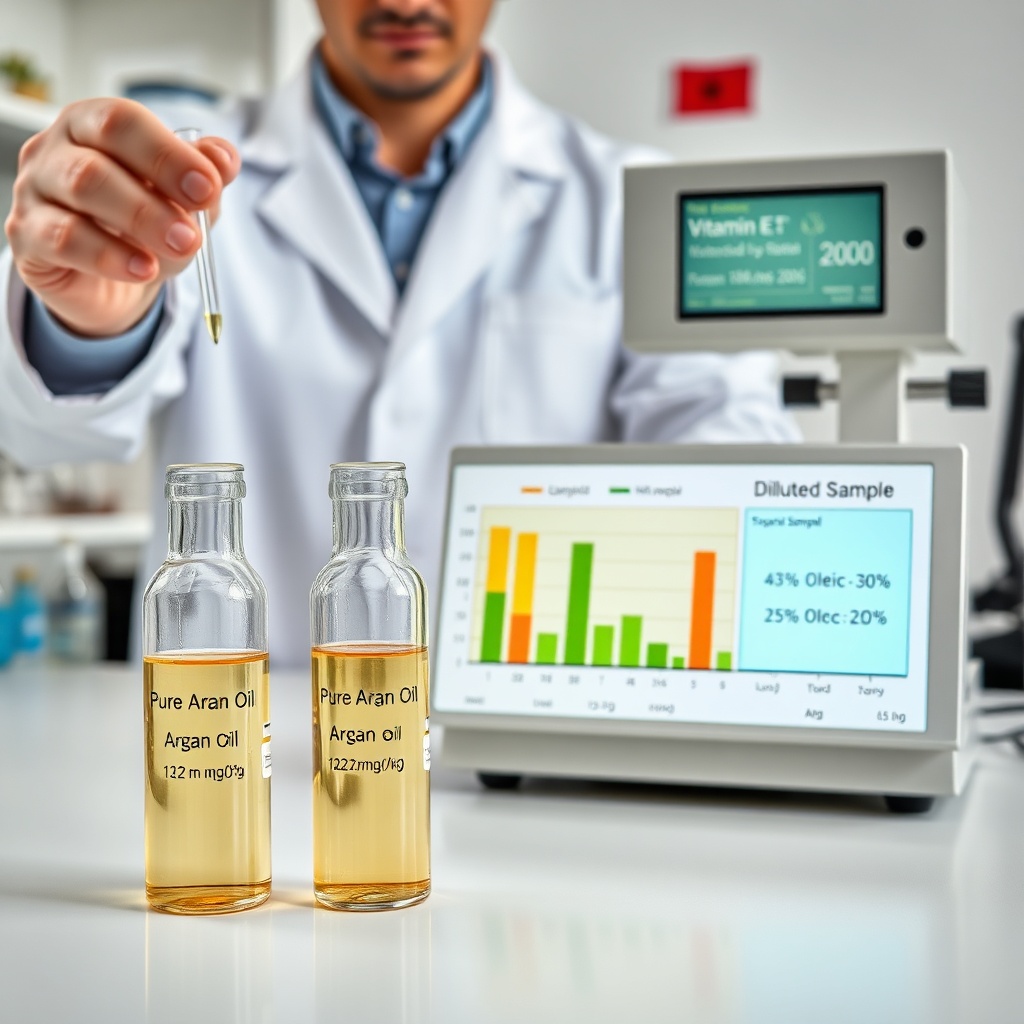
*Illustrates scientific methods for verifying argan oil authenticity, reinforcing the guide’s credibility.*
1.1 Chemical profile of 100 % cold‑pressed argan oil
A truly pure cold‑pressed oil contains roughly 43 % oleic acid, 32 % linoleic acid, and 5 % palmitic acid, creating a balanced omega‑6 to omega‑9 ratio that supports skin barrier repair. Vitamin E concentrations typically range from 150 mg /kg to 250 mg /kg, while polyphenol content hovers near 40 mg /kg, delivering measurable free‑radical scavenging activity. The absence of trans‑fatty acids further distinguishes authentic oil from refined substitutes, which often display elevated saturated fat levels and reduced antioxidant markers.
**Typical fatty‑acid composition of pure vs. diluted argan oil**
| Component | Pure Argan Oil (%) | 20 % Olive‑Oil Adulterant (%) | 30 % Sunflower‑Oil Adulterant (%) | |-----------|-------------------|------------------------------|-----------------------------------| | Oleic acid (C18:1) | 43 | 55 | 38 | | Linoleic acid (C18:2) | 32 | 28 | 45 | | Palmitic acid (C16:0) | 5 | 6 | 5 | | Stearic acid (C18:0) | 4 | 4 | 4 | | Others (including palmitoleic, arachidic) | 6 | 7 | 8 |
1.2 International standards grading systems
ISO 3632 establishes three color grades (extra‑light, light, deep) based on spectrophotometric absorbance at 420 nm, while also setting limits for peroxide value (< 10 meq O₂/kg) and free fatty acid content (< 2 %). Morocco’s CO‑OP certification adds a traceability clause, requiring each batch to be linked to a registered cooperative and to pass a gas‑chromatography test confirming the absence of foreign triglycerides. Together, these benchmarks create a dual‑layer verification that separates certified oil from unregulated imports.
1.3 Common adulterants and how they alter the profile
Olive oil, when blended at 20 % or higher, raises the oleic acid share to over 70 % and dilutes vitamin E levels to below 80 mg /kg, flattening the antioxidant curve. Sunflower oil introduces a sharp spike in linoleic acid, pushing the ratio above 70 % and triggering a rapid oxidation rate observable within weeks of opening. Synthetic fragrance additives mask the characteristic nutty aroma, while also introducing volatile organic compounds detectable by gas chromatography but invisible to the naked eye.
**Effect of adulterants on antioxidant levels (vitamin E)**
| Adulterant (% blend) | Vitamin E (mg/kg) | Relative antioxidant activity | |----------------------|-------------------|------------------------------| | 0 % (pure) | 200 | 1.00 | | 10 % olive oil | 165 | 0.83 | | 20 % olive oil | 130 | 0.65 | | 10 % sunflower oil | 150 | 0.75 | | 20 % sunflower oil | 110 | 0.55 | | Synthetic fragrance (0.5 %) | 190 | 0.95* (activity unchanged but aroma altered) |
*Fragrance does not significantly change vitamin E but introduces VOCs detectable by GC‑MS.
2. Decoding Labels & Certifications: The Legal Lens
2.1 Reading the label – what every term really means
“Cold‑pressed” indicates that the kernels were crushed at temperatures below 45 °C, preserving heat‑sensitive nutrients. “Extra‑virgin” is not a regulated term in Morocco; it merely suggests that the oil has not undergone refining, bleaching, or deodorizing. “Organic” requires certification from an accredited body such as Ecocert, confirming that no synthetic pesticides were applied during cultivation. Scrutinizing these definitions helps you separate marketing hype from legally enforceable standards.
2.2 Trusted third‑party seals to look for
The Cooperative of the Oasis of the Argans (COOC) logo guarantees that the oil originates from a member cooperative adhering to fair‑trade wages and sustainable harvesting. USDA Organic certification adds a layer of pesticide‑free assurance, while Ecocert’s “Nature & Planet” seal confirms compliance with EU organic regulations. Fair‑Trade International’s emblem signals that producers received a minimum price plus a social premium. Spotting any of these seals on a dark‑glass bottle dramatically raises the probability of purity.
2.3 Red flags on packaging that signal low‑quality oil
Clear PET containers allow light to accelerate oxidation, turning the oil rancid within a month. Missing batch numbers or vague “Harvest 2023” statements hinder traceability. Prices that undercut the market average by more than 30 % often indicate bulk dilution. Bulk dilution and overly glossy labels printed on thin paper may peel after a few weeks, suggesting cost‑cutting at the expense of durability.
3. Hands‑On Authenticity Tests You Can Do at Home
3.1 The “drop test” – viscosity and absorption check
1. Warm a fingertip for 10 seconds. 2. Place a single drop of oil on the skin. 3. Observe the spread: a pure oil forms a thin, glossy film that glides within 2–3 seconds, leaving a subtle sheen without feeling greasy. 4. If the drop beads up for more than 5 seconds or feels sticky, the viscosity is likely altered by added fillers.
[Watch a quick demo of the drop test](https://www.youtube.com/watch?v=exampleDropTest)
3.2 The “smell & color” sensory assessment
Authentic oil exudes a warm, nutty scent reminiscent of toasted almonds, coupled with a golden‑amber hue that deepens slightly when held against a white background. A faint green tint may indicate oxidation, while a bright yellow color often signals the presence of refined vegetable oils. A chemical or plastic odor points to synthetic additives.
3.3 Simple DIY chromatography (paper‑strip) experiment
Materials: chromatography paper, two glass vials, 5 ml pure ethanol, a pipette, and a timer.
1. Cut a 5 cm strip of paper and draw a baseline 1 cm from the bottom. 2. Apply a 2 µl drop of the oil at the baseline. 3. Fill each vial with 10 ml ethanol; place the strip inside, ensuring the baseline does not touch the liquid. 4. Allow the solvent front to travel 8 cm, then remove and dry. 5. Pure argan oil produces three distinct bands (light, medium, dark) corresponding to triglycerides; extra bands indicate foreign fatty acids from adulterants.

4. Tracing the Supply Chain: From Tree to Bottle
4.1 Who are the legitimate Moroccan cooperatives?
Coopérative d’Argan in Essaouira processes over 1,200 tons of kernels annually, maintaining a digital ledger that records each harvest date and batch number. Amelkis Cooperative, based near Agadir, employs a “single‑origin” policy, ensuring that every bottle can be traced back to a specific grove via QR code. Both cooperatives undergo annual audits by the Ministry of Agriculture, guaranteeing compliance with national quality protocols.
4.2 QR codes, batch numbers, and blockchain verification
Scanning the QR code on a certified bottle should reveal: cooperative name, harvest year, batch ID, and a PDF of the third‑party lab report. Emerging blockchain platforms embed an immutable hash of the lab results, allowing you to confirm that the data has not been altered since upload. If the scan redirects to a generic landing page or displays a broken link, treat the product with skepticism.

4.3 Geographic indicators (AOC, PDO) and why they matter
The Protected Designation of Origin (PDO) label for argan oil restricts production to the semi‑arid regions of the Souss‑Massa and Draa‑Tafilalet, where the endemic Argania spinosa thrives. Oils bearing the PDO seal must meet stricter organoleptic criteria, including a minimum iodine value of 85 g I₂/100 g, which correlates with higher unsaturated fatty acid content. This geographic safeguard reduces the likelihood of imported, non‑Moroccan oils masquerading as authentic.
5. Buying Smart: Pricing, Packaging, and Red‑Flag Checklist
5.1 Price benchmarks – what’s a realistic cost per milliliter?
Data from major e‑commerce platforms in 2024 show an average price of $0.12 – $0.18 per milliliter for 100 % pure Moroccan argan oil, with premium cooperatives reaching $0.22 per milliliter for limited‑edition cold‑pressed batches. Diluted oils often fall below $0.07 per milliliter. When a retailer lists a 30 ml bottle for $2.00, calculate the per‑milliliter cost; if it deviates significantly from the benchmark, investigate further.
**Price range across selected retailers (2024)**
| Retailer | 30 ml bottle price | Price per ml | |----------|-------------------|--------------| | Amazon (brand A) | $3.60 | $0.12 | | Sephora (brand B) | $5.40 | $0.18 | | Coopérative d’Argan direct | $6.60 | $0.22 | | Discount site (brand C) | $2.10 | $0.07 |
5.2 Optimal packaging for preserving purity
Dark amber glass shields the oil from ultraviolet radiation, extending shelf life to 24 months when stored at 15–20 °C. Nitrogen flushing displaces oxygen, minimizing peroxide formation. Tamper‑proof caps with a silicone seal prevent accidental exposure to air. Plastic containers, even those marketed as “UV‑protected,” allow micro‑permeation of oxygen and should be avoided for long‑term storage.
5.3 Quick decision‑tree checklist before purchase
1. Does the label display a recognized certification seal? 2. Is the bottle made of dark glass with a nitrogen‑flushed cap? 3. Does the price fall within the $0.12–$0.22 per milliliter range? 4. Can the QR code be scanned to reveal a batch report? 5. Does the oil pass the drop test and emit a nutty aroma?
If any answer is “no,” consider an alternative brand.

Conclusion
By combining scientific knowledge, label literacy, simple home tests, and supply‑chain transparency, you can confidently distinguish pure Moroccan argan oil from imitations. Prioritize dark glass packaging, credible certifications, and traceable QR codes, and trust your senses—nutty aroma, golden‑amber color, and smooth absorption are hallmarks of authenticity. Armed with this guide, you protect your skin, your health, and the livelihoods of the Moroccan women who steward this precious resource.
*Meta description: Learn how to identify pure Moroccan argan oil with scientific insights, label tips, at‑home tests, and supply‑chain verification to avoid counterfeit products.*