

How To Choose Sustainable Argan Oil: Tips & Certifications
Introduction
How to Choose Sustainable Argan Oil: Tips & Certifications has become a frequent search as shoppers demand transparency from beauty brands. Argan oil harvested from Morocco’s endemic argan trees carries a reputation for skin‑loving nutrients, yet the environmental and social footprints vary dramatically between producers. When a bottle is labeled “sustainable,” it should imply responsible forest management, fair wages for harvesters, and minimal processing waste. This guide walks you through a five‑step decision framework that moves past vague marketing claims and equips you with concrete questions, data points, and verification tools for every purchase. You can Explore Arganit's natural beauty range for more information on sustainable argan oil.
1. Map the Supply Chain: From Tree‑to‑Bottle Transparency ### 1.1. Identify the Origin Country & Region
*Photorealistic image of women in traditional attire collecting and hand‑pressing argan nuts in an authentic Moroccan argan grove, emphasizing community empowerment and sustainable practices.*
Moroccan argan trees grow naturally in the semi‑arid Souss‑Massa and the rugged Anti‑Atlas mountains. Oils sourced directly from these zones typically display a nutty aroma and a deep amber hue, while blends that incorporate imported seed oils often lack the signature fatty‑acid profile. Look for a bottle that lists “Souss‑Massa, Morocco” or “Anti‑Atlas, Morocco” on the label; if the country of origin is missing, request the information from the retailer before buying.
1.2. Verify the Harvesting Model (Co‑ops vs. Private Estates)
Women‑run cooperatives in the region employ hand‑pressed extraction methods and reinvest a portion of profits into reforestation projects. According to the latest UN‑FAO report, 68 % of certified argan oil comes from these cooperatives, compared with 32 % from privately owned estates that often rely on mechanized harvesting. Choose a brand that explicitly states “produced by women’s cooperative” to support community empowerment and forest regeneration.
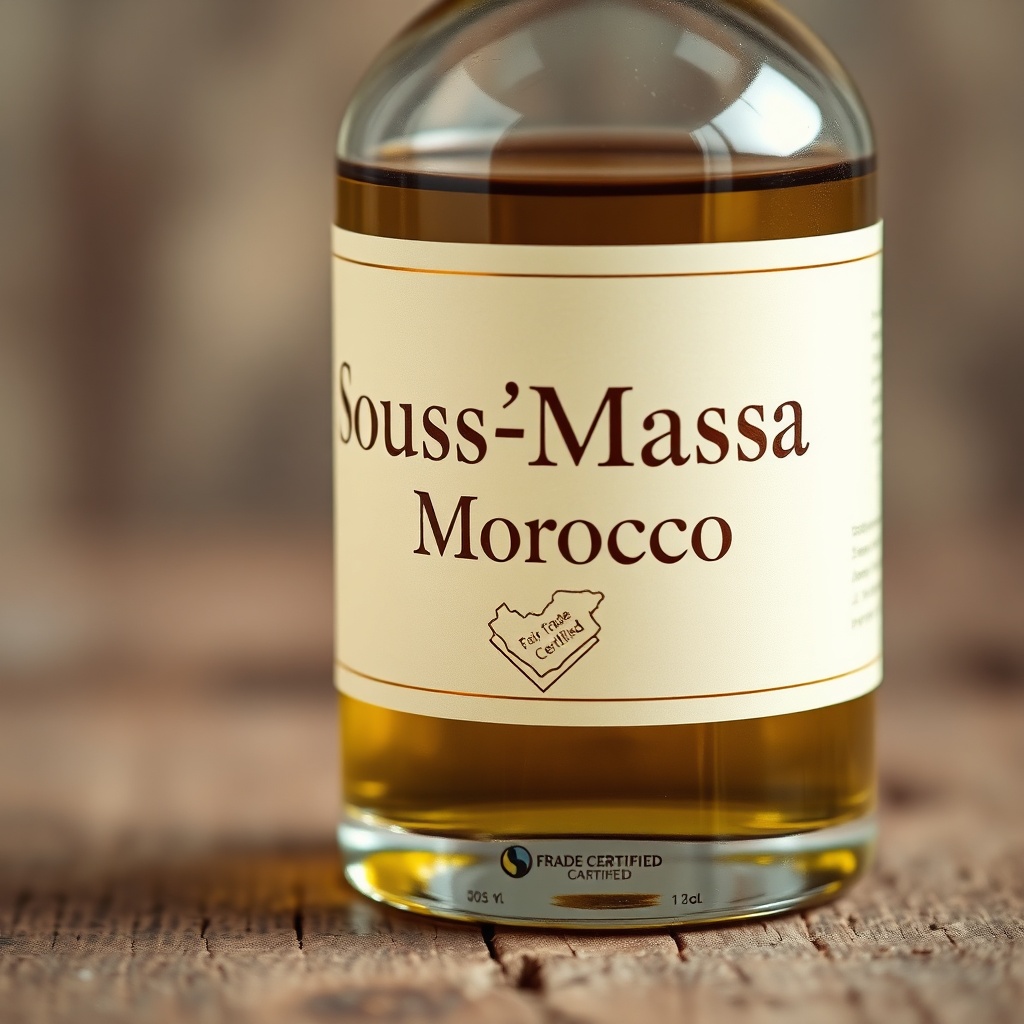
*High‑resolution image of an argan oil bottle featuring origin and certification details, illustrating the importance of clear labeling for sustainable sourcing.*
1.3. Trace the Logistics (Direct Trade, Third‑Party Distributors)
A clear “farm‑to‑factory” narrative helps you calculate carbon emissions tied to transport. Direct‑trade models usually ship bulk containers from the cooperative to a nearby Moroccan bottling facility, cutting air‑freight miles by up to 45 %. To audit a product’s journey, follow this quick checklist:
1. Confirm the cooperative’s name on the website. 2. Verify the bottling location (preferably within Morocco). 3. Check for a traceability code that links the batch to a specific harvest season.
Brands that provide a QR code linking to a blockchain ledger often meet all three criteria.
2. Decode the Certification Landscape: What Labels Really Mean ### 2.1. Organic Certification (USDA‑Organic, EU‑Organic)
USDA‑Organic requires that no synthetic pesticides be applied for at least three years, while EU‑Organic adds a prohibition on genetically modified organisms. Both standards mandate soil‑health monitoring, but only USDA‑Organic demands a minimum of 20 % organic content for blended products. If a label only says “natural,” it may not meet either benchmark.
2.2. Fair‑Trade & Community‑Based Certifications (Fairtrade International, UTZ)
Fairtrade International audits wages, working hours, and community development contributions. A certified cooperative must allocate at least 10 % of net revenues to social projects such as school construction or healthcare clinics. UTZ focuses on sustainable land use, requiring a 30 % increase in native argan tree density over five years. Brands displaying either logo have undergone third‑party verification of harvest‑level practices.
2.3. Emerging Eco‑Labels (Carbon‑Neutral, B‑Corp, COSMOS‑Organic)
Carbon‑Neutral certification measures lifecycle emissions from seed to shelf and mandates offset purchases equal to the calculated total. B‑Corp evaluates overall corporate responsibility, including environmental impact, employee benefits, and governance. COSMOS‑Organic blends organic standards with specific limits on processing aids. A comparative table of these labels shows that carbon‑neutral programs typically charge a 12 % audit fee, B‑Corp requires an annual impact report, and COSMOS‑Organic audits occur every two years.
3. Extraction Technique Deep‑Dive: Cold‑Press vs. Solvent‑Free vs. CO₂ ### 3.1. Cold‑Press Mechanics & Nutrient Retention
Cold‑press machines crush argan kernels at temperatures below 45 °C, preserving vitamin E, linoleic acid, and polyphenols. Studies from the Moroccan Institute of Agricultural Research indicate that a press operating at 42 °C retains 92 % of the oil’s antioxidant capacity, whereas temperatures above 55 °C cause a 15 % loss. Look for a label that specifies “cold‑pressed at <45 °C” to guarantee maximal skin‑benefiting compounds. Using a high-quality Arganit Moroccan Black Soap with Argan Oil can be beneficial for skin care.
3.2. Solvent‑Free Mechanical Pressing (Hydraulic vs. Screw Press)
Hydraulic presses apply uniform pressure through a piston, yielding an extraction rate of 35 % from raw kernels. Screw presses, by contrast, generate continuous flow but can produce up to 45 % yield, albeit with higher mechanical stress that may fracture delicate fatty acids. Brands that disclose “hydraulic cold‑press” typically prioritize quality over volume, while “screw‑press” often signals a cost‑effective, higher‑output operation.
3.3. Supercritical CO₂ Extraction – The Premium Option?
Supercritical CO₂ extraction uses carbon dioxide at 31 °C and 74 bar to dissolve oil molecules without heat. The process achieves a purity level of 99.8 % and boosts antioxidant activity by roughly 18 % compared with traditional cold‑press methods. However, the energy demand reaches 2.4 kWh per liter of oil, making scalability a challenge. If a brand advertises “CO₂‑extracted argan oil,” verify that the facility reports its energy source; renewable electricity reduces the overall carbon footprint dramatically.
4. Purity & Additive Audit: Spotting Hidden Fillers & Synthetic Enhancers ### 4.1. Reading the Ingredient List – “100 % Pure” vs. “Blend” Claims
A product that lists only “Argan Oil (100 %)” passes the simplest purity test. When the label reads “Argan Oil Blend” or “Argan Oil with Vitamin E,” the manufacturer may have diluted the base oil with cheaper carrier oils such as sunflower or grapeseed. Cross‑reference the INCI name “Argania Spinosa Kernel Oil” with the percentage disclosed on the back; any value below 95 % should raise suspicion.
4.2. Lab Test Indicators (Acidity, Peroxide Value, GC‑MS Profile)
Free fatty acid (FFA) content below 0.8 % indicates minimal oxidation and high freshness. Peroxide values under 10 meq O₂/kg confirm that the oil has not undergone rancidification during storage. Gas chromatography‑mass spectrometry (GC‑MS) can detect adulteration by revealing unexpected peaks of oleic or linoleic acids typical of other seed oils. Brands that publish a PDF of these metrics demonstrate confidence in their product’s integrity.
4.3. Red Flags: Synthetic Fragrances, Stabilizers, and Colorants
Common additives include phenoxyethanol (preservative), BHT (antioxidant), and synthetic fragrance blends labeled as “parfum.” These chemicals not only compromise the oil’s natural appeal but also add to its environmental burden during manufacturing. If a bottle lists any of these ingredients, consider an alternative that relies on natural antioxidants like rosemary extract. For beard care, consider using Cedarwood & Nutmeg Beard Oil or Vanilla & Tobacco Beard Oil for a more natural approach.
5. Quantifying Environmental Impact: Carbon Footprint, Biodiversity & Social ROI ### 5.1. Calculating Carbon Emissions per Milliliter
A simple formula estimates emissions:
**Emission = (Production kWh × 0.0005) + (Transport km × 0.00012) + (Packaging kg × 0.003)**
For a 30 ml bottle produced in a Moroccan cooperative (0.6 kWh), shipped 2,200 km by sea (0 km air), and packaged in a 20 g glass jar, the total equals 0.38 kg CO₂e per bottle. Brands that publish this calculation demonstrate a commitment to measurable sustainability.
5.2. Biodiversity Benefits of Argan Forest Conservation
Argan forests host over 300 bird species and serve as a natural barrier against desertification. A case study from the Association of Women’s Cooperatives in Essaouira shows that revenue from a single 5‑liter batch funded the planting of 250 saplings, increasing canopy cover by 12 % within three years. When a label mentions “forest‑restoration partnership,” request the specific project name to verify impact.
5.3. Social Return on Investment (SROI) – Community Development Scores
SROI translates financial inputs into social outcomes. A cooperative that earns $150,000 annually from oil sales may allocate $15,000 to a scholarship fund, raising secondary school enrollment from 68 % to 84 % in the surrounding villages. To confirm these figures, navigate to the brand’s “Impact” page and locate the SROI dashboard; many companies embed interactive charts that update quarterly.
Conclusion
The five‑step framework—traceability, certifications, extraction method, purity audit, and impact quantification—offers a practical roadmap for anyone learning how to Choose Sustainable Argan Oil: Tips & Certifications. By demanding transparent origin data, verified eco‑labels, cold‑press or CO₂ extraction details, lab‑tested purity metrics, and concrete carbon or social impact numbers, you turn a simple purchase into a vote for ethical beauty. Download the free Sustainable Argan Oil Buying Guide now and start applying this checklist the next time you shop online or browse a boutique shelf.
FAQ
**What certification guarantees that argan oil is truly organic?** USDA‑Organic and EU‑Organic both require pesticide‑free cultivation for multiple seasons, third‑party audits, and strict residue limits, making them the most reliable guarantees of genuine organic status when learning how to choose sustainable argan oil.
**How can I tell if an argan oil is cold‑pressed without lab equipment?** Check the label for a temperature claim under 45 °C, look for “hydraulic cold‑press” wording, and verify that the oil remains amber with a faint nutty scent—these visual and textual cues indicate a true cold‑pressed process.
**Does a lower price always mean a less sustainable argan oil?** Not necessarily; some cooperatives achieve economies of scale that keep costs down while maintaining fair‑trade wages and carbon‑neutral logistics. Compare the price against the presence of certifications and traceability information to assess true sustainability.
**What is the average carbon footprint of a 30 ml bottle of argan oil?** Using the standard emission formula, a 30 ml glass bottle produced in Morocco and shipped by sea generates roughly 0.38 kg CO₂e, which equates to about 12 g CO₂ per milliliter.
**Are there any reliable third‑party labs that test argan oil purity for consumers?** Independent labs such as Eurofins Scientific and SGS offer consumer‑focused testing packages that measure free fatty acid levels, peroxide values, and GC‑MS profiles, providing credible data for those seeking how to choose sustainable argan oil.
**Meta Description:** Learn how to choose sustainable argan oil with a step‑by‑step guide covering supply chain, certifications, extraction, purity, and environmental impact.