
Couscous For A Crowd: How Much Do You Need?
Feeding a dozen or more hungry guests can feel like a high-stakes math problem, but couscous for a crowd turns that challenge into a nearly effortless win. This tiny pasta is one of the fastest-cooking grains in the world, it scales up beautifully, and it serves as a blank canvas for nearly any flavor profile. This guide covers the definitive method for cooking it in large batches, scaling strategies, flavor variations, logistics, and troubleshooting.
Key Takeaways
- Couscous is one of the fastest grains to cook, making it perfect for last-minute crowd meals. - The key to great couscous for a crowd is mastering the liquid-to-grain ratio and using a large, wide vessel for even steaming. - You can prepare couscous up to 24 hours in advance and reheat it successfully with moisture. - Flavor comes from the broth, aromatics, and mix-ins—not just the grain itself. - A buffet-style setup with multiple topping options lets guests customize their bowls, reducing your stress.
The Complete Answer: How to Make Couscous for a Crowd
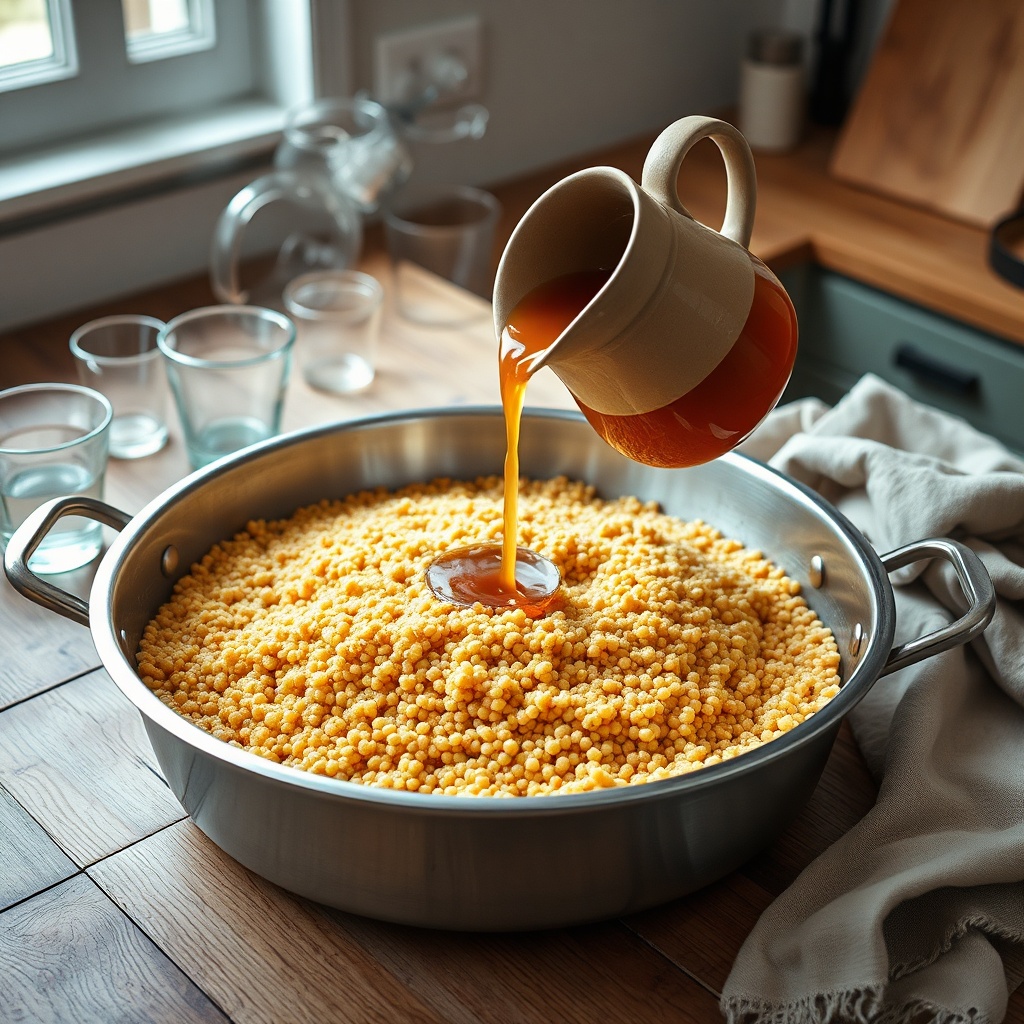
*Illustrates the core cooking method and large-vessel technique highlighted in the article for stress-free batch preparation.*
What Defines "Couscous for a Crowd"?
Couscous for a crowd means serving 12 or more people a fluffy, flavorful, and cohesive dish that anchors the meal without demanding hours of last-minute attention. The core principle is a 1:1.5 ratio of couscous to liquid by volume. This ensures the grains absorb just enough moisture to steam into light, separate pearls rather than clumping into a dense paste.
The biggest mistake people make is cooking couscous like rice—by boiling it in a lot of water and then draining it. Couscous is a pasta, but it is meant to be steamed, not boiled. Boiling leads to a mushy, sticky result that no amount of fluffing can fix. For large batches, you must treat it with a gentler hand: hot liquid, a covered vessel, and time.
**Quick Answer:** The best way to make couscous for a crowd is to use a 1:1.5 ratio of couscous to boiling liquid, pour the liquid over the toasted grains, cover tightly, and let it steam off the heat for about 5 minutes before fluffing with a fork.
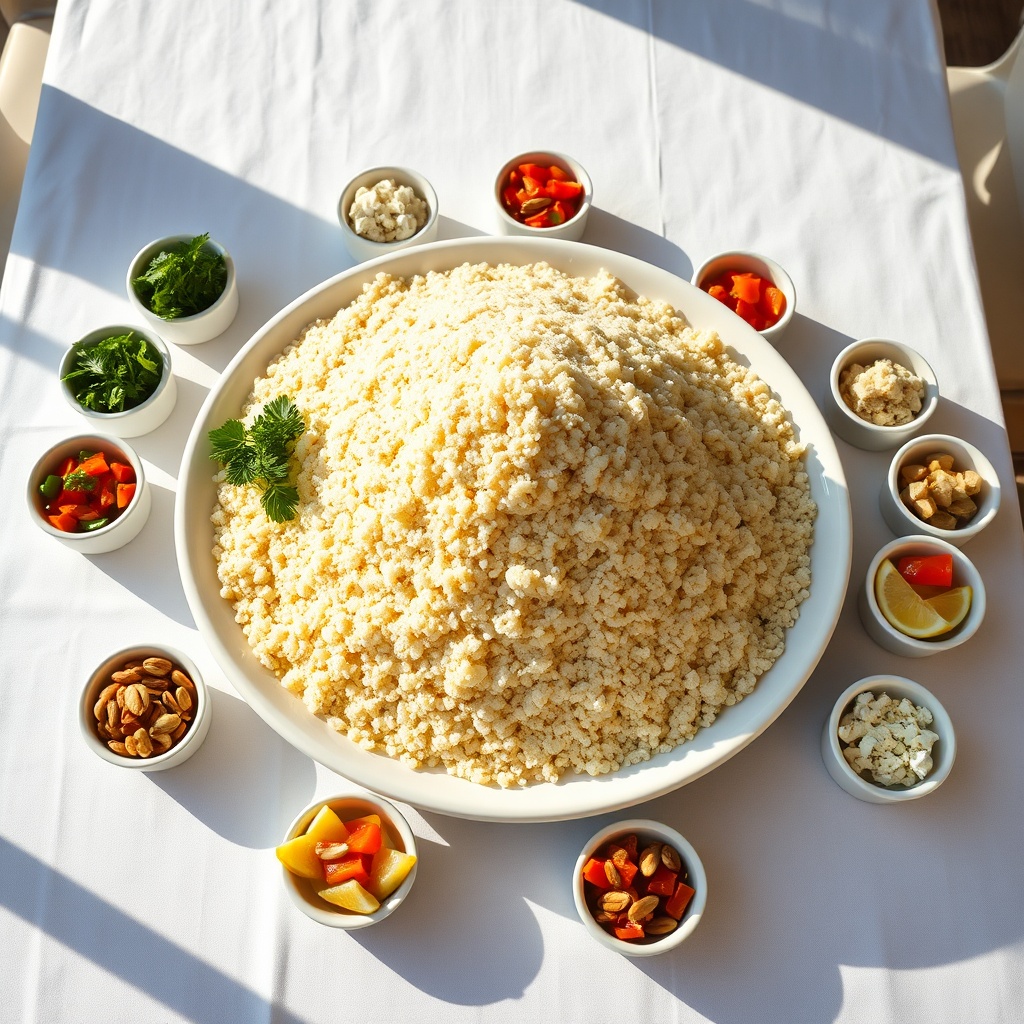
*Visualizes the article’s recommendation for a stress-free, guest-customized serving style that keeps hosts engaged rather than stuck in the kitchen.*
The Scalability Formula
To feed 20 people, you will need approximately 4 to 5 cups of dry couscous. This estimate is based on a standard serving size of 1/4 to 1/3 cup of dry couscous per person. The vessel matters as much as the math. A large roasting pan or a wide, shallow pot is far superior to a deep stockpot because it allows the steam to reach all the grains evenly. In a deep pot, the bottom layer can become soggy while the top remains dry.
Follow this 5-step process for a perfect large batch:
1. **Toast the couscous.** Heat a generous splash of olive oil in your large pan over medium heat. Add finely diced onion and garlic, and sauté until soft. Add the dry couscous and stir constantly for 2-3 minutes until the grains are lightly golden and smell nutty. 2. **Add boiling liquid.** Bring your broth or water to a rapid boil separately. Pour the boiling liquid over the toasted couscous at a 1:1.5 ratio. Stir once to combine. 3. **Steam.** Immediately cover the pan with a tight-fitting lid and remove it from the heat. Let it steam undisturbed for 5 minutes. 4. **Fluff.** Remove the lid and use a fork to gently rake through the couscous, breaking up any clumps. Do not use a spoon, as it will crush the grains. 5. **Cool and serve.** For a large batch, spread the fluffed couscous on a baking sheet to cool quickly and prevent it from steaming itself into a soggy mass. Transfer to a serving dish when ready.
The Golden Ratio and Timing
The 1:1.5 ratio is by volume, not weight. This is a crucial distinction. If you use a kitchen scale, the ratio will be different because couscous is less dense than water. Always use the same measuring cup for both the dry couscous and the liquid.
| Dry Couscous | Approximate Servings (Side) | Liquid Needed | | :--- | :--- | :--- | | 2 cups | 6-8 | 3 cups | | 4 cups | 12-16 | 6 cups | | 6 cups | 18-24 | 9 cups |
**Definition:** The couscous ratio is the proportion of dry couscous to liquid. The standard ratio is 1 part couscous to 1.5 parts liquid by volume, which allows the grains to steam properly rather than boil.
Time management is where couscous truly shines. Total active prep time for a batch serving 20-30 people is under 20 minutes. The 5-minute steaming period is entirely hands-off, allowing you to focus on other dishes or greet your guests.
Scaling and Equipment Strategies for Large Batches
Choosing the Right Cookware
A large sauté pan with a wide surface area or a 12-quart stockpot is your best friend for this task. Small saucepans will force you to cook in multiple batches, which is time-consuming and inconsistent. A wide, shallow vessel ensures that the couscous cooks evenly and that the steam reaches every grain. The lid is critical; it must fit tightly to trap the steam and create the perfect cooking environment.
If you prefer a hands-off approach, a slow cooker or an Instant Pot can work well. For a slow cooker, use a slightly reduced liquid ratio (1:1.25) since the cooker traps more moisture. For an Instant Pot, you can use the same 1:1.5 ratio and cook on high pressure for just 1 minute, followed by a quick release.
Batch Cooking and Reheating
You can absolutely double or triple the recipe, but you must use multiple pans or cook in shifts. Overloading a single pan will result in uneven cooking and a mushy bottom layer. The best make-ahead strategy is to cook the couscous, cool it completely, and store it in airtight containers in the refrigerator for up to 3 days.
To reheat, sprinkle the couscous with a little water or broth, cover it, and warm it in a 350°F oven for 10-15 minutes. The added moisture will steam the grains back to fluffiness. You can also reheat in the microwave with a damp paper towel over the bowl.
Serving Vessel and Buffet Setup
Use a large, shallow serving platter to prevent clumping. A deep bowl will trap heat and moisture, causing the grains at the bottom to become soggy. For a party, set up a "couscous bar" with separate bowls for mix-ins. Keep the couscous warm using a chafing dish or a slow cooker set to low.
**Quick Answer:** To keep couscous moist for a buffet, place it in a covered chafing dish or a slow cooker set to "low." You can also drape a clean kitchen towel over a covered serving bowl to trap steam and heat.
Flavor Foundations: Building a Base That Scales
The Liquid Is the Flavor
The single biggest upgrade you can make is using broth instead of water. Chicken, vegetable, or beef broth adds an instant depth of flavor that water simply cannot. To go further, infuse the broth with whole spices. Add a cinnamon stick, a few cumin seeds, and some coriander seeds to the liquid as it heats, then strain them out before pouring it over the couscous. A splash of olive oil or a knob of butter added to the liquid enriches the final dish and helps prevent the grains from sticking together.
Aromatics and Toasting
Sautéing finely diced onions, garlic, and ginger in olive oil before adding the couscous builds a savory base. Toasting the couscous itself for 2-3 minutes enhances its naturally nutty flavor. For a Moroccan twist, add a spoonful of ras el hanout or harissa paste to the oil, stirring until fragrant before adding the grains.
The Mix-In Strategy
The mix-ins are where you can truly make the dish your own. Categorize them into three groups: vegetables, proteins, and fresh elements.
- **Vegetables:** Roasted carrots, zucchini, bell peppers, or eggplant; grilled asparagus; or raw cucumbers and tomatoes. - **Proteins:** Chickpeas, grilled chicken, lamb, or flaked fish. - **Fresh elements:** Chopped herbs like parsley, mint, or cilantro; lemon zest; pomegranate seeds; or toasted nuts.
A simple rule for a balanced bowl is 1 part protein, 1 part vegetables, and 2 parts couscous by volume.
| Flavor Profile | Suggested Mix-Ins | | :--- | :--- | | Mediterranean | Roasted red peppers, feta, kalamata olives, cherry tomatoes, oregano | | Moroccan | Chickpeas, raisins, toasted almonds, preserved lemon, harissa, cilantro | | Middle Eastern | Grilled chicken, cucumber, tomato, mint, lemon-tahini dressing | | Italian | Roasted cherry tomatoes, parmesan, basil, balsamic glaze, pine nuts |
Customization and Dietary Accommodations for a Crowd
Making It Vegetarian or Vegan
Swapping chicken broth for vegetable broth instantly makes the base vegetarian. To make the dish heartier, add roasted eggplant, zucchini, and bell peppers. Chickpeas or lentils are excellent protein additions that make the dish satisfying for vegan guests.
Gluten-Free and Allergen Considerations
Traditional couscous is made from wheat and is not gluten-free. If you have guests with celiac disease or a gluten sensitivity, you must offer an alternative. Quinoa is a fantastic substitute that has a similar fluffy texture and cooks in about the same time. You can also look for rice-based couscous in specialty stores.
When serving a crowd, clearly label dishes with common allergens like nuts, dairy, and gluten. The best approach is to offer separate bowls for all toppings so guests can build their own bowls and avoid anything they are sensitive to.
Spice Level and Kid-Friendly Options
Keep the base couscous mild and offer heat on the side. Harissa, hot sauce, or chili flakes in small bowls let adventurous guests add spice without ruining the dish for others. For kids, prepare a simple butter and herb version with no strong spices. The "build your own" option naturally accommodates all preferences.
Step-by-Step Serving and Presentation Guide
The 10-Minute Assembly Plan
1. Reheat the couscous (if made ahead) or cook it fresh. 2. Fluff with a fork and transfer to a large serving dish. 3. Arrange mix-ins in separate bowls around the couscous. 4. Prepare sauces and dressings in small pitchers. 5. Set up a serving station with plates, bowls, and utensils. 6. Garnish the couscous with fresh herbs just before guests arrive.
Visual Presentation Tips
A large, colorful platter makes the dish look abundant and inviting. Layer the couscous with roasted vegetables on top for a "rainbow" effect. A final drizzle of olive oil and a sprinkle of lemon zest adds a fresh, vibrant finish that signals quality to your guests.
Portion Control and Refills
Estimate 1/3 cup of dry couscous per person for a main dish and 1/4 cup for a side dish. Keep a small amount of extra couscous in the kitchen to replenish the platter as guests serve themselves. Couscous is an excellent "filler" that pairs well with saucy dishes, so it will stretch your main proteins further.
Troubleshooting Common Crowd-Size Problems
The Couscous Is Mushy or Clumpy
This is usually caused by too much liquid, over-stirring, or letting it sit too long before fluffing. To fix it, spread the couscous out on a baking sheet in a thin layer and let it dry slightly. Then, re-fluff it with a fork to break up the clumps.
The Couscous Is Dry and Crumbly
This happens when there is not enough liquid or when the couscous is left uncovered too long. To fix it, sprinkle the couscous with hot broth or water, cover it, and let it steam for a few minutes. The added moisture will be absorbed, softening the grains.
Not Enough Couscous for the Crowd
If you run short, cook an extra batch in a separate pan. You can also stretch the dish by adding more mix-ins, like extra vegetables or beans. The best prevention is to always cook 10-15% more couscous than you think you need. It reheats perfectly, so leftovers are never a problem.
Frequently Asked Questions (FAQ)
Can I make couscous for a crowd a day ahead?
Yes, you can cook it, cool it, and refrigerate it. Reheat it with a splash of water in the oven or microwave to restore its fluffy texture.
How much couscous do I need per person?
As a side dish, plan on 1/4 cup of dry couscous per person. As a main dish, plan on 1/3 cup. Always round up for large groups to ensure you have enough.
What's the best way to keep couscous warm for a party?
Use a slow cooker on low, a chafing dish, or a covered serving bowl wrapped in a towel to trap the heat and moisture.
Can I use instant couscous for a large crowd?
Yes, instant couscous works well and cooks even faster, but you must follow the package's liquid ratio, which is often 1:1.
How do I prevent couscous from sticking together?
Use a fork to fluff, not a spoon, and add a little olive oil or butter after cooking to coat the grains and prevent clumping.
Conclusion
Couscous for a crowd is a forgiving, scalable, and crowd-pleasing dish that reduces host stress. By mastering the 1:1.5 ratio, using a wide vessel, and building flavor into the liquid and aromatics, you can serve a spectacular meal to dozens of people in under 20 minutes of active work. The customization options are endless, making it a perfect choice for guests with varied dietary needs. Try this method at your next gathering and enjoy the compliments.