
How To Cook Couscous Perfectly Every Time
Couscous: The Complete Guide to History, Types, Cooking Methods, and Nutrition
Couscous has quietly conquered the world's dinner tables, moving from a North African staple to a global pantry essential in just a few decades. This complete couscous guide covers everything you need to know — from the microscopic differences between grain sizes to the exact water ratios that guarantee fluffy results, backed by nutritional data and centuries of cultural context. In December 2020, UNESCO inscribed couscous on its Intangible Cultural Heritage list, recognizing a tradition shared by Algeria, Morocco, Mauritania, and Tunisia. By the end of this guide, you'll know exactly which variety to buy, how to cook it perfectly, and why this semolina-based food deserves a permanent spot in your kitchen.
Key Takeaways
- Couscous is a North African staple made from crushed durum wheat semolina, traditionally hand-rolled and steamed — not a grain itself but a pasta-like product. - Four main types exist (Moroccan, Israeli/Pearl, Lebanese/Moghrabieh, and whole-wheat), each requiring different cooking times and liquid ratios. - The perfect couscous-to-water ratio is 1:1.5 (by volume) for fluffiness, with a 5-minute steam-and-fluff technique for restaurant-quality results. - A 100g cooked serving contains approximately 112 calories, 23g carbohydrates, and 3.8g protein — making it a lighter alternative to rice and quinoa. - Couscous was inscribed on UNESCO's Intangible Cultural Heritage list in December 2020, recognizing its role across Algeria, Morocco, Mauritania, and Tunisia.
The Complete Answer: What Is Couscous?
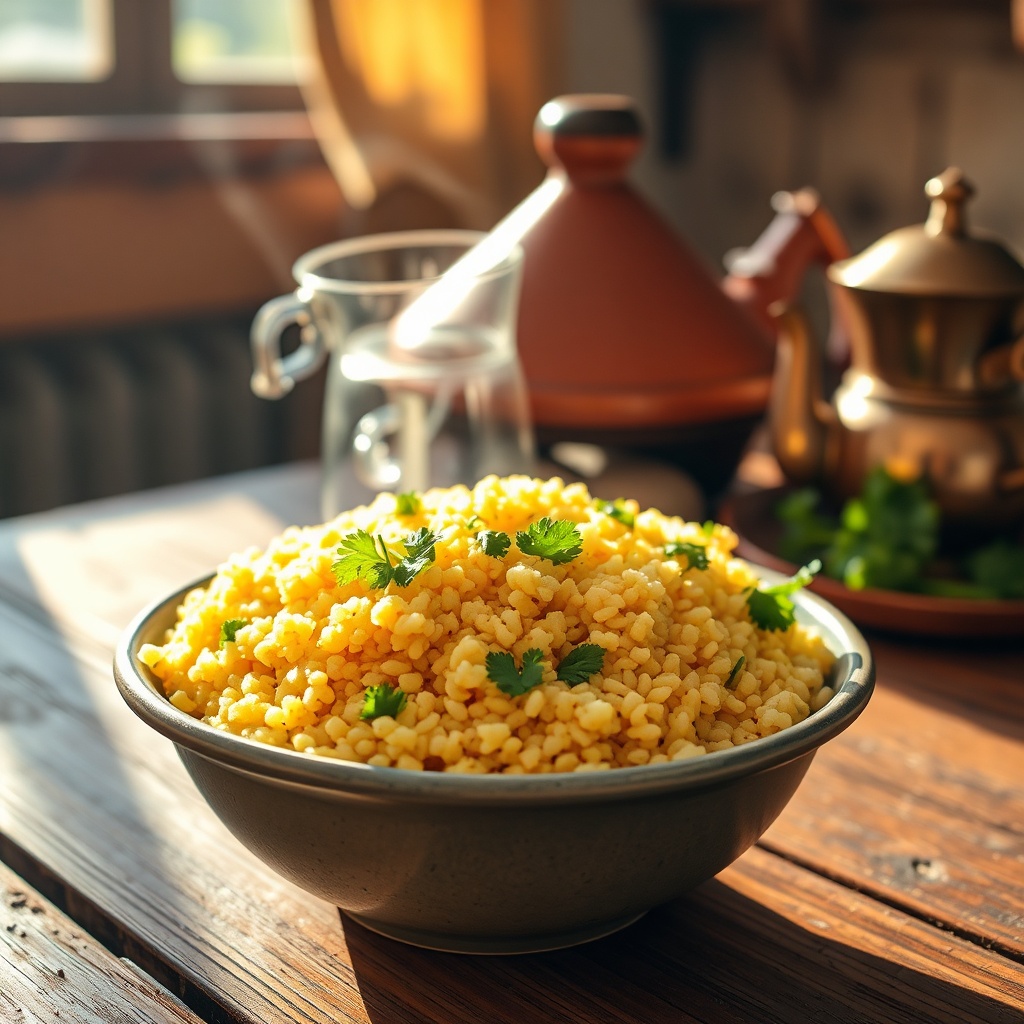
*A vibrant, close-up shot of a perfectly steamed couscous dish, emphasizing its light and airy texture, set in a culturally rich environment.*
Couscous is a traditional Maghrebi dish made from steamed granules of rolled durum wheat semolina — not a whole grain, but a form of pasta.
**Definition:** Couscous — a North African dish of steamed, small granules of rolled durum wheat semolina. The semolina is moistened with salted water, hand-rolled into tiny spheres, and steamed rather than boiled, giving it a pasta-like identity despite its grain-like appearance.
The most common misconception is that couscous is a whole grain. It isn't. It's made from durum wheat semolina — the same coarse flour used for high-quality pasta — which is sprinkled with salted water, rolled into granules, and dried. Traditionally, cooks steam these granules in a *couscoussier*, a two-tiered pot where the bottom simmers a stew and the top basket holds the couscous, absorbing the aromatic steam.
**Definition:** A *couscoussier* is a specialized two-tiered cooking pot used across North Africa. The lower pot holds the stew or broth; the perforated upper tier steams the couscous over it, infusing the grains with flavor.
Historical and Cultural Roots
Couscous originated with the Berber people of North Africa, with consumption dating back to the 9th century and the first written reference appearing in a 13th-century Andalusian cookbook. From North Africa, it spread to Sicily, Spain, and France through trade and colonization. It was traditionally served on Fridays, at communal gatherings, and during religious festivals like Eid.
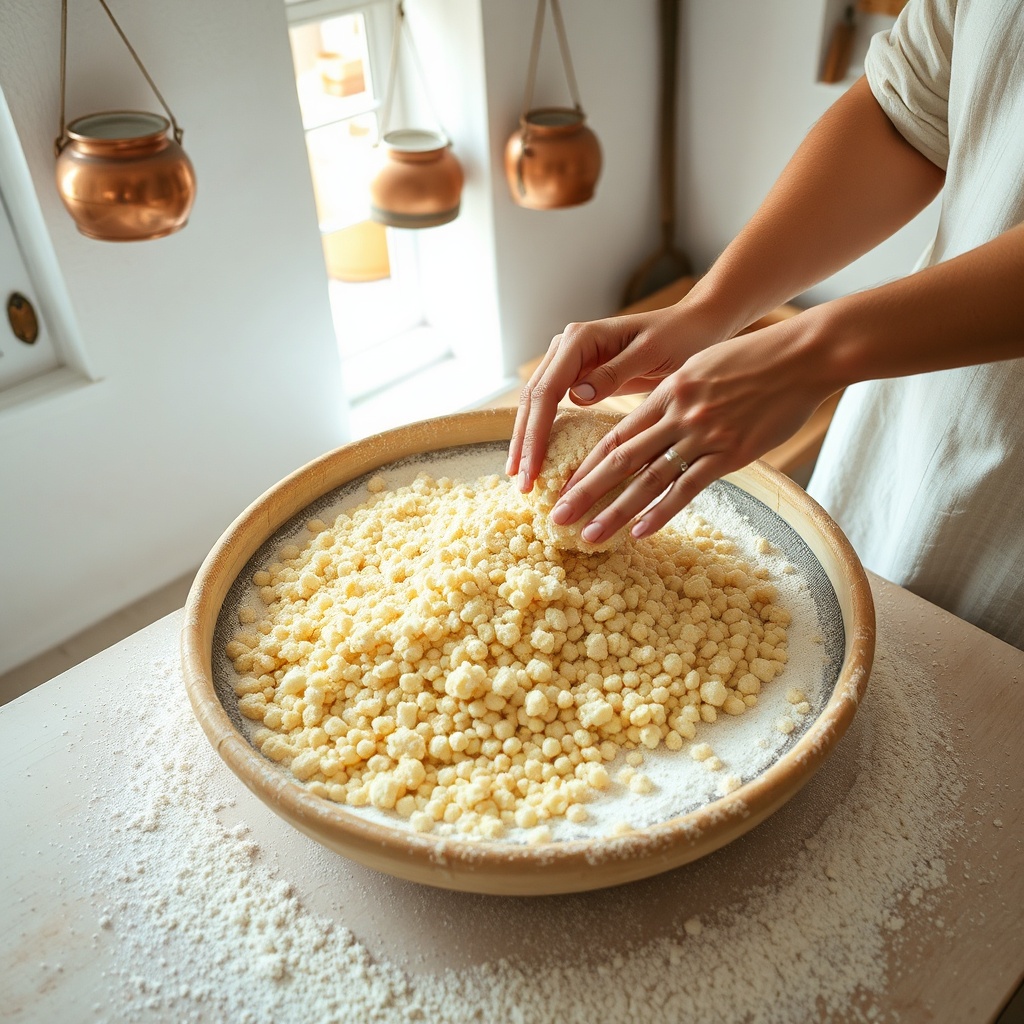
*An authentic depiction of the artisanal process of creating couscous, highlighting the skill and cultural significance behind this staple food.*
Why It Matters Today
The UNESCO 2020 listing, shared by Algeria, Morocco, Mauritania, and Tunisia, cemented its cultural significance. Economically, the worldwide couscous market was valued at approximately $1.48 billion in 2023 and is projected to reach $2.1 billion by 2030, growing at a CAGR of 5.2%. In Western kitchens, it has risen as a quick, versatile carbohydrate that cooks in minutes.
**Quick Answer:** Couscous is a pasta-like product made from steamed granules of durum wheat semolina, originating with the Berber people of North Africa. It is not a whole grain. UNESCO added couscous to its Intangible Cultural Heritage list in December 2020, recognizing its shared heritage across Algeria, Morocco, Mauritania, and Tunisia.
The Four Main Types of Couscous and How to Choose
Four distinct varieties of couscous exist, and each demands a different cooking method and liquid ratio.
Moroccan Couscous (Fine/Instant)
The smallest variety at 0.5–1mm granules. Pre-steamed and dried, it cooks in just 5 minutes with boiling water. This is what most grocery stores sell as "instant couscous." Best for salads, light vegetable dishes, and quick weeknight meals.
Israeli Couscous (Pearl/Ptitim)
**Definition:** Ptitim — the Hebrew name for Israeli couscous, a toasted, ball-shaped pasta invented in Israel in the 1950s as a rice substitute during a national rice shortage.
This larger, toasted variety (1.5–2.5mm) requires 8–10 minutes of simmering, similar to small pasta. Its nutty, toasted flavor and chewy texture make it ideal for hearty salads, roasted vegetable bowls, and risotto-style preparations.
Lebanese Couscous (Moghrabieh)
The largest variety (3–5mm pearls), also known as *moghrabieh*, with a Sardinian cousin called fregola. It takes 15–20 minutes to cook and has a dense, satisfying bite. Traditionally served with slow-cooked lamb or chicken stews in Lebanese cuisine.
Whole-Wheat and Gluten-Free Alternatives
Whole-wheat couscous offers higher fiber at roughly 7g per 100g dry. Traditional couscous contains gluten; for gluten-free needs, corn-based couscous or quinoa are alternatives, though neither is authentic couscous.
**Quick Answer:** Choose Moroccan fine couscous (0.5–1mm) for 5-minute meals and salads, Israeli pearl couscous (1.5–2.5mm) for hearty bowls with a nutty chew, and Lebanese moghrabieh (3–5mm) for slow-cooked stews. Whole-wheat versions double the fiber; gluten-free options exist but aren't authentic.
How to Cook Couscous Perfectly Every Time
Perfect couscous comes down to one ratio: 1 part couscous to 1.5 parts boiling liquid.
The Golden Ratio and Timing
Use 1 part couscous to 1.5 parts boiling liquid (water or broth) for fine couscous; 1:1.25 for pearl varieties. Add ½ teaspoon salt per cup of dry couscous and 1 tablespoon olive oil or butter to prevent sticking.
Step-by-Step: The Fluff-and-Steam Method
1. **Measure** 1 cup of dry couscous into a heatproof bowl and add ½ teaspoon salt. 2. **Boil** 1.5 cups of water or broth in a saucepan with 1 tablespoon olive oil or butter. 3. **Pour** the boiling liquid over the couscous, stir once, and cover tightly with foil or a lid. 4. **Rest** for 5 minutes without lifting the cover — the steam absorbs evenly. 5. **Fluff** with a fork, working gently to separate the granules, then season and serve.
Common Mistakes and Fixes
Waterlogged, mushy couscous comes from too much liquid or over-stirring — use the exact ratio and stir only once. Dry, hard granules result from insufficient liquid or resting time — never lift the lid early. Bland flavor happens when using water instead of broth — always cook in stock or season the liquid generously.
**Quick Answer:** Use a 1:1.5 ratio of couscous to boiling liquid for fine varieties, with ½ teaspoon salt and 1 tablespoon oil per cup. Pour the boiling liquid over the dry couscous, cover, rest for exactly 5 minutes, then fluff with a fork. Never stir more than once, or the granules will clump into a mushy paste.
Couscous Nutrition: Health Benefits and Data
A 100g serving of cooked couscous provides 112 calories, making it the lightest of the common staple grains.
Caloric and Macronutrient Profile
Per 100g cooked couscous: 112 calories, 23.2g carbohydrates, 3.8g protein, 0.2g fat, and 1.4g fiber. Compare that to cooked white rice (130 calories, 28g carbs) and quinoa (120 calories, 21g carbs). Couscous is naturally low in sodium and cholesterol-free.
Micronutrient Highlights
Selenium provides about 50% of the daily value per 100g dry, supporting thyroid function and antioxidant defense. B vitamins (thiamin, niacin, folate) support energy metabolism, plus trace amounts of magnesium, iron, and zinc. Whole-wheat couscous doubles the fiber content to 2.8g versus 1.4g per 100g cooked.
Glycemic Index and Weight Management
Couscous scores approximately 65 on the glycemic index (moderate), lower than white rice (73) but higher than quinoa (53). For weight management, 100g cooked couscous provides satiety at roughly 112 calories, a useful volume-for-calorie swap. Pair it with protein and vegetables to improve glycemic response — portion control still matters.
**Quick Answer:** Cooked couscous delivers 112 calories, 23.2g carbs, and 3.8g protein per 100g — fewer calories than white rice (130) and quinoa (120). Its glycemic index of 65 sits below white rice's 73, and whole-wheat versions double the fiber. Selenium and B vitamins round out a nutrient profile that supports thyroid and energy metabolism.
Couscous vs. Quinoa vs. Rice: Which Grain Wins?
Couscous wins on speed and price, quinoa wins on protein, and rice wins on gluten-free versatility.
Side-by-Side Comparison Table
| Grain | Calories (100g cooked) | Protein (g) | Fiber (g) | GI Score | Cooking Time | Gluten Content | |---|---|---|---|---|---|---| | Couscous | 112 | 3.8 | 1.4 | 65 | 5 min | Contains gluten | | Quinoa | 120 | 4.4 | 2.8 | 53 | 15 min | Gluten-free | | White Rice | 130 | 2.7 | 0.4 | 73 | 18 min | Gluten-free | | Brown Rice | 123 | 2.7 | 1.8 | 68 | 45 min | Gluten-free |
When to Choose Each Grain
Choose couscous for speed and versatility in salads and side dishes. Choose quinoa for higher protein and a complete amino acid profile, especially for plant-based diets. Choose rice for sticky-texture dishes like risotto and sushi, and for gluten-free needs.
Cost and Availability Considerations
Average retail prices run $2.50–$4.00 per pound for couscous, $5.00–$8.00 for quinoa, and $1.50–$3.00 for rice. Couscous has the longest shelf life (up to 2 years when stored properly) and the fastest preparation time, making it the most economical and convenient option for busy households. For a deeper look at similar staples, check our [Mediterranean grains guide](/#) covering bulgur, freekeh, and farro.
**Quick Answer:** Couscous beats white rice on calories (112 vs 130) and glycemic index (65 vs 73), but loses to quinoa on protein (3.8g vs 4.4g) and fiber (1.4g vs 2.8g). It cooks in 5 minutes versus 15 for quinoa and 18 for white rice, and costs less than quinoa. Choose based on your priority: speed, protein, or gluten-free.
Regional Couscous Traditions and Signature Recipes
Every North African country prepares couscous differently, and the variations reveal the dish's remarkable range.
Moroccan Seven-Vegetable Couscous
The classic Friday dish features couscous steamed over a rich tomato-based stew with seven vegetables — carrots, zucchini, turnips, pumpkin, chickpeas, cabbage, and onions — seasoned with *ras el hanout*, saffron, and preserved lemon. It's served as a mound of couscous with the stew ladled over the center.
Tunisian and Algerian Variations
Tunisian couscous is spicier, featuring *harissa* paste, fish or lamb, and a distinctively red broth. Algerian couscous often includes sweeter elements like raisins and caramelized onions, plus *mesfouf* — a sweet couscous with dates and nuts served across the region.
Modern Adaptations and Fusion Dishes
Contemporary chefs have pushed couscous into couscous salads with roasted vegetables and feta, Israeli couscous bowls with tahini dressing, couscous-stuffed peppers, and even breakfast porridges. Google Trends data shows a 320% increase in "couscous salad recipe" searches in the US between 2020 and 2025, driven by meal-prep culture.
**Quick Answer:** Morocco's signature Friday dish steams couscous over a seven-vegetable tomato stew seasoned with ras el hanout and saffron. Tunisia adds harissa for heat; Algeria favors sweeter notes with raisins and onions. Modern fusion has expanded into salads, stuffed peppers, and breakfast porridges, with US "couscous salad recipe" searches up 320% since 2020.
FAQ
**Is couscous gluten-free?**
No. Traditional couscous is made from durum wheat semolina and contains gluten. Gluten-free alternatives include corn-based couscous or quinoa, but these are not authentic couscous.
**How long does couscous take to cook?**
Fine Moroccan couscous takes 5 minutes of steep time after adding boiling liquid. Israeli/Pearl couscous takes 8–10 minutes of simmering, and Lebanese Moghrabieh takes 15–20 minutes.
**Can you eat couscous cold?**
Yes. Couscous is excellent cold in salads. After cooking and fluffing, toss with olive oil to prevent clumping, then chill. It keeps well in the refrigerator for up to 4 days.
**Is couscous healthier than rice?**
Couscous is lower in calories (112 vs 130 per 100g cooked) and has a lower glycemic index (65 vs 73) than white rice, making it a slightly better option for blood sugar management. However, brown rice offers more fiber and is gluten-free.
**What is the couscous-to-water ratio?**
Use 1 part couscous to 1.5 parts boiling liquid for fine couscous. For pearl varieties, use 1 part couscous to 1.25 parts liquid.
Conclusion
Couscous is far more than a quick side dish — it's a culturally significant food with four distinct varieties, each suited to different dishes and cooking styles. The 1:1.5 ratio and 5-minute steam-and-fluff method guarantee perfect results every time, while its nutritional profile (112 calories per 100g, GI of 65) makes it a smarter choice than white rice. From Morocco's seven-vegetable Friday stew to modern fusion salads, couscous's versatility is unmatched. Try a new variety this week — start with pearl couscous in a roasted vegetable bowl, or master the classic Moroccan method. Share your couscous creations in the comments below. As global demand grows toward $2.1 billion by 2030, this ancient semolina staple is proving it belongs in every modern, health-conscious kitchen.