
Chebakia Vs Briouats: Which Sweet Wins?
The confusion is understandable. Both Chebakia and Briouats are iconic Moroccan pastries, deeply tied to the country's culinary heritage, and both often make an appearance during Ramadan and festive celebrations. They share a love for honey, frying, and intricate preparation, yet they are fundamentally different creations. This guide clarifies the Chebakia vs Briouats distinction, defining each pastry and helping you understand when and how to serve them.
**Quick Answer:** The core difference is that Chebakia is a single, un-filled, flower-shaped cookie made from a spiced sesame dough, while Briouats are filled pastries wrapped in thin, crispy warqa sheets. Chebakia is always sweet, whereas Briouats can be either sweet or savory.
Key Takeaways
- **Chebakia and Briouats are fundamentally different:** Chebakia is a flower-shaped sesame cookie, while Briouats are triangular or cylindrical filled pastries. - **Ingredients define the base:** Chebakia relies on a dough of flour, sesame, anise, and orange blossom water; Briouats use thin pastry sheets (warqa) as a wrapper. - **Preparation methods diverge:** Chebakia involves intricate folding and frying, whereas Briouats focus on filling, folding, and frying or baking. - **Serving contexts differ:** Chebakia is a staple for Ramadan and tea time, while Briouats are often served as appetizers, desserts, or special-occasion treats. - **The flavor profile is distinct:** Chebakia is intensely sweet and nutty; Briouats offer a balance of sweet or savory fillings.
The Complete Answer: What Is the Difference Between Chebakia and Briouats?
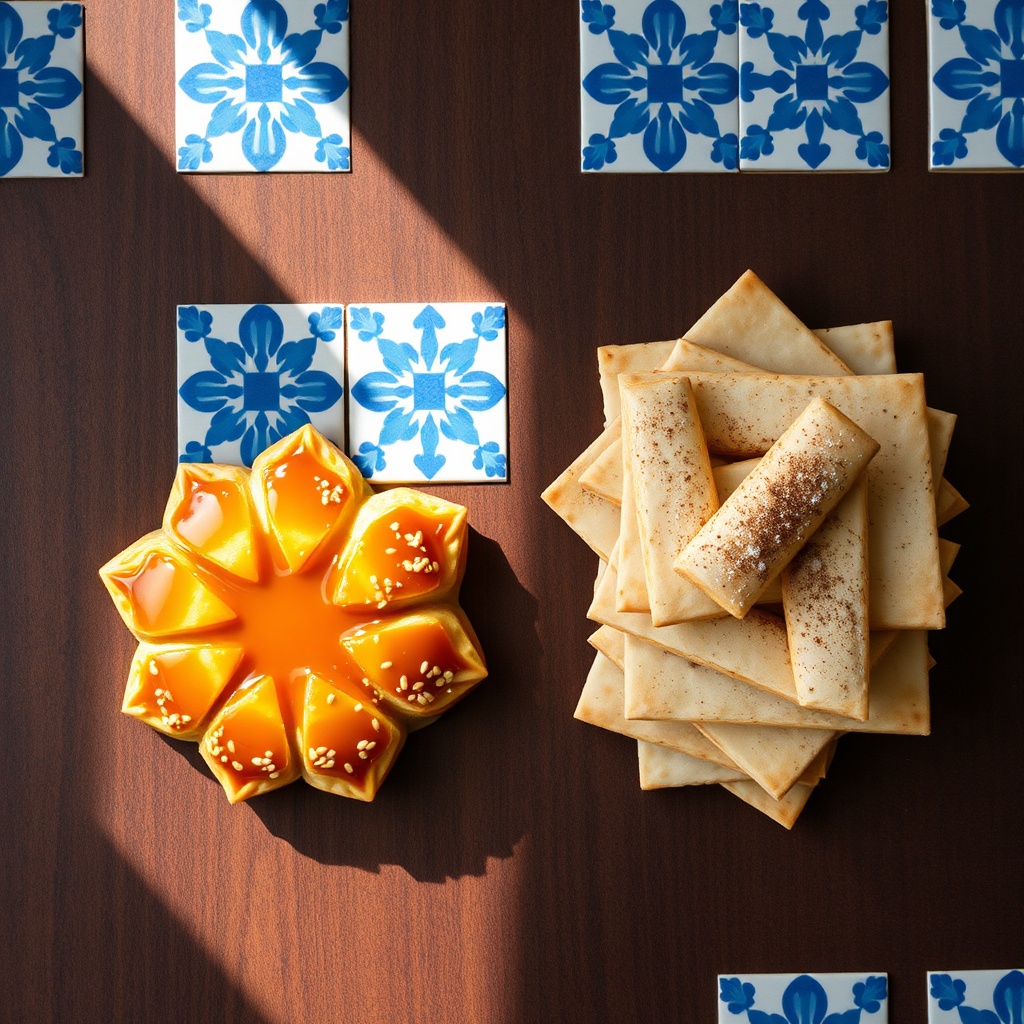
*Side-by-side comparison emphasizing shape, texture, and preparation methods of both Moroccan pastries.*
The simplest way to understand the Chebakia vs Briouats comparison is to look at their core structures. One is a shaped cookie, and the other is a filled pastry.
**Definition:** Chebakia (also known as mkharka) is a traditional Moroccan sweet cookie shaped like a flower or pretzel, made from a spiced sesame dough, fried until golden, and coated in a warm honey glaze.
**Definition:** Briouats are small, triangular or cylindrical pastries made from warqa (a very thin, pliable pastry sheet) that are filled with sweet or savory mixtures, then fried or baked until crisp.
The core distinction is that Chebakia is a single, un-filled dough pastry, while Briouats are filled pastries with a wrapper. This single fact drives all other differences in ingredients, texture, and preparation.
Visual and Structural Differences
Chebakia's unique shape is its most defining characteristic. The dough is rolled out, cut into rectangles or circles, and then slit and interlaced by hand to create a complex, flower-like form. This "twist" creates a beautiful, open structure that allows the honey glaze to penetrate every crevice.
Briouats, in contrast, feature a neat, enclosed shape. The warqa sheet is folded over a filling in a triangular or cylindrical motion to completely seal it. This "fold" is designed to contain the filling, ensuring it doesn't leak during frying or baking.
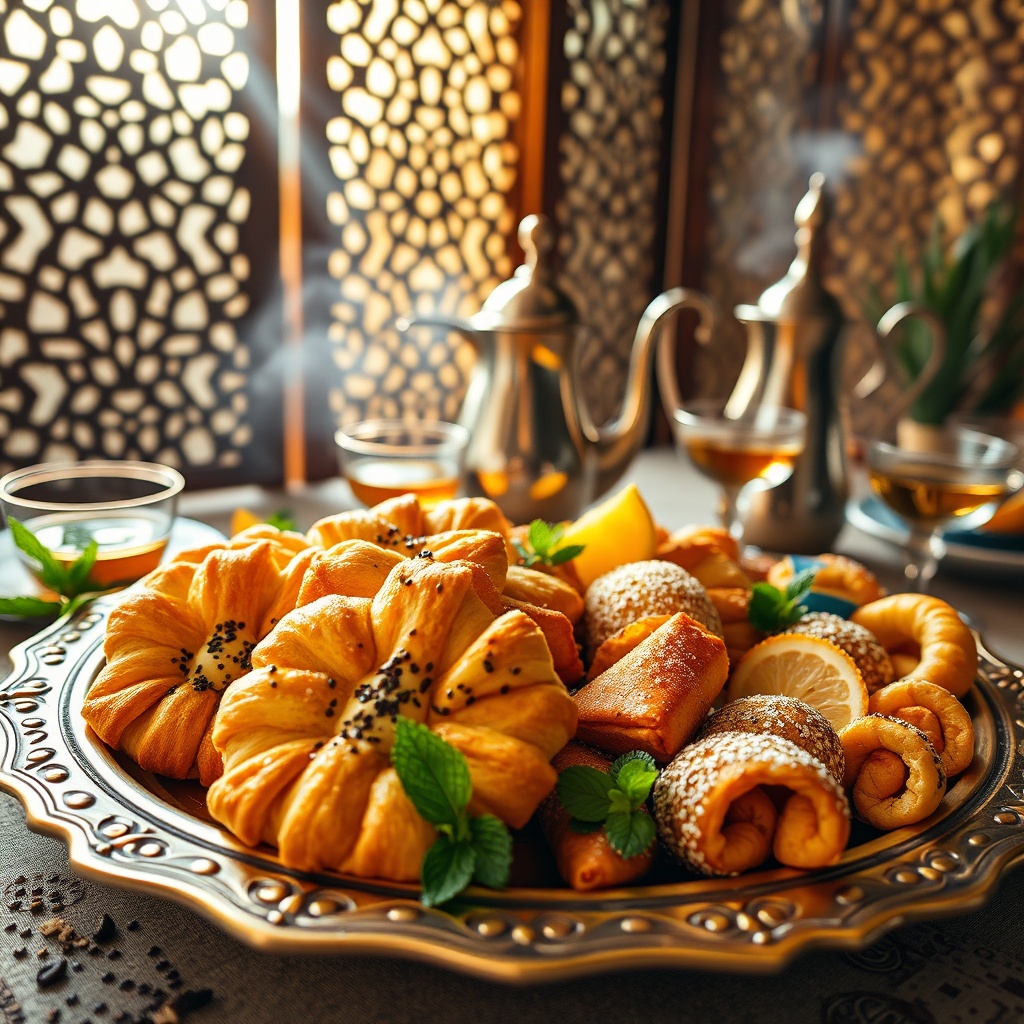
*Cultural presentation of both pastries in a festive setting with mint tea, highlighting their role in Moroccan gatherings.*
Flavor Profile and Texture
The flavor of Chebakia is singular and intense. It is crunchy, dense, and intensely sweet, with strong notes of toasted sesame, anise, and orange blossom water. The final honey coating gives it a sticky, satisfying texture.
Briouats offer a lighter, flaky texture due to the thin warqa wrapper. The flavor is entirely dependent on the filling, which can range from sweet almond paste and chocolate to savory spiced meat and cheese. This sweet vs. savory spectrum is the key difference from the singularly sweet Chebakia.
Deep Dive: Ingredients and Dough Preparation
The ingredients are the foundation of the Chebakia vs Briouats difference. The building blocks for each pastry are entirely distinct, leading to different textures and flavors.
The Chebakia Dough: A Spiced Sesame Base
Chebakia dough is a rich, aromatic mixture. It typically includes toasted sesame seeds, flour, anise, cinnamon, saffron, and orange blossom water, along with a leavening agent. The process of creating a pliable, aromatic dough is crucial, as it must hold its intricate shape during frying. The role of frying is to create a crisp exterior that can absorb the warm honey glaze, resulting in a dense, sweet, and nutty pastry.
The Briouat Wrapper: Mastering Warqa
**Definition:** Warqa is a very thin, delicate pastry sheet, similar to filo dough but more pliable and resilient. It is a staple of Maghreb baking traditions.
Warqa is the essential wrapper for Briouats. Unlike Chebakia's dough, the wrapper's role is to contain the filling and provide a crisp, flaky texture, not to contribute the primary flavor. The warqa sheet is brushed with melted butter or oil, cut into strips, and folded around the filling.
The Art of Assembly: Step-by-Step Preparation
The hands-on processes for each pastry are completely different. Chebakia requires mastering a specific folding technique, while Briouats focus on simple but precise folding to enclose a filling.
Step-by-Step: Making Chebakia from Scratch
1. Prepare the dough by mixing flour, spices, and sesame; knead until smooth. 2. Roll the dough to a specific thickness and cut into rectangular or circular shapes. 3. Cut slits in the dough and fold/interlace to create the flower shape. 4. Fry the shaped dough in hot oil until golden brown. 5. Immediately dip the fried Chebakia in warm honey to coat. 6. Allow to cool and drain on a wire rack.
Step-by-Step: Assembling Briouats
1. Prepare the filling (e.g., almond paste, cheese, or spiced meat). 2. Lay out a sheet of warqa and brush with melted butter or oil. 3. Cut the warqa into long strips or specific shapes. 4. Place a small amount of filling at one end of the strip. 5. Fold the warqa over the filling in a triangular or cylindrical motion to enclose it. 6. Fry or bake until golden and crisp.
**Quick Answer:** Briouats are generally considered easier to make at home because they involve simple folding of a wrapper around a filling. Chebakia requires mastering a specific dough and an intricate hand-folding technique.
Cultural Context and Serving Occasions
Both pastries hold a special place in Moroccan culture, but they serve different social and religious moments.
Chebakia: The Quintessential Ramadan Sweet
Chebakia has a near-sacred status during Ramadan. It is a staple of the iftar meal, often served alongside harira soup to break the fast. Its role as a symbol of hospitality is significant, with families preparing large batches to share with neighbors and family throughout the holy month.
Briouats: Versatile for Every Occasion
Briouats are incredibly versatile. They can be served as savory appetizers (with cheese or chicken) or as sweet desserts (with almond or chocolate). Their adaptability makes them a popular choice for weddings, formal gatherings, and tea parties, where they can be made in a variety of flavors to suit the event.
Comparison Table: Chebakia vs. Briouats at a Glance
| Feature | Chebakia | Briouats | | :--- | :--- | :--- | | **Base** | Spiced sesame dough | Warqa (thin pastry sheets) | | **Shape** | Flower/pretzel, hand-folded | Triangle or cylinder, folded | | **Filling** | None | Sweet or savory (e.g., almond, cheese) | | **Primary Flavor** | Honey, sesame, anise | Depends on filling | | **Cooking Method** | Deep-fried | Fried or baked | | **Typical Occasion** | Ramadan, tea time | Appetizers, desserts, celebrations | | **Texture** | Dense, crunchy, sticky | Light, flaky, crisp |
FAQ: Common Questions About Chebakia and Briouats
**Can Briouats be made with the same dough as Chebakia?** No, Chebakia uses a dense, spiced dough that requires frying, while Briouats require thin, pliable warqa sheets to enclose a filling.
**Are Chebakia and Briouats both served during Ramadan?** Yes, Chebakia is a traditional staple for iftar, while Briouats are also popular but are more versatile and served throughout the year and at other events.
**Which one is easier to make at home?** Briouats are generally considered easier because they involve simple folding of a wrapper, whereas Chebakia requires mastering a specific dough and intricate folding technique.
**Can Briouats be baked instead of fried?** Yes, Briouats can be baked for a lighter version, while Chebakia is traditionally deep-fried to achieve its signature texture.
Conclusion
The Chebakia vs Briouats comparison comes down to a fundamental difference: a shaped, un-filled dough versus a filled pastry wrapped in a delicate sheet. Chebakia is a dense, honey-coated sesame treat that embodies the spirit of Ramadan, while Briouats are versatile, flaky pastries that can be adapted for any occasion.
Both are masterpieces of Moroccan pastry artistry, showcasing the country's rich culinary traditions. To experience the full range of these flavors, try making both at home. Whether you are preparing for the fasting month or hosting a tea party, these pastries are sure to impress.