
Best Moroccan Snacks And Sweets Guide
The best Moroccan snacks and sweets offer a captivating blend of textures and flavors, ranging from the savory, buttery layers of Msemen pancakes to the sticky, honey-drenched crunch of Chebakia. Moroccan cuisine balances savory staples like Maakouda with intricate royal desserts like Gazelle Horns, creating a diverse culinary landscape rooted in hospitality. This guide explores the essential treats that define traditional food culture in 2026, providing a detailed look at the country's finest offerings.
Navigating the bustling souks of Marrakech or the quiet corners of a Fes bakery reveals an array of aromatic delights. The air is thick with the scent of frying dough, melted butter, and orange blossom water. These are not merely foods but symbols of welcome, served to guests alongside mint tea. Whether you crave a quick street food bite or a delicate pastry, the variety ensures there is something to satisfy every palate.
Key Takeaways
* **Msemen and Rghaif** are the essential savory pancakes found in every Moroccan household, often served for breakfast or as a late-afternoon snack. * **Chebakia** stands as the undisputed queen of Moroccan sweets, particularly during Ramadan, featuring a sesame-rich dough fried and coated in honey. * **Kaab el Ghzal** (Gazelle Horns) represent the pinnacle of Moroccan pastry artistry, blending delicate almond paste with thin, orange blossom-scented dough. * **Sellou (Sfouf)** is a unique energy-boosting sweet made from toasted almonds, sesame seeds, and flour, traditionally served to new mothers and guests.
The Ultimate Definitive List of the Best Moroccan Snacks and Sweets
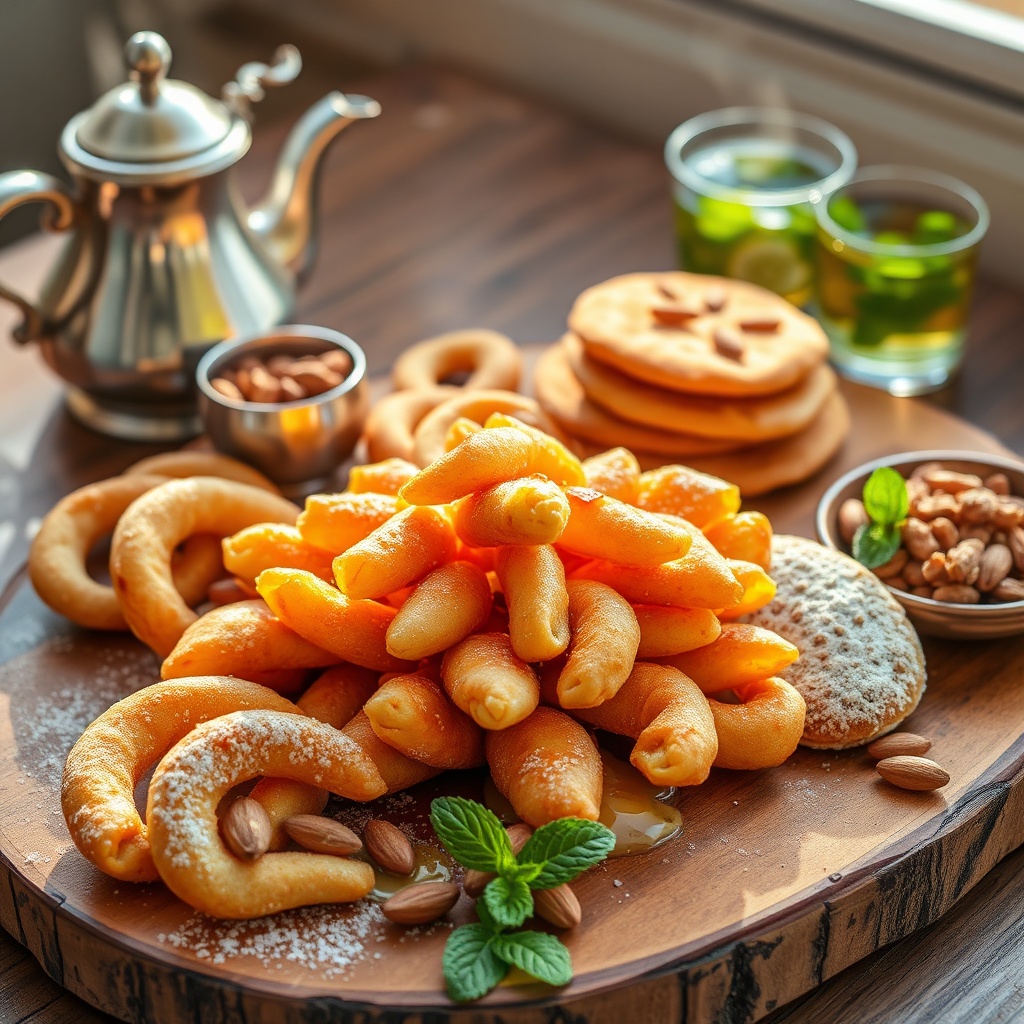
*A flat lay showcasing a variety of traditional Moroccan treats including honey-soaked cookies and savory pancakes.*
When seeking the **best Moroccan treats**, one must distinguish between the daily savory staples consumed by locals and the elaborate confections reserved for special occasions. The top tier of Moroccan treats is defined by the quality of ingredients, specifically the use of **Argan oil**, fresh almonds, and aromatic honey. In 2026, the culinary scene continues to revere these classics while maintaining strict adherence to traditional preparation methods.
The Savory Essentials
**Msemen** and **Maakouda** form the backbone of Moroccan street food. Msemen is a square, layered pancake characterized by its crispy exterior and soft, flaky interior. It is typically eaten hot from the griddle, smeared with butter or honey. Maakouda, on the other hand, consists of seasoned potato fritters. These are mashed potatoes mixed with garlic, cumin, and parsley, formed into patties, dipped in egg, and deep-fried until golden brown. You will find these in every neighborhood, served with fresh bread and harissa.
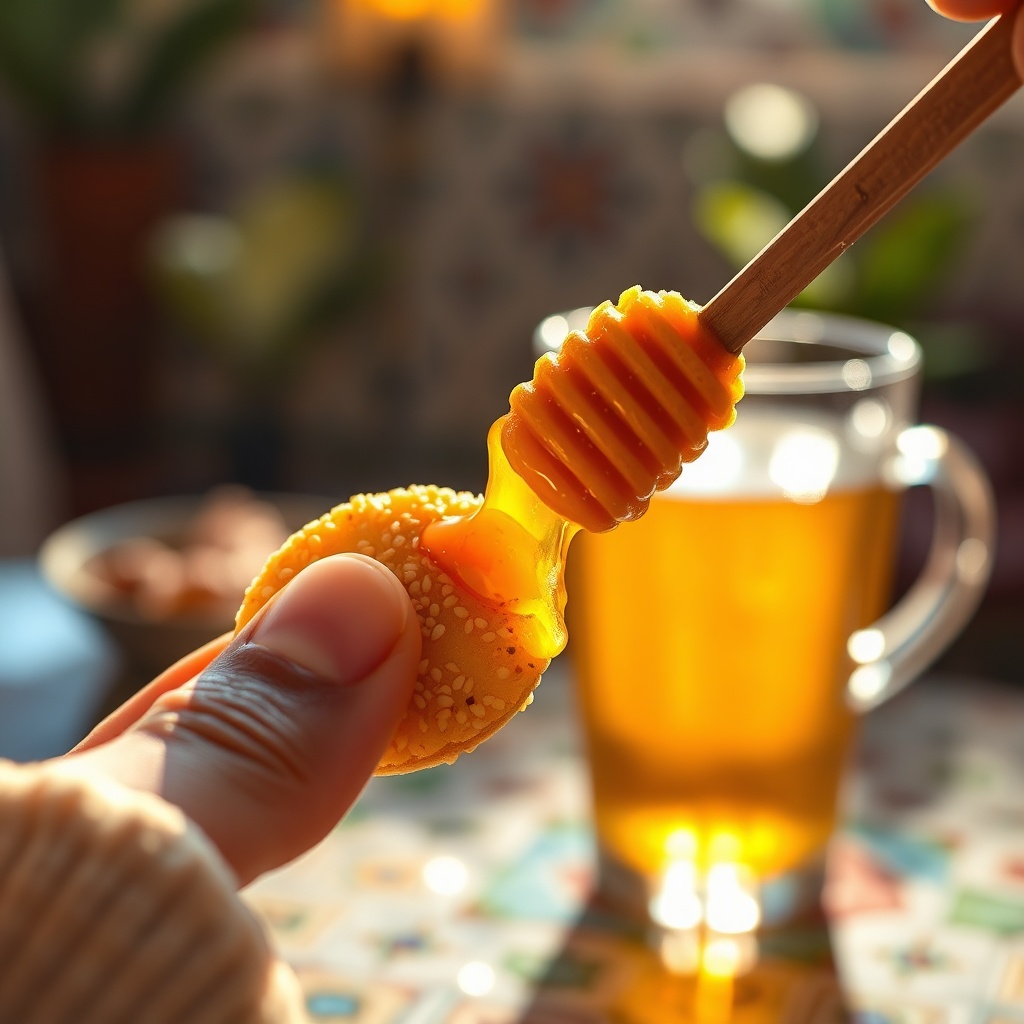
*An intimate shot of a honey-soaked cookie paired with traditional tea, highlighting the sweet flavors of Morocco.*
The Sweet Royalty
The gold standard for Moroccan confectionery includes **Chebakia** and **Kaab el Ghzal**. Chebakia is a flower-shaped cookie made from strips of dough flavored with anise and sesame, fried, then immersed in a honey syrup flavored with orange blossom water. Kaab el Ghzal, or Gazelle Horns, are crescent-shaped pastries filled with almond paste flavored with cinnamon and orange blossom water, encased in thin, delicate dough that melts in the mouth. These represent the height of **Ramadan sweets** and are often displayed in towering piles in sweet shops.
**Quick Answer:** What are the top two must-try items? You absolutely must try **Msemen** for a savory breakfast option and **Chebakia** for the definitive sweet experience, especially if visiting during the holy month.
The Architecture of Dough: Mastering Moroccan Pancakes and Flatbreads
The mastery of dough is central to **Moroccan breakfast** culture. Unlike the yeast-leavened breads common in the West, Moroccan pancakes rely on high hydration and a unique folding technique to achieve their signature texture. This process, often passed down through generations, requires patience and dexterity to pull the dough until it is translucent before folding it back onto itself.
Msemen: The Square of Delight
The popularity of **Msemen** lies in its versatility. The dough is made from semolina and flour, combined with water and oil to create a pliable mixture. The cook flattens a ball of dough on an oiled surface, pulls it out to the edges, and folds it into a square. This creates layers of buttery goodness. It is cooked on a hot griddle until both sides develop a deep golden-brown color. It is most commonly served with a side of **Amlou**—a dip of roasted almonds, honey, and argan oil—or simply melted butter and honey.
Harcha: The Semolina Sensation
In contrast to the oily layers of Msemen, **Harcha** offers a crumbly, biscuit-like texture. It is made from fine semolina, butter, baking powder, and a pinch of sugar. The dough is not pulled but rather gently pressed into discs and cooked on a griddle. The result is a bread that feels like a cross between a pancake and a cornbread. It is a comfort food staple, often dipped in jam or soft cheese, and pairs perfectly with a glass of hot mint tea.
**Definition:** **Rghaif** (also known as Meloui) is a cylindrical, layered flatbread similar to Msemen but typically rolled into a spiral rather than a square, resulting in a slightly different texture that is often more airy and flaky.
Honey, Almonds, and Thyme: Unpacking the Flavor Profiles of Moroccan Confectionery
The flavor profile of traditional Moroccan treats is complex, moving far beyond simple sugariness. It relies on a sophisticated interplay of toasted nuts, aromatic spices, and floral waters. The distinct taste comes from ingredients like **Honey and sesame**, which provide depth and earthiness. The sweetness is often cut by the savory notes of toasted almonds or the slight bitterness of thyme found in specific regional breads.
The Significance of Almond Paste
Almonds are the nut of choice in Morocco, prized over peanuts or walnuts for their texture and subtle flavor. In pastries like **Ghriba** and **Briouat**, the almonds are toasted, peeled, and ground into a fine paste. This paste is then mixed with cinnamon and orange blossom water to create a filling that is rich but not heavy. The preparation of the almond paste is a crucial step; if the almonds are not toasted sufficiently, the final pastry lacks the characteristic nutty aroma that defines high-quality Moroccan sweets.
The Role of Floral Waters
Floral waters are essential in balancing the intensity of honey. **Orange blossom water** and **rose water** are used liberally in syrups and doughs. They add a perfumed aroma that makes the sweets taste exotic and refreshing. For example, **Ghriba**—a shortbread cookie—relies on a hint of orange blossom water to elevate the humble combination of flour, sugar, and almonds. Without these floral notes, the sweets would taste overly sweet and flat.
**Quick Answer:** Why do Moroccan sweets taste floral? The use of orange blossom water and rose water in the dough and honey syrups provides a distinct aromatic lift that balances the sugar, creating the signature Moroccan flavor profile.
Regional Variations: A Culinary Map of Moroccan Snacks in 2026
Geography plays a pivotal role in the availability and preparation of snacks across the kingdom. The difference between the coast and the interior is stark, with the **North African cuisine** adapting to local resources. While the core items like Msemen are ubiquitous, regional specialties highlight the diverse agricultural and maritime landscapes of the country.
Northern Influences and Seafood Snacks
In northern cities like Tangier and Tetouan, the proximity to the Mediterranean introduces seafood into the snack repertoire. You will find **Briouats**—those signature triangular or cylindrical pastries—filled with spicy sardine or tuna mixtures rather than just meat or chicken. These seafood Briouats are often lighter, seasoned with parsley, coriander, and a kick of chili, reflecting the Spanish and Andalusian influence on the region's cuisine.
The Imperial Sweets of Fes and Marrakech
In the imperial cities, the focus remains on density and decoration. Fes is renowned for its **Jouhara** cookies, which are delicate, sugar-dipped biscuits often adorned with a single almond or pistachio. In 2026, the presentation during wedding seasons in Marrakech has become even more elaborate. Sweets are arranged on towering platters, sometimes reaching over a meter high, showcasing cookies dusted with powdered sugar, filled with pistachio paste, and scented with **Moroccan mint tea** infusions.
The Modern Evolution: Health-Conscious and Fusion Moroccan Treats
As of 2026, **modern Moroccan cuisine** is witnessing a significant shift. Urban cafes in Casablanca and Rabat are adapting traditional recipes to suit contemporary dietary needs. There is a growing demand for reduced-sugar options and gluten-free alternatives, driven by a younger, health-conscious demographic that still wants to indulge in traditional flavors without the guilt.
The Rise of "Sellou" as a Superfood
**Sellou** (also known as Sfouf) is undergoing a rebranding. Traditionally given to new mothers to regain strength, this blend of toasted almonds, sesame seeds, fried flour, and honey is now being marketed as a protein-rich energy bar. Modern vendors are reducing the honey content and emphasizing the healthy fats from the sesame and argan oil. It is sold in grab-and-go packaging, making it a popular pre-workout snack or office staple for those needing a sustained energy boost.
Fusion Patisseries
A new wave of fusion patisseries is emerging, blending French techniques with Moroccan ingredients. Chefs are incorporating flavors like saffron, **cinnamon**, and argan oil into French macarons, chocolate truffles, and croissants. This creates a new category of treats for the younger generation who appreciate the familiarity of French pastries but crave the nostalgic taste of home. These fusion items are becoming some of the **best Moroccan treats** for the urban elite.
**Definition:** **Sellou** is a confection made from toasted sesame seeds, fried flour, almonds, and honey, often spiced with anise and cinnamon, shaped into a mound and served as a high-energy snack.
Conclusion
The journey through the world of **traditional Moroccan treats** is a journey through the country's soul. From the savory, buttery layers of a street-side Msemen to the delicate, honey-soaked layers of a royal Kaab el Ghzal, each bite tells a story of tradition and hospitality. These foods are not just about sustenance; they are about connection, shared moments, and the celebration of life.
You do not need to book a flight to Morocco to experience these delights. Specialized bakeries worldwide now stock **Ghriba** and **Chebakia**, and ingredients like orange blossom water are readily available. However, the true essence lies in the sharing. Whether you are dipping a piece of Harcha into tea or passing a plate of Briouats around a table, the best snack is always the one shared with others, honoring the enduring Moroccan spirit of generosity.
FAQ
**What is the most popular Moroccan cookie?** The **Ghriba** is widely considered the most popular cookie, known for its cracked exterior, chewy texture, and varieties made with almonds, sesame, or coconut.
**Are Moroccan sweets very sugary?** Yes, traditional Moroccan sweets are often dipped in honey or syrup and heavily dusted with powdered sugar, though modern 2026 variations are offering reduced-sugar options.
**What is the difference between Msemen and Rghaif?** While both are layered pancakes, **Msemen** is typically square and thicker, often pan-fried, whereas **Rghaif** (or Meloui) is thinner, rolled into a cylindrical spiral, and sometimes cooked in an oven.
**What is Amlou usually served with?** Amlou, a dip made of roasted almonds, honey, and argan oil, is traditionally served for breakfast or as a snack dipped with warm Msemen or fresh bread.
**What are modern trends in Moroccan sweets?** Modern trends include a shift toward healthier options, such as reduced-sugar and gluten-free varieties. Additionally, fusion patisseries are gaining popularity, blending French baking styles with Moroccan ingredients like saffron and argan oil.
**Why is Sellou considered a healthy snack?** Sellou is often considered a superfood because it is packed with protein from almonds and healthy fats from sesame seeds and argan oil. It provides a sustained energy boost, making it a popular choice for pre-workout snacks or office staples.
**What defines a Moroccan fusion pastry?** A Moroccan fusion pastry combines French pastry methods—such as those used for macarons or croissants—with traditional Moroccan flavors. Common ingredients include cinnamon, orange blossom water, and argan oil, offering a mix of Western texture and Eastern taste.