Best Moroccan Olive Oil: 2026's Top 5
Best Moroccan Olive Oil: The Complete 2026 Buyer's Guide
Morocco ranks among the world's top five olive oil producers, generating roughly 1.9 million tons of olives annually — yet its oil remains one of the most underrated in the global market. This guide cuts through the marketing noise to identify what actually makes Moroccan olive oil exceptional, how to verify authenticity, and which bottles deserve your money in 2026. From the Picholine Marocaine variety that dominates 95% of the country's groves to the regional terroir differences that rival Italian and Spanish production, you'll leave with a concrete purchasing framework.
Key Takeaways
- Morocco's Picholine Marocaine olive variety produces a grassy, slightly bitter, and nutty oil distinct from Mediterranean competitors — and 95% of Moroccan production comes from this single cultivar. - Only oils with acidity below 0.3%, a harvest date within 18 months, and PDO/PGI certification from regions like Fes-Meknes qualify as genuinely premium Moroccan extra virgin. - The Fes-Meknes region alone accounts for roughly 40% of national olive oil output, making it the primary sourcing hub for top-tier bottles. - Direct-from-cooperative purchases in Morocco cost 40–60% less than equivalent international retail prices, but certification labels matter more than price when buying abroad. - The three-step professional tasting method — warm, slurp, and identify bitterness/pungency — reliably distinguishes authentic Moroccan extra virgin from blended or refined imposters.
The Complete Answer: What Makes Moroccan Olive Oil the Best
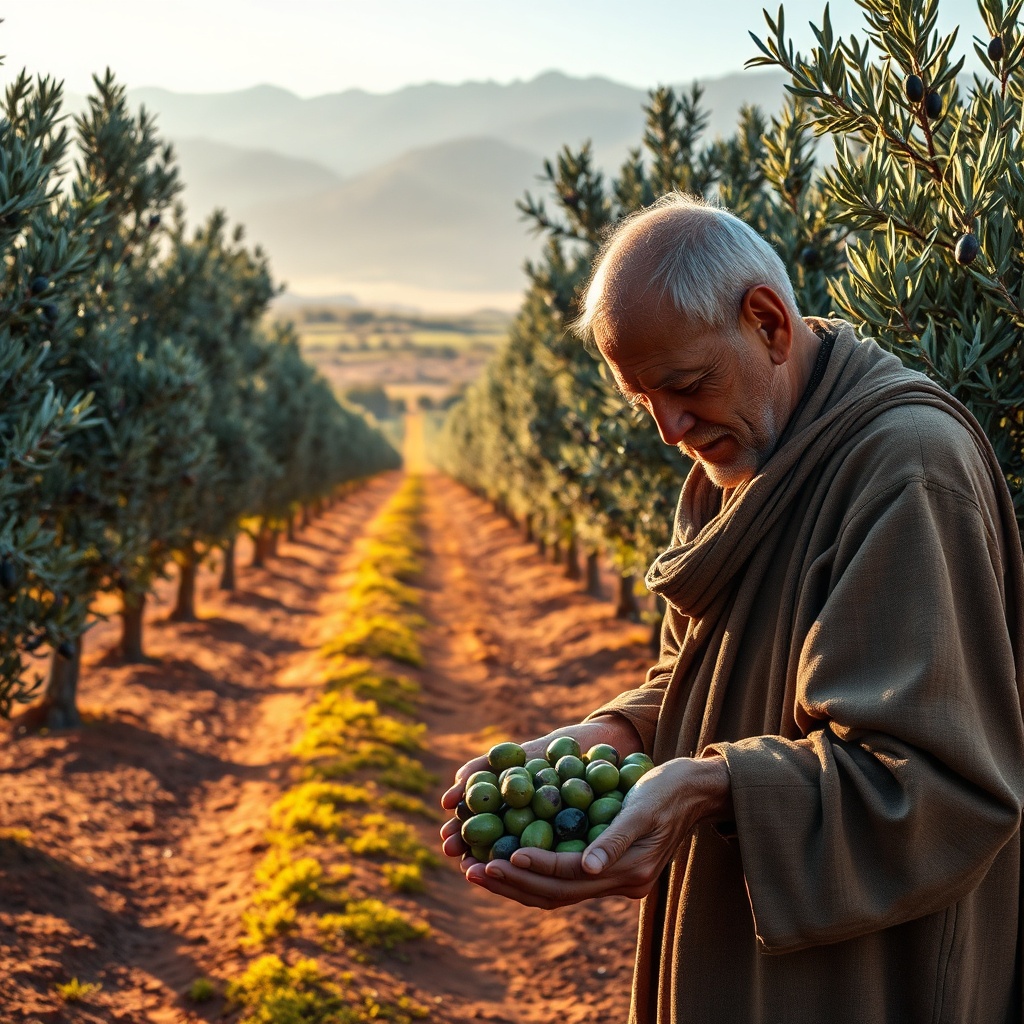
*Scenic view of olive trees in Fes-Meknes with Atlas Mountains, showcasing the authentic terroir behind Morocco's finest olive oil.*
Morocco's olive-growing belt spans 1.2 million hectares, with a unique combination of Atlantic humidity, Atlas Mountain altitude (400–1,600 meters), and mineral-rich clay-limestone soils. This tri-factor terroir accelerates phenolic compound development — Moroccan oils routinely test between 350–600 mg/kg of polyphenols, compared to a 200–300 mg/kg average for standard European extra virgins. Higher polyphenol content translates to greater antioxidant benefits and a longer shelf life, giving Moroccan oil a measurable chemical advantage over mass-market competitors.
**Quick Answer:** The best Moroccan olive oil is defined by its Picholine Marocaine variety, high polyphenol content (350–600 mg/kg), and sub-0.3% acidity. These factors produce a grassy, peppery oil with superior antioxidant benefits and a shelf life that outlasts most European competitors. For raw applications like drizzling and dipping, premium Moroccan extra virgin rivals top Italian and Spanish oils.
The Terroir Advantage: Why Moroccan Soil Produces Superior Olives
The combination of Atlantic humidity, Atlas Mountain altitude, and mineral-rich clay-limestone soils creates a unique growing environment. This tri-factor terroir accelerates phenolic compound development — Moroccan oils routinely test between 350–600 mg/kg of polyphenols, compared to a 200–300 mg/kg average for standard European extra virgins. Higher polyphenol content translates to greater antioxidant benefits and a longer shelf life, giving Moroccan oil a measurable chemical advantage over mass-market competitors.
**Definition:** Polyphenols — naturally occurring antioxidant compounds in olive oil that protect against oxidative damage. Higher levels mean better health benefits and extended shelf life, which is why premium producers prioritize early harvests that maximize phenolic content.
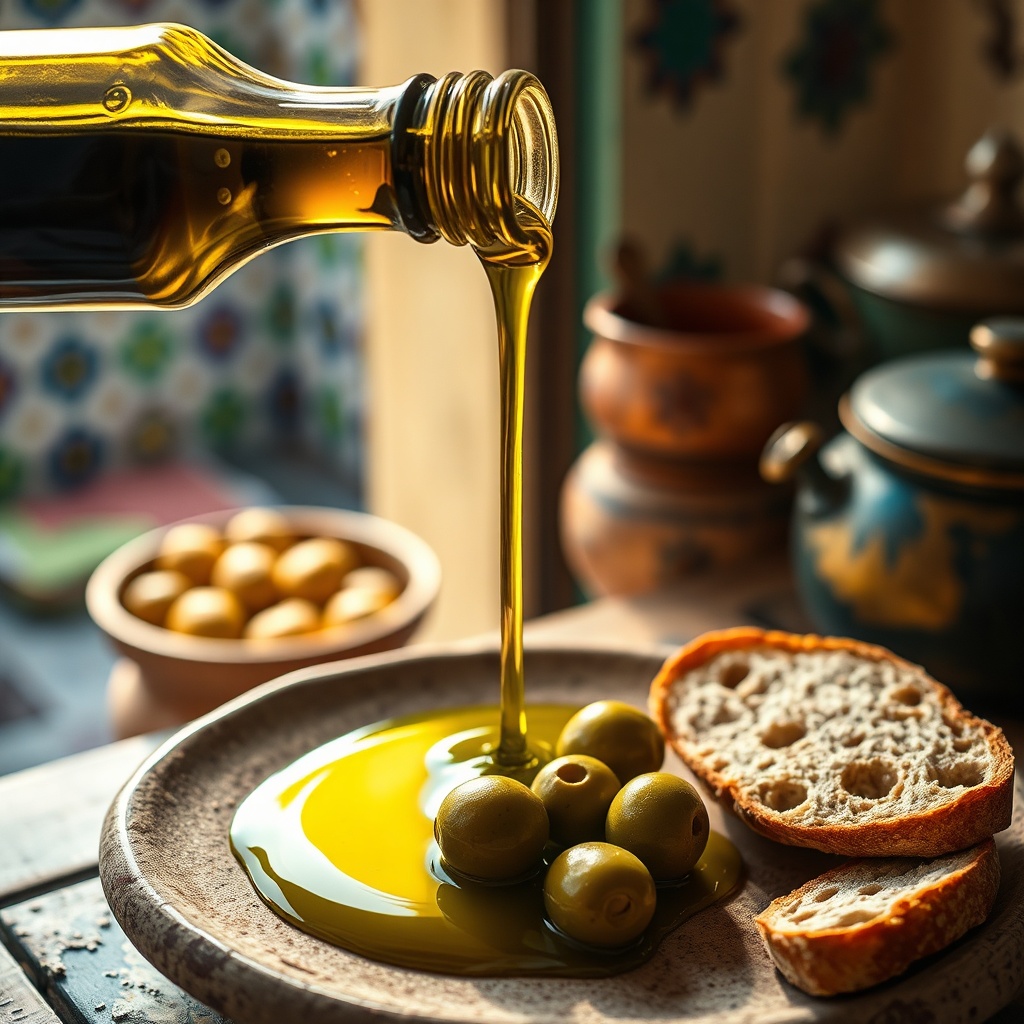
*Close-up of extra virgin olive oil being poured, highlighting the color and texture, with olives and bread for a sensory tasting experience.*
The Picholine Marocaine Monoculture and Its Unique Flavor Profile
Unlike Spain's multi-varietal blends, Morocco's near-total reliance on Picholine Marocaine creates a distinct, recognizable signature: fresh-cut grass on the nose, a pronounced green almond bitterness on the palate, and a peppery finish that lingers 15–20 seconds. This monoculture also means consistency — a 2025 harvest from Meknes tastes remarkably similar to a 2024 bottle, which is rare in the olive oil world. The variety's small fruit size (2–3 grams per olive) yields less oil per kilogram but concentrates flavor compounds more densely.
Production Standards and Traditional Harvesting Methods
Morocco's dual production system — modern industrial presses alongside centuries-old cooperative methods — creates a quality spectrum few countries match. The best producers harvest early (October–November) when olives are still green, cold-extract within 6 hours of picking, and never heat the paste above 27°C. These practices consistently yield extra virgin oils with acidity below 0.2%, well under the 0.8% EU legal ceiling. In 2025, Moroccan exports to the EU grew 23% year-over-year, signaling rising international recognition of these standards.
Top Producing Regions and Their Distinctive Flavor Profiles
Each Moroccan region produces a distinctly different oil, and understanding these differences is essential to finding the best Moroccan olive oil for your palate.
Fes-Meknes: The Heartland of Premium Olive Oil
The Fes-Meknes region produces roughly 40% of Morocco's olive oil and is home to the country's oldest PDO (Protected Designation of Origin) status. Oils from this zone are characterized by medium intensity, pronounced almond notes, and a balanced bitterness that suits both raw consumption and cooking. The region's 500-year-old cooperative network means many of the best bottles come from small, family-run mills with production runs under 5,000 liters annually.
**Quick Answer:** Fes-Meknes oils offer balanced almond notes and medium intensity, making them the most versatile Moroccan oils. Marrakech-Safi produces bolder, more peppery oils for robust dishes. The Oriental region delivers fresh, citrus-forward oils with exceptional polyphenol counts — and won 11 international medals in 2025 despite producing under 8% of national volume.
Marrakech-Safi: Bold and Peppery Expressions
Warmer temperatures and lower altitudes in the Marrakech-Safi region produce oils with higher oleic acid content and a more aggressive peppery kick. These oils are ideal for those who prefer a throat-burning finish and robust flavor that stands up to grilled meats and tagines. The region's oils typically grade 6–8 on the 10-point pungency scale, versus 4–5 for Fes-Meknes products.
Oriental Region: The Emerging Artisan Producer
The Oriental region bordering Algeria has invested heavily in modern extraction technology since 2020, with over 40 new artisan mills opening. Its higher-altitude groves (800–1,200 meters) produce oils with exceptional freshness and a distinctive citrus zest note. While volumes remain small — under 8% of national output — international competitions awarded Oriental region oils 11 medals in 2025, making them the fastest-rising stars in Moroccan production.
How to Identify Authentic Moroccan Olive Oil: A Buyer's Checklist
The 31% adulteration rate in European supermarkets makes label literacy your most important purchasing skill.
Reading Labels: PDO, PGI, and Certification Marks
Authentic Moroccan olive oil carries one of three certification markers: PDO (specific region), PGI (Morocco-wide but region-linked), or the ONSSA food safety seal. A 2025 consumer watchdog study found that 31% of bottles labeled "Moroccan olive oil" in European supermarkets contained blended oils from Spain or Tunisia. Always verify the label lists "Picholine Marocaine" or "Huile d'Olive Vierge Extra" and includes a Moroccan cooperative or producer name — vague labels like "Product of Morocco" without a producer code are red flags.
**Definition:** PDO (Protected Designation of Origin) — an EU certification guaranteeing that every stage of production, from olive growing to bottling, occurred in a specific region. Moroccan PDOs include Fes-Meknes and several Atlas Mountain zones.
The Harvest Date Test: Freshness as the #1 Quality Metric
Freshness determines quality more than any other factor. Premium Moroccan extra virgin should display a harvest date — not just a bottling date — within the last 18 months. Oils harvested in November 2025 and bottled in early 2026 are ideal. If the bottle shows only a "best before" date, the oil may be up to 24 months old and will have lost 40–60% of its polyphenol content and much of its peppery character.
Common Counterfeits and How to Spot Them
Counterfeit or adulterated Moroccan olive oil typically exhibits one or more of these traits: a flat, oily mouthfeel with no bitterness or pungency; a price below $8 per 750ml at international retail (unsustainable for genuine extra virgin); and a clear glass bottle exposed to light, which accelerates oxidation. Follow this verification sequence:
1. Check the label for a harvest date within 18 months and a named Moroccan producer or cooperative. 2. Verify the acidity level — genuine extra virgin must state below 0.8%, with premium oils under 0.3%. 3. Open the bottle and smell — authentic Picholine Marocaine oil smells like fresh grass and green tomato, not rancid nuts or cardboard. 4. Taste a small sip — genuine oil should produce a mild throat tickle (pungency) and a bitter note on the back of the tongue. 5. Refrigerate a small sample for 24 hours — genuine extra virgin will solidify and turn cloudy; heavily refined or blended oils remain liquid.
Top Moroccan Olive Oil Brands Compared
These five brands represent the quality spectrum of the best Moroccan olive oil available internationally in 2026.
Brand Comparison Table
| Brand | Region | Acidity Level | Harvest Date Labeling | Price (750ml, Intl.) | Best For | |---|---|---|---|---|---| | Atlas Gold | Fes-Meknes | 0.18% | Yes | $28–34 | Raw drizzling, dipping | | Marrakech Reserve | Marrakech-Safi | 0.22% | Yes | $22–27 | Grilling, robust dishes | | Coop Tafilalt | Oriental | 0.15% | Yes | $18–24 | Value premium, salads | | Maison Zitouna | Fes-Meknes | 0.25% | No (bottling only) | $12–16 | Everyday cooking | | Royal Atlas | Mixed regions | 0.30% | No | $8–11 | Budget, high-heat cooking |
Budget vs. Premium: Where to Spend
The price gap between entry-level and premium Moroccan oils reflects real chemical differences. Budget oils ($8–16) typically have acidity between 0.25–0.30%, fewer polyphenols (200–300 mg/kg), and may be blended across regions. Premium oils ($18–34) consistently deliver sub-0.20% acidity, polyphenol counts above 400 mg/kg, and single-region sourcing. For raw applications — drizzling over hummus, finishing grilled fish, or dipping bread — the premium tier is worth the 2x price premium. For sautéing and baking, budget oils perform essentially identically.
Where to Buy: Direct from Morocco vs. International Retailers
Buying directly from Moroccan cooperatives (via platforms like Souk el Fellah or direct-export websites) delivers the best value — a premium 750ml bottle costs $8–12 locally versus $22–34 internationally. However, shipping costs and customs add 15–25%, narrowing the gap. International buyers should prioritize specialty importers who can document harvest dates and cooperative sourcing. Avoid large marketplace listings with stock photos and no harvest date; these are the primary channel for adulterated product.
How to Taste and Pair Moroccan Olive Oil
Mastering the tasting method transforms you from a passive buyer into an informed judge of quality.
The Professional Tasting Method (Step-by-Step)
1. Pour 15ml of oil into a small glass and cup it in your palm for 60 seconds to warm it to 28°C, releasing volatile aromatics. 2. Cover the glass with your other hand and swirl gently for 10 seconds, then lift the cover and inhale deeply — note the grass, almond, and green tomato notes. 3. Slurp the oil loudly from a spoon, drawing air across the oil to aerosolize it across your palate. 4. Hold for 5 seconds, then swallow — focus on the bitterness at the back of the tongue and the pungency (peppery tickle) in your throat. 5. Wait 30 seconds and rate the finish: premium Moroccan oils should leave a clean, nutty aftertaste with no rancid or oily residue.
**Quick Answer:** To taste professionally, warm 15ml of oil in your palm for 60 seconds, slurp it loudly to aerosolize across your palate, and hold for 5 seconds before swallowing. Genuine Picholine Marocaine oil delivers a bitter note at the back of the tongue and a peppery throat tickle — the two markers of authentic, fresh extra virgin.
Food Pairings: From Couscous to Chocolate
Picholine Marocaine's grassy bitterness pairs exceptionally well with North African cuisine: drizzle over couscous with preserved lemon, finish a lamb tagine with a tablespoon before serving, or use it in chermoula marinades. The oil's high polyphenol content also stands up to sweet applications — pastry chefs increasingly use Moroccan extra virgin in chocolate ganache and olive oil cakes, where its peppery finish cuts through sugar. For a simple 10-minute appetizer, warm a small bowl of oil with crushed garlic and smoked paprika, then serve with crusty bread.
Storage and Shelf Life: Protecting Your Investment
Moroccan extra virgin olive oil maintains peak quality for 18–24 months from harvest when stored correctly: in a dark glass or tin container, at 14–18°C, away from stovetop heat and direct sunlight. Once opened, consume within 3 months for optimal flavor. Never store oil in the refrigerator long-term — condensation can introduce moisture that accelerates rancidity. A 2026 study from the University of Meknes found that oils stored in green glass retained 92% of their polyphenols after 6 months, versus 74% in clear glass.
FAQ
**Is Moroccan olive oil better than Italian or Spanish olive oil?**
Moroccan oil isn't inherently "better," but it offers a distinct flavor profile and often higher polyphenol content due to the Picholine Marocaine variety and terroir conditions. For raw consumption where freshness and antioxidants matter, top-tier Moroccan oils compete with — and sometimes outperform — premium Italian and Spanish products at similar price points. For cooking, the differences are negligible.
**How can I tell if my Moroccan olive oil is authentic extra virgin?**
Check for three things: a harvest date within 18 months, an acidity level below 0.8% (premium oils under 0.3%), and a named Moroccan producer or cooperative rather than a vague "Product of Morocco" label. Genuine Picholine Marocaine oil also has a distinctive grassy aroma and peppery finish that no blended product can replicate.
**What does Moroccan olive oil taste like?**
Authentic Moroccan olive oil tastes of fresh-cut grass, green almond, and tomato leaf, with a medium-to-strong bitterness and a peppery throat finish that lingers 15–20 seconds. Oils from warmer regions like Marrakech are more pungent, while Fes-Meknes oils are more balanced and nutty.
**Is Moroccan olive oil good for cooking?**
Yes — Moroccan extra virgin olive oil has a smoke point around 190–200°C, suitable for most sautéing and roasting. The high polyphenol content also makes it more stable under heat than many other extra virgin oils. For deep frying at higher temperatures, a lighter refined olive oil is more appropriate.
**Where can I buy authentic Moroccan olive oil in the US or Europe?**
Specialty Mediterranean importers, high-end grocery chains with dedicated olive oil sections, and direct-from-cooperative online platforms are the most reliable sources. Look for importers who display harvest dates and cooperative names on their websites. Avoid generic marketplace listings without sourcing documentation.
Conclusion
Moroccan olive oil offers a rare combination of distinctive flavor, measurable health benefits, and accessible pricing — provided you know what to look for. Prioritize Picholine Marocaine varietal oils from certified regions like Fes-Meknes, verify the harvest date and acidity level on every label, and choose single-region products when the bottle is destined for raw applications. The market's 31% adulteration rate makes label literacy non-negotiable, but for buyers who follow the verification checklist, Morocco delivers some of the best Moroccan olive oil value in the global category. In 2026, with exports up 23% and artisan producers winning international awards, there has never been a better time to explore what this North African nation's groves have to offer. Start with a single certified bottle from Fes-Meknes — your palate will thank you.