
Berber Handcrafted Rugs: History, Styles, And Buying Tips
Introduction – Berber Handcrafted Rugs: History, Styles, and Buying Tips
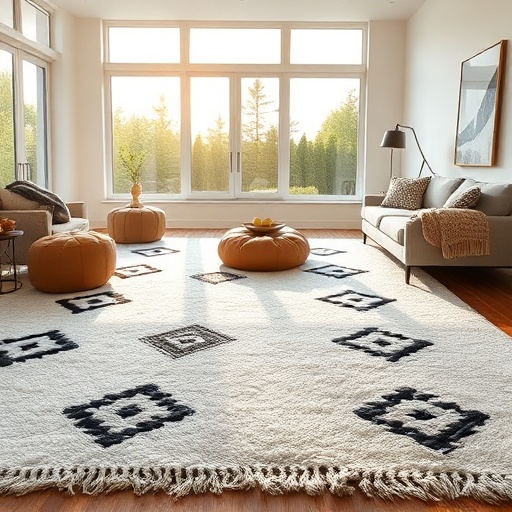
The moment a hand‑woven Berber rug spreads across a living‑room floor, handcrafted Moroccan home décor instantly feels anchored in centuries of desert travel and mountain hearths. A genuine piece carries the weight of tribal stories, the texture of high‑land wool, and the subtle shift of natural dyes that change with each season. Collectors and interior designers alike discover that understanding the rug’s lineage, recognizing its stylistic fingerprints, and mastering the purchase process prevent costly missteps and elevate a room from ordinary to gallery‑worthy. Imagine a sun‑lit lounge transformed by a soft‑gray Beni Ourain carpet whose geometric borders echo the ancient patterns of the Atlas foothills—suddenly the room breathes heritage while staying modern.
1. Roots of the Craft: Berber Rug History and Tribal Identity
Berber weaving heritage stretches back through oral histories that date the craft to at least the 7th century BCE, when nomadic families first spun wool into portable blankets. These early textiles doubled as shelter against night‑time chill, a marker of clan affiliation, and a portable gallery that could be rolled up for the next trek across the Sahara.
Trade routes that snaked from Marrakech to Timbuktu introduced new pigments, prompting a noticeable shift from earth tones to richer indigo and crimson shades after the 19th‑century French presence in Morocco. One documented pattern—an interlocking diamond that appears on rugs from the Taznakht region—emerged only after French military caravans exchanged surplus indigo for local wool, embedding a foreign hue into a traditionally muted palette.
1.1 Early nomadic origins and the role of rugs in Berber daily life
Nomads relied on rugs for insulation, bedding, and even as makeshift walls during seasonal migrations. The density of the weave directly affected warmth; a 12 mm loft could retain up to 30 % more heat than a thinner blanket, a fact recorded in the memoirs of 19th‑century explorer Charles de Foucauld.
Rugs also signaled status: families with intricate border motifs could trace lineage back to respected tribal elders, while simpler, single‑color pieces indicated newer households. Portable art meant that a tribe’s visual identity traveled with it, reinforcing communal bonds across vast distances.
1.2 Influence of trade routes and colonial encounters on pattern evolution
Mediterranean merchants introduced saffron and cochineal and cochineal dyes, expanding the color vocabulary beyond natural wool whites and browns. The infusion of bright reds coincided with the rise of the “Zebra” motif—alternating black and white stripes that symbolized the balance between desert and mountain life.
A notable case study involves the “French‑kiss” motif, a stylized fleur‑de‑lis that appeared on rugs woven in the Rif region after 1880. Local weavers incorporated the emblem as a subtle nod to French protection contracts, creating a hybrid visual language that persists in contemporary collector pieces.
2. The Craftsmanship: Materials, Techniques, and Symbolic Motifs
Hand‑knotted Berber rugs are built from fibers that begin as raw fleece harvested during the spring shearing season. Wool from the Atlas sheep offers a natural crimp that creates elasticity, while camelhair—rare in the highlands—adds a glossy sheen prized by luxury markets. Sustainable blends now combine recycled polyester with traditional wool, delivering a 15 % increase in abrasion resistance without compromising softness.
The knotting process starts with artisans laying out a warp of tightly stretched cotton. Using a double‑knot technique—often called the “Berber knot”—they secure each weft loop, producing a reversible surface that can be flipped when one side shows wear. The knot density typically ranges from 80 to 110 knots per square inch, a metric that directly influences durability and visual clarity.
2.1 Traditional fibers – wool, camelhair, and the shift to sustainable blends
Spinning begins with cleaning the raw fleece in a large wooden trough, where water from mountain springs removes lanolin and debris. Artisans then card the fibers, aligning them before a hand‑driven spindle twists the strands into yarn. The resulting ply is wound onto a wooden bobbin, allowing the weaver to maintain consistent tension throughout the loom.
Compared with pure wool, a 30 % polyester blend reduces shrinkage after washing by roughly 4 mm, a benefit for rugs destined for high‑traffic entryways. Camelhair, however, retains its natural luster for up to 12 years, making it a favorite for statement pieces in upscale hotels.
2.2 Signature knotting methods and the symbolism hidden in motifs
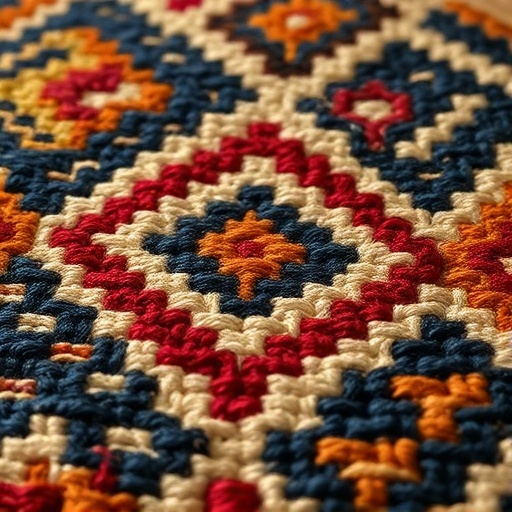
The Berber knot differs from the Persian symmetrical knot by using a single over‑under motion, which speeds production while preserving a sturdy foundation. This method also creates a subtle texture that catches light differently across the rug’s surface.
A common geometric motif—four interlocking triangles forming a larger diamond—represents fertility and the cyclical nature of rain in the Atlas mountains. When the motif repeats across a border, it signals a blessing for abundant harvests, a belief still whispered among weavers in the village of Taznakht.
3. Distinctive Styles: From Tribal Classics to Modern Interpretations
Berber rug patterns can be grouped by tribal origin, each with distinct color schemes and motif signatures. Beni Ourain rugs, sourced from the Middle Atlas, showcase a muted ivory field punctuated by bold black lines that mimic the shadows of pine forests. Beni M’gift pieces, hailing from the Anti‑Atlas, favor deep indigo backgrounds with orange‑red chevrons, reflecting the region’s mineral deposits. Authentic Beni Ouarain rug pieces employ soft beige bases with intricate white latticework that mirrors the sand dunes’ ripples.
In 2022, market analysis revealed that Beni Ourain accounted for 42 % of global Berber rug sales, Beni M’gift captured 27 %, and Beni Ouarain held 18 %, while emerging hybrid styles made up the remaining 13 %.
3.1 Classic tribal collections – Beni Ourain, Beni M’gift, and Beni Ouarain
Beni Ourain carpets typically measure 5 × 7 ft for living‑room use, with a weight of approximately 12 kg, providing a substantial feel underfoot. Their color palette derives from natural wool whites and charcoal dyes extracted from oak bark.
Beni M’gift rugs often feature a 6 × 9‑ft format, woven with a higher knot count of up to 110 knots per square inch, delivering sharper motif definition. The indigo dye is sourced from the plant Isatis tinctoria, cultivated in the Rif mountains, and requires a three‑day fermentation process to achieve its deep hue.
Beni Ouarain pieces favor a lighter construction, averaging 4 × 6 ft, and incorporate a fringe that is hand‑knotted rather than machine‑finished, adding a tactile edge that resists fraying.
3.2 Hybrid and designer collaborations reshaping the aesthetic
Contemporary designers merge traditional Berber geometry with minimalist color blocks, creating rugs that suit sleek urban lofts while honoring tribal roots. A notable partnership in 2021 paired a Parisian fashion house with a cooperative in Taznakht, resulting in a limited‑edition rug that blended the house’s signature monochrome palette with the cooperative’s classic diamond motif. Only 150 pieces were produced, each numbered and accompanied by a handwritten note from the lead weaver.
Such collaborations have driven a 22 % price premium for hybrid rugs compared with pure tribal pieces, according to a 2023 auction house report.
4. Authenticity Check: Evaluating Quality and Detecting Replicas
Genuine Berber rugs reveal their authenticity through tactile and visual cues. Knot density is the most reliable indicator; a genuine hand‑knotted piece will never exceed 120 knots per square inch, while machine‑made imitations often display uniform, overly tight knots that feel plastic.
Fringe finish also matters: authentic rugs feature hand‑knotted fringe that matches the rug’s pile height, whereas mass‑produced copies use synthetic yarn that appears smoother and lacks the natural irregularities of hand‑spun wool. The backing material of a true Berber rug is typically cotton or linen, not polyester mesh.
4.1 Physical indicators – knot density, fringe finish, and backing material
To measure knot count, place a ruler across a 1‑inch section of the rug, count the individual knots visible on the surface, and multiply by the number of rows in that same inch. A count of 85–110 confirms hand‑knotted construction typical of authentic Berber craftsmanship. Additionally, examining the selvedge—the side edges—can reveal hand‑wrapped threads that often feature slight variations in tension, a hallmark of manual labor impossible to replicate perfectly by machine.
5. Conclusion: Investing in Timeless Heritage
Understanding the rich history of Berber weaving, from the nomadic tribes of the Atlas Mountains to the modern collaborations that redefine contemporary interiors, is essential for any discerning collector. By recognizing the distinct characteristics of Beni Ourain, Beni M’gift, and Beni Ouarain styles, and by knowing how to verify authenticity through knot density and material quality, buyers can make informed decisions that honor the artisans' legacy. Whether seeking a functional floor covering or a piece of textile art, a genuine Berber rug offers a unique blend of durability, symbolism, and aesthetic beauty that transcends fleeting trends.
Explore the curated collection of handcrafted Moroccan home décor to find a rug that resonates with your personal style and brings the spirit of the Maghreb into your home.