
Authentic Moroccan Cuisine: A Foodie'S Guide
Introduction: Why Moroccan Cuisine Deserves a Spot on Your Culinary Bucket List
You're walking through the Djemaa el-Fna as the sun drops behind the Koutoubia Mosque. Smoke curls from dozens of food stalls, carrying the scent of charred lamb fat, cumin, and something sweet you can't quite name. A vendor pulls a clay pot from a bed of embers, its conical lid dripping with condensation that has been cycling for hours, slow-braising chicken with olives and a lemon that looks nothing like the lemons back home. A few steps away, a woman folds paper-thin dough onto a hot griddle, creating a flaky msemen that she stacks in neat, blistering layers. Fresh mint cascades from a silver teapot held a full foot above a row of glasses, each pour producing a thin amber stream topped with a crown of foam.
This is authentic Moroccan cuisine — a foodie's guide could fill an entire book, and many have tried. But what makes Morocco's food culture extraordinary isn't just the flavors. It's the fact that every dish carries centuries of trade, migration, and coexistence. Berber foundations meet Arab spice routes, Andalusian refinement from Moors expelled from Spain, French colonial influence on pastry technique, and sub-Saharan African ingredients that arrived through trans-Saharan caravans. The result is a cuisine that doesn't borrow — it absorbs and transforms.
Morocco's culinary tourism sector has grown steadily over the past decade, with food-focused travel experiences among the fastest-growing segments in North African tourism. Travelers are no longer content to eat at hotel buffets; they're booking cooking classes in riads, hiring local guides for souk spice tours, and timing their visits around harvest seasons for argan oil and saffron.
This guide will take you through the essential ingredients, the dishes that define the culture, regional variations that most visitors miss, the customs that turn a meal into a ceremony, and practical steps for recreating these flavors in your own kitchen. Whether you're planning a trip to Marrakech or simply want to understand what makes a proper couscous Friday ritual, you'll find everything you need right here.
1. The Holy Trinity of Moroccan Flavor: Spices, Preserved Lemons, and Cooking Vessels
1.1 The Essential Moroccan Spice Rack
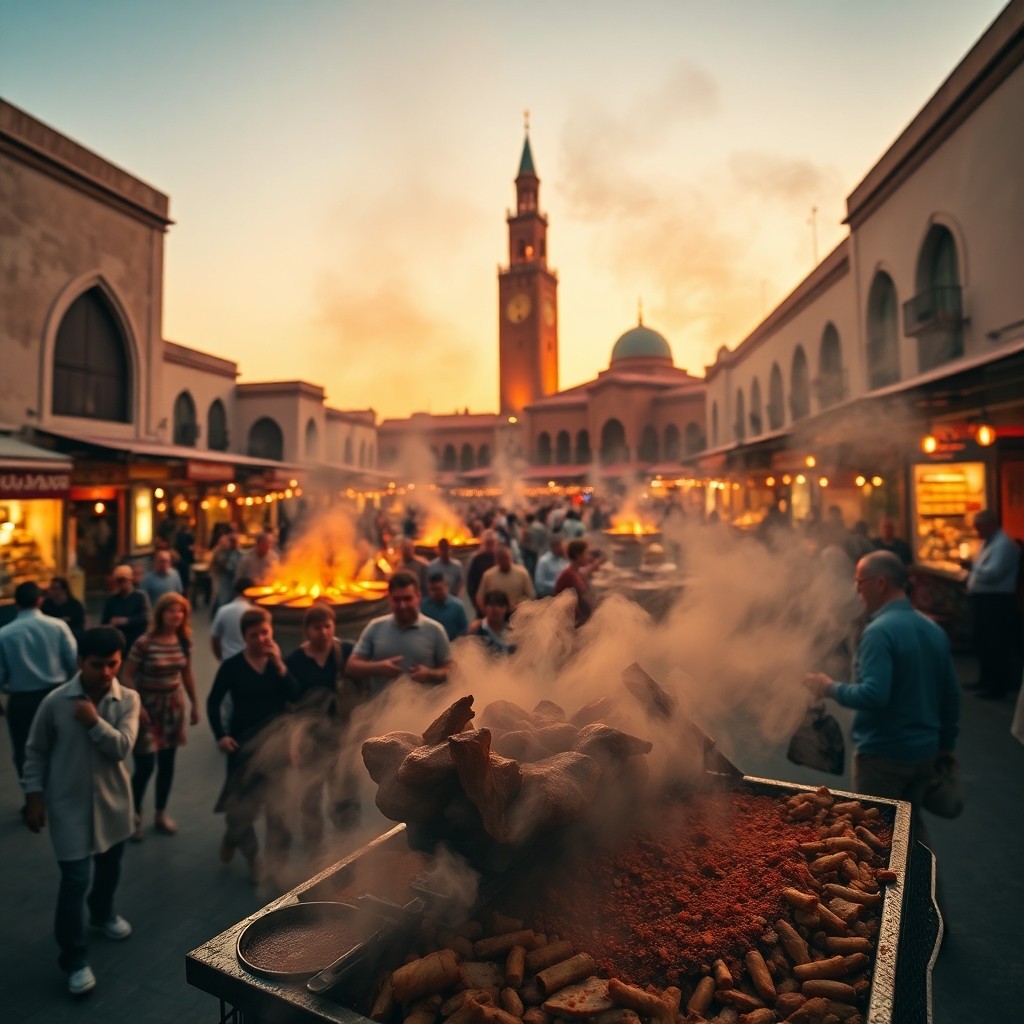
*A vibrant scene of Djemaa el-Fna square at golden hour, capturing the iconic food stalls with smoke rising from traditional cooking, the Koutoubia Mosque in the background, and the bustling atmosphere that defines Moroccan street food culture.*
Most tourists come home with a bag of ras el hanout and a jar of cumin. That's a start, but it barely scratches the surface. A well-stocked Moroccan spice cabinet includes ingredients that serve distinct structural roles in a dish — some provide warmth, others color, and a few do things you wouldn't expect.
Here's what you actually need. **Cumin** appears in nearly every savory preparation, from grilled kebabs to bean soups. **Ginger** (dried, ground) provides a sharp, peppery warmth distinct from fresh ginger. **Paprika** — sweet, not smoked — supplies color and a mild, fruity base. **Turmeric** adds earthiness and that unmistakable golden hue to tagines. **Cinnamon**, specifically Ceylon cinnamon, shows up in savory dishes like lamb tagines and in pastilla, where it bridges sweet and savory in a single bite. **Ras el hanout** is a fragrant ras el hanout blend that varies by shop but typically contains between 20 and 30 ingredients, including rose petals, grains of paradise, and long pepper. **Taliouine saffron**, harvested in the Anti-Atlas mountains, is saffron's most prized regional variety, with a potency that means you need only a few threads for an entire tagine. **Black pepper** and **white pepper** both appear, often in the same dish. **Fenugreek** is used sparingly in bread and spice mixes for its maple-like bitterness. **Nigella seeds** top breads and pastries with their slightly oregano-like crunch. And dried **orange blossom water** and **rose water** finish desserts and sometimes savory dishes with floral notes that define Moroccan sweets.
Each spice earns its place through function, not tradition for tradition's sake. Cumin aids digestion. Saffron contains safranal, a compound that enhances other flavors around it. Cinnamon's cinnamaldehyde binds with fat-soluble flavor molecules in slow-cooked meats, amplifying depth over hours of cooking.
1.2 Preserved Lemons: The Ingredient That Defines the Cuisine
A fresh lemon and a preserved lemon share almost nothing in common beyond their origin fruit. The preservation process transforms the rind into something soft, intensely salty, mildly fermented, and utterly unique — an ingredient that appears in chicken tagines, fish dishes, grain salads, and even some versions of couscous garnish.
Making them at home requires patience but almost no skill. Quarter fresh lemons lengthwise without cutting all the way through, so the quarters remain attached at the base. Pack the cuts and the interior generously with coarse sea salt — roughly 2 tablespoons per lemon. Press the lemons back into shape and pack them tightly into a sterilized glass jar, adding extra salt between layers. If you're working with Taliouine saffron and preserved lemons sourced directly from Moroccan producers, you'll notice the difference immediately. Seal the jar and store it in a cool, dark place for a minimum of three to four weeks. The lemons are ready when the rind has turned translucent and soft enough to eat without effort.
When a recipe calls for preserved lemon, you typically use only the rind — discarding the pulp unless specified. Dice it finely and add it during the last 15 to 20 minutes of cooking so the flavor disperses without disintegrating entirely.
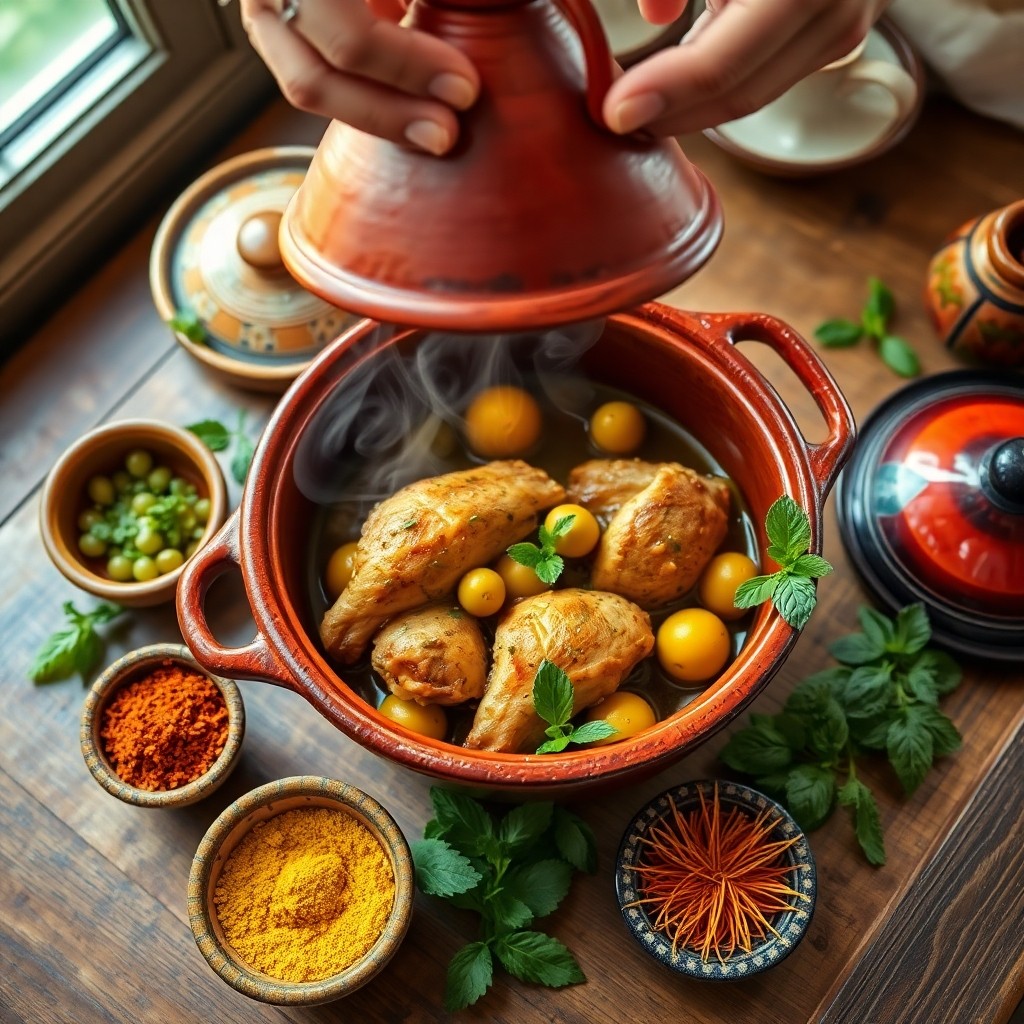
*A beautifully styled overhead shot of a traditional Moroccan tagine being unveiled, showcasing slow-braised chicken with preserved lemons and olives, surrounded by aromatic spices and fresh mint on a rustic table.*
1.3 The Tagine Pot: More Than a Tourist Souvenir
The tagine pot isn't a decorative object for a shelf. Its geometry is functional engineering. The wide, shallow base allows ingredients to cook in a single layer with minimal liquid, while the heavy conical lid traps steam, condenses it, and returns it to the dish in a continuous self-basting cycle. This means you can cook meat with as little as a quarter cup of added water — the ingredients essentially braise in their own released moisture.
You have three main options. **Unglazed clay tagines** produce the most authentic results, but they require seasoning before first use, slow heat (never high), and patience. They're ideal for traditionalists willing to monitor the cooking process. **Cast iron tagines** (such as those from Le Creuset or similar brands) retain heat more evenly and work directly on modern stovetops without diffuser plates. They sacrifice some of the clay's moisture-absorbing properties but gain reliability. **Electric tagines** are the least authentic option — they regulate temperature automatically but often cook too aggressively, reducing the slow-simmer quality that defines the dish.
For most home cooks, a cast iron tagine or a heavy Dutch oven with a tight-fitting lid offers the best balance of authenticity and practicality.
2. The Dishes You Can't Leave Morocco Without Trying
2.1 Tagine: Not Just a Pot — It's a Philosophy of Slow Cooking
A tagine is not a stew. The distinction matters. Stews rely on abundant liquid to submerge and cook ingredients. A tagine uses minimal liquid, relying on the conical lid to cycle moisture back into the food. The layering technique also differs from Western cooking: onions and aromatics form the base, meat sits in the middle to receive steady moisture, and vegetables go on top where they steam gently. You never stir. Breaking this structure defeats the purpose.
Three variations define the form. **Chicken tagine with preserved lemon and olives** is the dish most Moroccan home cooks consider their signature — chicken thighs simmered with onion, ginger, saffron, and turmeric, finished with quartered preserved lemons and cracked green olives during the final 20 minutes. **Lamb tagine with prunes and almonds** balances rich meat with caramelized fruit sweetness, using cinnamon and a touch of honey to bridge the flavors. **Seven-vegetable tagine** is the vegetarian standard, layering zucchini, carrots, turnips, tomatoes, chickpeas, onions, and cauliflower with cumin, paprika, and a generous hand of fresh cilantro.
Each variation shares the same principle: low heat, no stirring, and time.
2.2 Couscous: The Friday Ritual Dish
Couscous in Morocco is not the instant-grain side dish you find in Western supermarkets. It's a steamed, hand-rolled semolina preparation that families gather around every Friday after mosque — and at weddings, funerals, and holidays. The name refers both to the dish and to the fine semolina granules themselves.
The traditional method involves three rounds of steaming. The first steaming hydrates the raw couscous granules, which are then spread on a large platter and fluffed with fingers (or a fork) to prevent clumping, while being rubbed with oil or smen (aged butter). The second steaming further tenderizes the grains. The third and final steaming, often done over the stew or tagine being served alongside, infuses the couscous with the aromas of the main dish. Between each round, the couscous is returned to the platter, fluffed, and sometimes tossed with raisins or onions.
The finished couscous is piled into a mound with a well in the center, into which the meat and vegetables from the tagine are placed. A broth made from the cooking liquid is served on the side for ladling.
2.3 Beyond the Classics: Pastilla, Harira, and Mechoui
**Pastilla** (sometimes spelled bastilla) is a warqa-dough pie that layers spiced shredded pigeon or chicken with a custard-like mixture of eggs and herbs, then tops the whole thing with a blizzard of powdered sugar and cinnamon. The contrast of savory filling against sweet, crackling pastry is unlike anything in other cuisines. Chicken versions are more common for everyday eating, while pigeon pastilla remains a celebration dish.
**Harira** is a tomato-based soup thickened with lentils, chickpeas, and a small amount of flour or rice. It's the soup that breaks the Ramadan fast at sunset across Morocco, served with sticky-sweet chebakia (sesame cookies dipped in honey) and dates. The flavor profile leans on ginger, cinnamon, turmeric, and a generous squeeze of lemon juice added at the table.
**Mechoui** is a whole lamb slow-roasted in an underground pit oven. The animal is seasoned simply — salt, cumin, and sometimes paprika — then lowered into a clay-lined pit with burning coals. It cooks for four to six hours until the meat pulls from the bone and the exterior has developed a crust. It's served without ceremony: torn by hand, sprinkled with salt and cumin, and eaten on the spot.
3. Regional Flavors: How Geography Shapes What's on the Plate
3.1 Fez: The Refined, Royal Kitchen
Fez has been Morocco's culinary capital for over a thousand years, and its food reflects the city's aristocratic past. The Fez-style pastilla is the most elaborate version — it can contain dozens of layers of warqa dough, spiced pigeon, toasted almonds, eggs thickened with parsley, and a sugar-and-cinnamon topping that alone requires a practiced hand. The city's Fez Festival of World Sacred Music often pairs its programming with elaborate culinary events that showcase these royal dishes.
Sweet-and-savory combinations reach their most sophisticated expression here. A lamb tagine might include quince, pears, and raisins alongside the meat, with a honey glaze that caramelizes during the final cooking phase. Fez is also the birthplace of the *b'stilla au lait* — a milk-based pastilla dessert that uses the same warqa technique but fills it with sweetened milk custard and orange blossom water.
The city's traditional riad restaurants often serve multi-course meals that follow a strict progression: cold salads first, then pastilla, tagine, couscous, and finally dessert with mint tea. Understanding this structure helps visitors appreciate why a Moroccan meal can last two to three hours.
3.2 Marrakech: Street Food Capital of Morocco
When the sun sets and the Djemaa el-Fna transforms into an open-air food hall, Marrakech earns its reputation. The square fills with numbered stalls, each specializing in specific dishes. Stall vendors call out to passersby, and the air thickens with smoke from charcoal grills.
Snail soup — *bebouche* — is the iconic street bowl. Small land snails simmer in a broth spiked with thyme, licorice root, ginger, and bitter orange peel. You eat them with a toothpick, then drink the broth from the cup. Grilled merguez sausages, made from lamb or beef spiced with cumin, paprika, and harissa, are served with bread and a dusting of salt. Fresh orange juice stalls line the perimeter, offering glasses of liquid fruit for a few dirhams.
The food stalls of Marrakech are a sensory experience that deserves their own guide, and for the more adventurous eaters, guided food tours can help navigate the dozens of stalls and explain what's in each dish before you commit.
3.3 The South and the Coast: Berber Roots and Seafood
South of the Atlas Mountains, the cuisine shifts dramatically. Saharan Berber cooking relies on dates, camel milk, and bread baked directly in hot sand — *khobz eddar* or *matlouh*, depending on the region. Mechoui reaches its most traditional form here, and dishes tend to be simpler, with fewer spices and more reliance on the natural flavors of the ingredients.
On the Atlantic coast, Essaouira is the fish tagine capital. Sardines are the local obsession — fresh ones arrive by the crate at the port each morning. A fish tagine here layers sardines with tomatoes, peppers, preserved lemon, and cumin, cooked in a clay tagine that amplifies the briny depth. Grilled whole fish with chermoula (a marinade of cilantro, parsley, garlic, cumin, paprika, lemon, and olive oil) is the other coastal staple.
The contrast between regions is stark: the north uses butter and dairy, the south relies on camel and date products, and the coast pivots to seafood and olive oil. A single country, three distinct food systems.
4. How to Eat Like a Local: Customs, Etiquette, and the Communal Table
4.1 Bread as Utensil: The Art of Eating with Your Hands
In a traditional Moroccan meal, forks and spoons are optional. The primary eating tool is *khobz* — a round, dense bread that appears at every meal, from breakfast to dinner. You tear off a piece with your right hand (never your left), pinch or fold it around a piece of meat or a scoop of vegetables, and bring it to your mouth. The bread functions as both plate and utensil.
The technique has a specific logic: use the bread to absorb sauce, scoop grains, or grip slippery ingredients like chickpeas or olives. You eat from the communal dish by taking food from the section directly in front of you. Reaching across the platter to grab a piece from someone else's section is considered poor form. At formal meals, a host may place choice pieces of meat in front of a guest as a gesture of hospitality.
4.2 Mint Tea Ceremony: More Than a Drink
Moroccan mint tea — *atay* — is served at every social interaction: welcoming guests, closing business deals, after meals, and when someone simply stops by. The preparation is a ritual. Gunpowder green tea is rinsed briefly with boiling water to remove bitterness, then combined with fresh spearmint (not peppermint) and sugar — often 5 to 7 teaspoons per small pot. The tea is poured from a height of 12 to 18 inches into small glass cups, creating a thin layer of foam on top.
The three-glass tradition has specific symbolism. The first glass is "gentle as life," the second "strong as love," and the third "bitter as death" — the bitterness comes from the mint and tea steeping longer as the pot empties. You're expected to drink at least one glass. Declining outright is unusual; if you need to stop, you can gently place your hand over the cup.
4.3 Hospitality Rules Every Visitor Should Know
Moroccan hospitality operates on the principle of *baraka* — a blessing that accompanies generosity. When you're offered food or tea, accepting is the respectful choice, even if you only take a small portion. Hosts will often insist you eat more (*koul, koul* — eat, eat), and a polite but firm "shukran, la bas" (thank you, I'm full) works after the second or third round of encouragement.
Don't be surprised if a shopkeeper offers you tea without any obligation to buy. This is standard practice, not a sales tactic. Accept the tea, enjoy the conversation, and move on without guilt if you're not interested in purchasing. The social exchange matters more than the transaction.
5. Bringing Morocco Home: Where to Shop, What to Buy, and How to Start Cooking
5.1 Sourcing Authentic Ingredients Outside Morocco
Finding quality Moroccan ingredients abroad is easier than it was a decade ago. **Ras el hanout** from specialty spice retailers like The Spice House offers blends that are significantly better than mass-market supermarket versions. **Preserved lemons** are available at Mediterranean grocery stores and online through Terrain or directly from Moroccan import shops. **Argan oil** — culinary grade, not cosmetic — comes from cooperatives in the Souss region and can be ordered through specialized importers that work directly with women-run cooperatives in Morocco. **Smen** (aged butter) is harder to find but worth seeking out from Middle Eastern grocers; it adds a funky, deeply savory quality to couscous and bean dishes that butter cannot replicate. **Couscous** itself should be the premium Moroccan couscous grains (not fine Israeli couscous or coarse pearl couscous), available at most well-stocked grocery stores in the international aisle.
5.2 The Beginner's Moroccan Pantry: 10 Items to Start With
If you're building a Moroccan pantry from scratch, prioritize these items in order: (1) medium-grain couscous, (2) ras el hanout, (3) cumin, (4) ground ginger, (5) ground cinnamon, (6) sweet paprika, (7) turmeric, (8) preserved lemons, (9) saffron, and (10) smen or a good salted butter substitute. Budget options work for most of these — regular ras el hanout is fine for your first few dishes, and standard ground spices are perfectly adequate. The one splurge worth making is saffron: a single gram of Taliouine saffron costs around $10 to $15 but lasts dozens of recipes and produces a flavor that no substitute matches.
5.3 Your First Moroccan Meal: A Suggested Menu
For a beginner-friendly Moroccan dinner, start with a simple salad — diced tomatoes, cucumbers, and onions dressed with lemon, olive oil, and cumin. For the main course, try a chicken tagine with preserved lemon and olives. The technique is forgiving: brown the chicken, add onions and spices, add a small amount of water, cover, and simmer low for about an hour. Add preserved lemon and olives in the last 15 minutes. Serve over couscous steamed once (the three-round process can wait until you're comfortable). For dessert, slice fresh oranges and sprinkle them with cinnamon and a drizzle of orange blossom water. Pair the entire meal with mint tea served from a handcrafted Moroccan tea pot, and you've just served a credible Moroccan dinner that covers the essential flavors without requiring specialty equipment or advanced technique.
Conclusion: Moroccan Cuisine Is a Journey, Not a Destination
What makes Moroccan cuisine worth exploring again and again is the depth hiding behind every familiar name. Tagine isn't one dish — it's a cooking method that produces hundreds of regional variations. Couscous isn't a grain — it's a weekly ritual tied to family, faith, and community. Mint tea isn't a beverage — it's a social contract poured from a height.
The cuisine rewards curiosity at every level. You can spend a week in Marrakech eating street food and leave wanting more. You can take a cooking class in a Fez riad and realize that warqa dough takes years of practice to master. You can recreate a chicken tagine in your apartment kitchen and discover that the preserved lemons you made a month ago have transformed into something you can't find in any store back home.
Start where you are. Book that trip to a local Moroccan restaurant and order something you can't pronounce. Buy preserved lemons online and add them to your next roast chicken. Take a cooking class in Casablanca or Fez if you're planning a visit — Casablanca cooking schools offer half-day experiences that cover tagine technique, bread baking, and the spice knowledge you'll use for years.
Moroccan cuisine has been absorbing influences for over a millennium. It has room for your curiosity too.
Frequently Asked Questions (FAQ)
**Q1: What is the most authentic dish in Moroccan cuisine?**
Couscous served on Fridays is considered the national dish, but tagine is the most internationally recognized. Authenticity depends on regional context — a Berber mountain tagine differs significantly from a Fez pastilla.
**Q2: What spices are essential for cooking Moroccan food at home?**
Cumin, ginger, paprika, turmeric, cinnamon, and ras el hanout form the core. Saffron and preserved lemons are also critical for depth of flavor in traditional preparations.
**Q3: Is Moroccan food spicy hot?**
Generally no. Moroccan cuisine emphasizes warm, aromatic spices like cinnamon, ginger, and cumin rather than heat. Harissa is served as a condiment on the side for those who want to add spice.
**Q4: What is a traditional Moroccan breakfast?**
Msemen (layered flatbread), harcha (semolina bread), olive oil, honey, mint tea, and amlou — a dip made from almonds, argan oil, and honey.
**Q5: Can you make authentic Moroccan food without a tagine pot?**
Yes. A Dutch oven or heavy-bottomed pot with a tight-fitting lid replicates the slow-cooking, moisture-cycling effect of a traditional clay tagine. The results are nearly identical for most home cooking purposes.
**Meta Description:** Discover authentic Moroccan cuisine — from tagine techniques and regional dishes to spice guides and dining customs. Your complete foodie's guide to Morocco's flavors.