
Ultimate Guide: Authentic Moroccan Coffee Recipe
An authentic Moroccan coffee recipe is defined by the decoction of dark roast coffee with a distinct spice blend featuring sesame seeds, black pepper, and sometimes a pinch of sea salt, resulting in a robust and complex beverage. Unlike its Turkish counterpart which relies heavily on cardamom, the __LINK_PLACEHOLDER_4__ method incorporates a wider array of spices and requires a specific "three-rise" boiling technique to generate a thick, creamy foam. As spice-infused beverages continue to dominate global culinary trends in 2026, mastering this traditional preparation offers a direct connection to centuries-old North African hospitality.
The sensory experience of this drink is immediate and intense. The aroma hits you before the cup touches your lips—a mix of roasted earthiness from the beans and the sharp, warm scent of spices. In 2026, as coffee enthusiasts move beyond simple syrups and artificial flavorings, the return to authentic, whole-spice infusions has revitalized interest in **North African coffee culture**. This recipe is not just about caffeine; it is about preserving a ritual that has been passed down through generations, transforming a morning routine into a moment of pause and connection.
Key Takeaways
- **Authentic Moroccan coffee** relies heavily on a specific blend of spices like sesame seeds and black pepper, distinct from other regional styles. - The brewing process requires a long decoction time to extract the deep flavors of the roasted beans. - Presentation is paramount, often serving the drink in small glasses with intricate designs. - Sugar is traditionally added during the brewing process, not after, to ensure proper caramelization.
The Definitive Authentic Moroccan Coffee Recipe
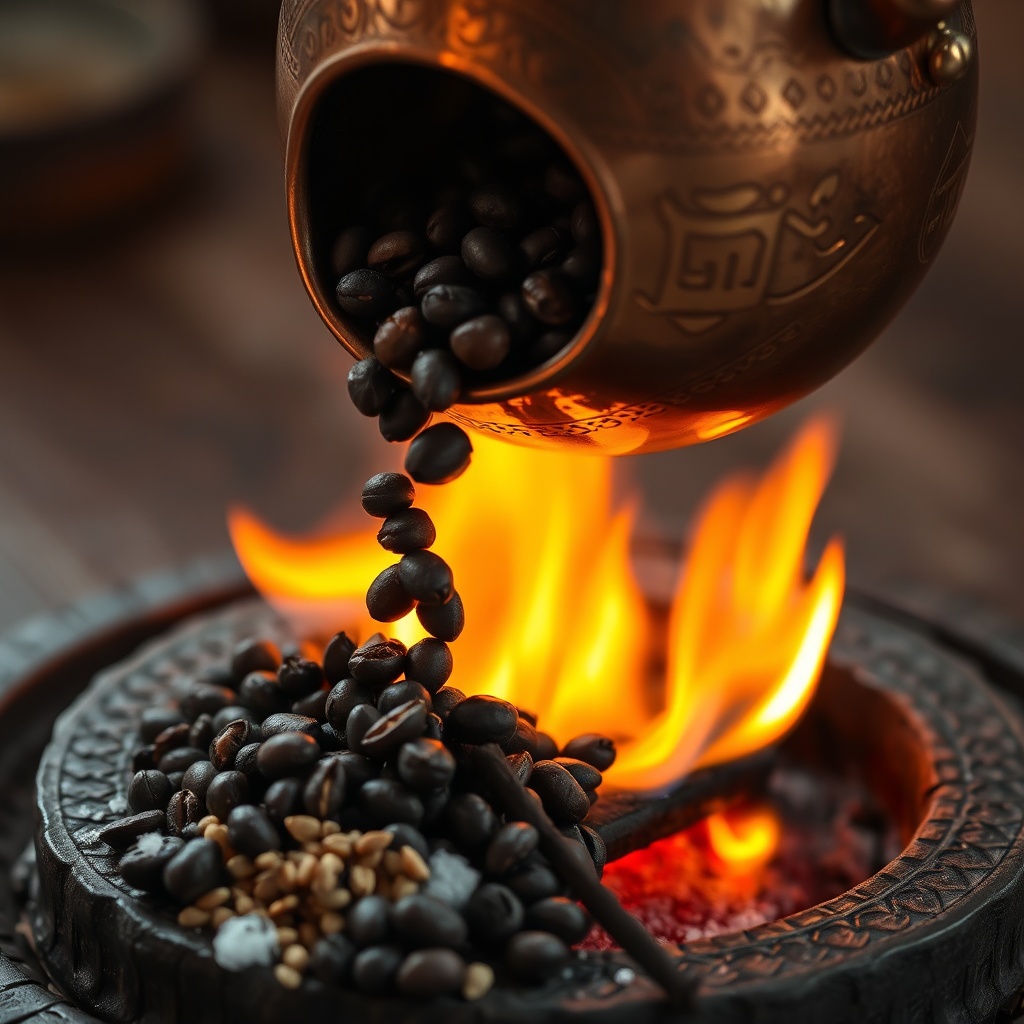
*A rustic copper pot simmering spiced coffee beans, illustrating the authentic Moroccan coffee recipe process.*
To create the perfect **Authentic Moroccan Coffee Recipe**, you must prioritize the quality of your grind and the precision of your heat. The following method yields two servings of **dark roast Arabic coffee** that strikes a balance between bitterness and spice. Start by combining 2 tablespoons of extra-fine ground coffee (similar to espresso grind), 1 teaspoon of ground cardamom, a generous pinch of freshly ground black pepper, and 2 teaspoons of sugar in your pot.
Pour in 1 cup of cold water. Place the pot over medium-low heat and stir gently until the sugar dissolves. As the mixture heats, watch for the foam to begin rising. This is the critical moment in the **Authentic Moroccan Coffee Recipe**. Just as the foam threatens to spill over, remove the pot from the heat immediately. Let the bubbles settle for a few seconds, then return it to the heat. Repeat this process two more times. By the third rise, the coffee should be thick and aromatic. Pour immediately into small cups to capture the foam, ensuring an even distribution between the servings.
**Quick Answer:** The secret to the **Authentic Moroccan Coffee Recipe** is the "three-rise" boiling method. Bring the spiced coffee to a boil three times, removing it from the heat just before it overflows, to create a thick foam and intense flavor.
Essential Ingredients and Measurements
The foundation of this drink is the bean. You must use a high-quality **dark roast Arabic coffee**. A French Roast or an Italian Roast works best because the oiliness of the bean stands up to the strong spices. Lighter roasts will taste too acidic and will be overpowered by the pepper and sesame. For the spices, freshness is non-negotiable. Pre-ground cardamom from a supermarket often lacks the volatile oils that give this drink its signature kick. If possible, crack whole cardamom pods and grind them with the coffee beans.
The ratio of liquid to solid is precise. Use 1 cup of water for every two demitasse cups intended. This produces a strong, concentrated shot. If you prefer a milder drink, you can add more water, but you risk diluting the foam. The sugar measurement of 2 teaspoons is traditional for a semi-sweet cup; Moroccans generally do not drink this coffee black. The sugar helps to mellow the bitterness of the dark roast and creates a smoother mouthfeel.
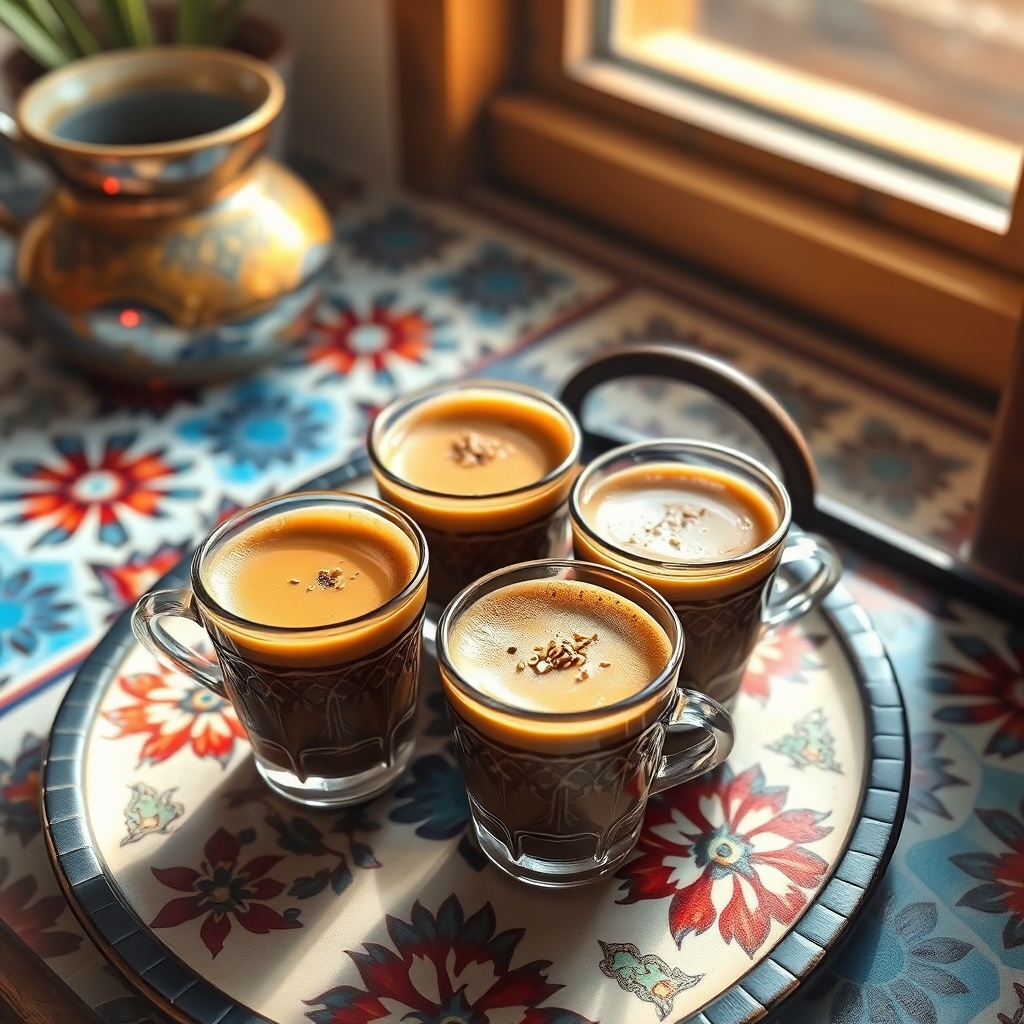
*Elegant presentation of authentic Moroccan coffee with foam and spice garnish on a colorful tile tray.*
The Traditional Brewing Process
The brewing vessel is just as important as the ingredients. Ideally, you should use a **traditional brass coffee pot** known as a *briki* or *beka*. The conical shape of this pot is engineered to funnel rising coffee grounds and foam into a narrow neck, which facilitates the creation of the frothy head. If you do not have a *briki*, a small, heavy-bottomed saucepan will suffice, though you must watch it more closely to prevent boiling over.
The process requires patience. Do not rush the heat. High heat will scorch the coffee and release unpleasant tannins. Low and slow allows the flavors to meld. As the coffee heats, you will see the foam start to form at the center. This foam, called *kaych*, is the mark of a well-brewed cup. It traps the aromatic compounds, ensuring they hit your nose before your tongue. When pouring, tilt the cup slightly and pour from a height of about three inches to encourage the foam to rise to the top.
Serving Suggestions
Serving is an art form in Morocco. The coffee is typically poured into small glasses or cups without handles, often decorated with gold or colorful patterns. The small size is intentional; the drink is potent and meant to be sipped slowly. It is customarily served alongside sweet treats, such as **Moroccan honey cakes** or dates, which complement the spiced bitterness of the coffee.
One crucial rule of etiquette and physics: do not stir the coffee once it is poured. The grounds need time to settle at the bottom of the cup. Stirring immediately disturbs the sediment, resulting in a gritty texture. Instead, wait a minute or two before taking your first sip. This allows the liquid to clarify while retaining the heat. The experience is about savoring the top layer of foam first, then moving to the dark liquid beneath.
The Cultural Ritual of Coffee in Morocco
In Morocco, coffee is rarely a solo activity consumed on the commute to work. It is a social lubricant and a symbol of hospitality. Offering a cup to a guest is a mandatory sign of welcome. The preparation is often performed in front of the guest, serving as a display of respect and generosity. In 2026, despite the fast pace of modern life, this ritual remains a sacred pause in the day. It is a moment to talk, negotiate, and bond.
The etiquette surrounding the coffee ceremony is specific. Guests are typically served the oldest person first, moving down the hierarchy of age or status as a mark of deference. When receiving the cup, you must use your right hand. The left hand is considered impolite for eating or drinking in this cultural context. Furthermore, there is a polite dance involved in refusing a refill. The host will invariably offer more, and it is polite to initially decline before eventually accepting, or to accept exactly three cups. Refusing a fourth cup is the standard signal that you are satisfied and wish to leave.
**Definition:** *Briki* — A long-handled pot, traditionally made of copper or brass, used specifically for boiling coffee. Its narrow neck is designed to help concentrate the foam and trap aroma during the brewing process.
Symbolism of the Pour
The act of pouring is steeped in meaning. The host pours from a height, often holding the pot a foot above the cup. This is not merely for show; it helps to cool the liquid slightly as it falls and aerates the coffee, creating a frothy layer on top. A thick head of foam is a sign of a skilled host. It implies that the coffee was brewed with patience and care. A cup without foam is sometimes considered a bad omen or a sign of a stingy host.
The oldest guest is always served first. This hierarchy reinforces the social structure within the gathering. It is a silent acknowledgment of wisdom and status. The host will often continue to pour a small amount into each cup, then return to the beginning to top them off, ensuring everyone receives a cup with an equal amount of foam. This attention to detail is what elevates the drink from a simple beverage to a cultural experience.
The Role of Coffee in Moroccan Gatherings
Coffee serves as the bridge between formal business and relaxed family time in 2026 Moroccan society. In a business setting, the coffee ceremony establishes trust. No serious negotiations begin until the coffee has been served and sipped. It signals that the parties are willing to take the time to understand one another. Conversely, in family settings, it is the backdrop to gossip, storytelling, and relaxation.
This contrasts sharply with the "espresso to go" culture prevalent in many Western cities. In Morocco, you do not grab a coffee in a paper cup and rush out the door. You sit. You drink from glass or ceramic. You engage with the people around you. The **serving with Moroccan dates** adds a nutritional and textural element, providing a quick energy boost that sustains the conversation. The slowness of the preparation—the grinding, the boiling, the waiting—forces a slowdown in pace that is increasingly rare in the digital age.
The Anatomy of Flavor: Spices and Roasts
The flavor profile of Moroccan coffee is complex and multi-layered. It is distinct from the heavy cardamom focus found in Saudi or Emirati coffee. While cardamom is present, it is part of a choir, not a solo performance. The inclusion of **ground sesame seeds** adds a nutty, buttery richness that coats the palate. A pinch of black pepper provides a subtle heat that lingers at the back of the throat, cutting through the sweetness of the sugar. Sometimes, a pinch of sea salt is added to enhance the chocolate notes of the dark roast.
The interaction between the roast level and the spices is critical. A light roast would be too floral and acidic, clashing with the savory notes of the pepper and sesame. The dark roast provides a canvas of bitterness, chocolate, and caramel. These robust notes stand up to the spices, allowing them to shine without overwhelming the palate. The sugar caramelizes during the three-rise boiling process, adding a toasty depth that you cannot achieve by adding sweetener at the end.
**Quick Answer:** The best **Moroccan coffee spiced blend** typically includes cardamom, cinnamon, nutmeg, black pepper, and sesame seeds. This combination creates a flavor profile that is nutty, spicy, and slightly sweet, perfectly complementing the bitterness of dark roast beans.
Selecting the Right Beans
You must choose a bean with high oil content. Look for beans that appear shiny and dark. These oils are essential for carrying the fat-soluble flavor compounds found in spices like nutmeg and cinnamon. Beans labeled as "French Roast" or "Italian Roast" are ideal. Flavor notes of dark chocolate, burnt caramel, or tobacco are excellent pairings for the spice profile. Avoid beans with fruity or acidic undertones, such as Kenyan or Ethiopian roasts, as they will create a dissonant flavor profile.
Grinding the beans fresh is mandatory. Pre-ground coffee stales quickly, losing the aromatic oils that are vital for this recipe. You want a texture that is slightly finer than table salt but not as powdery as flour. This texture allows for maximum extraction during the boil without turning the final cup into sludge. If you can, grind the spices together with the beans. This ensures the oils from the spices are released instantly into the coffee grounds.
The Secret Spice Blend (Ras el Hanout)
While many households mix their own spices, some traditionalists turn to *Ras el Hanout*. This translates to "head of the shop" and is a complex spice mix used in North African cooking. It can contain over a dozen spices, including cumin, coriander, allspice, and dried rosebuds. Using a high-quality Ras el Hanout is a shortcut to a deep, sophisticated flavor profile.
If using a pre-made mix, exercise restraint. Use half the amount you would of single spices. A little goes a long way. The complexity of Ras el Hanout can easily overpower the coffee if used too liberally. Start with 1/4 teaspoon for two cups of coffee and adjust from there. This approach adds layers of flavor—floral, savory, and spicy—that make the **Authentic Moroccan Coffee Recipe** truly unique.
Balancing Sweetness and Bitterness
The traditional use of sugar is not just for sweetness; it is for texture. In Morocco, large sugar lumps or loaves were traditionally broken off and added to the pot. As the lump sugar dissolves slowly during the boiling process, it contributes to a slightly thicker mouthfeel. Modern granulated sugar works, but it dissolves too quickly to impact the texture.
Balancing the sweetness is a personal preference. However, the goal is not to mask the bitterness but to harmonize with it. The sugar should tame the sharp edges of the dark roast and the pepper, allowing the nutty and spicy notes to take center stage. If you find the coffee too bitter, try adding the sugar a bit earlier in the process, perhaps during the first rise, to give it more time to caramelize.
Essential Tools for the Perfect Brew
To achieve the authentic taste, you need the right hardware. The shape and material of your brewing vessel affect the physics of the boil. In 2026, there has been a resurgence of copper pots in modern kitchens, not just for their aesthetic appeal but for their superior thermal conductivity. Copper heats evenly and quickly, allowing for precise control over the boiling process. This control is essential for managing the foam.
While you can use a standard saucepan, the wide surface area makes it difficult to retain heat and manage the foam. The traditional pot's narrow neck concentrates the heat and the rising bubbles. Investing in the proper equipment is the first step toward mastering this culinary art. It transforms the recipe from a morning task into a cultural practice.
**Definition:** *Demitasse* — A small cup, typically holding 2 to 3 fluid ounces, used for serving strong coffee such as espresso, Turkish coffee, or Moroccan coffee. The small size helps maintain the beverage's temperature and concentration.
The Traditional Pot (Briki or Kessa)
The *briki* is the undisputed champion of Moroccan coffee brewing. It is typically made of unlined copper or brass with a long handle to keep your hands away from the heat. The narrow neck forces the liquid and foam to rise through a small opening, increasing the velocity and creating a dense, meringue-like foam. Some modern versions come with non-stick linings, but purists prefer the traditional metal.
When selecting a *briki*, size matters. Do not buy a large pot hoping to brew multiple servings at once. The ratio of surface area to liquid changes with volume, affecting the foam. A pot sized for 1 or 2 cups is ideal. This ensures you can brew fresh coffee for every round, which is the preferred method. Reheating Moroccan coffee is generally frowned upon as it breaks down the foam and makes the taste harsh.
Grinding Equipment
A burr grinder is an essential investment for this recipe. Blade grinders chop the beans unevenly, creating dust that leads to over-extraction and bitterness. A burr grinder crushes the beans between two abrasive surfaces, creating a uniform particle size. This consistency is crucial for the sediment. You want the grounds to be fine enough to extract flavor but large enough to settle quickly at the bottom of the cup.
Grinding your own **homemade coffee spice mix** is also recommended. Spices lose their potency rapidly once ground. If you grind cardamom, cinnamon, or pepper in a blade grinder that you previously used for coffee, the oils will linger and mix. Ideally, have a dedicated small grinder for spices, or use a mortar and pestle. This manual method allows you to control the texture, ensuring the spices are finely powdered but not turned into a paste.
The Importance of Demitasse Cups
The vessel you drink from changes the experience. Moroccan coffee is served in small cups for a reason. The volume is small (60-
Brewing the perfect cup is an art form that relies heavily on the specific tools you choose. From the thermal conductivity of a traditional copper pot to the precision of a burr grinder, every element plays a vital role in creating that signature foam and robust flavor. By respecting the process and investing in the right equipment, you transform a simple morning routine into a rich, cultural experience. Remember, the secret lies in the details, from the grind size to the vessel used. Now that you understand the essentials, it is time to bring the taste of Morocco to your kitchen. Gather your ingredients, grab your briki, and try this **Authentic Moroccan Coffee Recipe** today to impress your guests and savor a truly aromatic delight.
Frequently Asked Questions
**Why is a copper briki recommended for Moroccan coffee?** A copper briki is recommended because of its superior thermal conductivity and shape. The metal heats evenly and quickly, while the narrow neck concentrates the heat to force the liquid upward, creating the essential dense, meringue-like foam.
**Can I use a blade grinder for the coffee beans?** It is best to avoid blade grinders. They chop beans unevenly, creating dust that leads to over-extraction and bitterness. A burr grinder is preferred because it crushes the beans into uniform particles, ensuring proper flavor extraction and quick sediment settling.
**Why is Moroccan coffee served in demitasse cups?** Moroccan coffee is served in small demitasse cups to maintain the beverage's temperature and concentration. The small volume ensures the coffee stays hot and preserves the intensity of the flavors until the last sip.
**Should I brew a large pot of coffee for a group?** You should avoid brewing large batches. Reheating Moroccan coffee breaks down the foam and negatively impacts the taste. It is better to use a smaller pot sized for one or two cups and brew fresh rounds for your guests.