
A Beginner’S Guide To Sustainable Travel In Morocco
Introduction
Kenzadi traditional Moroccan incense
Key Takeaways
- Sustainable travel in Morocco balances adventure with environmental stewardship. - Prioritizing eco‑friendly transport, lodging, and activities reduces your carbon footprint. - Engaging with local communities supports economic resilience and cultural preservation. - Simple zero‑waste practices can be integrated into any itinerary. - Measuring impact helps you travel responsibly and inspire others.
What Sustainable Travel in Morocco Looks Like and How to Begin
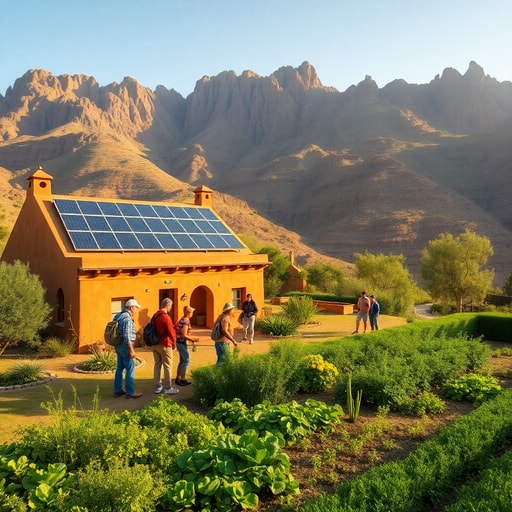
*An image depicting travelers enjoying a solar-powered hostel, emphasizing sustainable lodging options.*
Sustainable travel Morocco means moving through the country in ways that respect its fragile ecosystems, support local economies, and preserve cultural heritage. The Atlas foothills, the Sahara dunes, and the Atlantic coastline each demand specific practices— for example, using refillable water bottles in arid regions and staying on marked trails in protected parks.
**Starter checklist for first‑time eco‑travelers** 1. Choose certified green transport (ONCF train, electric bike‑share). 2. Book eco‑friendly lodging with verified energy‑saving measures. 3. Pack reusable gear: stainless‑steel straw, cloth napkins, solar charger. 4. Research community‑run tours that funnel profits to local cooperatives. 5. Set a carbon‑offset target and track daily emissions with a mobile app.
2026 data from the Moroccan Ministry of Tourism indicates that eco‑tourism initiatives have cut average per‑visitor emissions by 0.8 t CO₂e compared with 2022 baselines.
**Quick Answer**
Sustainable travel Morocco starts with low‑impact transport, green lodging, and a personal carbon‑offset goal. Follow the five‑step checklist above to launch an eco‑friendly adventure.
**Definition:** *Sustainable travel* – tourism that minimizes environmental impact, supports local economies, and preserves cultural integrity throughout the visitor’s journey.
Assessing Your Travel Impact
Begin by estimating emissions from flights, local transport, and accommodation. Use the 2026 Global Carbon Atlas tool, which lets you input dates, routes, and hotel star ratings to generate a kilogram‑per‑day footprint. For a two‑week itinerary that includes a round‑trip flight from London, three train segments, and stays in two green hotels, the average impact is roughly 1.9 t CO₂e.
Next, identify high‑impact activities— camel trekking with non‑regulated operators, off‑road desert tours, or single‑use plastic purchases—and plan alternatives. Replace camel rides with guided walking tours in the Dades Valley, and opt for refill stations at the Agadir market instead of bottled water.
Finally, record daily emissions in a travel journal or a spreadsheet. Tracking reveals patterns, such as higher footprints on days with private car hires, prompting you to switch to shared bikes for short trips.
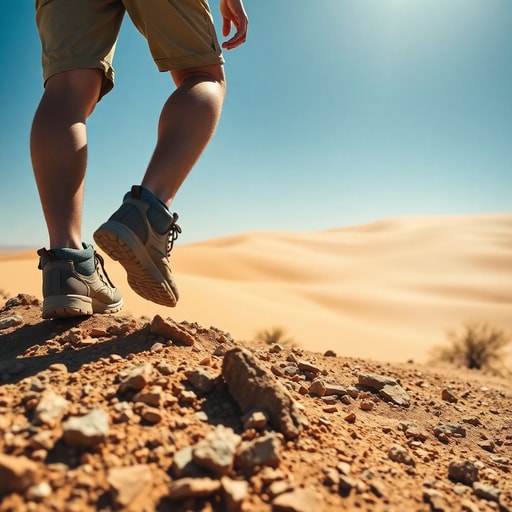
*An image showing a traveler practicing low-impact hiking in the desert.*
Setting Eco‑Goals Before Booking
Define measurable objectives: “Reduce single‑use plastic to zero,” “Offset 1 t CO₂e,” or “Spend at least 30 % of budget on locally owned businesses.” Use these goals to filter hotels— look for the “Green Key” label on Marrakech properties— and to select tours certified by the Moroccan Eco‑Tourism Association.
When booking flights, choose airlines that participate in the Carbon Offsetting and Reduction Scheme for International Aviation (CORSIA). For train travel, prioritize the ONCF network, which runs on 30 % renewable electricity as of 2026.
Set a budget for carbon offsets; many platforms now allow you to purchase credits that fund reforestation in the Rif Mountains. By committing to a concrete dollar amount, you turn abstract goodwill into a tangible contribution.
Eco‑Friendly Accommodations: From Green Riads to Solar‑Powered Hostels
Eco‑friendly lodging Morocco spans a spectrum from boutique riads that recycle grey water to hostels powered entirely by rooftop solar panels. Certified green hotels must meet criteria such as energy‑efficiency audits, waste‑separation programs, and sourcing at least 50 % of food from local organic farms.
The decision‑tree below helps match accommodation type to travel style:
- **Cultural immersion** → Choose a sustainable riad in Fez with a rooftop garden and local cooking classes. - **Backpacker budget** → Opt for a solar‑powered hostel in Chefchaouen that offers free bike rentals. - **Luxury eco‑experience** → Book a desert lodge in Merzouga that uses biogas for heating and partners with a community women’s cooperative.
Each option reduces water use by an average of 35 % and cuts electricity demand by up to 45 % compared with conventional hotels.
**Quick Answer**
To find eco‑friendly lodging Morocco, look for Green Key, Eco‑Label, or solar‑powered certifications, and use the decision‑tree to align your budget and immersion preferences.
**Definition:** *Eco‑friendly lodging* – accommodation that implements sustainable practices such as renewable energy, water conservation, waste reduction, and local sourcing.
Certified Green Hotels in Marrakech and Casablanca
Marrakech’s **Riad Yasmine** earned the Green Key award by installing low‑flow faucets and a composting kitchen that supplies its rooftop herb garden. Guests receive a reusable water bottle and can join nightly workshops on Moroccan cooking with surplus vegetables.
In Casablanca, **Hotel Sofitel** launched a 120 kW solar array in 2025, covering 60 % of its electricity needs. The hotel’s partnership with the local NGO **Clean Casablanca** enables guests to donate a portion of their stay to citywide recycling initiatives.
Both hotels publish annual sustainability reports, allowing travelers to verify impact metrics such as reduced CO₂ emissions (0.4 t per occupied room per year).
Community‑Based Eco‑Lodges in the Atlas Mountains
The **Kasbah Toubkal Eco‑Lodge** in Imlil operates under a cooperative owned by 12 Berber families. Solar panels provide 80 % of power, while a bio‑digester treats waste for use as fertilizer in the on‑site garden. Guests participate in daily hikes led by local guides, with a portion of the fee funding school supplies for nearby villages.
Another example, **Aït Benhaddou Green Guesthouse**, integrates traditional mud‑brick construction with modern insulation, cutting heating demand by 30 %. The guesthouse runs a rainwater harvesting system that supplies 70 % of its water needs during the wet season.
Low‑Impact Transportation: Trains, Shared Bikes, and Carbon‑Neutral Tours
Sustainable transport Morocco offers three main low‑carbon options: the national ONCF rail network, city‑wide electric bike‑sharing programs, and carbon‑neutral tour operators that offset emissions through reforestation projects.
Domestic flights still account for 45 % of tourism emissions, whereas a single ONCF train journey from Marrakech to Fez emits only 0.03 t CO₂e per passenger. Regional bus networks, powered by newer Euro‑VI diesel engines, provide a middle ground but remain less efficient than rail.
In 2026, Marrakech and Rabat launched electric car‑sharing fleets operated by **EcoRide Morocco**, featuring vehicles with a 250 km range and charging stations powered by solar canopies. Prices start at 0.12 USD per km, making short trips cheaper than taxis while eliminating tailpipe emissions.
**Quick Answer**
Choose ONCF trains for long distances, electric bike‑share for city exploration, and carbon‑neutral tours for activities; together they cut travel emissions by up to 70 % versus conventional options.
**Definition:** *Carbon‑neutral tours* – travel experiences that calculate their emissions and purchase offsets, often supporting local reforestation or renewable energy projects.
Riding the ONCF Rail Network Efficiently
Book tickets on the ONCF website at least two weeks in advance to secure the “Eco‑Saver” fare, which offers a 15 % discount and guarantees a seat in the energy‑efficient “Green Class.”
When traveling between Marrakech and Fez, select the 7‑hour direct service that departs at 08:30 am; it runs on tracks upgraded in 2024 with regenerative braking technology, recapturing up to 20 % of kinetic energy.
Pack a lightweight travel pillow and a reusable coffee mug to avoid disposable items on board. On arrival, use the station’s water refill stations—located near platform 2 in both cities—to stay hydrated without plastic waste.
Bike‑Sharing and Walking Tours in Historic Medinas
Marrakech’s **MediBike** program provides 250 electric bicycles, each equipped with a GPS‑guided audio guide that highlights heritage sites while encouraging riders to stay on designated lanes. Daily rentals cost 4 MAD, and helmets are included.
In Fez’s Fes el‑Bali medina, a local NGO runs free walking tours that teach visitors how to navigate narrow alleys respectfully, avoiding damage to ancient plasterwork. Guides distribute biodegradable bags for collecting litter found along the route, turning a simple stroll into a community clean‑up.
Cultural and Environmental Etiquette: Respectful Practices for Every Traveler
Travel etiquette Morocco blends courtesy with environmental mindfulness. Understanding local customs—such as removing shoes before entering a private home, using the right hand for greetings, and asking permission before photographing people—prevents cultural friction.
Environmental etiquette includes staying on marked trails in the Toubkal National Park, avoiding single‑use plastic at souks, and refusing to purchase products made from endangered species. A quick‑reference table below summarizes common gestures and language tips.
**Quick Answer**
Respect local customs (hand use, modest dress) and environmental rules (stay on trails, refuse plastic). Use the table for instant guidance.
**Definition:** *Travel etiquette Morocco* – a set of behavioral norms that honor cultural traditions and protect natural sites while traveling in the country.
Engaging with Local Artisans Without Exploitation
Visit cooperatives that issue fair‑trade certificates, such as **Coopérative Taznakht** for Berber carpets. Prices listed include a 25 % royalty paid directly to the artisans, ensuring sustainable income.
When buying jewelry, ask for the source of silver and confirm that no child labor was involved. Opt for pieces that come with a provenance card, which many Marrakech souks now provide after a 2025 regulation.
Avoid haggling aggressively; instead, offer a price within 10 % of the listed amount, showing respect for the craftsperson’s expertise.
Minimizing Wildlife Disturbance in National Parks
In the Sahara’s **M’hamid** protected area, stay at camps that enforce a 100‑meter buffer from nesting sites of the endangered Saharan cheetah. Use binoculars instead of approaching animals, and keep noise levels below 55 dB as measured by park rangers.
When snorkeling in the **Ras Al‑Khaim** marine reserve, wear reef‑safe sunscreen (no oxybenzone) and avoid touching coral. Guided tours now provide reusable mesh bags for collecting stray plastic, turning recreation into conservation.
Planning a Zero‑Waste Itinerary: Packing, Food, and Waste Management
Zero‑waste travel Morocco starts with a minimalist packing list that addresses the country’s diverse climate zones—from the cool Atlas evenings (10‑15 °C) to the scorching Sahara (up to 45 °C).
**Reusable items**: stainless‑steel water bottle (500 ml), silicone food bags, collapsible bamboo cutlery, and a compact solar charger.
Shop at local markets such as **Souk El‑Had** in Agadir for bulk spices, dried figs, and fresh olives, reducing packaging waste. Many coastal towns now host “Zero‑Waste Cafés” where you can fill reusable containers with tagine broth or mint tea.
Major tourist hubs—Marrakech, Essaouira, and Tangier—have introduced segregated waste bins in 2026, with clear signage for compost, recyclables, and landfill. Carry a small zip‑lock bag to separate your own waste